Photo: Wikipedia
Political ClimatePolitical Climate in Wise County
Showing district-level results — no local-only data available.
Local Political AnalysisPolitical Analysis of Wise County
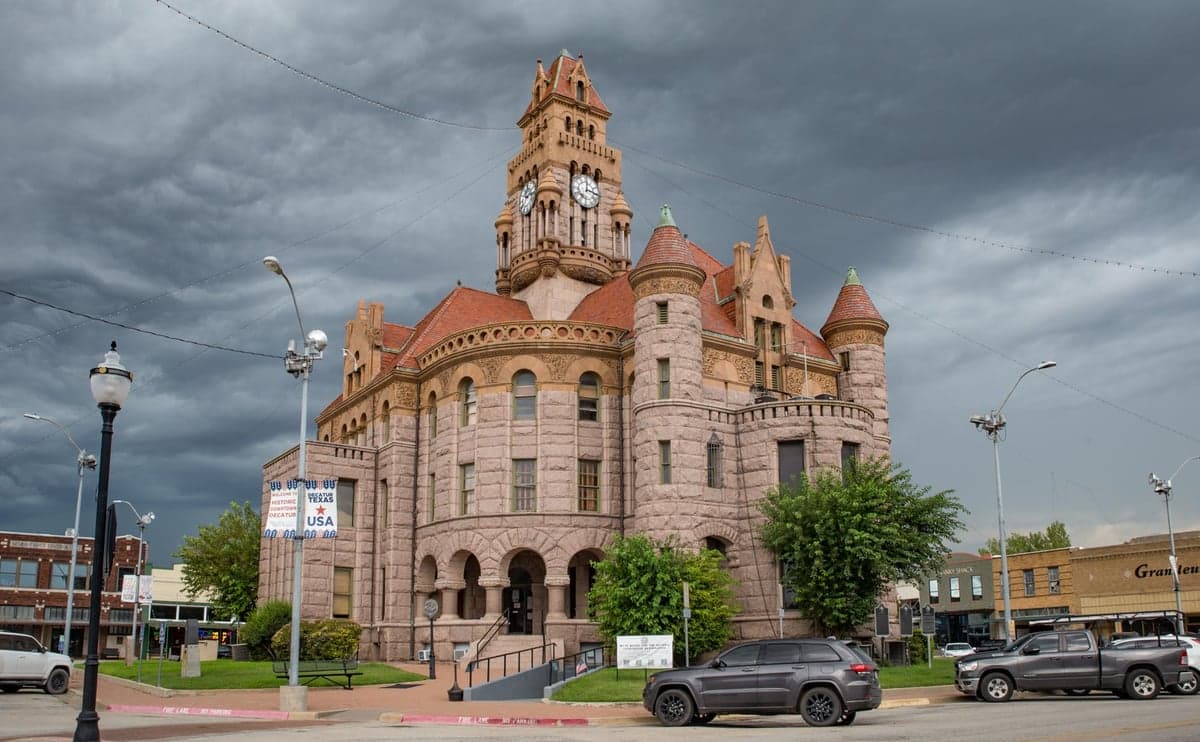
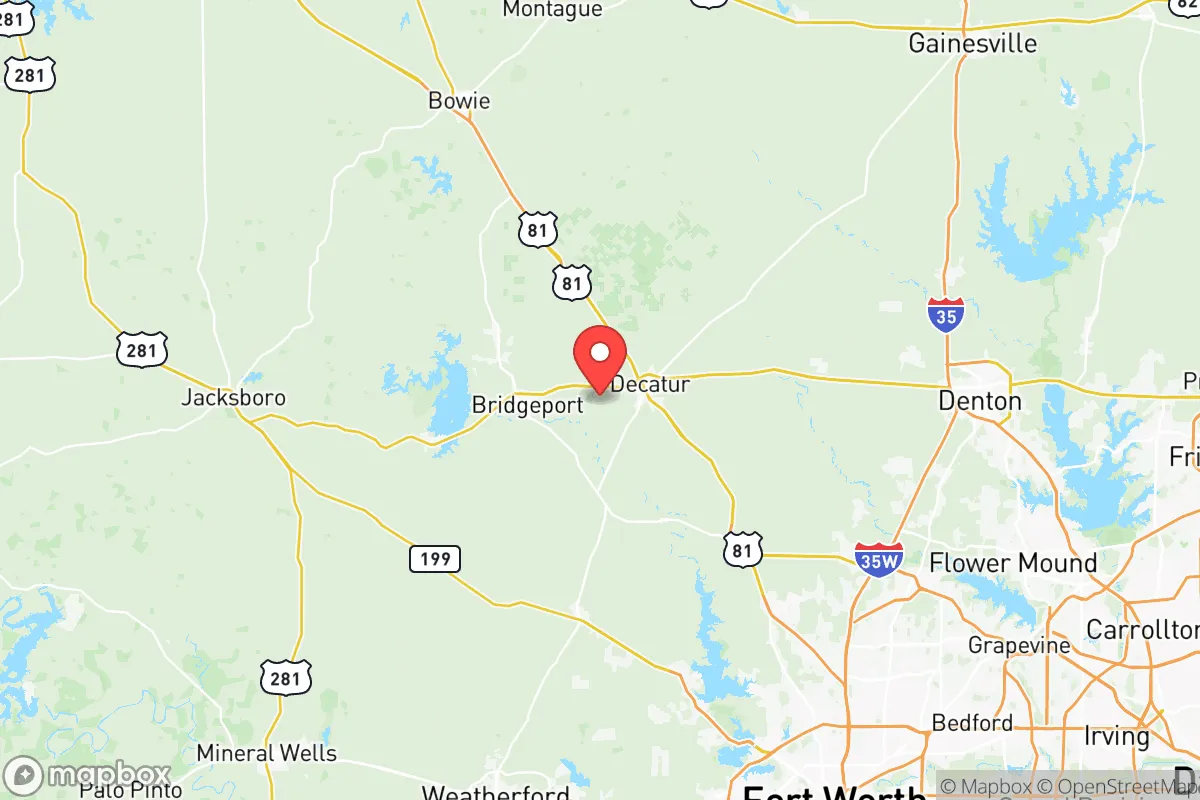
Wise County, Texas, is about as solidly conservative as they come, with a Cook PVI of R+11 that puts it well to the right of the state as a whole (which sits at R+4). That R+11 isn't just a number on a map—it reflects a deep-rooted, no-nonsense political culture that's been here for generations. Folks in places like Decatur, the county seat, and Bridgeport have historically voted straight-ticket Republican, and while the county's rapid growth has brought in new faces, the overall trajectory hasn't budged an inch toward the left. If anything, the political lean has hardened over the last decade, as residents have watched state and national trends drift in a direction they don't recognize—or trust.
How it compares
Compared to Texas as a whole, Wise County is a redoubt of old-school conservatism. The state's R+4 PVI already leans Republican, but Wise County's R+11 is a full seven points more conservative. That gap shows up in election results: while Texas has seen some suburban counties flip or tighten in recent cycles, Wise County has held firm. For example, in the 2024 presidential race, the county voted for the Republican candidate by a margin of over 30 points, while statewide the margin was closer to 10. There's some variation within the county—the town of Rhome, which is closer to the Dallas-Fort Worth metroplex, has a few more moderate precincts, and you'll see a handful of blue-leaning households in the newer subdivisions around Aurora. But even those areas are still reliably red; they're just not as deep red as the rural stretches around Chico and Alvord, where you'd be hard-pressed to find a single Democratic yard sign. The swing precincts are mostly in the unincorporated areas near the county line, where transplants from Tarrant County have brought a slightly more tempered view, but it's a far cry from the purple shift you see in places like Collin County.
What this means for residents
For someone living here, the political climate means a government that mostly stays out of your way—at least at the local level. County commissioners and city councils in Decatur and Bridgeport are focused on keeping taxes low, maintaining rural roads, and pushing back against state or federal mandates that feel like overreach. The recent fights over property tax appraisal caps and local control of land use have been big deals here, and residents have made it clear they don't want Austin or Washington telling them how to run their ranches or their small businesses. That said, the growth from the metroplex is bringing pressure for more zoning and infrastructure spending, which some worry could lead to the kind of bureaucratic meddling that's made life in Dallas so expensive and restrictive. The cultural distinction is that Wise County still feels like a place where your word is your bond and the Second Amendment isn't up for debate—something that's becoming rarer in Texas as the cities expand.
Looking ahead, the concern among longtime residents is that the influx of people from blue-leaning areas could slowly erode the county's character. It hasn't happened yet—the newcomers often move here specifically because they want out of the progressive policies they left behind—but there's a wariness about school board elections and county commissioner races. If you value personal freedoms, low regulation, and a community that doesn't try to micromanage your life, Wise County is still one of the safest bets in Texas. But keep an eye on those precincts near Rhome and Aurora; they're the canary in the coal mine for whether this place stays true to its roots or starts drifting toward the kind of government overreach that's pushed so many people out here in the first place.

State Political ClimatePolitical Climate in Texas
State Political AnalysisPolitical Environment in the State
Texas remains a solidly Republican state with a Cook PVI of R+4, but the coalition that delivers those wins has shifted dramatically over the past two decades. The GOP still dominates statewide races, winning every major office since 1994, but the margin of victory has tightened from double digits to single digits in presidential elections, driven by explosive growth in the urban crescent from Dallas-Fort Worth down through Austin and Houston. The old Texas — rural, Anglo, oil-and-ranch — still turns out reliably red, but the new Texas is younger, more diverse, and increasingly concentrated in cities that vote blue. The result is a state that feels like two different countries sharing a border, with the political center of gravity slowly moving toward the suburbs where the real fight now lives.
Urban vs. rural divide
The political map of Texas is a textbook study in geographic polarization. The big four metros — Houston, Dallas-Fort Worth, San Antonio, and Austin — now hold over 70% of the state’s population, and they lean Democratic by varying margins. Austin is the bluest major city in the South, consistently voting 70%+ Democratic in presidential races, while El Paso and the Rio Grande Valley have trended blue for decades, though the Valley showed surprising shifts toward Trump in 2020 and 2024. Meanwhile, the rural expanse — the Panhandle around Lubbock, the Piney Woods of East Texas, the Hill Country west of San Antonio, and the vast ranchlands of West Texas — votes 75-85% Republican. The real battleground is the suburban ring: Collin County north of Dallas, Fort Bend County southwest of Houston, and Comal County north of San Antonio. These areas were once GOP strongholds but are now competitive, with Collin County still red but by shrinking margins, while Fort Bend flipped to Biden in 2020. The 2024 election saw Hays County (south of Austin) flip back to Trump after going for Biden, signaling that the suburban shift is not a one-way ratchet but a contested trench war.
Policy environment
Texas’s policy environment is defined by what it does not do: no state income tax, light business regulation, and a legal system that favors property rights and gun ownership. The state constitution limits government growth through a part-time legislature that meets only 140 days every two years, which keeps the regulatory burden low compared to California or New York. On education, Texas has a robust school choice movement — the 2023 legislature passed a universal education savings account program, though it was watered down in the Senate — and the state has banned critical race theory and DEI programs in public schools and universities. Healthcare policy is a mixed bag: Texas did not expand Medicaid under the ACA, leaving roughly 1.5 million uninsured, but it has also resisted vaccine mandates and COVID-era lockdowns more aggressively than almost any other state. Election laws tightened after 2020 with Senate Bill 1, which banned drive-through voting, added ID requirements for mail ballots, and empowered poll watchers. The state also passed a near-total abortion ban (trigger law after Dobbs) and a law allowing permitless carry of handguns. For a conservative, the policy environment is broadly friendly, but the lack of Medicaid expansion and rising property taxes (no state income tax means local property taxes are high) are persistent pain points.
Trajectory & freedom
On the freedom front, Texas has moved in two directions simultaneously. On gun rights, the state expanded liberty: permitless carry (HB 1927, 2021) allows any law-abiding adult to carry a handgun without a license, and the state preempts local gun ordinances. On parental rights, the 2023 legislature passed a law requiring school districts to notify parents of any changes in a child’s mental or physical health, effectively banning secret gender transitions at school. On medical freedom, Texas banned COVID-19 vaccine mandates for private employers and government entities, and it outlawed mask mandates in schools. But there are concerning counter-trends. Property rights took a hit with the 2023 passage of a law allowing the state to seize land for the border wall without compensation in some cases, and the state’s power grid (ERCOT) remains a vulnerability — the 2021 winter storm blackout killed over 200 people and led to a massive state intervention that some conservatives saw as a bailout. The biggest freedom concern is the state’s growing reliance on property taxes, which have risen faster than inflation for two decades, effectively acting as a hidden income tax on homeowners. The 2023 legislature passed a $18 billion property tax cut, but it was funded by a surplus that may not recur, leaving the long-term trajectory uncertain.
Civil unrest & political movements
Texas has seen its share of political flashpoints. The 2020 Black Lives Matter protests in Austin and Houston were large and occasionally violent, leading to property damage and a police budget defunding in Austin that was later reversed by voters. The border crisis has been a constant source of tension: Governor Abbott’s Operation Lone Star deployed state troopers and National Guard to the border, bused migrants to northern cities, and installed razor wire and buoys in the Rio Grande, sparking lawsuits from the Biden administration and a standoff with the federal government. The state’s abortion ban led to a wave of lawsuits and a high-profile case of a woman who traveled out of state for an abortion, which became a national rallying cry for the left. On the right, the Texas GOP’s 2022 platform included a call for a secession referendum, though that remains fringe rhetoric. Election integrity remains a live issue: the 2020 and 2024 elections saw no evidence of widespread fraud in Texas, but the state’s new voting laws have been challenged in court, and the 2024 election saw record turnout despite the restrictions. A new resident would notice the political polarization in everyday life — bumper stickers, yard signs, and conversations at the grocery store are more charged than in most states.
Projection
Over the next 5-10 years, Texas is likely to become more competitive but not flip blue. The in-migration from California and the Northeast is slowing but still significant, and those newcomers tend to be moderate to liberal, especially in the suburbs. The Hispanic vote, long assumed to be a Democratic lock, is fracturing — Trump won 45-50% of Hispanic voters in the Rio Grande Valley in 2024, and that trend could continue if Democrats move left on cultural issues. The rural vote will remain deeply red but shrink as a share of the electorate. The wild card is the state’s own policy choices: if property taxes continue to rise and the grid remains unreliable, even conservative voters may start to question the status quo. The 2026 gubernatorial race will be a bellwether — if a Democrat can get within single digits, the 2030s could see a realignment. For now, Texas remains a red state with a blue tint in the cities, and the suburbs are the battlefield where the future will be decided.
Bottom line for a new resident: If you’re moving to Texas for lower taxes, lighter regulation, and a culture that values personal responsibility, you’ll find most of what you’re looking for — but don’t expect a libertarian paradise. Property taxes are high, the grid is fragile, and the political fights are getting louder every year. Pick your county carefully: Collin County offers a conservative suburban lifestyle with good schools, Comal County gives you Hill Country freedom with San Antonio access, and Fort Bend County is more diverse and politically mixed. Avoid Austin proper if you want a red-leaning environment, but the exurbs north and west of the city still vote Republican. Texas is still worth the move for most conservatives, but the days of easy, one-party dominance are fading — you’ll need to be engaged to keep it that way.
* Values derived from national, state, county, city and local statistics and may differ in a specific area. Last updated: 2026-05-15T22:31:10.000Z
Narrative content on this page is AI-generated and may contain mistakes. Verify any details that matter before acting on them.
ReloMaps may earn a commission from affiliate links at no extra cost to you.

