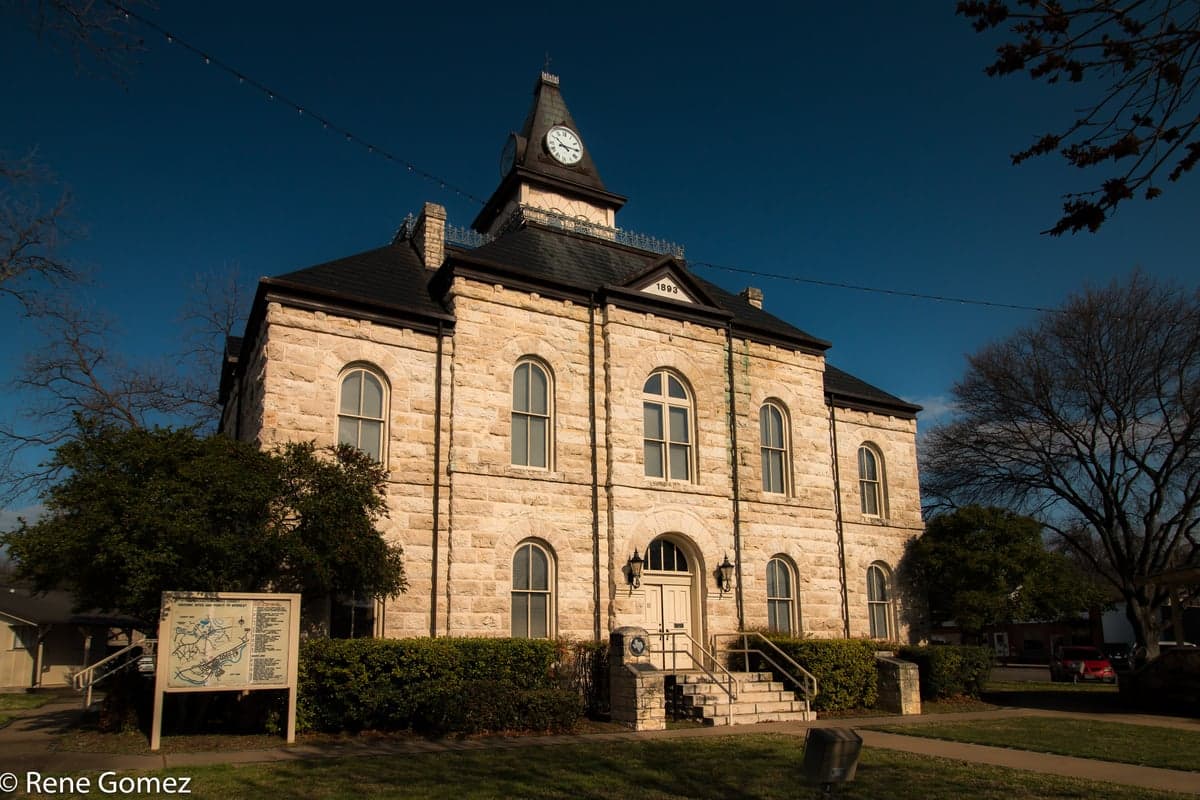
Photo: Wikipedia
Political ClimatePolitical Climate in Somervell County
Showing district-level results — no local-only data available.
Local Political AnalysisPolitical Analysis of Somervell County
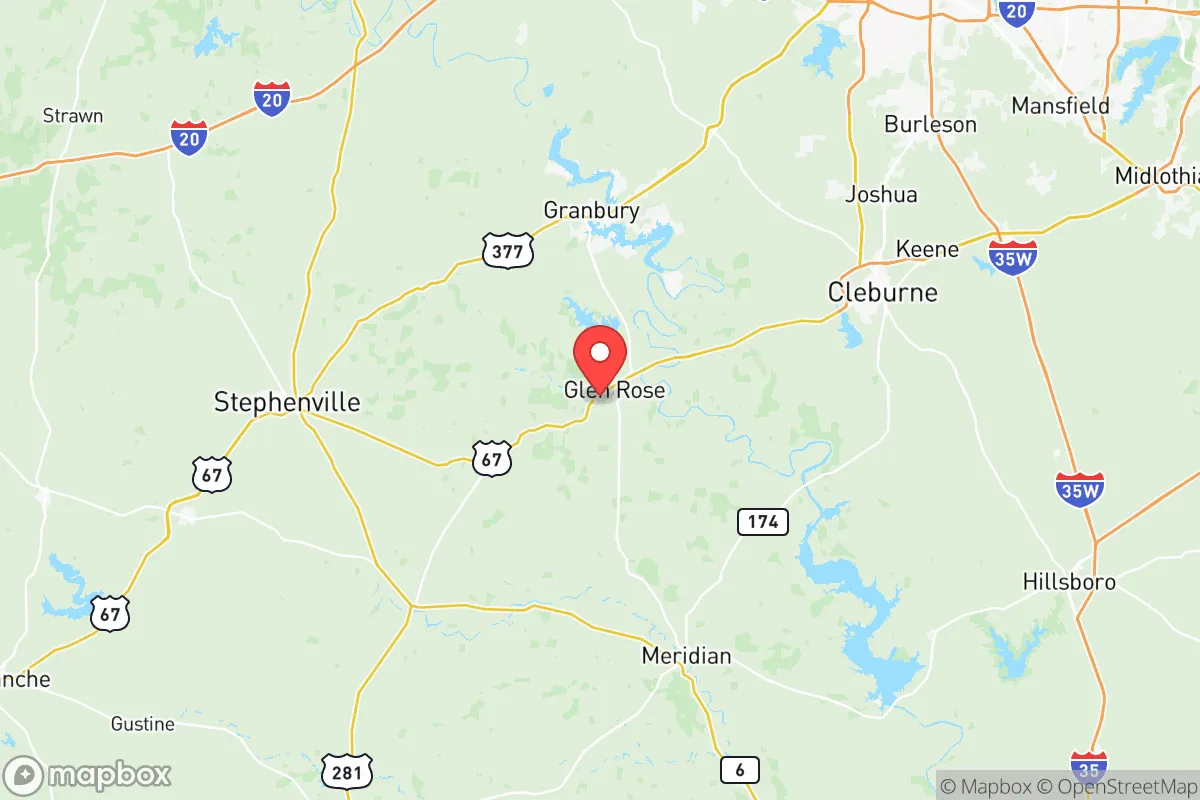
Somervell County is one of the most reliably Republican counties in Texas, carrying a Cook Partisan Voting Index (PVI) of R+18 — a full 14 points more conservative than the state of Texas as a whole, which sits at R+4. In the 2024 presidential election, the county delivered roughly 80% of its vote to Donald Trump, a margin that has only widened over the past decade as the rural areas have solidified and the small towns have stayed the course. The county seat, Glen Rose, anchors the political center, but it's the unincorporated communities like Nemo and the rural stretches along the Brazos River that push the numbers deep into Republican territory.
How it compares
Texas as a state is a solidly Republican lean, but its R+4 PVI reflects a competitive environment where Democrats can win in urban centers like Houston, Dallas, and Austin. Somervell County's R+18 rating places it in a different category entirely — more akin to the deeply red Panhandle than the purple-tinged suburbs of the Metroplex. Within the county itself, there is little political variation: Glen Rose, the only incorporated town, trends Republican but is slightly more moderate than the rural precincts. The precincts around the Somervell County Airport and the eastern edge near the Johnson County line occasionally show a few more Democratic votes, but they rarely break 25% for a Democratic candidate. The western precincts, especially those near the Comanche Peak nuclear plant and the Squaw Mountain area, are the most conservative, often hitting 85% Republican or higher.
What this means for residents
For conservative residents, Somervell County offers a political environment where their values are the clear majority — local school board meetings, county commissioner races, and even the occasional bond election tend to reflect a fiscally cautious, socially conservative outlook. For liberal residents, the reality is that they are a distinct minority, and political discussions in public settings like the Glen Rose square or at local diners can feel isolating. However, the small size of the county (roughly 9,000 residents) means that personal relationships often transcend political differences, and most local governance is focused on practical issues like road maintenance, water rights, and the economic impact of tourism at Dinosaur Valley State Park rather than partisan battles.
Culturally, Somervell County stands apart from the broader Texas trend of rapid suburbanization and demographic change. While Texas as a whole has seen significant in-migration from blue states and a growing urban-liberal axis, Somervell has remained largely insulated from those shifts. The county's economy is anchored by the nuclear plant, tourism, and agriculture, not by the tech or energy booms that have reshaped Austin or Houston. This means policy debates here are less about growth management and more about preserving the rural character — a stance that resonates across the political spectrum, even if the partisan label attached to it is overwhelmingly Republican. The long-term trajectory suggests the county will stay deeply red, as the limited housing stock and lack of major employers keep population growth slow and the demographic profile stable.

State Political ClimatePolitical Climate in Texas
State Political AnalysisPolitical Environment in the State
Texas is a solidly Republican state with a Cook Partisan Voting Index of R+4, meaning it typically votes about four points more Republican than the national average. Over the past 10-20 years, the state has undergone a dramatic political realignment: while Republicans have maintained control of every statewide office and both legislative chambers, the margins have been steadily shrinking as the state's explosive population growth—driven largely by domestic migration from blue states and a surging Hispanic electorate—has turned once-safe GOP strongholds into competitive battlegrounds. In 2024, Donald Trump carried Texas by roughly 9 points, down from 11 points in 2020 and 16 points in 2016, signaling a clear trajectory toward a purple state within the next decade.
Urban vs. rural divide
The political geography of Texas is a textbook case of the urban-rural split. The state's five largest metros—Houston, Dallas-Fort Worth, San Antonio, Austin, and El Paso—are increasingly Democratic, with Austin and El Paso being reliably blue, Harris County (Houston) and Dallas County trending left, and Tarrant County (Fort Worth) flipping blue for the first time in decades in 2020. Meanwhile, the vast rural and exurban expanses—places like the Panhandle around Lubbock, East Texas timber country, and the Hill Country west of Austin—vote overwhelmingly Republican, often by 70-80% margins. The key battlegrounds are the fast-growing suburban "collar counties" like Collin, Denton, and Montgomery north of Dallas, and Comal and Hays near San Antonio and Austin, where educated, affluent transplants are slowly shifting the partisan balance. Bexar County (San Antonio) is a bellwether: it voted for Obama in 2008 and 2012, then flipped to Trump in 2016 before swinging back to Biden in 2020, reflecting the broader suburban volatility.
Policy environment
Texas has no state income tax, relying instead on high property taxes and a regressive sales tax structure that funds a relatively lean state government. The regulatory posture is famously business-friendly, with minimal zoning in most cities, weak labor protections, and a "right-to-work" law that has kept unionization rates among the lowest in the nation. Education policy is dominated by the school choice debate: the state funds public schools through a complex recapture system (Robin Hood) that redistributes property tax revenue from wealthy districts to poor ones, and Governor Greg Abbott has made private school vouchers his top priority, though they have repeatedly stalled in the House. Healthcare is a perennial flashpoint: Texas has the highest uninsured rate in the country, having refused to expand Medicaid under the Affordable Care Act, and the state has enacted some of the nation's strictest abortion laws, including a near-total ban with no exceptions for rape or incest. Election laws have been tightened in recent cycles, with the 2021 Senate Bill 1 restricting mail-in voting, expanding poll watcher access, and imposing new ID requirements.
Recent policy direction
The last five years have seen Texas lurch sharply rightward on cultural and social issues while maintaining its traditional pro-business posture. On gun and self-defense law, the state enacted permitless carry in 2021, allowing anyone over 21 who can legally possess a firearm to carry it openly or concealed without a license. Parental and education rights have been a central focus: the 2023 "Parental Bill of Rights" (HB 900) requires schools to notify parents of any library materials deemed "sexually explicit" and allows them to challenge books, while the 2021 "Critical Race Theory" law (HB 3979) restricts how teachers can discuss race and current events. On speech and privacy, Texas passed a law in 2021 (HB 20) that prohibits social media platforms from moderating content based on viewpoint, though it has been partially blocked by courts. Medical and bodily autonomy has seen the most dramatic shift: the 2021 "Heartbeat Act" (SB 8) bans abortion after roughly six weeks and deputizes private citizens to enforce it through civil lawsuits, while the 2023 trigger law (HB 1280) enacted a near-total ban with narrow medical exceptions. Property rights remain strong, with no statewide zoning and relatively weak eminent domain protections, though the 2023 "Texas Homestead Act" (SB 1578) expanded protections against property tax increases for homeowners. Voting and ballot access has been tightened: SB 1 (2021) banned 24-hour and drive-through voting, restricted mail-in ballot applications, and gave partisan poll watchers more latitude, while the 2023 "Election Integrity Act" (SB 2) increased criminal penalties for election offenses.
Civil unrest & political movements
Texas has been a flashpoint for political activism on both sides. The 2020 Black Lives Matter protests in Austin were among the largest and most sustained in the country, leading to a city council vote to defund the police by $150 million, which was later partially restored after a backlash. The 2021 winter storm blackouts sparked widespread protests against the state's deregulated energy grid, leading to the resignation of the Electric Reliability Council of Texas (ERCOT) CEO and a push for grid hardening that has since stalled. Immigration politics are a constant source of tension: Governor Abbott's "Operation Lone Star" has deployed state troopers and National Guard to the border, bused migrants to Democratic-led cities, and installed razor wire and buoys in the Rio Grande, leading to ongoing legal battles with the Biden administration. The "Texas secession" movement, while fringe, has gained visibility through the Texas Nationalist Movement, though polling consistently shows only 10-15% support. Election integrity remains a live issue: the 2020 and 2022 cycles saw numerous lawsuits over voting procedures, and the 2024 election is expected to bring more legal challenges, particularly around mail-in ballots and voter roll maintenance.
Projection
Over the next 5-10 years, Texas is on a clear trajectory toward becoming a competitive swing state. The demographic math is inexorable: the state's Hispanic population, which leans Democratic and is growing rapidly, will continue to erode the Republican advantage, while the influx of college-educated professionals from California and the Northeast is shifting suburban counties leftward. However, the GOP is not standing still—the party is doubling down on cultural conservatism to mobilize its rural and exurban base, and the state's gerrymandered legislative maps ensure Republican control of the legislature even if the statewide vote tightens. A new resident moving in now should expect to see the political climate become more contentious and polarized, with every election cycle bringing higher turnout, more spending, and more legal battles. The practical reality is that Texas will remain a conservative-governed state for at least the next few years, but the margin of control will continue to narrow, and the state's political identity will be increasingly defined by the tension between its growing urban centers and its shrinking rural base.
For a new resident, the bottom line is this: Texas offers a low-tax, lightly regulated environment that appeals to conservatives and libertarians, but the state's politics are becoming more volatile and polarized by the cycle. If you're moving here, expect to live in a state where your local government's policies—on everything from abortion to zoning to school curriculum—will depend heavily on whether you settle in a blue city like Austin or El Paso, a purple suburb like Fort Worth or San Antonio, or a red exurb like Lubbock or the Hill Country. The state-level direction is firmly conservative for now, but the ground is shifting under everyone's feet.
* Values derived from national, state, county, city and local statistics and may differ in a specific area. Last updated: 2026-07-12T05:17:04.000Z
Narrative content on this page is AI-generated and may contain mistakes. Verify any details that matter before acting on them.
ReloMaps may earn a commission from affiliate links at no extra cost to you.

