Photo: Wikipedia
Demographics of Somervell County
Affluence Level in Somervell County
A middle-class area roughly in line with national averages across income, home values, education, and employment.
People of Somervell County
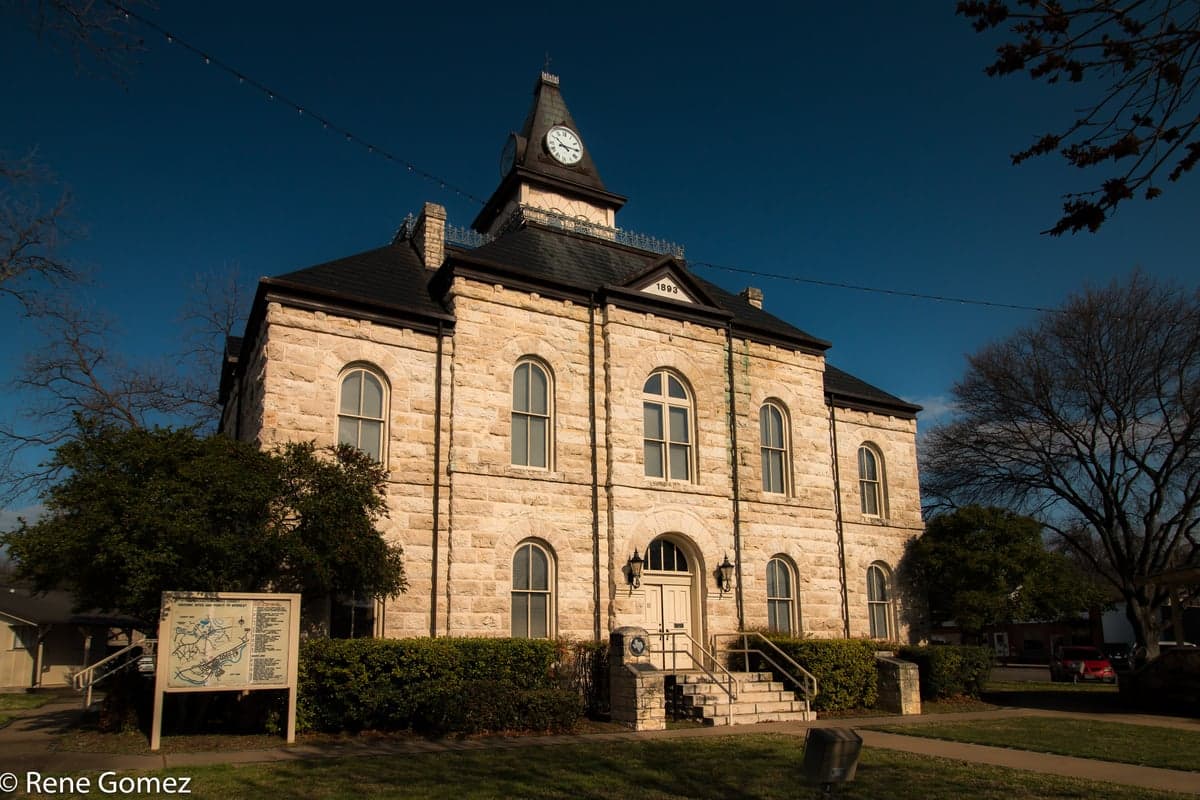
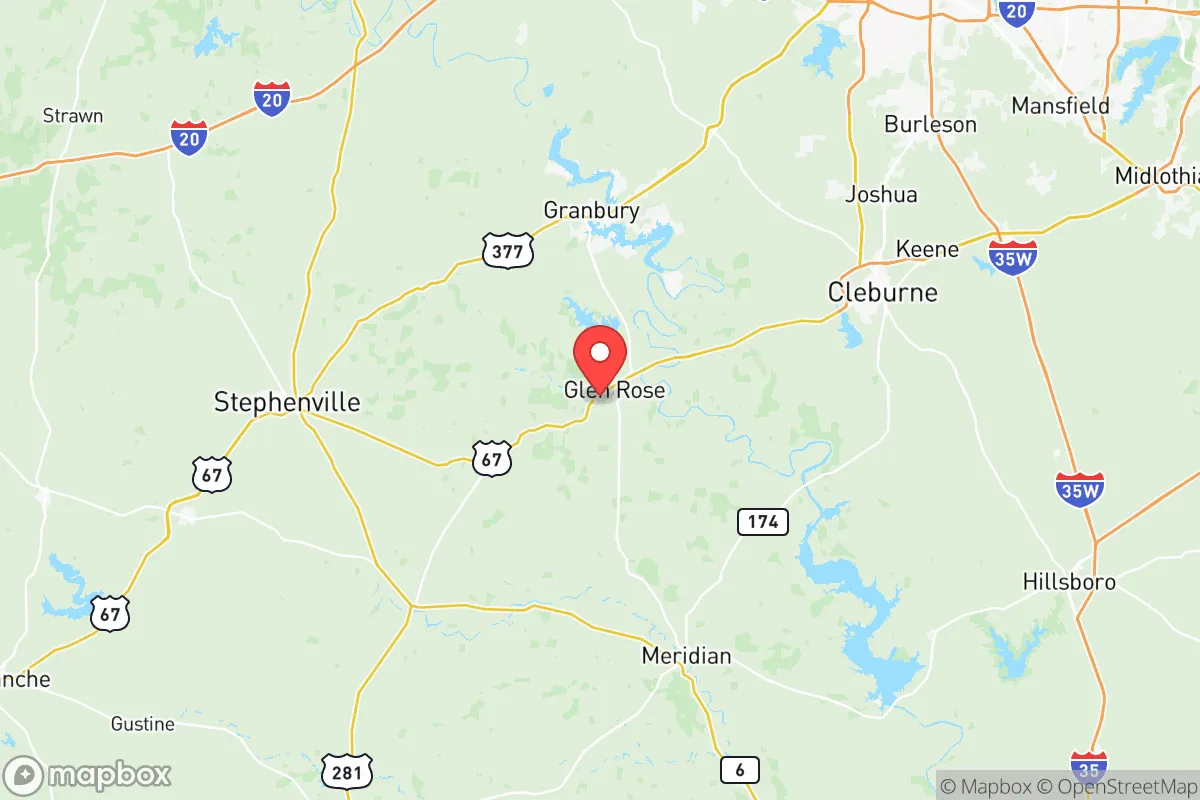
Today, Somervell County’s 9,510 residents form a predominantly white, rural community with a growing Hispanic minority, concentrated around the county seat of Glen Rose and the smaller unincorporated areas of Nemo and Rainbow. The county is notably less diverse than Texas as a whole, with a foreign-born population of just 6.5% and a college attainment rate of 25.0%, reflecting its working-class agricultural and tourism roots. Its identity is shaped by the Paluxy River, Dinosaur Valley State Park, and a strong sense of local independence, with a population density of roughly 30 people per square mile that preserves a small-town, conservative character.
Settlement & growth (pre-1960)
Before Anglo-American settlement, the area now known as Somervell County was part of the traditional territory of the Comanche and, earlier, the Caddo and Wichita peoples. The Comanche dominated the Cross Timbers region through the 18th and early 19th centuries, using the Paluxy River valley as a hunting and camping ground. Spanish and Mexican authorities made little effort to colonize this rugged, limestone-rich area, leaving it largely untouched by European settlement until Texas independence.
Anglo-American settlers began arriving in the 1850s, drawn by cheap land grants from the Republic of Texas and later the state. The first permanent settlement was established at Glen Rose in 1849, originally called "Barnard's Mill" after Charles Barnard built a gristmill on the Paluxy River. These early settlers were overwhelmingly Scots-Irish and English yeoman farmers from the Upper South—Tennessee, Kentucky, and Arkansas—who brought a tradition of subsistence agriculture, livestock grazing, and a fiercely independent, Protestant culture. They were joined by a smaller number of German and Czech families who moved west from the German Belt of Central Texas (e.g., New Braunfels and Fredericksburg) in the 1870s and 1880s, though Somervell never developed the dense ethnic enclaves seen in those counties.
The county was formally organized in 1875, carved out of Hood and Johnson counties, and named after a Texas Revolution veteran. The arrival of the Fort Worth and Rio Grande Railway in the 1880s spurred modest growth, connecting Glen Rose to regional markets and enabling a cotton and livestock economy. Small communities like Nemo (originally a farming hamlet) and Rainbow (a ranching crossroads) emerged as supply points for surrounding ranches. By 1900, the population had reached roughly 3,000, almost entirely native-born white Protestants, with a handful of African American families working as sharecroppers and laborers—a legacy that explains the county's 1.9% Black population today, a remnant of that small post-Reconstruction presence.
The Dust Bowl and Great Depression hit Somervell hard, as cotton prices collapsed and the rocky soil proved marginal for row crops. Many families left for urban jobs in Fort Worth and Dallas, and the county's population stagnated around 2,500 through the 1940s. The post-World War II period saw a modest rebound as returning veterans took up ranching and the state park system developed Dinosaur Valley State Park (opened 1968), which began attracting tourists and a small service-sector workforce. Still, by 1960, the population was only 2,577, and the county remained overwhelmingly white, native-born, and rural.
Modern era (post-1965)
The 1965 Hart-Cellar Act had minimal direct impact on Somervell County, as the area lacked the industrial or agricultural pull to attract international immigrants. Unlike Houston or Dallas, which saw waves of Vietnamese, Indian, and Central American arrivals, Somervell's foreign-born population remains just 6.5%—roughly half the Texas average. The small Hispanic population (18.1%) is largely composed of Mexican-American families who moved from South Texas or Mexico directly into construction, service, and ranching jobs in the 1980s and 1990s, settling primarily in Glen Rose and the mobile home communities along Highway 67. There are no identifiable East/Southeast Asian or Indian-subcontinent communities in the county, consistent with the 0.0% shares for both groups.
The most significant demographic shift since 1965 has been domestic in-migration from the Dallas-Fort Worth metroplex, which lies just 50 miles to the northeast. Starting in the 1990s, retirees and telecommuters began buying ranch properties around Glen Rose, Nemo, and Rainbow, drawn by lower land prices, the Paluxy River scenery, and a slower pace of life. This trend accelerated after 2010, as suburban sprawl from Fort Worth pushed into neighboring Johnson and Hood counties, making Somervell a feasible exurban commute for some workers. The county's population jumped from 6,809 in 2000 to 9,510 by 2024, a 40% increase driven almost entirely by white, college-educated newcomers from the metroplex. These arrivals have raised the college-educated share to 25.0%, though that remains below the state average, and have introduced a more affluent, amenity-seeking demographic that supports local tourism, craft breweries, and second-home development.
Racial and ethnic composition has shifted modestly. The white share has declined from roughly 85% in 2000 to 77.1% today, while the Hispanic share has grown from about 10% to 18.1%, reflecting both natural increase and continued migration from South Texas. The Black population has remained stable at 1.9%, concentrated in a small historic neighborhood in Glen Rose near the old railroad depot. No new immigrant enclaves have formed, and the county remains one of the least diverse in the Dallas-Fort Worth region.
The future
Somervell County is likely to continue its gradual diversification, but at a slower pace than the state as a whole. The Hispanic share is projected to reach 22-25% by 2040, driven by higher birth rates and continued migration from South Texas and Mexico, while the white share will decline to around 70-72%. The East/Southeast Asian and Indian populations are expected to remain negligible, as the county lacks the high-tech employment base and urban infrastructure that attract those groups to Plano, Frisco, and other DFW suburbs. The college-educated share will rise slowly, perhaps to 30%, as more remote workers and retirees from Dallas-Fort Worth settle in Glen Rose and along the Paluxy River corridor.
The key demographic wildcard is water availability. Somervell sits atop the Trinity Aquifer, but prolonged drought and population growth in the region could constrain development, particularly for large subdivisions. If water remains adequate, the county could see its population reach 12,000-13,000 by 2040, with new housing concentrated around Glen Rose and along the Highway 67 corridor toward Cleburne. If water becomes scarce, growth will likely remain slow, preserving the county's rural character and limiting further diversification. Culturally, the county is becoming a hybrid: a working ranching community overlaid with exurban commuters and tourism entrepreneurs, creating a politically conservative but economically mixed electorate that values low taxes, gun rights, and limited government.
For someone moving in now, Somervell County offers a predominantly white, English-speaking, conservative rural environment with a growing Hispanic minority and virtually no Asian or Indian presence. It is becoming more affluent and educated, but remains a place where family ties, church membership, and land ownership define social standing. The next 20 years will likely see a slow, steady increase in diversity and suburban amenities, but the county will remain a distinctly rural, traditional pocket within the booming Dallas-Fort Worth region.

* Values derived from national, state, county, city and local statistics and may differ in a specific area. Last updated: 2026-07-12T05:17:04.000Z
Narrative content on this page is AI-generated and may contain mistakes. Verify any details that matter before acting on them.
ReloMaps may earn a commission from affiliate links at no extra cost to you.

