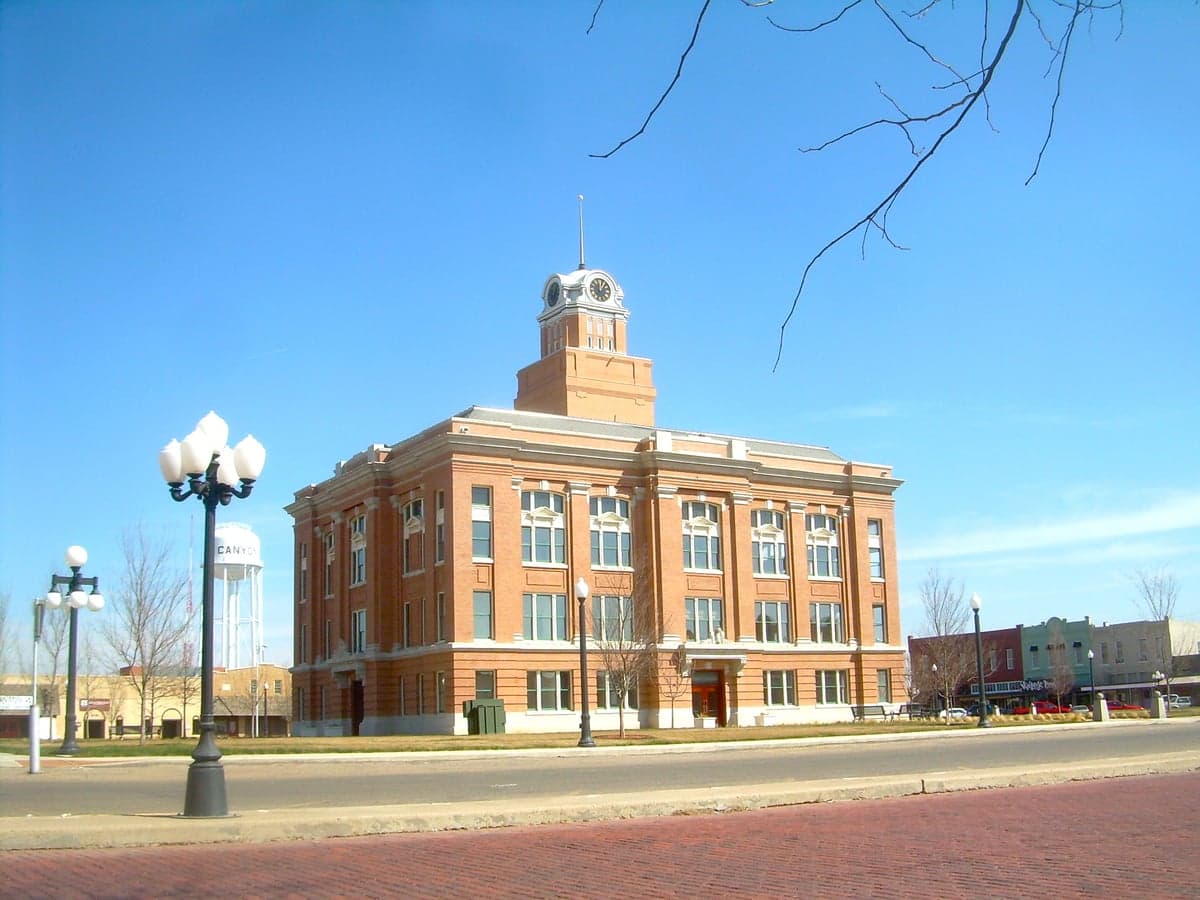
Photo: Wikipedia
Demographics of Randall County
Affluence Level in Randall County
A middle-class area roughly in line with national averages across income, home values, education, and employment.
People of Randall County
The people of Randall County, Texas, today number 143,791 and are characterized by a predominantly white, conservative-leaning population with a significant and growing Hispanic minority. The county’s identity is rooted in its Panhandle heritage—a blend of ranching, agriculture, and the civic life anchored by Canyon and the larger, more suburban Amarillo—with a demographic profile that remains less diverse than the state average. With a foreign-born population of just 2.3% and a college attainment rate of 32.1%, Randall County reflects a community shaped by deep historical settlement patterns rather than recent international immigration, though its Hispanic share of 23.7% signals a long-standing and increasingly influential presence.
Settlement & growth (pre-1960)
Before American settlement, the area now known as Randall County was part of the vast Llano Estacado, a region used by the Comanche and Apache peoples for hunting bison. Spanish explorers passed through as early as the 16th century, but no permanent European colonies were established. The U.S. Army forced the removal of Native tribes in the 1870s, opening the land to Anglo-American ranching. The county was formally organized in 1889, named after a Confederate officer, and its earliest non-Native settlers were cattle ranchers drawn by the open range and the arrival of the Fort Worth and Denver City Railway in 1888.
The first major wave of permanent settlers arrived in the 1890s and early 1900s, primarily Anglo-Americans from the South and Midwest—Tennessee, Kentucky, and Missouri—seeking cheap land for farming and ranching. The town of Canyon, founded in 1889, became the county seat and a center for agriculture, particularly wheat and cattle. A smaller but notable group of German and Czech families settled in the area around Umbarger and Happy in the 1900s-1910s, drawn by railroad access and the promise of irrigated farming along the Tierra Blanca Creek. These communities established tight-knit rural enclaves, with German Lutheran and Czech Catholic churches still standing today.
The Dust Bowl of the 1930s hit Randall County hard, causing a temporary population decline as many farm families abandoned the land. However, the post-World War II era brought a second wave: returning veterans and their families, many from the Amarillo Army Air Field (now Rick Husband Amarillo International Airport), settled in the county’s growing suburban fringe. The construction of U.S. Highway 60 and Interstate 27 in the 1950s and 1960s spurred development in Lake Tanglewood and Timbercreek Canyon, small residential communities that attracted Amarillo commuters. By 1960, the county’s population had reached roughly 33,000, still overwhelmingly white and native-born, with a strong agricultural and small-town character.
Modern era (post-1965)
The 1965 Hart-Cellar Act had a minimal direct impact on Randall County, as the region did not attract the large-scale international immigration seen in Texas’s major metros. Instead, the county’s modern demographic story is one of domestic migration and suburbanization. From the 1970s through the 1990s, the population more than doubled, driven by the expansion of Amarillo’s economy—particularly in healthcare, education, and energy—and the construction of master-planned subdivisions in Canyon and along the I-27 corridor south of Amarillo. This growth was overwhelmingly Anglo, with many newcomers arriving from other parts of Texas and the Rust Belt states of Ohio, Michigan, and Illinois.
The Hispanic population, however, has been the most dynamic demographic force since 1990. While many Hispanic families have roots in the region stretching back to the early 20th century—working in agriculture and railroads—the share grew from roughly 10% in 1990 to 23.7% by 2020. This growth came primarily from natural increase and domestic migration from South Texas and the Rio Grande Valley, rather than from foreign immigration. The Hispanic community is dispersed throughout the county, with notable concentrations in Canyon and the southern parts of Amarillo’s Randall County portion, where bilingual services and Hispanic-owned businesses have become more visible. The Black population remains small at 3.2%, concentrated in Amarillo’s urban core rather than Randall County’s suburban areas. East and Southeast Asian communities (1.6%) and Indian subcontinent residents (0.2%) are tiny but growing, primarily professionals drawn to West Texas A&M University in Canyon and the medical sector in Amarillo.
Suburbanization reshaped the county’s geography. The town of Happy, once a farming hamlet, has seen its population stagnate as younger residents move toward Canyon and Amarillo. Meanwhile, the unincorporated area of Palisades and the gated community of Lake Tanglewood have become desirable for retirees and professionals seeking a rural feel with city access. The county’s overall character remains conservative and family-oriented, with a strong emphasis on local schools, churches, and outdoor recreation at Palo Duro Canyon State Park.
The future
Randall County is projected to continue growing, albeit at a slower pace than Texas’s booming urban centers. The population is expected to reach roughly 160,000 by 2035, driven by natural increase and continued domestic migration from other parts of Texas and the Midwest. The Hispanic share will likely rise to 28-30% by 2040, as younger Hispanic families have higher birth rates and as the county becomes more attractive to Hispanic professionals seeking affordable housing and good schools. The white non-Hispanic share will decline gradually but remain the majority. The foreign-born population is unlikely to rise significantly above 3-4%, as the county lacks the industrial and service-sector magnets that draw international immigrants to Houston or Dallas.
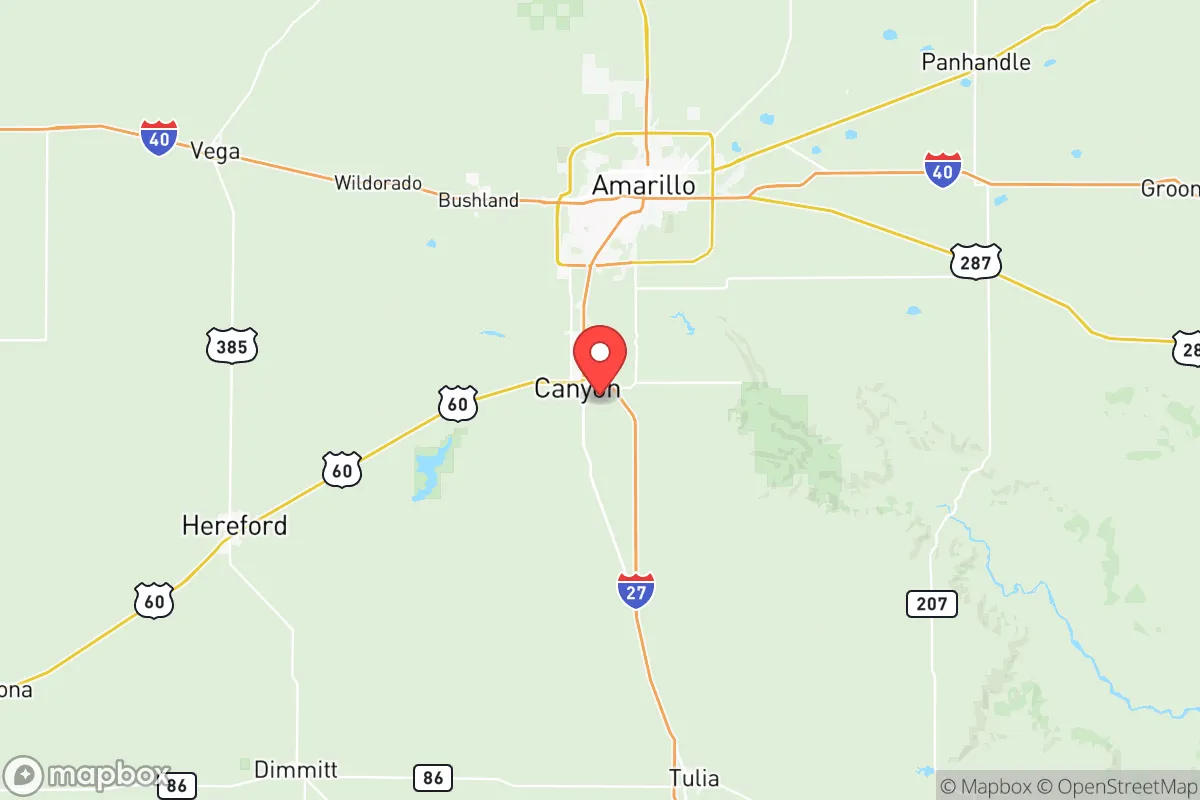
New residential development will concentrate in the southern Amarillo suburbs and along the US-60 corridor toward Canyon, where new master-planned communities are already under construction. The town of Happy may see modest infill, but most growth will occur within a 10-mile radius of Canyon and the I-27/Amarillo border. The county’s cultural identity will likely remain conservative and rooted in Panhandle traditions, but with a more visible Hispanic influence in local festivals, cuisine, and politics. West Texas A&M University will continue to be a driver of diversity, attracting a small but steady stream of out-of-state and international students, though most will not settle permanently in the county.
For someone moving to Randall County now, the area offers a stable, family-oriented community with low crime, good schools, and a cost of living below the national average. The population is becoming more diverse, but slowly and primarily through Hispanic growth rather than international immigration. The county’s future is one of steady, moderate expansion—not a demographic revolution—making it a predictable and safe choice for those seeking a traditional Texas Panhandle lifestyle with access to Amarillo’s amenities.

* Values derived from national, state, county, city and local statistics and may differ in a specific area. Last updated: 2026-10-18T00:37:53.000Z
Narrative content on this page is AI-generated and may contain mistakes. Verify any details that matter before acting on them.
ReloMaps may earn a commission from affiliate links at no extra cost to you.

