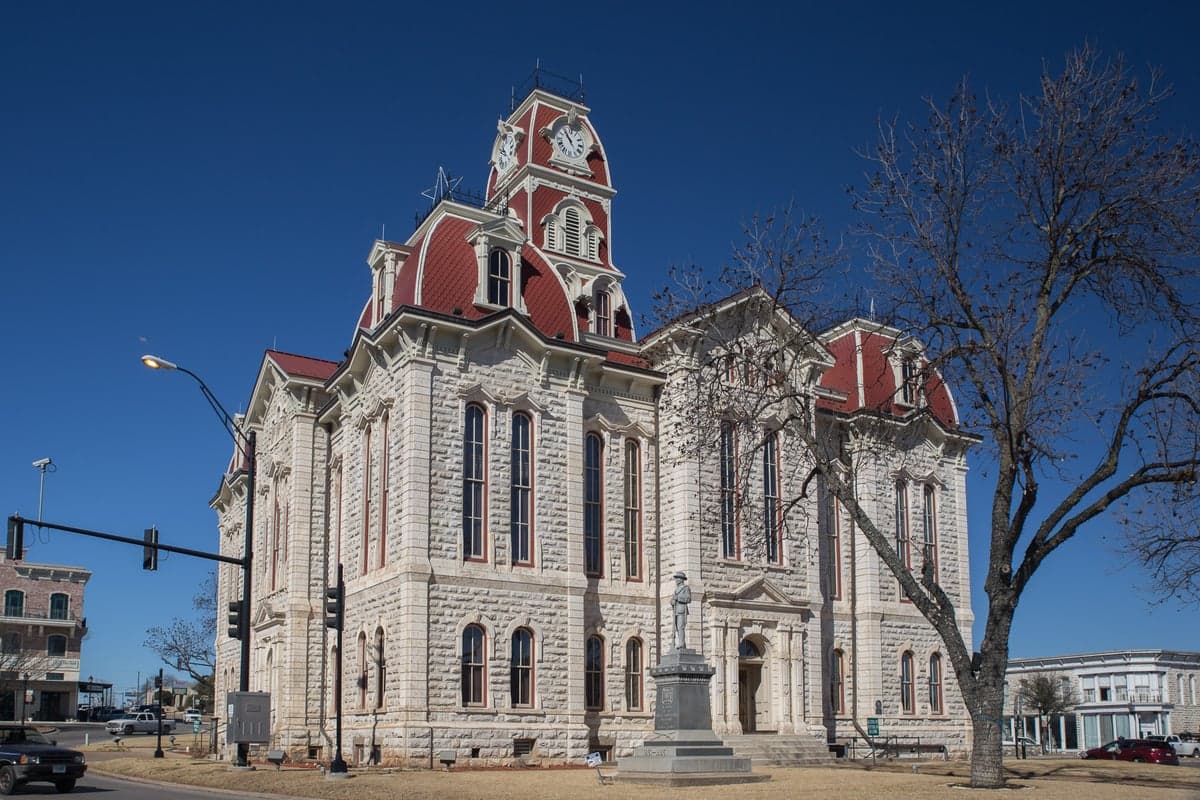
Photo: Wikipedia
Personal Sovereignty in Parker County
Strong independent fundamentals that actively favor personal liberty and low regulation.
What does Personal Sovereignty tell us?
Personal Sovereignty measures your capacity for self-reliance and independence with minimal government friction. Higher scores mean fewer barriers between you and the way you want to live... but it assumes you have the space you need and good neighbors.
What does this tell us?
Personal Sovereignty measures your capacity for self-reliance and independence with minimal government friction. Higher scores mean fewer barriers between you and the way you want to live... but it assumes you have the space you need and good neighbors.
State Policy
Energy independence: Net exporter (220% of energy produced in-state)
Personal Liberty
Homesteading

Personal Liberty Analysis
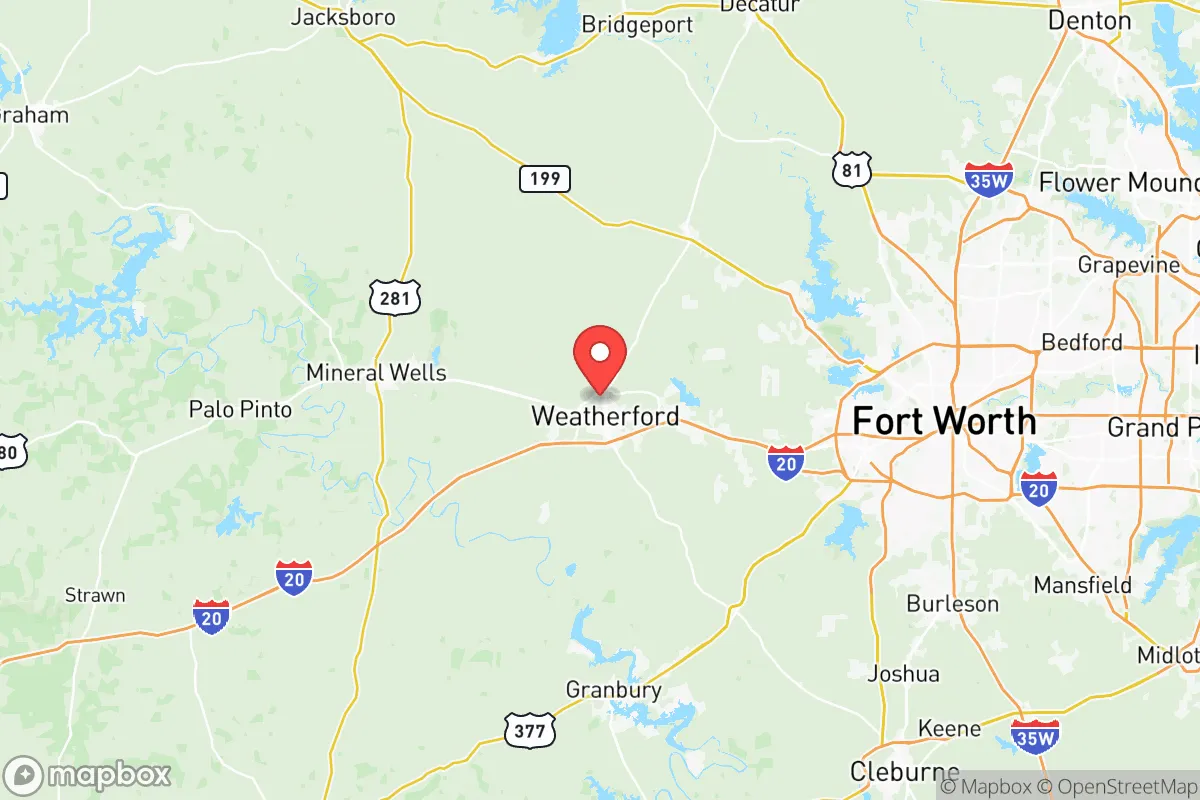
Parker County delivers a level of personal sovereignty that stands out even by Texas standards, with minimal county-level zoning, strong gun rights, and a tax burden that rewards self-reliance. Located just west of the Dallas-Fort Worth metroplex, the county offers a buffer from urban overreach while keeping access to city amenities. For single individuals and parents who prioritize autonomy over convenience, places like Weatherford, Aledo, Springtown, Willow Park, Brock, and Millsap each present distinct trade-offs in regulatory posture, homesteading feasibility, and community culture. The overarching environment here is one where government interference in daily life is the exception, not the rule.
Tax burden and regulatory posture: what it means for your autonomy
Texas has no state income tax, and Parker County keeps its overall tax burden competitive with surrounding rural counties. The effective property tax rate hovers around 2.2% of assessed value, but the county’s appraisal district tends to be more conservative than urban counterparts like Tarrant or Dallas, meaning fewer surprise hikes. Unincorporated areas—common around Brock, Millsap, and Poolville—have no county building codes or zoning ordinances, giving landowners wide latitude to build, store equipment, or run a home-based business without permits. In contrast, Willow Park and Hudson Oaks have municipal zoning that restricts things like livestock, accessory structures, and commercial vehicles. For a prepper or survivalist, the unincorporated parts of the county are where true regulatory freedom lives. The county also maintains a lean government posture: no local income tax, no business inventory tax, and a limited number of county-level fees. This means less of your income is siphoned off to fund programs you may not support.
Self-defense and gun law specifics: constitutional carry and local culture
Texas has been a constitutional carry state since 2021, and Parker County law enforcement openly supports that right. The sheriff’s office has publicly stated it will not enforce any future federal firearms restrictions that violate the Second Amendment, a stance echoed by the county commissioners. Gun ownership is the norm here, not the exception. In Springtown and Aledo, you’ll find multiple gun shops, indoor ranges, and regular concealed carry classes. The county has no local ordinances restricting magazine capacity, firearm storage, or where you can carry beyond state preemption. Open carry of handguns is legal, and the county’s rural character means you can shoot on your own property in most unincorporated areas—provided you follow noise and safety common law. For parents, this translates to a culture where firearm safety education starts early, and children are taught respect for weapons rather than fear of them. The local school districts (Aledo ISD, Brock ISD, Springtown ISD) do not have restrictive policies on firearm-related extracurriculars like shooting sports, which are popular in the area.
Self-reliance and homesteading viability: lot sizes, zoning, and off-grid feasibility
Parker County’s land use regulations make it one of the more homestead-friendly counties in North Texas. In unincorporated areas, there are no minimum lot size requirements for agricultural use, though typical rural parcels range from 1 to 20 acres. Brock and Millsap are prime for off-grid living: many properties already have wells, septic systems, and solar panels. The county does not require connection to municipal water or sewer if you can provide your own. Rainwater collection is legal and encouraged, and there are no restrictions on composting toilets or greywater systems as long as they meet basic health codes. Cool and Poolville offer even more isolation, with larger tracts of land and fewer neighbors. In contrast, Willow Park and Hudson Oaks have HOAs and city ordinances that ban things like outdoor storage of firewood, chickens, or non-operational vehicles. If your goal is to be as self-sufficient as possible—growing food, raising livestock, generating power—stick to the western half of the county. The county also has a robust agricultural exemption that can slash property taxes if you use the land for farming, ranching, or timber production, even on small acreage.
Personal liberties in Parker County: parental rights, medical autonomy, speech, and property protections
Parental rights are strongly protected in Parker County. The school boards in Aledo, Brock, and Springtown have consistently resisted state and federal overreach on curriculum transparency, library content, and medical consent. Parents have broad authority to opt their children out of any instruction they find objectionable, and the county’s conservative majority ensures that school policies reflect community values rather than distant bureaucrats. Medical autonomy is similarly respected: there are no county-level vaccine mandates, and local pharmacies and clinics generally honor conscientious objection. Free speech is robust; the county courthouse square in Weatherford has been a site for political rallies and religious gatherings without permit hassles. Property rights are the bedrock of Parker County’s identity. The county has a strong tradition of defending landowners against eminent domain abuse, and the appraisal district is known for being receptive to homestead exemptions and agricultural valuations. For those concerned about government overreach into personal health choices, educational content, or land use, Parker County offers a legal and cultural buffer that many urban counties have eroded.
Compared to neighboring Tarrant County or the Austin metro area, Parker County’s sovereignty is far less compromised by regulatory creep. The combination of constitutional carry, minimal zoning, low taxes, and a community that values self-reliance makes it a strategic relocation choice for individuals and families who want to live on their own terms. While no place is a perfect fortress against federal overreach, Parker County’s local governance and cultural norms provide one of the strongest bulwarks in North Texas for preserving personal liberty.

* Values derived from national, state, county, city and local statistics and may differ in a specific area. Last updated: 2026-05-14T21:08:03.000Z
Narrative content on this page is AI-generated and may contain mistakes. Verify any details that matter before acting on them.
ReloMaps may earn a commission from affiliate links at no extra cost to you.

