Photo: Wikipedia
Demographics of Parker County
Affluence Level in Parker County
An upper-middle-class area. Household wealth, education levels, and homeownership run ahead of national benchmarks.
People of Parker County
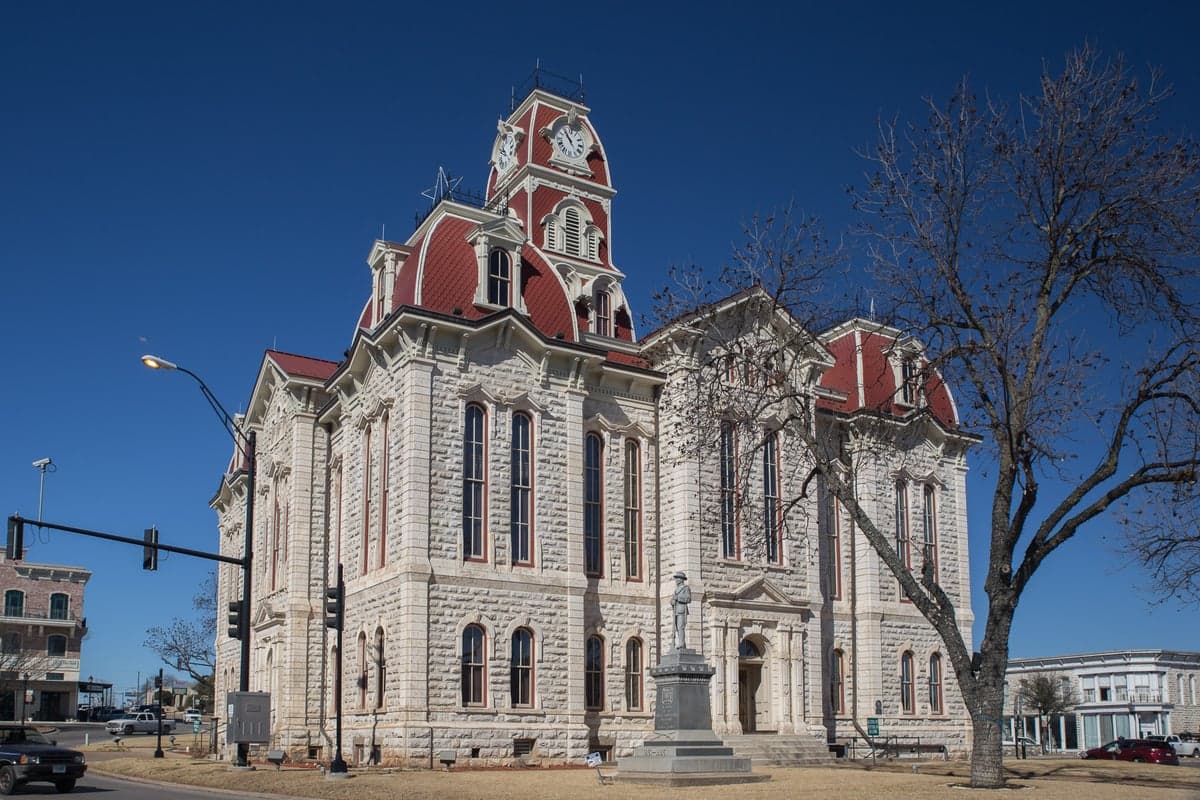
Parker County's 158,079 residents today form a predominantly White (80.0%) and native-born (97.0%) population, with a growing Hispanic minority (14.1%) and small Black (1.4%) and East/Southeast Asian (0.7%) communities. The county's identity remains rooted in its ranching and agricultural heritage, centered on Weatherford, while suburban spillover from Fort Worth has brought new residents to Aledo, Willow Park, and Hudson Oaks. With 31.6% holding college degrees, the population is more educated than its rural past but less diverse than the broader Dallas-Fort Worth metroplex, and its conservative political character is reinforced by low foreign-born rates (3.0%) and a strong tradition of local governance.
Settlement & growth (pre-1960)
Before Anglo-American settlement, the area now known as Parker County was part of the Comanchería, the domain of the Comanche people, who controlled the southern plains through the 18th and early 19th centuries. Spanish and Mexican authorities made few attempts to settle this far north, and the region remained largely untouched by European colonization until Texas independence. The first Anglo settlers arrived in the 1840s and 1850s, primarily from Tennessee, Kentucky, and Missouri, drawn by the promise of cheap land and open range for cattle. These were Scots-Irish and English-stock families who brought a culture of independent farming, livestock raising, and local self-government that still marks the county's character.
The county was formally organized in 1856, with Weatherford established as the seat of government. Early settlers took up cotton farming and cattle ranching along the Brazos River and its tributaries. The arrival of the Texas and Pacific Railway in the 1880s transformed the economy, connecting Weatherford to national markets and spurring the growth of Springtown and Aledo as shipping points for cotton, cattle, and wool. German and Czech immigrants trickled in during the late 19th century, but never in the numbers seen in Central Texas; Parker County remained overwhelmingly Anglo-American. The Dust Bowl and Great Depression of the 1930s brought a small wave of displaced farmers from Oklahoma and the Texas Panhandle, some of whom settled in Brock and Garner, but the county's population grew slowly through the first half of the 20th century, hovering around 20,000 as late as 1950.
Modern era (post-1965)
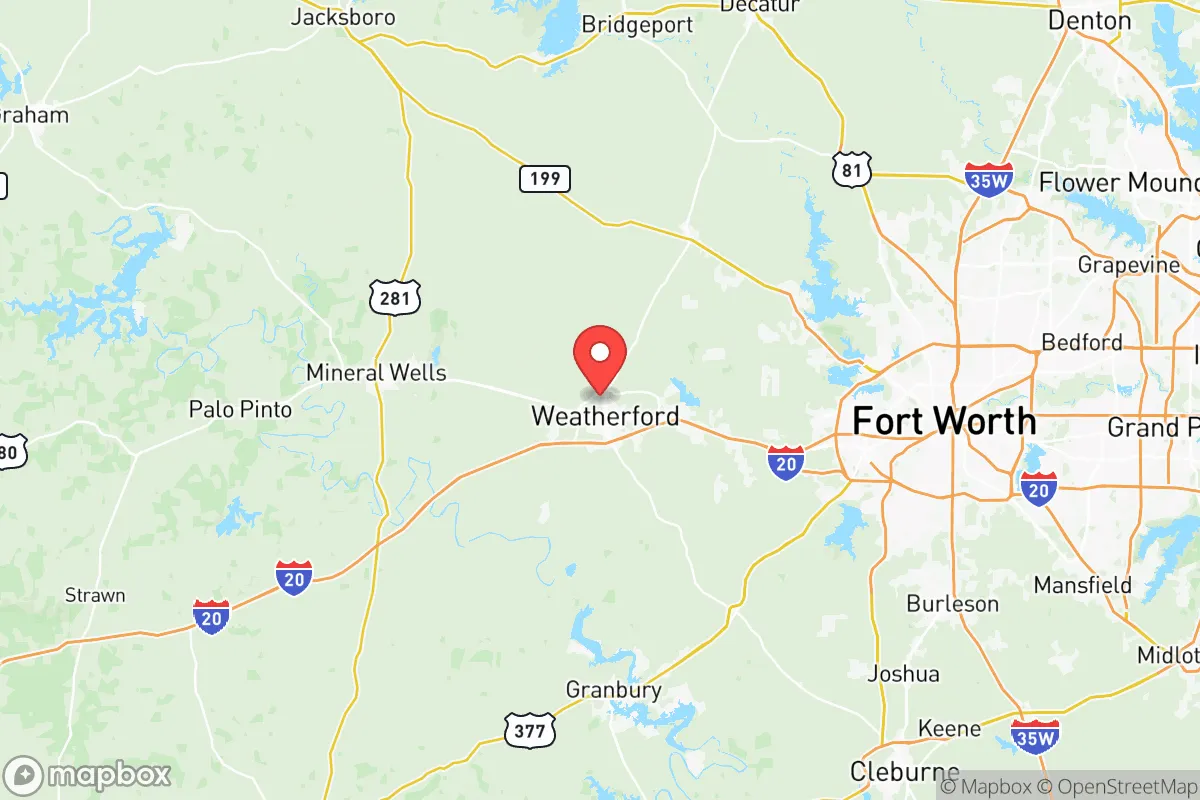
The 1965 Hart-Cellar Act had little direct effect on Parker County's demographics, as the county lacked the industrial or service-sector jobs that drew immigrants to Houston or Dallas. Instead, the post-1965 transformation came from domestic migration: the expansion of the Dallas-Fort Worth metroplex pushed suburban development west along Interstate 20 and U.S. Highway 180. From the 1970s onward, families seeking larger lots, lower taxes, and a slower pace moved from Tarrant County into Willow Park, Hudson Oaks, and the western edges of Azle. This wave was overwhelmingly White and native-born, reinforcing the county's existing cultural and political profile.
The Hispanic population grew steadily but gradually, rising from under 5% in 1990 to 14.1% by the 2020s. This growth came primarily through domestic migration from South Texas and Mexico, with families settling in Weatherford and Springtown for work in construction, landscaping, and the service sector. The Black population remained small (1.4%), concentrated in older neighborhoods of Weatherford, while East/Southeast Asian residents (0.7%) are mostly professionals in healthcare and education, with no distinct ethnic enclave. The Indian-subcontinent population is effectively zero. The foreign-born share (3.0%) is among the lowest in the DFW region, reflecting the county's limited draw for international immigration.
The future
Parker County is likely to continue its gradual suburbanization, with population growth driven by domestic in-migration from Tarrant and Dallas counties. The Hispanic share will probably rise to 18–22% over the next decade, as younger families move outward for affordable housing, but the county will remain predominantly White and native-born. The East/Southeast Asian and Black populations may increase slightly as professionals seek lower-cost alternatives to Fort Worth, but no large ethnic enclaves are expected to form. The county's cultural identity—conservative, ranching-influenced, and community-oriented—is likely to persist, as new arrivals tend to be absorbed into existing social and political structures rather than reshaping them. The college-educated share (31.6%) will grow as more white-collar workers telecommute or commute to Fort Worth, but the county will retain a strong blue-collar and agricultural base in towns like Millsap and Peaster.
For someone moving in now, Parker County offers a stable, low-diversity environment where traditional values and local institutions remain strong, but with increasing access to suburban amenities and DFW job markets. The population is not tribalizing into distinct

* Values derived from national, state, county, city and local statistics and may differ in a specific area. Last updated: 2026-05-14T21:08:03.000Z
Narrative content on this page is AI-generated and may contain mistakes. Verify any details that matter before acting on them.
ReloMaps may earn a commission from affiliate links at no extra cost to you.

