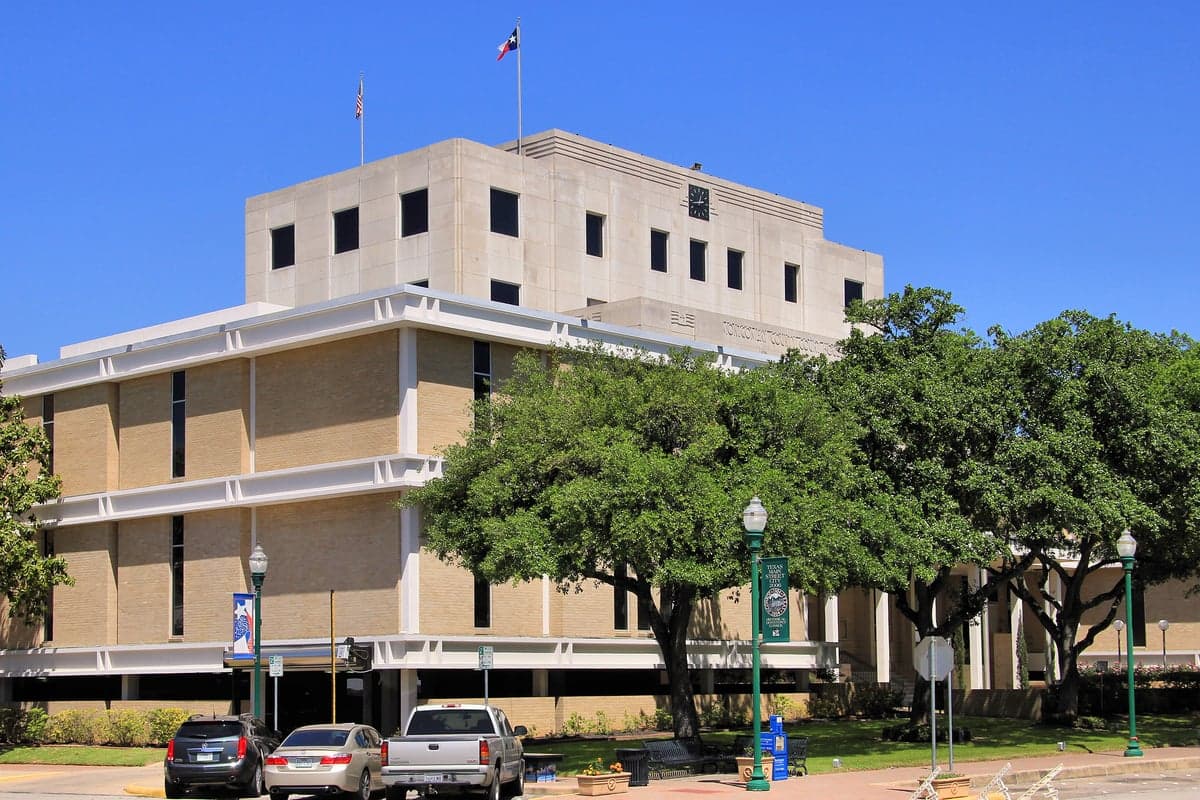
Photo: Wikipedia
Quality of Life in Montgomery County
A livable area that tracks near national norms for affordability, walkability, and neighborhood health.
What does Quality of Life tell us?
Quality of Life measures an area by evaluating factors like cost of living, nearby amenities, country club access, airport proximity, socioeconomic signals and neighborhood character. For large states, this is a general average — quality of life can vary dramatically between metro areas, suburbs, and rural communities within the same state.
What does this tell us?
Quality of Life measures an area by evaluating factors like cost of living, nearby amenities, country club access, airport proximity, socioeconomic signals and neighborhood character. For large states, this is a general average — quality of life can vary dramatically between metro areas, suburbs, and rural communities within the same state.
Cost of Living
21% above national average
107%
The Real Cost of Living in Montgomery County for 2026
| Tier | Individual | Family (4) |
|---|---|---|
| Survival | $23k | $44k |
| Comfortable | $62k | $91k |
| Luxury | $176k+ | $272k+ |
| Elite (Top 5%) | $217k+ | $336k+ |
Quality-of-Life Analysis
Montgomery County north of Houston offers a broad quality-of-life spectrum, from the master-planned urbanism of The Woodlands to the quiet piney-woods rurality of Magnolia and Cut and Shoot. The county draws commuters who work in the Houston metro but want more space, retirees seeking golf-course communities, and families looking for good schools without Harris County tax rates. With a cost-of-living index of 121 (roughly a fifth above the national average), it is not cheap, but the median home value of $317,500 and median rent of $1,471 still undercut comparable suburbs inside the 610 Loop. The average one-way commute clocks just under 32 minutes, a trade-off most residents accept for larger lots and lower crime rates.
Largest town(s) & population centers
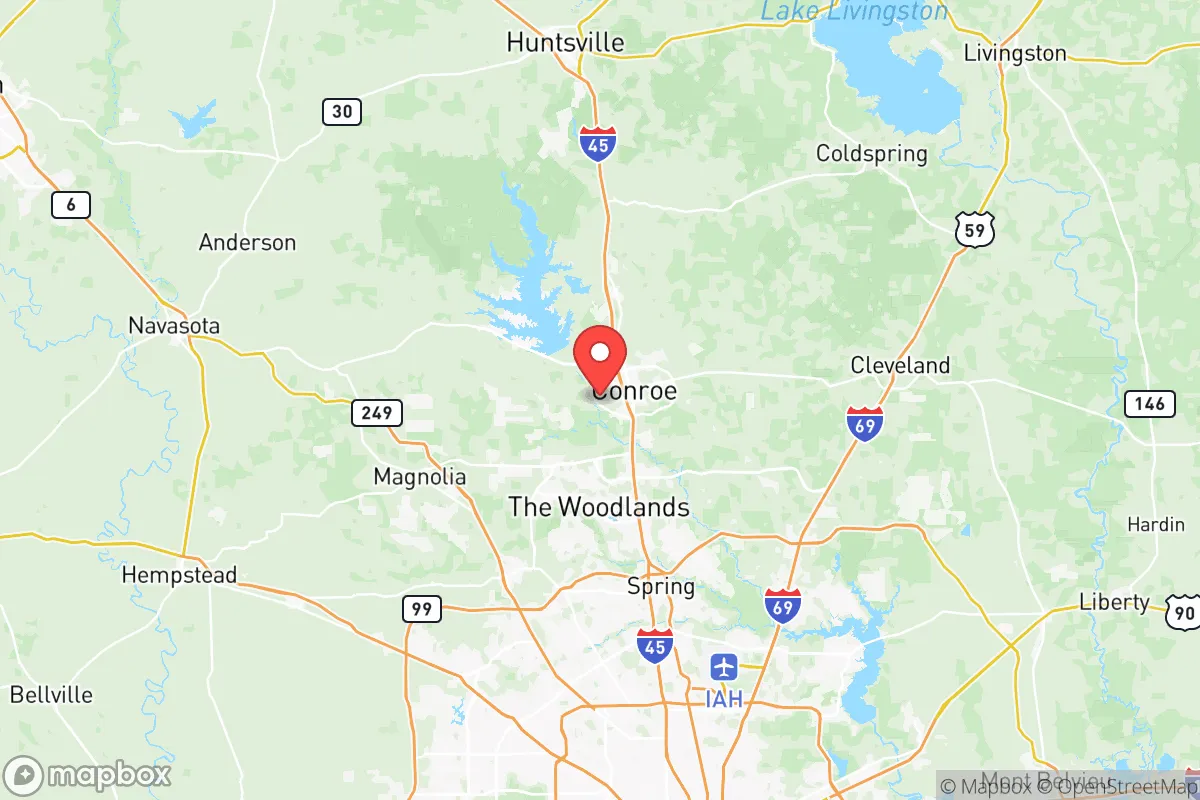
The Woodlands, an unincorporated master-planned community of roughly 120,000 people, is the county’s economic and lifestyle anchor. Daily life here centers on its extensive hike-and-bike trail system, the Cynthia Woods Mitchell Pavilion for outdoor concerts, and high-end retail at Market Street and The Woodlands Mall. The adjacent city of Conroe (population about 100,000) offers a more traditional small-city feel with a historic downtown square, Lake Conroe for boating, and a lower entry price for housing. Conroe’s school district (Conroe ISD) is the same one serving The Woodlands, which keeps property values stable across the metro area. Newer growth corridors like Grand Parkway (SH 99) and Rayford Road continue to blur the line between these two population centers, drawing families who want proximity to The Woodlands’ jobs but more square footage per dollar.
Smaller towns & rural pockets
East of I-45, New Caney and Porter remain more affordable and less developed, with a growing number of subdivisions on former pastureland. Magnolia, northwest of The Woodlands, still has a working rodeo and a downtown that feels like an old Texas town; its outskirts feature five-acre lots and equestrian properties. Montgomery, the county seat (not to be confused with the county itself), is a historic river town on the San Jacinto River with antique shops and a slower pace. Tiny Cut and Shoot (population just over 1,000) and Willis (around 7,000) represent the county’s unincorporated rural roots — unpaved roads, livestock ordinances, and volunteer fire departments remain common. Even in these areas, however, the Houston exurban wave is pushing new construction, gradually replacing ranchland with entry-level homes on half-acre lots.
Cost & lifestyle range
At the high end, established neighborhoods in The Woodlands — particularly the Village of Creekside Park and East Shore — command home prices above $600,000 and offer golf courses, private lake access, and top-rated elementary schools. The lowest cost-of-living enclaves are found in New Caney and Willis, where median home values hover near $250,000 and rental rates dip below $1,200 for a three-bedroom. Apartment complexes along I-45 in Conroe and Shenandoah fill the middle price band, with many one-bedrooms leasing for $1,300. The lifestyle gap is stark: residents in The Woodlands can walk to grocery stores and parks, while those in Cut and Shoot typically need a 15-minute drive to reach a supermarket. Rural areas also face longer emergency-response times and fewer broadband options, though fiber expansion is underway in Magnolia and Montgomery proper.
Families who value short commutes and walkable amenities tend to cluster in The Woodlands or southern Conroe. Retirees and hobby farmers often settle in Magnolia or Montgomery for the tax advantages and larger acreages. Remote workers and tradespeople willing to drive an extra 10 minutes find the most square footage per dollar in New Caney and Willis. Montgomery County’s variety means that nearly any household budget — from $1,200/month renters to lakefront luxury buyers — can find a fit, provided they accept the region’s persistent humidity and reliance on Interstate 45.

Crime in Montgomery County
Crime rates similar to the national median for U.S. locations.
Violent CrimeViolent Crime Analysis
Property CrimeProperty Crime Analysis
Crime Analysis
Montgomery County, TX maintains a violent crime rate of 342.3 per 100,000 residents and a property crime rate of 1,780.9 per 100,000, placing it in a middle tier relative to the greater Houston metro area. Communities such as The Woodlands and Shenandoah consistently report lower crime figures than the county average, while Conroe and Willis experience higher rates, particularly in property and drug-related offenses. The county’s conservative District Attorney, Brett Ligon, aggressively prosecutes violent and repeat offenders, creating a justice environment that contrasts sharply with the progressive policies seen in neighboring Harris County (Houston).
Crime in context
Montgomery County’s violent crime rate of 342.3 per 100,000 is higher than the Texas statewide average of roughly 292 per 100,000 but remains below the national average of approximately 380 per 100,000. Property crime at 1,780.9 per 100,000 exceeds the Texas rate of about 1,650 per 100,000 but falls under the national figure of 2,010 per 100,000. These comparisons matter because the county sits on the northern edge of the Houston metropolitan area, where many residents commute to jobs in Harris County. In Harris County, a progressive district attorney’s office and cash-bail reform have been linked to higher recidivism and a 40% increase in violent crime since 2019, according to local law enforcement reports. Montgomery County’s stricter sentencing and proactive policing, particularly in The Woodlands and Oak Ridge North, help keep overall crime lower than jurisdictions with similar demographics that have adopted lenient justice policies.
What residents experience
Residents in Montgomery County encounter a split reality. In master-planned communities like The Woodlands, violent crime is rare—the area logged only 99 violent offenses in 2023 for a population of 120,000, driven by private security and a dedicated township police force. In Conroe, the county seat, property crime is more common: auto thefts and burglaries occur frequently near I-45 corridors and retail zones. Willis and Magnolia, smaller cities with fewer resources, see spikes in drug-related violence and theft from vehicles. A critical factor is the county’s judicial philosophy: District Attorney Brett Ligon has publicly rejected progressive “defund the police” measures, maintaining mandatory minimum sentences for violent crimes and opposing bail reform. This approach keeps habitual offenders off the streets longer, directly reducing victimization rates. Shenandoah, a small but affluent city, benefits from this deterrence effect and reports property crime rates 30% below the county average.
Neighborhood-level variation is pronounced. The Woodlands and Shenandoah are the safest, with crime rates comparable to the safest suburbs nationally. Conroe’s older neighborhoods near downtown and apartment complexes along SH 242 show higher incident density. Willis and unincorporated areas
* Values derived from national, state, county, city and local statistics and may differ in a specific area. Last updated: 2026-06-17T03:45:16.000Z
Narrative content on this page is AI-generated and may contain mistakes. Verify any details that matter before acting on them.
ReloMaps may earn a commission from affiliate links at no extra cost to you.

