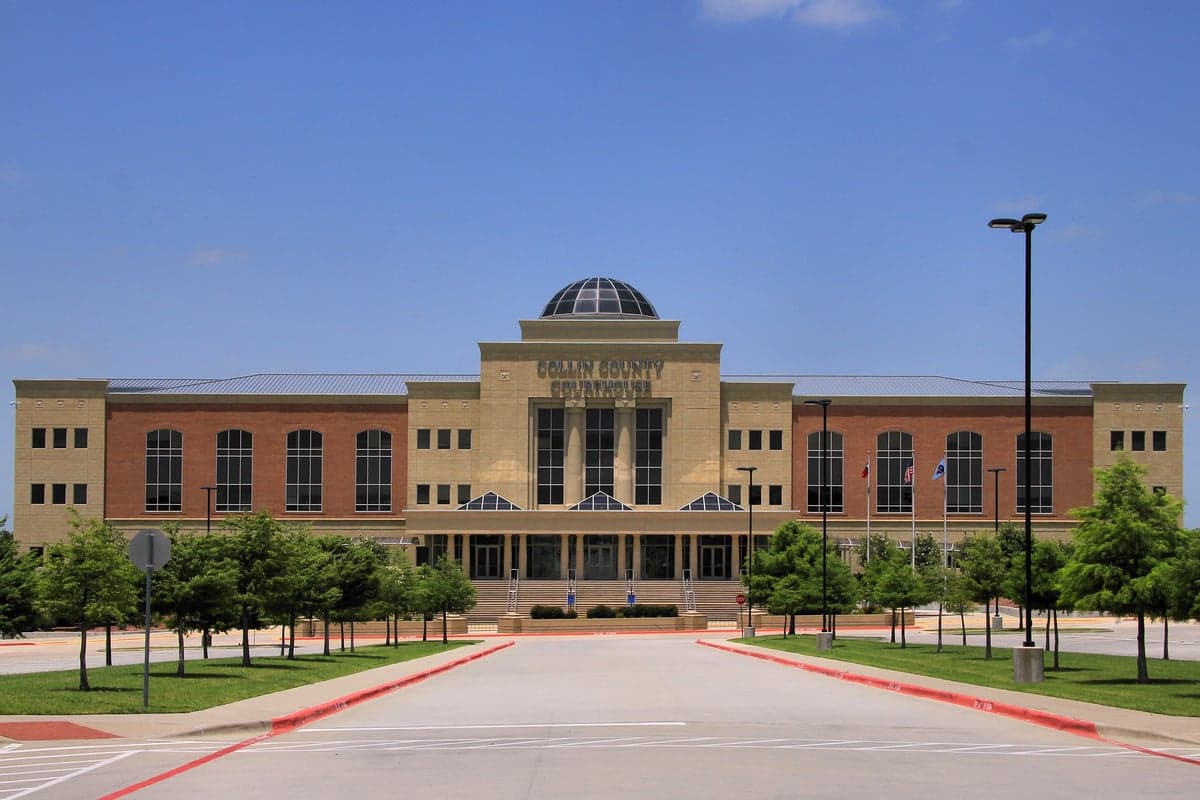
Photo: Wikipedia
Political ClimatePolitical Climate in Collin County
Showing district-level results — no local-only data available.
Local Political AnalysisPolitical Analysis of Collin County
Collin County has long been a stronghold for conservative values, but the political landscape here is shifting faster than many of us who've lived here for decades are comfortable with. The Cook PVI of R+10 still makes it a reliably Republican county, but that's a far cry from the deep red it was 20 years ago, and the trajectory is concerning. You can see the change most clearly in the southern part of the county, where transplants from blue states are flooding in and bringing their politics with them.
How it compares
Compared to the rest of Texas, which sits at R+4, Collin County is still a solid Republican anchor. But the gap is narrowing. The state as a whole is more conservative than the national average, but Collin County's R+10 is being chipped away at by rapid growth. The real story is the internal divide within the county. Frisco and Plano used to be reliably red, but now they're the epicenters of the shift. Plano's precincts near the DART rail line and the Legacy West area are trending blue, with some precincts flipping to Democratic margins of 55-60% in recent elections. McKinney is holding steadier, but even there, the historic downtown area and newer developments near 380 are seeing more purple precincts. Meanwhile, Anna, Melissa, and Princeton in the northern, more rural parts of the county remain deeply conservative, often voting 70-80% Republican. The swing precincts are in the middle—places like Allen and Murphy, where the margins are tightening to 52-48 Republican. It's a tale of two counties now: the urbanized south and the rural north.
What this means for residents
For those of us who value limited government and personal freedoms, the trend is alarming. The influx of progressive voters is already translating into policy pressure. Plano's city council has seen more debates over zoning for affordable housing and "equity" initiatives that sound a lot like government overreach into property rights. In Frisco, there's been a push to expand the city's role in social programs, which feels like a step toward the kind of bureaucratic meddling we moved here to escape. The county commissioners' court, still Republican-controlled, has pushed back on state-level mandates they see as infringing on local control, but the cultural shift is undeniable. School board meetings in Plano and Frisco have become battlegrounds over curriculum transparency and parental rights, with progressive activists pushing for more centralized control over what kids are taught. It's a direct threat to the idea that parents—not the government—should decide how their children are raised.
The biggest distinction between Collin County and the rest of Texas is the speed of this change. While the state as a whole is seeing a slow drift, Collin County is experiencing a rapid transformation. The 2024 election saw several state house districts in the county flip or become competitive, which would have been unthinkable a decade ago. For residents who moved here specifically for the conservative culture and low taxes, the worry is that we're becoming just another suburban sprawl of the Dallas metroplex, losing the very character that made this place special. The fight now is to keep local government from becoming a tool for progressive social engineering, and to preserve the freedom that drew so many of us here in the first place.

State Political ClimatePolitical Climate in Texas
State Political AnalysisPolitical Environment in the State
Texas has been a reliably Republican state for decades, with a Cook PVI of R+4, but the political landscape is far from monolithic. The dominant coalition is a mix of rural conservatives, suburban moderates, and a growing number of transplants from blue states, creating a dynamic where the GOP still holds all statewide offices but the margins have tightened in major metro areas. Over the last 10-20 years, the state has shifted from a solid red stronghold to a competitive battleground, driven by explosive population growth in cities like Austin, Dallas, and Houston, while rural and exurban counties have only deepened their conservative roots.
Urban vs. rural divide
The political map of Texas is a tale of two worlds. The major metros—Harris County (Houston), Dallas County, Travis County (Austin), and Bexar County (San Antonio)—have become Democratic strongholds, with Travis County voting nearly 75% for Biden in 2020. Meanwhile, rural West Texas, the Panhandle, and East Texas are deeply Republican, with counties like Lubbock and Amarillo routinely delivering 80%+ margins. The real action is in the suburbs: Collin County (north of Dallas) and Fort Bend County (southwest of Houston) were once reliably red but have become purple, with Collin County flipping to Trump by only 5 points in 2020 after a 20-point margin in 2016. This urban-rural split means that while the state legislature remains firmly in GOP hands, the governor's race and U.S. Senate seats are now competitive, with Beto O'Rourke coming within 2.6 points of Ted Cruz in 2018.
Policy environment
Texas maintains a low-tax, low-regulation posture that appeals to conservatives. There is no state income tax, property taxes are high but capped at 10% annual growth under Proposition 4 (2023), and the regulatory environment is business-friendly. Education policy has been a flashpoint: the state passed a school voucher-like program in 2023 (HB 3) that allows Education Savings Accounts for special needs students, and the "Parental Bill of Rights" (HB 101) in 2021 gives parents more control over curriculum and library materials. Healthcare is a mixed bag—Texas has not expanded Medicaid, but the state has invested in rural hospital funding and telehealth. Election laws tightened after 2020 with SB 1 (2021), which banned drive-through voting, added ID requirements for mail ballots, and restricted early voting hours. For a conservative, the policy environment is largely favorable, but the influx of new residents from California and New York is slowly shifting the Overton window on issues like marijuana decriminalization and renewable energy mandates.
Trajectory & freedom
On personal liberty, Texas has been a mixed bag. On the positive side for conservatives, the state passed constitutional carry (HB 1927) in 2021, allowing permitless carry of handguns, and the "Heartbeat Act" (SB 8) in 2021 effectively banned abortion after six weeks, with no exceptions for rape or incest. Property rights were strengthened with the "Takings Act" (HB 2730) in 2023, which limits eminent domain abuse. However, there are concerning trends: the state has seen a rise in government overreach during the pandemic, with Governor Abbott's executive orders on mask mandates and business closures drawing criticism from both sides. More recently, the "Drag Ban" (SB 12) in 2023, which restricts drag performances in public, has been challenged in court as a free speech violation. The trajectory is toward more government intervention in social issues, which some conservatives see as a double-edged sword—protecting traditional values but expanding state power. The real freedom concern is the growing influence of corporate ESG policies, which are pushing green energy mandates in cities like Austin and Dallas, potentially raising energy costs and limiting property rights.
Civil unrest & political movements
Texas has seen its share of political flashpoints. The 2020 Black Lives Matter protests in Austin and Houston were large and sometimes violent, leading to property damage and a police funding debate. On the right, the "Trump Train" convoys and "Stop the Steal" rallies were prominent in 2020-2021, particularly in Dallas and San Antonio. Immigration politics are a constant: the state launched "Operation Lone Star" in 2021, deploying state troopers and National Guard to the border, and busing migrants to sanctuary cities like New York and Chicago. This has created a visible tension in border towns like El Paso, where local officials have clashed with the state over enforcement. Secession rhetoric is mostly fringe, but the "Texit" movement has gained some traction online, with a few county GOP conventions passing resolutions in 2022. Election integrity remains a hot-button issue, with the 2022 primary seeing high turnout and few problems, but lingering distrust from 2020. A new resident will notice the heavy police presence at political events and the polarized media landscape, with local news often taking sides.
Projection
Over the next 5-10 years, Texas is likely to become more competitive at the statewide level, but the legislature will remain Republican due to gerrymandering. The key demographic shift is the influx of over 1,000 new residents per day, many from California and the Northeast, who tend to be more moderate or liberal on social issues but still value low taxes. This will push the suburbs of Dallas, Houston, and Austin further left, while rural areas will stay deep red. The state's growing Hispanic population is not voting as a monolith—South Texas counties like Hidalgo and Cameron shifted right in 2020, with Trump gaining 10+ points in some precincts. Expect continued fights over school choice, property tax reform, and energy policy. The biggest wildcard is the Supreme Court's ruling on the Texas abortion law and the ongoing battle over the state's power grid, which could erode trust in the state government. For a conservative moving in now, the next decade will likely see a state that remains broadly conservative on fiscal issues but becomes more polarized on social and cultural matters, with the GOP needing to adapt to a more diverse electorate.
For a new resident, the bottom line is that Texas offers a low-tax, business-friendly environment with strong protections for gun rights and parental control, but you should expect the political climate to become more contentious as the state's demographics shift. The urban-rural divide will only widen, so choose your county carefully—Collin County or Montgomery County offer a more conservative suburban experience, while Travis County will feel like a blue island. If you value personal freedom and limited government, Texas is still one of the best bets in the country, but you'll need to stay engaged in local politics to keep it that way. The state is not immune to the national trends of polarization and government overreach, but for now, the balance of power still favors those who want to be left alone to live their lives.
* Values derived from national, state, county, city and local statistics and may differ in a specific area. Last updated: 2026-05-11T23:51:11.000Z
Narrative content on this page is AI-generated and may contain mistakes. Verify any details that matter before acting on them.
ReloMaps may earn a commission from affiliate links at no extra cost to you.

