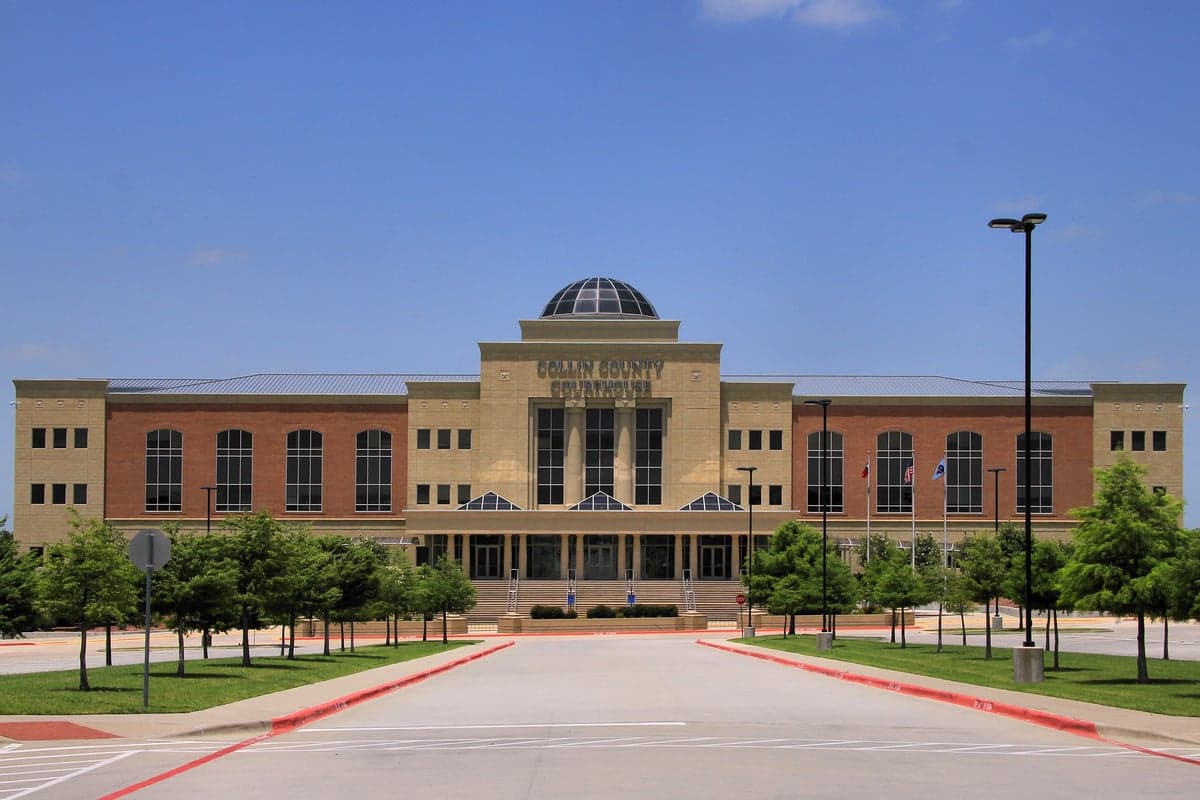
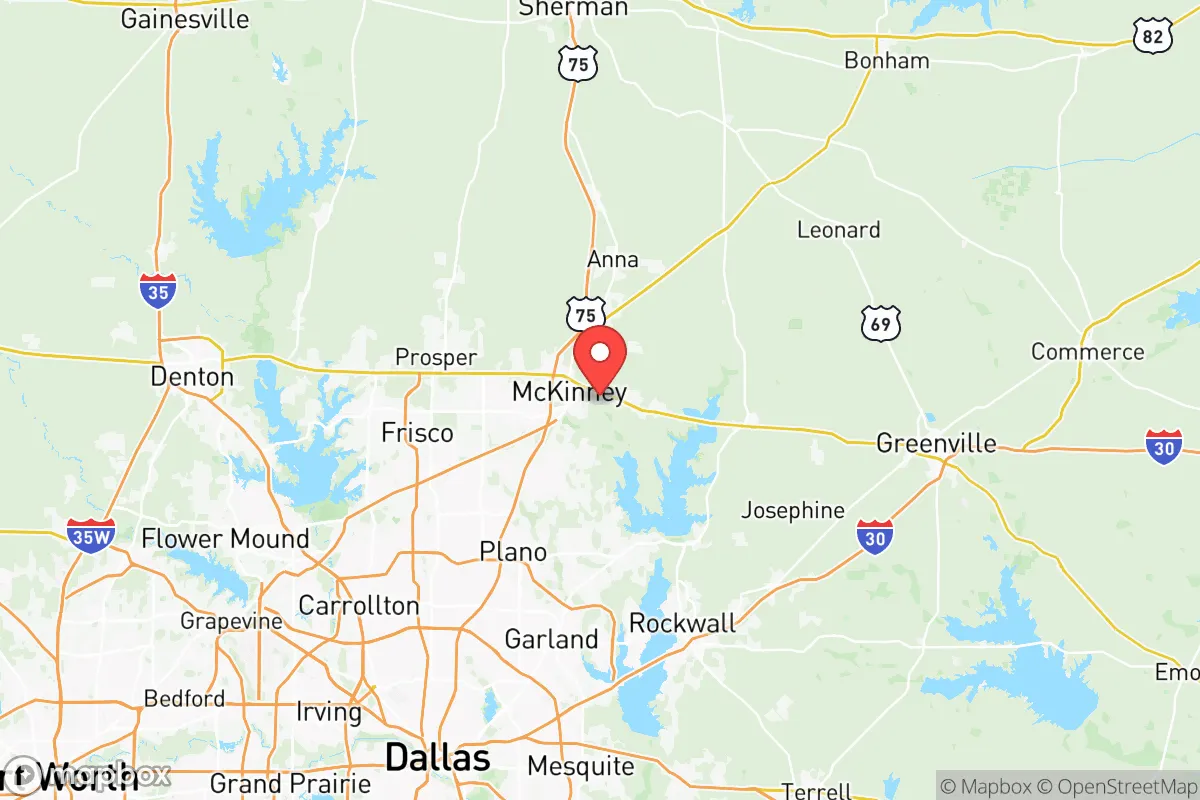
Photo: Wikipedia
Demographics of Collin County
Affluence Level in Collin County
An upper-middle-class area. Household wealth, education levels, and homeownership run ahead of national benchmarks.
People of Collin County
Collin County, Texas, is home to over 1.1 million residents, making it one of the fastest-growing and most affluent counties in the United States. Its population is notably diverse, with a White non-Hispanic plurality of 51.3%, a significant Indian-subcontinent community at 10.4%, a Hispanic population of 16.0%, a Black population of 10.6%, and an East/Southeast Asian population of 7.2%. The county is defined by its high educational attainment—54.9% of adults hold a college degree—and a distinctive blend of conservative-leaning politics, corporate-driven suburban growth, and a history of intentional community planning.
Settlement & growth (pre-1960)
Before European settlement, the area now known as Collin County was inhabited by the Caddo and Comanche nations, who used the prairies and river bottoms for hunting and seasonal camps. Spanish and French explorers passed through in the 17th and 18th centuries, but no permanent colonial settlements were established. The region remained a sparsely populated frontier until after Texas joined the United States in 1845.
Anglo-American settlement began in earnest in the 1840s and 1850s, driven by land grants from the Republic of Texas and later the state. The earliest permanent settlers were primarily Scots-Irish and English families migrating from the Upper South—Tennessee, Kentucky, and Missouri—seeking cheap, fertile blackland prairie for cotton farming. They founded the county's first towns: McKinney (established 1848 as the county seat), Plano (settled 1844, incorporated 1873), and Allen (settled 1870s). These communities were agrarian, with cotton as the cash crop, and relied on enslaved African American labor until Emancipation.
After the Civil War, freedmen and their descendants formed rural settlements and small communities within the county, such as the St. Paul community near McKinney and the Frisco area. These were largely self-sufficient farming and sharecropping enclaves. The arrival of the Houston and Texas Central Railway in the 1870s spurred the growth of Frisco (originally called Emerson) and Wylie (founded 1880), turning them into cotton-ginning and shipping hubs. By 1900, Collin County was overwhelmingly rural, White, and native-born, with a Black population of about 15% and virtually no foreign-born residents.
The early 20th century brought little demographic change. The Dust Bowl of the 1930s drove some Okies and Arkies into the county, but they were culturally similar to the existing population. Cotton farming declined after World War II, and the county's population stagnated at around 41,000 in 1950. The pre-1960 era ended with Collin County as a quiet, conservative, agricultural backwater—a character that would soon be completely transformed.
Modern era (post-1965)
The 1965 Hart-Cellar Act fundamentally reshaped Collin County, but the immediate catalyst was corporate relocation. In the 1970s and 1980s, domestic migration from the Rust Belt and California flooded into North Texas, drawn by Texas's right-to-work laws, low taxes, and booming economy. Plano became the epicenter, growing from 17,000 in 1970 to over 250,000 by 2020. The arrival of corporate headquarters—including J.C. Penney (moved from New York in 1987), Frito-Lay (PepsiCo), and later Toyota North America (moved from California in 2017)—created a massive demand for skilled white-collar workers.
This corporate-driven growth attracted a wave of Indian-subcontinent professionals, particularly engineers and IT specialists. By 2020, the Indian community had become the largest non-White group in the county at 10.4%, with a heavy concentration in Plano and Frisco. These areas feature Indian grocery stores, temples (such as the DFW Hindu Temple in Plano), and cultural festivals. The East and Southeast Asian community (7.2%)—primarily Chinese, Korean, and Vietnamese—also grew substantially, settling in Plano and Allen, where Asian-themed shopping centers and restaurants are common.
The Hispanic population (16.0%) grew steadily through both immigration and domestic migration, with concentrations in McKinney and Princeton. Many work in construction, landscaping, and service industries supporting the county's rapid development. The Black population (10.6%) has grown as well, driven by middle-class families moving from Dallas and other parts of Texas, with notable clusters in Allen and McKinney. The White non-Hispanic share has fallen from over 80% in 1990 to 51.3% today, reflecting the county's transformation into a majority-minority suburb.
Suburbanization has been deliberate and master-planned. Towns like Frisco and Celina have used zoning and tax incentives to attract families and businesses, creating a landscape of large single-family homes, top-rated schools, and office parks. The county's foreign-born population stands at 11.3%, lower than many urban counties, but the immigrant communities are highly educated and economically integrated.
The future
Collin County is projected to continue growing rapidly, with estimates reaching 1.5 million by 2035. The population is tribalizing into distinct enclaves rather than homogenizing. Indian-subcontinent communities are solidifying in Plano and Frisco, East/Southeast Asian communities in Plano and Allen, and Hispanic communities in McKinney and Princeton. White families remain the plurality but are dispersing into newer exurban developments in Celina, Anna, and Melissa, where housing is newer and more affordable.
Immigrant communities are not plateauing; they are growing through both continued immigration and natural increase. The Indian and East/Southeast Asian populations are likely to increase their shares, driven by ongoing tech-sector hiring and family reunification. The Hispanic share is also rising steadily. However, assimilation is occurring: second-generation Indian and Asian residents are highly integrated into the county's schools and economy, and intermarriage rates are rising.
In-migration from California and the Northeast is accelerating, bringing more politically moderate and liberal residents, but the county's overall character remains conservative. The cultural identity is shifting from a traditional White Southern suburb to a multi-ethnic, high-achieving, corporate-oriented community where education and economic success are the primary shared values.
For someone moving in now, Collin County offers a stable, prosperous, and increasingly diverse environment. It is becoming a place where distinct ethnic communities coexist with a shared focus on family, education, and economic opportunity, rather than a melting pot. The county's future is one of continued growth, managed suburban expansion, and a population that is both more diverse and more stratified by education and income than ever before.

* Values derived from national, state, county, city and local statistics and may differ in a specific area. Last updated: 2026-05-11T23:51:11.000Z
Narrative content on this page is AI-generated and may contain mistakes. Verify any details that matter before acting on them.
ReloMaps may earn a commission from affiliate links at no extra cost to you.

