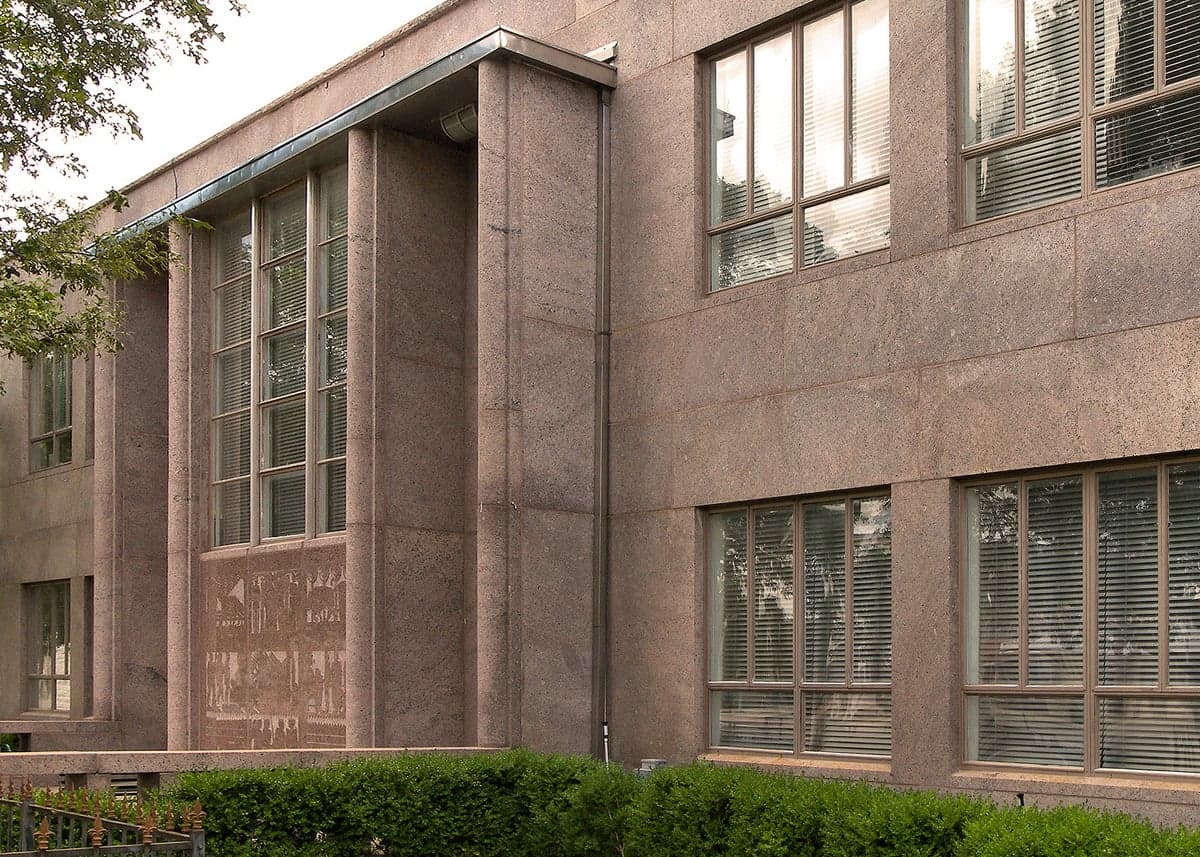
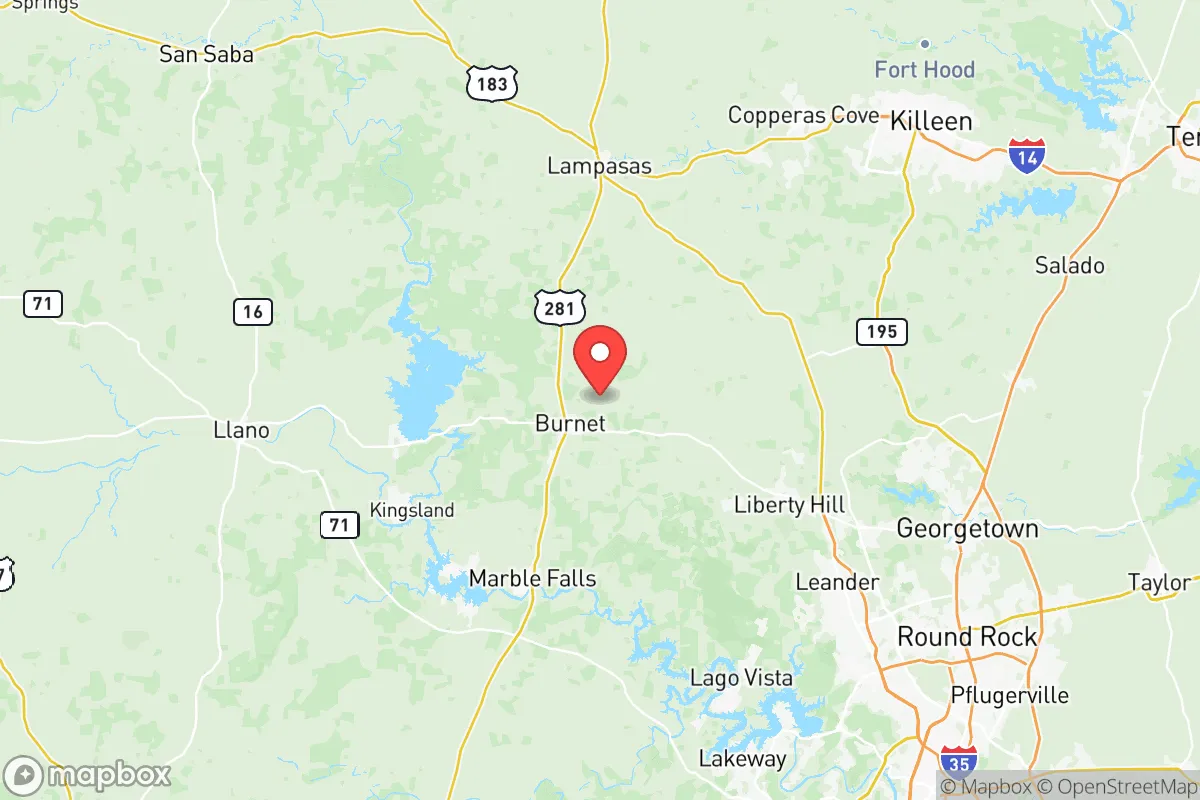
Photo: Wikipedia
Demographics of Burnet County
Affluence Level in Burnet County
An upper-middle-class area. Household wealth, education levels, and homeownership run ahead of national benchmarks.
People of Burnet County
Burnet County, Texas, is home to 51,064 residents who maintain a distinctly rural and conservative character, with a population that is 71.3% White and 23.1% Hispanic. The county's identity is shaped by its Highland Lakes geography and a history of ranching, mining, and small-town commerce, creating a community that values self-reliance and traditional Texas culture. Unlike the booming suburbs of nearby Austin or Round Rock, Burnet County retains a slower pace of life, with its population spread across small towns like Burnet, Marble Falls, and Bertram. The county's relatively low foreign-born share of 4.7% and college attainment rate of 28.7% reflect a population that is predominantly native-born and working-class, with a growing Hispanic presence reshaping the cultural landscape.
Settlement & growth (pre-1960)
The human history of Burnet County begins with the Tonkawa and Lipan Apache peoples, who inhabited the region for centuries before European contact. The Comanche also claimed the area as part of their vast hunting grounds, and their fierce resistance delayed permanent Anglo-American settlement until after the Texas Revolution. Spanish and Mexican authorities made little effort to colonize this rugged Hill Country terrain, leaving the area largely untouched by European settlement until the Republic of Texas era.
Anglo-American settlement began in earnest after Texas statehood in 1845, with the Texas legislature creating Burnet County in 1852 from parts of Travis, Bell, and Williamson counties. The earliest settlers were primarily Scots-Irish and English families from the southern United States, drawn by cheap land grants and the promise of open range for cattle ranching. These pioneers established the county seat of Burnet in 1852, followed by the founding of Marble Falls in 1887 as a railroad and granite quarrying hub. The arrival of the Austin and Northwestern Railroad in the 1880s transformed the local economy, enabling the export of granite from quarries near Granite Shoals and Marble Falls, which supplied stone for the Texas State Capitol building in Austin.
German immigrants, though less numerous than in neighboring counties like Gillespie or Comal, established small farming communities in the northern part of the county, particularly around Bertram and Naruna. These German settlers brought with them a tradition of stone masonry and dry-land farming that proved well-suited to the rocky Hill Country soil. The post-Civil War period saw the arrival of freed African Americans, who established small rural communities and worked as sharecroppers and ranch hands; the Black population peaked at around 12% in the 1880s before declining through the 20th century due to out-migration to urban areas. The construction of the Buchanan Dam (completed 1937) and Inks Dam (1938) by the Lower Colorado River Authority created the Highland Lakes, bringing hydroelectric power and flood control that spurred modest population growth. The Dust Bowl and Great Depression drove some Okies and Arkies into the county during the 1930s, though Burnet County remained sparsely populated, with fewer than 10,000 residents as late as 1950.
Modern era (post-1965)
The post-1965 period brought gradual demographic change to Burnet County, driven primarily by domestic migration rather than foreign immigration. The 1965 Hart-Cellar Act had limited direct impact here, as the county's foreign-born share remains low at 4.7%, but the broader trend of Sun Belt migration reshaped the population. The completion of the Lake Travis reservoir and the expansion of Texas State Highway 71 in the 1970s made the southern part of the county more accessible to Austin commuters, triggering suburban-style development around Marble Falls and Horseshoe Bay. Horseshoe Bay, incorporated in 1975, was developed as a master-planned resort community for affluent retirees and second-home owners, attracting newcomers from the Midwest and Northeast who were drawn to the lake lifestyle and lower cost of living.
The Hispanic population grew steadily from the 1980s onward, rising from roughly 8% in 1990 to 23.1% by the 2020s. This growth came primarily from Mexican-American families moving from the Rio Grande Valley and South Texas for construction, hospitality, and service-industry jobs tied to the region's tourism economy. Hispanic residents are concentrated in Marble Falls and Burnet, where they form visible communities centered on Catholic parishes and Spanish-language services. The Black population, now just 1.2%, has remained stable but small, with most African American residents living in Burnet and Bertram. East and Southeast Asian communities (0.4%) and Indian-subcontinent residents (0.3%) are present in very small numbers, typically professionals working in healthcare or education in Marble Falls. The county's college-educated share of 28.7% lags behind the Texas average of roughly 32%, reflecting the area's economic base in construction, retail, and tourism rather than knowledge-industry employment.
The future
Burnet County is projected to become more diverse over the next two decades, driven by continued Hispanic population growth and limited but steady domestic in-migration from the Austin metro area. The Hispanic share is expected to approach 30% by 2040, as younger Hispanic families have higher birth rates and as service-sector employment continues to attract workers from South Texas. The White population, while still the majority, will likely decline as a share of the total, though the county will remain predominantly non-Hispanic White compared to the state average. The small Black and Asian populations are expected to grow modestly as Austin's high housing costs push some minority professionals into more affordable exurban areas like Marble Falls and Cottonwood Shores.
The most significant demographic trend is the gradual suburbanization of the county's southern tier, particularly along the US 281 corridor between Marble Falls and the Travis County line. New housing developments in Granite Shoals and Meadowlakes are attracting a mix of retirees, remote workers, and families priced out of Austin, bringing a more politically moderate and educationally diverse population. This influx is slowly shifting the county's cultural identity from purely rural ranching to a hybrid of lake-resort living and exurban commuter life. The county's political character remains deeply conservative — Burnet County voted +24 points Republican in the 2024 presidential election — but the newcomers from Austin may gradually moderate that margin over time.
For someone moving to Burnet County now, the area offers a stable, family-oriented community with strong traditional values, affordable housing relative to the Austin metro, and access to outdoor recreation on the Highland Lakes. The population is becoming more diverse and slightly more educated, but the county's essential character as a conservative, rural, and predominantly White community is likely to persist through the next decade. New residents should expect a place where neighborly connections matter, where church attendance is high, and where the pace of life remains distinctly slower than the booming suburbs to the south.

* Values derived from national, state, county, city and local statistics and may differ in a specific area. Last updated: 2026-06-23T20:04:54.000Z
Narrative content on this page is AI-generated and may contain mistakes. Verify any details that matter before acting on them.
ReloMaps may earn a commission from affiliate links at no extra cost to you.

