Photo: Wikipedia
Demographics of Burleson County
Affluence Level in Burleson County
A middle-class area roughly in line with national averages across income, home values, education, and employment.
People of Burleson County
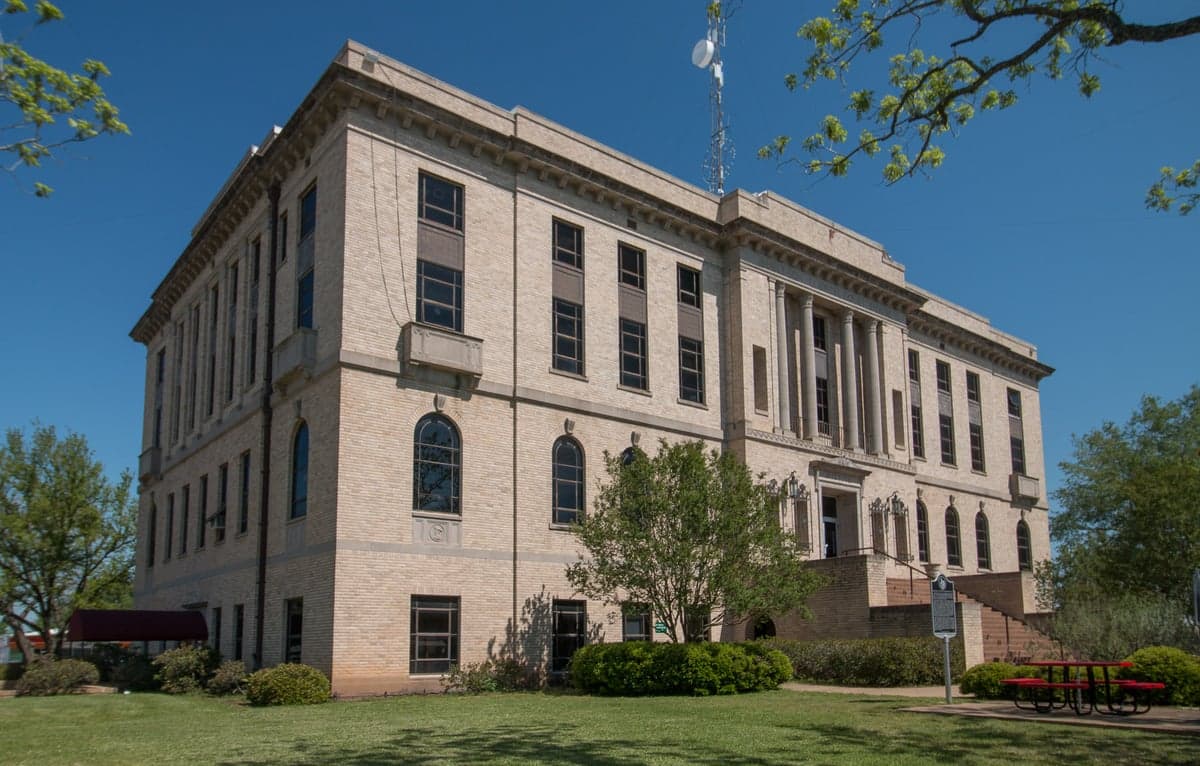
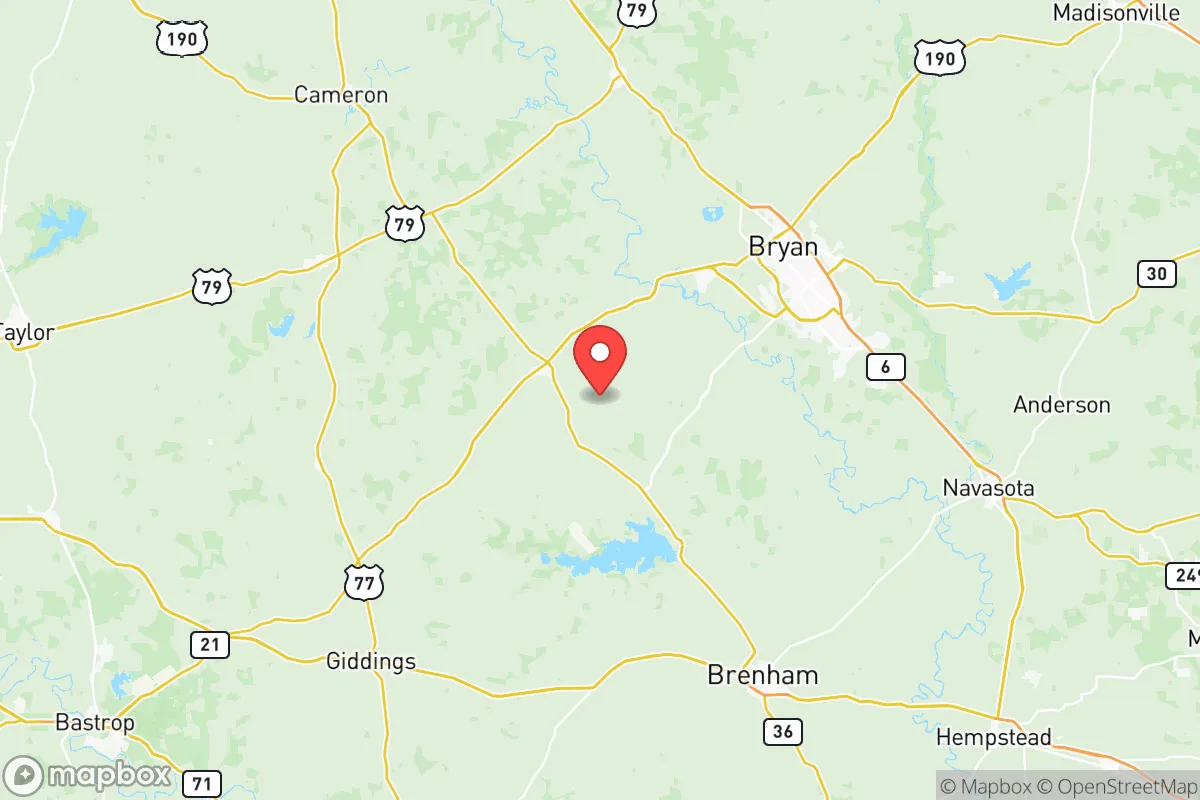
Burleson County, Texas, is a rural community of 18,327 residents where a predominantly White population (63.0%) is joined by a significant Hispanic (21.8%) and Black (11.6%) presence, creating a demographic profile that reflects its deep agricultural roots and slow, steady growth. The county’s identity is shaped by its small towns—Caldwell, Snook, and Somerville—where family ties to the land and local churches remain central. With a foreign-born population of 5.0% and a college-educated rate of 23.1%, Burleson County is less diverse and less educated than the state average, but it offers a tight-knit, conservative community for those seeking a quieter, land-based lifestyle.
Settlement & growth (pre-1960)
Before Anglo-American settlement, the area now known as Burleson County was home to the Tonkawa and Bidai Native American nations, who lived along the Brazos River and its tributaries. Spanish and Mexican land grants in the early 1800s brought a few settlers, but the region remained sparsely populated until the Republic of Texas era. The county was officially formed in 1846 from parts of Milam and Washington counties, named after Edward Burleson, a Texas Revolution general and later vice president of the Republic.
The first major wave of settlers were Anglo-Americans from the U.S. South, primarily from Tennessee, Kentucky, and the Deep South, who arrived in the 1840s and 1850s. They were drawn by cheap, fertile land along the Brazos River for cotton and corn farming. These early settlers established the county seat of Caldwell in 1840 and the smaller community of Snook in the 1870s. Many were slaveholders, and by 1860, enslaved African Americans made up roughly 35% of the county’s population, working the cotton plantations that dominated the economy.
After the Civil War and emancipation, freed African Americans remained in the county, forming distinct communities like the Black settlement around the St. John Baptist Church in Caldwell and the rural enclave of Deanville. They worked as sharecroppers and tenant farmers, a system that persisted well into the 20th century. A smaller wave of German immigrants arrived in the 1870s and 1880s, settling primarily in the Somerville area and the Lyons community, where they established farms and small businesses. The Houston and Texas Central Railroad reached Caldwell in 1860 and Somerville in 1870, spurring growth and connecting the county’s cotton and livestock to wider markets.
The early 20th century saw little new immigration. The county’s population peaked at around 25,000 in 1910, then declined as agricultural mechanization reduced the need for farm labor. The Dust Bowl and Great Depression of the 1930s prompted some out-migration, but the county remained overwhelmingly rural and agricultural. By 1960, the population had fallen to about 15,000, with a demographic makeup that was roughly 65% White, 25% Black, and 10% Hispanic—the latter mostly descendants of Mexican laborers who had worked on railroads and in cotton fields since the 1910s.
Modern era (post-1965)
The 1965 Hart-Cellar Act had a minimal direct impact on Burleson County. Unlike urban Texas, the county did not see significant new immigration from Asia, Africa, or Latin America. The foreign-born population today stands at just 5.0%, with most being Hispanic immigrants from Mexico who arrived in the 1980s and 1990s to work in agriculture and construction. These families have concentrated in Caldwell and Snook, where they form stable, Spanish-speaking communities within the broader Hispanic population.
The most significant demographic shift since 1965 has been the decline of the Black population. In 1970, African Americans made up about 22% of the county; today, they are 11.6%. This out-migration, driven by the loss of agricultural jobs and the pull of urban centers like Houston and Dallas, has left the Black community concentrated in Caldwell and the rural area around Cook’s Point. The White population has also declined slightly in share, from about 70% in 1970 to 63.0% today, as younger Whites have left for college and careers elsewhere.
The Hispanic population has grown steadily, from roughly 8% in 1970 to 21.8% today. This growth is almost entirely domestic, driven by births within the existing Hispanic community rather than new immigration. The county’s East/Southeast Asian population is negligible at 0.3%, and there is no measurable Indian-subcontinent population. Suburbanization has largely bypassed Burleson County; it remains a rural, agricultural area, with no major subdivisions or master-planned communities. The construction of Lake Somerville in the 1960s brought some recreational development and second homes, but not a large permanent population shift.
The future
Burleson County is projected to grow slowly, reaching roughly 20,000 residents by 2040. The population is becoming more Hispanic, as the White and Black populations age and younger families are disproportionately Hispanic. The county’s cultural identity—rooted in Southern Baptist and Methodist traditions, hunting, and agriculture—is gradually incorporating Hispanic influences, particularly in Caldwell and Snook, where bilingualism is increasing. The Black community will likely continue to shrink in share, while the East/Southeast Asian and Indian populations are expected to remain negligible.
The county is not becoming more diverse in the urban sense; rather, it is transitioning from a biracial (White-Black) rural society to a triracial (White-Hispanic-Black) one, with Hispanics as the fastest-growing group. The college-educated share of 23.1% is below the state average of 31%, and this is unlikely to rise significantly unless the county attracts remote workers or retirees—a possibility given its proximity to College Station (home to Texas A&M University) and the growing popularity of rural living. The political character remains deeply conservative, with the county voting Republican by wide margins in recent elections.
For someone moving in now, Burleson County offers a stable, slow-paced rural life where community ties are strong and land is still affordable. The demographic changes are gradual, not disruptive, and the county’s identity as a place of family farms, churches, and outdoor recreation is likely to persist. New residents will find a welcoming but insular community where knowing your neighbors and participating in local events—like the Caldwell Kolache Festival—is the norm.

* Values derived from national, state, county, city and local statistics and may differ in a specific area. Last updated: 2026-11-07T20:13:15.000Z
Narrative content on this page is AI-generated and may contain mistakes. Verify any details that matter before acting on them.
ReloMaps may earn a commission from affiliate links at no extra cost to you.

