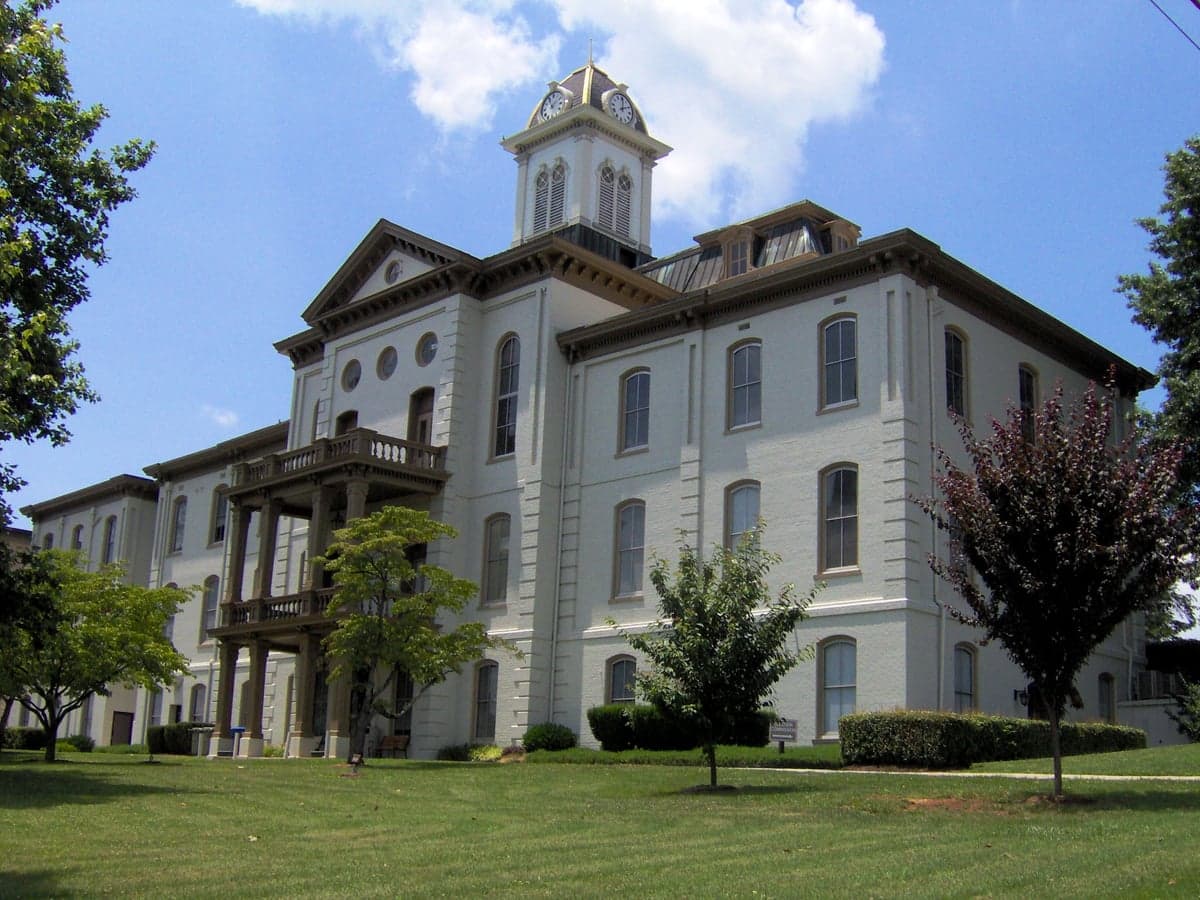
Photo: Wikipedia
Political ClimatePolitical Climate in Hamblen County
Showing district-level results — no local-only data available.
Local Political AnalysisPolitical Analysis of Hamblen County
Hamblen County, Tennessee, is about as solidly red as they come, with a Cook PVI of R+29 that puts it in the top tier of conservative counties in the state. That means Republicans typically win by about 29 points more than the national average here, and it’s been that way for as long as most folks can remember. The county seat, Morristown, is the main population center, and while you’ll find a few more moderate pockets near the downtown area and around the college, the surrounding communities like Russellville, Whitesburg, and Lowland are deeply conservative. The trajectory has been steady—if anything, the area has gotten redder over the last decade as national trends push rural and exurban voters further right.
How it compares
To put it in perspective, Tennessee as a whole is already a strong red state with a Cook PVI of R+13, but Hamblen County is more than twice as conservative as the state average. That gap is significant. While places like Nashville and Memphis pull the state’s numbers toward the center, Hamblen County is part of the rural eastern Tennessee backbone that keeps the state reliably red. In Morristown, you’ll see some precincts that swing a bit—like those near the downtown historic district or around Walters State Community College, where younger voters and transplants sometimes lean more moderate or even blue. But drive ten minutes out to the unincorporated areas like Alpha or the neighborhoods along Highway 11E, and you’re looking at precincts that routinely go 80% Republican or higher. The county commission and school board are overwhelmingly conservative, and local elections often turn on who can claim the strongest record on Second Amendment rights and limited government.
What this means for residents
For folks living here, the political climate means a government that generally stays out of your business. Property taxes are low, zoning is minimal, and there’s little appetite for the kind of progressive social policies you see in bigger cities. That said, it’s not a free-for-all—there’s a strong sense of community expectations, and most people prefer to keep things traditional. The school board has been a battleground in recent years, with debates over curriculum transparency and parental rights drawing big crowds. If you’re worried about government overreach, Hamblen County is a place where local leaders are usually on your side, pushing back against state and federal mandates. But keep an eye on the long-term: as Morristown grows and attracts more industry and remote workers, there’s a slow trickle of new residents who bring different ideas. So far, the county’s conservative DNA has held firm, but it’s worth watching how the next few elections shake out, especially in the more suburban precincts near the interstate.
Culturally, Hamblen County is a place where church attendance is high, hunting and fishing are part of daily life, and the local economy leans on manufacturing and agriculture. You won’t find many progressive policy experiments here—no sanctuary city talk, no defunding police movements, and the local government has been vocal about protecting gun rights and religious freedom. The biggest policy distinction from the state at large is the county’s resistance to any form of tax increases or new regulations, even when the state pushes for them. For example, Hamblen was one of the counties that pushed back hardest against statewide mask mandates during the pandemic, and local leaders have consistently opposed any expansion of Medicaid or state-run health programs that they see as federal overreach. If you value personal freedom and a government that keeps its hands off your life, this is a place that still feels like the old Tennessee—but you’d better be ready for the trade-offs, like fewer services and a slower pace of change.

State Political ClimatePolitical Climate in Tennessee
State Political AnalysisPolitical Environment in the State
Tennessee is a deeply red state with a Cook PVI of R+13, meaning it votes about 13 points more Republican than the national average in presidential elections. The dominant coalition is a mix of rural conservatives, suburban families, and a growing number of transplants from blue states who are fleeing high taxes and progressive policies. Over the last 10-20 years, the state has shifted decisively rightward, with the GOP now holding supermajorities in both chambers of the legislature and every statewide office, while Democrats have been reduced to a rump presence in Memphis and Nashville.
Urban vs. rural divide
The political map of Tennessee is starkly divided. The three major metros—Nashville, Memphis, and Chattanooga—are blue islands in a sea of red. Nashville, the state capital and a booming tech and healthcare hub, has become increasingly progressive, with a Democratic mayor and city council that have pushed for sanctuary city policies and higher taxes. Memphis, anchored by a large African American population and the legacy of machine politics, is reliably Democratic but plagued by crime and corruption. Chattanooga, while historically more moderate, has seen its urban core trend left as young professionals move in. In contrast, the rest of the state—from the rural Upper Cumberland region to the Tri-Cities (Johnson City, Kingsport, Bristol) and the sprawling suburbs of Franklin and Murfreesboro—votes overwhelmingly Republican. The 2020 election saw Williamson County (Franklin) vote 60% for Trump, while Rutherford County (Murfreesboro) hit 65%. The real story is the suburban exodus from Nashville: counties like Wilson (Lebanon) and Sumner (Gallatin) have flipped from purple to deep red as conservative families flee the city’s rising crime and left-wing governance.
Policy environment
Tennessee’s policy environment is aggressively conservative. The state has no income tax on wages, a major draw for relocators, and a relatively low sales tax rate of 7% (though local options can push it higher). The regulatory posture is business-friendly, with right-to-work laws and minimal zoning restrictions outside of major cities. On education, the state has expanded school choice through the Education Savings Account (ESA) program, which allows parents in certain counties to use public funds for private school tuition. The legislature also passed a Parental Bill of Rights in 2022, requiring schools to notify parents of any changes to a child’s health or well-being—a direct response to woke gender ideology in classrooms. Healthcare policy is mixed: the state refused Medicaid expansion under Obamacare, keeping the system lean, but has also seen hospital closures in rural areas. Election laws are strict: voter ID is required, early voting is limited to two weeks, and the state purged over 100,000 inactive voters from the rolls in 2023. This is a state that takes election integrity seriously, with no mail-in ballot expansion beyond what’s required for military and overseas voters.
Trajectory & freedom
Tennessee is becoming more free in many respects, but there are warning signs. On the plus side, the state enacted constitutional carry (permitless carry of handguns) in 2021, and the legislature has repeatedly blocked any red-flag laws. Property rights are strong, with no state-level rent control and a robust homestead exemption. The Tennessee Freedom of Information Act is among the strongest in the South, giving citizens broad access to government records. However, the state has also seen creeping government overreach in the name of public health. During COVID, Governor Bill Lee imposed a mask mandate in schools and later a statewide mask mandate, which many conservatives saw as an overstep. More recently, the legislature passed a ban on gender-affirming care for minors in 2023, which is a positive step for protecting children from irreversible procedures, but it also shows the state is willing to use government power to enforce moral standards. The Tennessee Heartbeat Act, which bans abortion after a fetal heartbeat is detected (around 6 weeks), is another example of the state using its police power to protect life. For a conservative, the trajectory is mostly good, but the COVID-era mandates are a reminder that even red states can overreach.
Civil unrest & political movements
Tennessee has seen its share of political flashpoints. In 2020, Nashville experienced weeks of protests after the George Floyd killing, with some turning violent and resulting in property damage. The city’s progressive mayor at the time, John Cooper, was criticized for not cracking down harder. More recently, the Covenant School shooting in Nashville in 2023 sparked a massive gun control protest at the state capitol, with thousands of activists demanding red-flag laws and an assault weapons ban. The legislature responded by passing a bill to arm teachers and strengthening school security, not by restricting gun rights. On the immigration front, Tennessee has no sanctuary cities, and the legislature passed a law in 2023 requiring local law enforcement to cooperate with ICE. However, Nashville’s city council has repeatedly tried to declare itself a sanctuary city, leading to ongoing legal battles. The Tennessee Three—three Democratic state representatives who were expelled for disrupting a floor session during a gun control protest—became a national story, but the GOP supermajority held firm. For a new resident, the visible political tension is mostly in Nashville and Memphis; the rest of the state is quiet and law-abiding.
Projection
Over the next 5-10 years, Tennessee will likely become even more Republican at the state level, but the urban-rural divide will deepen. In-migration from California, Illinois, and New York is accelerating, with Nashville and its suburbs absorbing the bulk of new arrivals. Many of these transplants are conservative-leaning families who want lower taxes and better schools, but they also bring some blue-state cultural baggage—like support for light rail, bike lanes, and denser zoning. The state’s rural areas are losing population, which could eventually dilute their political power. However, the GOP supermajority is likely to hold for at least another decade, as the state’s legislative maps are heavily gerrymandered in their favor. The biggest wildcard is the Tennessee Valley Authority (TVA) and energy policy: as the state grows, pressure to build more solar and wind farms could clash with the traditional coal and natural gas base. On social issues, expect more battles over school curriculum, transgender rights, and abortion, with the legislature continuing to push the envelope. For someone moving in now, the state will remain a conservative stronghold, but the culture war will intensify in the suburbs.
For a new resident, the bottom line is clear: Tennessee offers a low-tax, high-freedom environment with strong gun rights, school choice, and a conservative culture. The downsides are the growing crime in Nashville and Memphis, the occasional government overreach during emergencies, and the constant political noise from the blue cities. If you’re looking for a place where your values are respected and your wallet isn’t raided, Tennessee is a solid bet—just stay out of the urban cores and you’ll be fine.
* Values derived from national, state, county, city and local statistics and may differ in a specific area. Last updated: 2026-05-28T06:25:46.000Z
Narrative content on this page is AI-generated and may contain mistakes. Verify any details that matter before acting on them.
ReloMaps may earn a commission from affiliate links at no extra cost to you.

