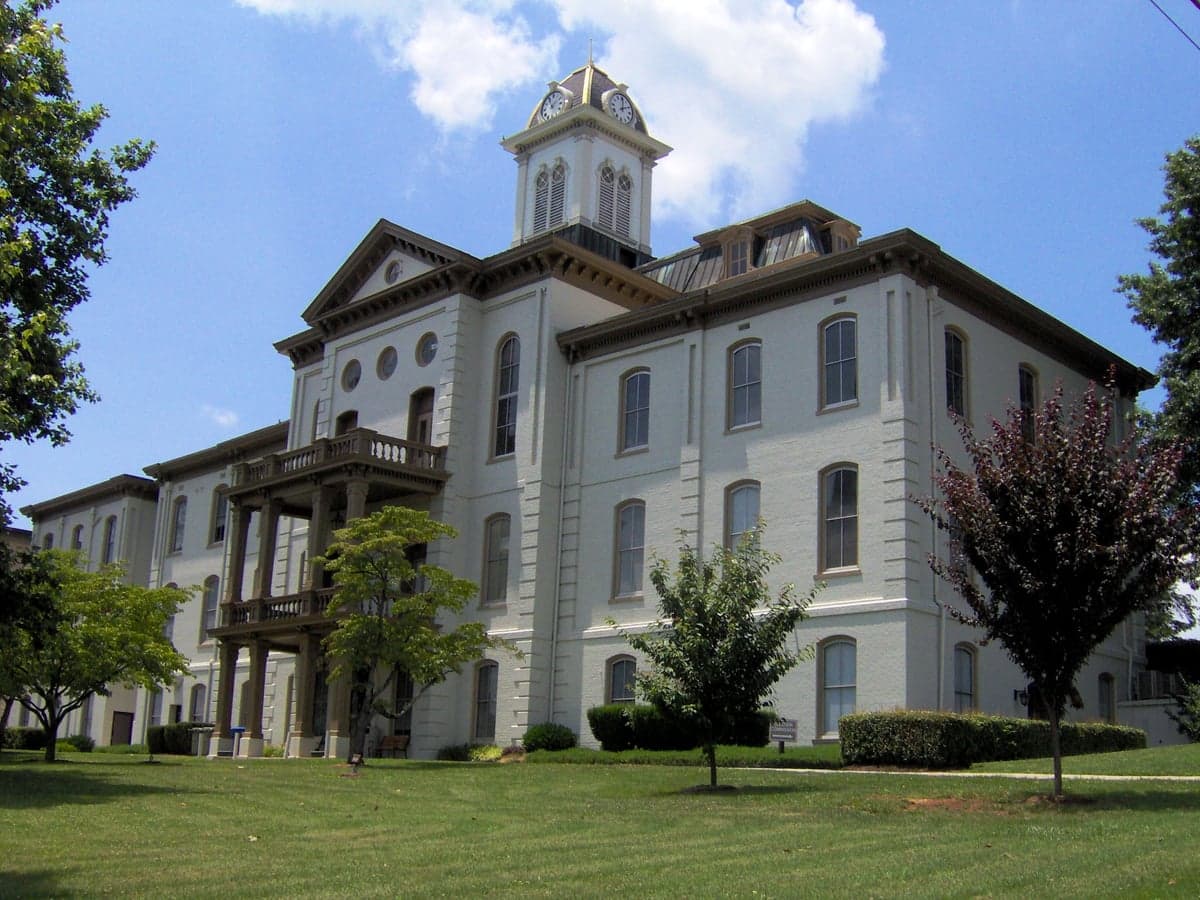
Photo: Wikipedia
Demographics of Hamblen County
Affluence Level in Hamblen County
A middle-class area roughly in line with national averages across income, home values, education, and employment.
People of Hamblen County
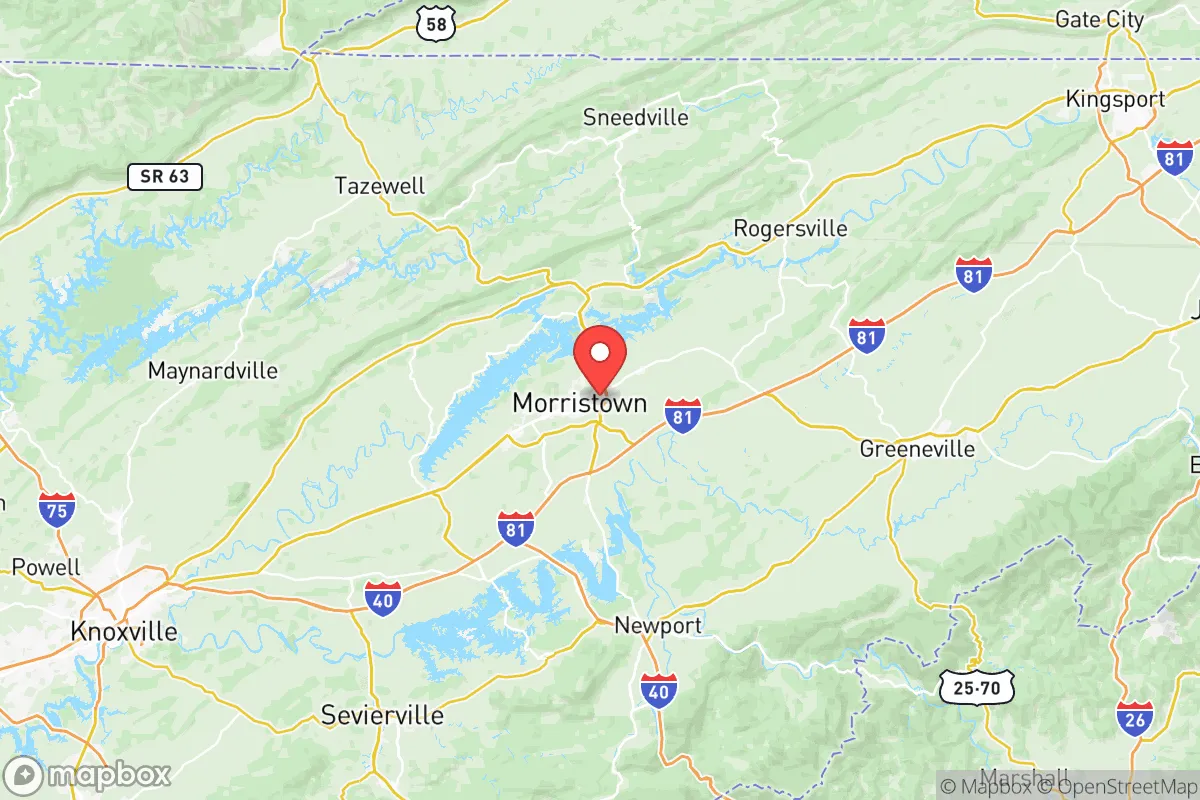
Hamblen County, Tennessee, is home to 64,930 residents who form a predominantly white (77.6%) and increasingly Hispanic (14.7%) community centered on the city of Morristown. The county’s population is characterized by a strong manufacturing and logistics workforce, a modest foreign-born share of 5.9%, and a below-average college attainment rate of 20.1%. Distinctive identity markers include a deeply rooted Appalachian and Scots-Irish heritage, a growing Latino presence reshaping local schools and neighborhoods, and a political culture that leans conservative, reflecting broader East Tennessee values.
Settlement & growth (pre-1960)
Before European settlement, the area now known as Hamblen County was part of the traditional homeland of the Cherokee Nation, who maintained villages and hunting grounds along the Holston River and its tributaries. The Cherokee were forcibly removed through the Trail of Tears in the late 1830s, opening the land to white settlers. The first major wave of European settlers arrived in the late 18th and early 19th centuries, primarily Scots-Irish and English migrants moving westward from Virginia and North Carolina. These pioneers were drawn by land grants offered for Revolutionary War service and the fertile valleys of the Holston River. They established small farms and communities, with the earliest settlements clustering around what is now Morristown, founded in 1787, and the nearby hamlets of Russellville and Lowland.
Throughout the 19th century, Hamblen County’s population grew steadily through natural increase and continued migration from the Upper South. The county was officially formed in 1870 from parts of Jefferson, Grainger, and Hawkins counties, with Morristown designated as the county seat. The arrival of the East Tennessee and Virginia Railroad in the 1850s transformed Morristown into a regional trade and manufacturing hub, attracting a modest influx of German and Irish laborers who worked on the railroad and in emerging industries like flour milling and textile production. These groups settled primarily in Morristown’s growing downtown and along the rail corridor, with smaller numbers in Whitesburg and Lowland.
The post-Civil War period saw the establishment of a small African American community, largely composed of freedmen who remained in the area as sharecroppers and laborers. By 1900, Black residents made up roughly 10% of the county’s population, concentrated in Morristown’s “Black Bottom” neighborhood near the railroad tracks and in rural pockets around Russellville. The early 20th century brought additional waves of domestic migration, including Appalachian whites from more remote mountain counties seeking industrial work in Morristown’s expanding furniture and textile mills. The Great Depression and World War II era saw limited new in-migration, but the post-war boom of the 1950s spurred suburban growth around Morristown, with new housing developments spreading into areas like Alpha and the western edge of the county.
Modern era (post-1965)
The 1965 Hart-Cellar Act had a delayed but significant impact on Hamblen County. While the county did not experience the immediate surge of immigration seen in major metropolitan areas, the 1980s and 1990s brought a growing number of Hispanic immigrants, primarily from Mexico and Central America, who were recruited to work in the region’s expanding poultry processing plants and manufacturing facilities. This wave settled heavily in Morristown, particularly in the eastern and southern parts of the city, as well as in the unincorporated community of Talbott. By 2020, the Hispanic share of the county’s population had risen to 14.7%, making it the largest minority group and a visible presence in local schools, churches, and businesses.
Domestic migration has also reshaped the county since the 1970s. Hamblen County has attracted retirees and families from the Rust Belt—particularly Ohio, Michigan, and Indiana—seeking lower costs of living, milder winters, and a slower pace of life. This in-migration has concentrated in suburban subdivisions around Morristown, especially along the U.S. 11E corridor and in newer developments near Cherokee Lake. The county has also seen a modest influx of East/Southeast Asian residents (0.6% of the population), including small numbers of Vietnamese and Filipino families, who have settled primarily in Morristown and work in healthcare and manufacturing. The Indian subcontinent population (0.3%) is even smaller, with most individuals employed in professional roles at local hospitals or the county school system.
The African American population has declined significantly from its historical peak, now standing at just 2.7%. This reflects broader patterns of out-migration to larger cities and the lack of new Black in-migration. The Black community today is concentrated in Morristown’s older neighborhoods, with a small presence in Russellville. Suburbanization since the 1990s has been characterized by low-density, car-dependent development on the outskirts of Morristown, with new retail corridors along Andrew Johnson Highway and West Andrew Johnson Highway catering to the growing population.
The future
Hamblen County’s population is projected to continue growing slowly, driven primarily by Hispanic natural increase and ongoing domestic in-migration from the Rust Belt. The Hispanic community is likely to grow as a share of the population, potentially reaching 20-25% by 2040, as younger families have higher birth rates and continued immigration from Latin America supplements the existing base. This growth is concentrated in Morristown and Talbott, where Spanish-language services and ethnic grocery stores are already established. The white population, while still the majority, is aging and experiencing lower birth rates, meaning its share will gradually decline.
The county is not tribalizing into distinct enclaves in the way seen in larger metropolitan areas. Instead, Hispanic families are dispersing across Morristown and into previously all-white subdivisions, though some clustering persists near the original settlement areas. The small East/Southeast Asian and Indian communities are likely to remain niche populations, growing only through occasional professional recruitment. The African American population is expected to remain stable or decline slightly, as out-migration continues and few new Black residents move in. The county’s cultural identity is slowly shifting from a purely Appalachian and Scots-Irish character to a more diverse, working-class Southern identity with a significant Latino influence. For a newcomer, this means a community that is still predominantly conservative and family-oriented, but with growing bilingualism and cultural variety in its schools and public life.
Hamblen County is becoming a more diverse, still predominantly white, and increasingly Hispanic community where manufacturing and logistics anchor the economy. For someone moving in now, the county offers a stable, low-cost environment with a conservative social fabric, but one that is gradually adapting to a more multicultural population, particularly in Morristown and Talbott.

* Values derived from national, state, county, city and local statistics and may differ in a specific area. Last updated: 2026-05-28T06:25:46.000Z
Narrative content on this page is AI-generated and may contain mistakes. Verify any details that matter before acting on them.
ReloMaps may earn a commission from affiliate links at no extra cost to you.

