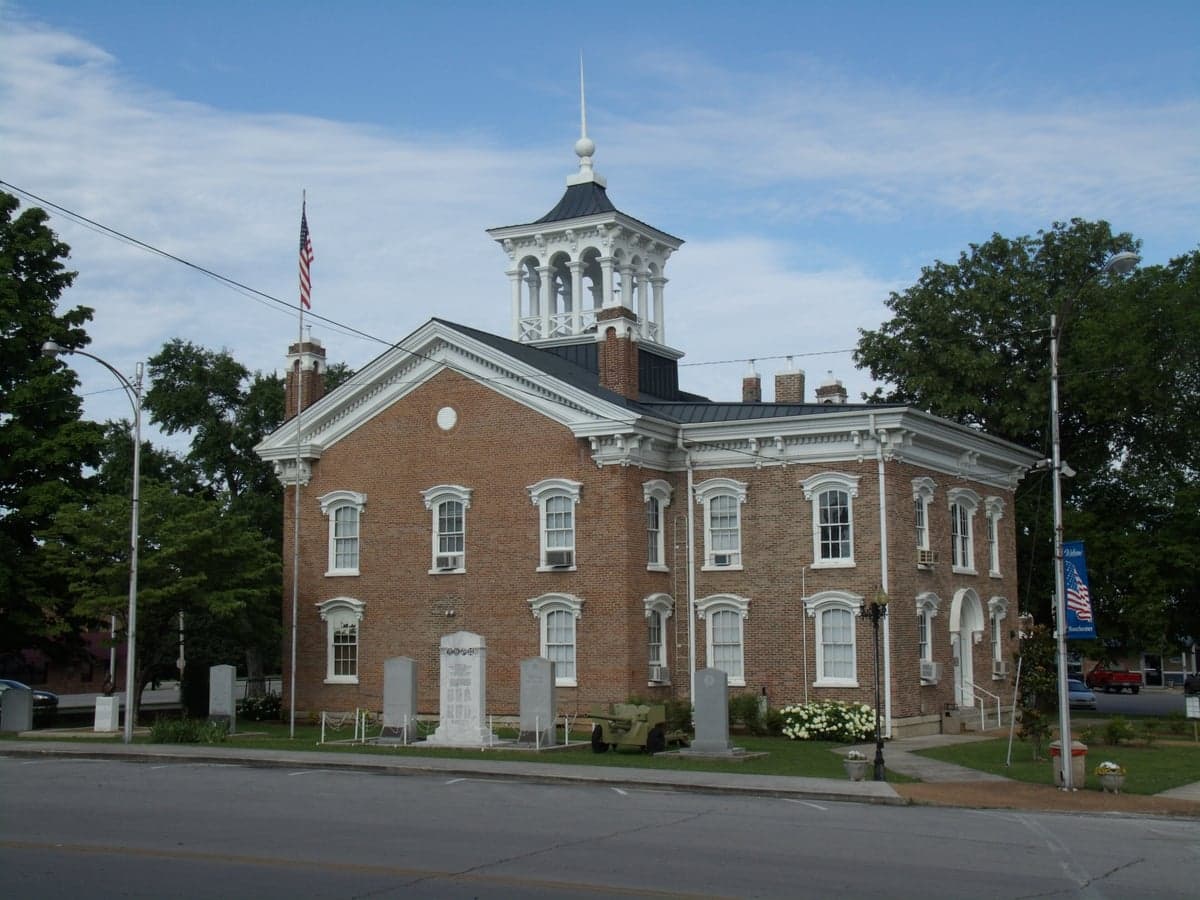
Photo: Wikipedia
Political ClimatePolitical Climate in Coffee County
Showing district-level results — no local-only data available.
Local Political AnalysisPolitical Analysis of Coffee County
Coffee County is about as solidly Republican as they come in Tennessee, and it’s been that way for as long as anyone can remember. The Cook PVI clocks in at R+21, which is a full eight points redder than the state’s R+13 rating, and that gap isn’t just a number—it reflects a deep-seated cultural and political conservatism that runs through the whole area. Over the past decade, the county has only gotten more Republican, with Trump winning by 35 points in 2020 and the margins holding steady in 2024. The shift isn’t dramatic, but it’s real: the kind of folks moving here from Nashville or Murfreesboro are often looking to escape the progressive creep, not import it.
How it compares
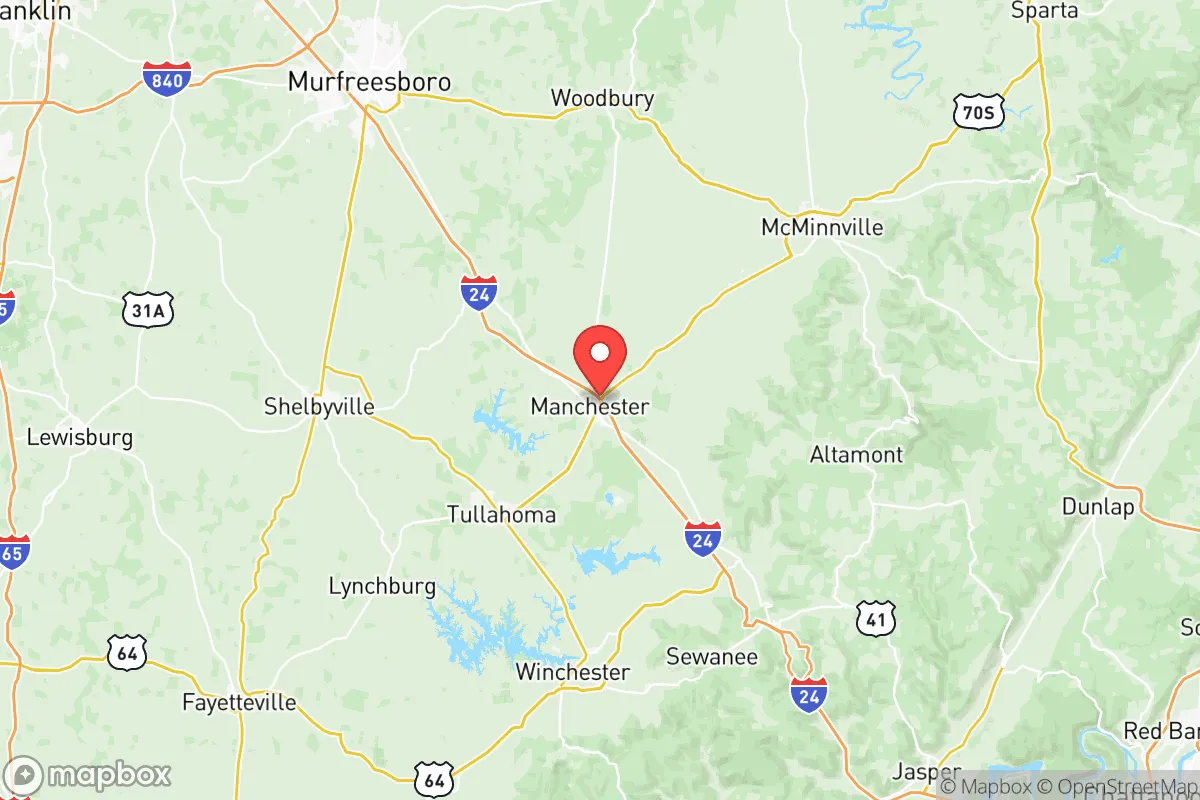
Tennessee as a whole is reliably red, but Coffee County is a different beast. The state’s R+13 PVI is driven by the deep-blue bubbles of Nashville, Memphis, and Knoxville, which drag the average left. Coffee County doesn’t have those pockets. Manchester, the county seat, votes Republican by about 25 points, while Tullahoma—the largest town—leans even redder, often hitting 30-point margins for GOP candidates. The only real variation is in the tiny precincts around New Union and Summitville, which sometimes swing by a few points but never flip blue. Compared to neighboring counties like Franklin (R+23) or Warren (R+22), Coffee is right in the middle of the pack, but it’s noticeably more conservative than the state’s urban centers. The difference isn’t just in voting patterns; it’s in the local culture. You don’t see the same push for progressive policies on zoning, school boards, or taxes here that you’d find in Davidson County.
What this means for residents
For the people living here, the political climate means a government that mostly stays out of your business. Property taxes are low, there’s no city income tax, and the county commission has consistently rejected efforts to impose stricter regulations on firearms or land use. That’s a big deal for folks who moved here specifically to get away from the overreach they saw in other states. The school board in Coffee County has also held the line on curriculum battles, keeping critical race theory and gender ideology out of classrooms—a stark contrast to what’s happening in places like Nashville or even Murfreesboro. The downside? If you’re hoping for rapid infrastructure upgrades or progressive social programs, you’ll be disappointed. The county’s conservative approach means slower change, but for most residents, that’s a feature, not a bug.
One thing that stands out is how the local politics reflect a broader distrust of federal overreach. In 2023, the county commission passed a resolution opposing federal gun control measures, and there’s a strong strain of Second Amendment sanctuary sentiment here. The long-term trajectory looks stable—Coffee County isn’t going blue anytime soon. But there’s a quiet concern among long-time residents that the influx of out-of-state transplants, especially around the Arnold Air Force Base area, could slowly shift the needle. For now, though, the county remains a bastion of old-school Tennessee conservatism, where personal freedom and local control are still the guiding principles.

State Political ClimatePolitical Climate in Tennessee
State Political AnalysisPolitical Environment in the State
Tennessee is a solidly Republican state with a Cook PVI of R+13, meaning it votes about 13 points more Republican than the national average in presidential elections. The dominant coalition is a mix of rural conservatives, suburban families, and evangelical Christians, with the state having voted Republican in every presidential election since 2000. Over the last 10-20 years, the trajectory has been a steady rightward shift, driven by in-migration from blue states and a growing exurban population, though recent years have seen some suburban softening in the Nashville and Memphis metros.
Urban vs. rural divide
The political map of Tennessee is a textbook case of the urban-rural split. The major metros—Nashville (Davidson County), Memphis (Shelby County), and Knoxville (Knox County)—are the Democratic strongholds, with Nashville and Memphis consistently voting blue by double digits. In 2024, Davidson County went +18 D, while Shelby County went +22 D. However, the rest of the state is deeply red. The rural counties in Middle and West Tennessee, like Giles, Lincoln, and Hardeman, routinely vote +40 to +50 R. The suburbs are where the real action is. Williamson County, just south of Nashville, is the wealthiest county in the state and a Republican bastion, voting +23 R in 2024. But places like Rutherford County (Murfreesboro) and Sumner County (Gallatin) are growing fast and have seen some suburban drift toward the center, though they remain reliably red. The eastern part of the state, including the Tri-Cities (Johnson City, Kingsport, Bristol), is ancestrally Republican and has only gotten redder with the decline of organized labor in the region.
Policy environment
Tennessee’s policy environment is aggressively conservative. There is no state income tax—only a 7% sales tax on most goods and a 9.25% combined rate in some cities. Property taxes are low, with a median effective rate of 0.67%. The state has a right-to-work law and is a "constitutional carry" state for firearms, meaning no permit is needed to carry a handgun. Education policy has been a flashpoint: the state passed a universal school voucher program in 2023 (the Education Freedom Scholarship Act), allowing families to use public funds for private or homeschool expenses. Healthcare is a mixed bag—Tennessee did not expand Medicaid under the ACA, leaving a coverage gap for about 300,000 low-income adults. Election laws are strict: voter ID is required, and the state has a 20-day early voting period. In 2023, the legislature passed a law banning "ballot harvesting" and requiring signature verification for absentee ballots. The state also enacted a near-total abortion ban in 2022 (trigger law) with no exceptions for rape or incest, only to save the mother’s life.
Trajectory & freedom
Tennessee has been moving in a direction of expanded personal freedom on most fronts, but with some concerning exceptions. On the plus side, the state passed a "Second Amendment Sanctuary" law in 2021, prohibiting local governments from enforcing federal gun restrictions. In 2023, the legislature passed a law banning "gender transition" procedures for minors (SB 1), which was a major win for parental rights advocates. The state also passed a "Don't Say Gay" style law (HB 800) restricting classroom discussion of sexual orientation and gender identity in K-8. Property rights have been strengthened by a 2022 law limiting the use of eminent domain for private economic development. However, there are red flags. The state’s COVID-era emergency powers were used to impose business closures and mask mandates in 2020, and the legislature has since passed a law (SB 900) limiting the governor’s ability to issue future emergency orders without legislative approval. The state also has a "public nuisance" law that has been used to target homeless encampments, raising concerns about government overreach into personal autonomy. The biggest freedom concern is the state’s surveillance apparatus: Tennessee has a statewide license plate reader network (the "Tennessee Fusion Center") that shares data with federal agencies, which some conservatives see as a violation of Fourth Amendment principles.
Civil unrest & political movements
Tennessee has seen its share of political flashpoints. In 2023, the "Tennessee Three" (state representatives Justin Jones, Justin Pearson, and Gloria Johnson) were expelled from the legislature for leading a gun control protest on the House floor after the Covenant School shooting in Nashville. The expulsions sparked massive protests at the state capitol, with thousands of demonstrators demanding stricter gun laws. The state also saw a wave of "Moms for Liberty" activism in 2022-2023, particularly in Williamson and Rutherford counties, where parents successfully pushed for book bans and curriculum transparency. Immigration politics are relatively quiet, as Tennessee is not a border state, but there have been local "sanctuary city" debates in Nashville, which the state legislature has tried to preempt with a 2023 law banning sanctuary policies. Election integrity has been a hot topic: in 2020, Tennessee had no major controversies, but the state passed a law in 2021 requiring signature verification for absentee ballots and banning private funding of election administration. There is a small but vocal "Tennessee Independence" movement that advocates for secession, but it has no serious political traction. The most visible flashpoint for a new resident would be the constant presence of political signage and the strong cultural divide between the urban core and the rest of the state.
Projection
Over the next 5-10 years, Tennessee is likely to remain solidly red, but with growing suburban tension. The state is one of the fastest-growing in the country, with net in-migration of over 100,000 people per year, many from California, Illinois, and New York. These newcomers tend to be more moderate than native Tennesseans, and they are already shifting the politics of suburbs like Franklin, Brentwood, and Mount Juliet. The state’s Republican supermajority is likely to hold, but the margin could narrow in the state house and senate as the Nashville and Memphis suburbs become more competitive. The biggest wildcard is the state’s education policy: if the voucher program proves popular, it could cement Republican dominance; if it leads to underfunded rural schools, it could spark a backlash. On social issues, the state will likely continue to pass laws restricting abortion and transgender rights, but these could face federal court challenges. The state’s tax structure is unlikely to change, as the no-income-tax model is a major draw for new residents. A new resident moving in now should expect a state that is politically stable but not static, with a growing divide between the urban core and the rest of the state.
For a new resident, the bottom line is that Tennessee offers a low-tax, high-freedom environment on most fronts, but with a strong cultural conservatism that may feel restrictive to some. The state is safe from major political upheaval, but the urban-rural divide is real and visible in daily life. If you value low taxes, gun rights, and parental control over education, Tennessee is a strong choice. If you are concerned about government overreach, keep an eye on the state’s surveillance programs and the potential for future emergency powers. Overall, Tennessee is a state where conservative values are the norm, and the political climate is unlikely to change dramatically in the near future.
* Values derived from national, state, county, city and local statistics and may differ in a specific area. Last updated: 2026-05-12T08:54:57.000Z
Narrative content on this page is AI-generated and may contain mistakes. Verify any details that matter before acting on them.
ReloMaps may earn a commission from affiliate links at no extra cost to you.

