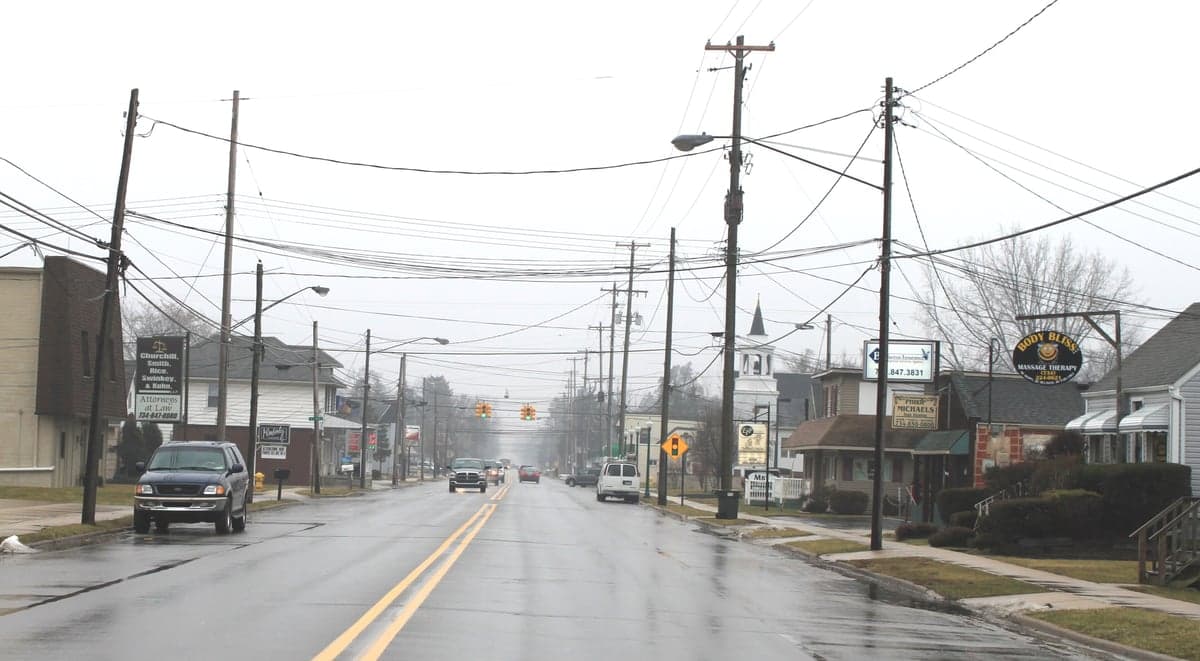
Photo: Wikipedia
Political ClimatePolitical Climate in Temperance, MI
District shown is the primary district for this city’s centroid. Cities may span multiple districts.
Inherited from parent county — no local data available.
* Lean and PVI are calculated from the surrounding county’s 2020 and 2024 presidential results, Cook-style — a finer measure here than its congressional district (MI-5).
Political rankings in Michigan
- Most Conservative Cities in Michigan
- Most Liberal Cities in Michigan
- Best Liberal-Leaning Towns in the Midwest
- Safest Liberal-Leaning Towns in the Midwest
- Safest Conservative-Leaning Towns in the Midwest
- Affordable Small Towns for Conservatives
- Most Affordable Liberal-Leaning Small Towns in the U.S.
- Safest Conservative-Leaning Cities in the U.S.
- Most Conservative Counties in Michigan
- Most Liberal Counties in Michigan
Local Political AnalysisPolitical Analysis of Temperance, MI
Temperance, Michigan, leans solidly Republican, with a Cook Partisan Voting Index (PVI) of R+13—meaning it votes about 13 points more Republican than the national average. That’s a stark contrast to the state of Michigan as a whole, which sits at a Cook PVI of EVEN, reflecting its status as a true swing state. Over the past decade, Temperance has held steady in its conservative lean, even as nearby cities like Toledo (just across the Ohio border) and Ann Arbor (about 45 minutes north) have become more Democratic strongholds. If you’ve lived here a while, you’ve seen the local GOP turnout stay reliable, especially in presidential cycles, while the broader state has seesawed between red and blue.
How it compares
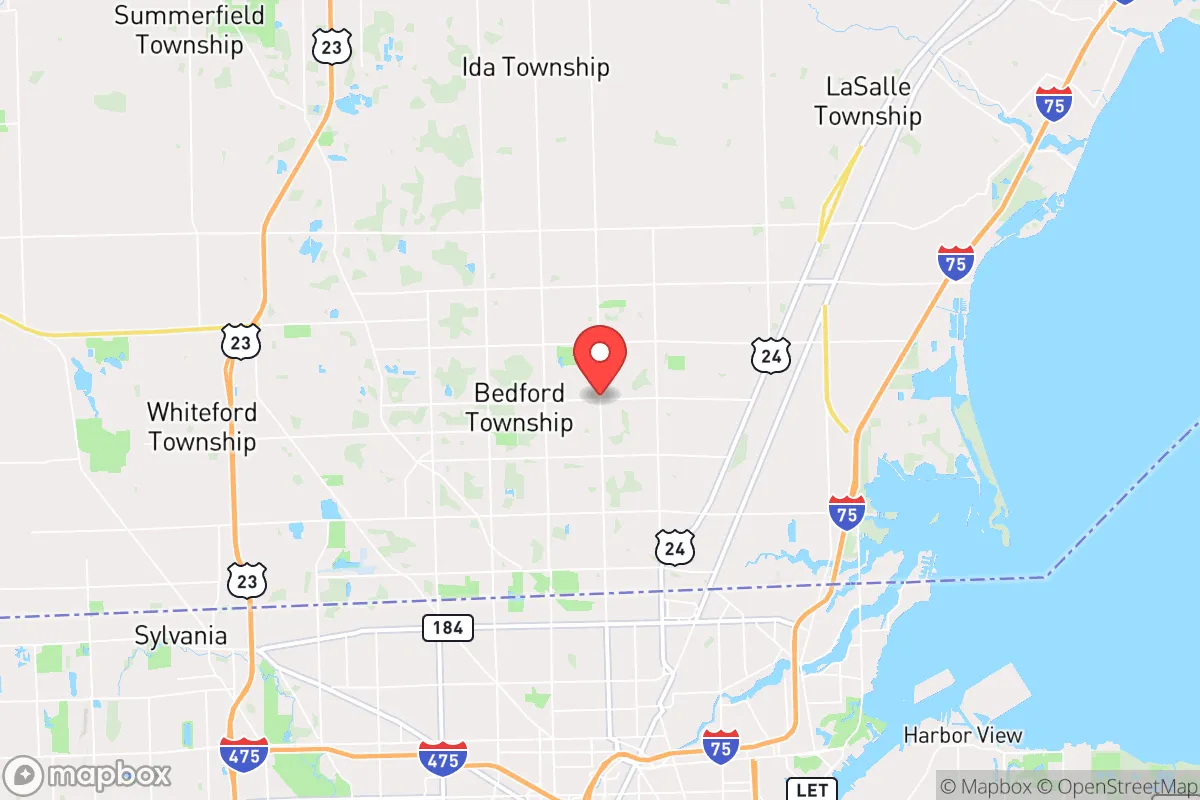
Compared to Michigan’s statewide PVI of EVEN, Temperance is a clear outlier. The village sits in Monroe County, which voted for Donald Trump by about 12 points in 2020 and 2024—a margin that’s held steady since 2016. Drive 20 minutes north to Monroe city, and you’ll find a more mixed electorate, with a stronger Democratic base thanks to union-heavy auto plants and a larger working-class population. Head 30 minutes west to the suburbs of Ann Arbor, and you’re in a liberal bubble where Democrats routinely win by 30 points or more. Temperance, by contrast, feels like a quiet conservative pocket, where local elections often go uncontested by Democrats and the school board and township boards are reliably Republican. The R+13 PVI here isn’t just a number—it reflects a community where GOP candidates can count on a solid floor of support, even in years when Democrats sweep statewide races like the 2022 governor’s race.
What this means for residents
For conservative residents, Temperance offers a comfortable political environment. Local government tends to favor low taxes and limited regulation, and you’ll find plenty of neighbors who share your views on gun rights, school choice, and fiscal conservatism. The local Republican club is active, and campaign signs for GOP candidates dominate lawns during election season. For liberal residents, life here is more of a balancing act. You’ll likely be in the minority, but it’s not hostile—most folks are polite and neighborly, even if political conversations can get tense. You’ll find your people at local coffee shops or through regional groups based in Toledo or Ann Arbor, which are just a short drive away. The practical upshot: if you’re conservative, you’ll feel at home; if you’re liberal, you’ll need to seek out like-minded communities, but you won’t face outright exclusion.
Culturally, Temperance stands out for its strong sense of local identity and a slower pace of life that contrasts with the more urbanized parts of southeast Michigan. Policy-wise, the village and township tend to prioritize public safety and infrastructure over social programs, and you won’t see the kind of progressive initiatives—like sanctuary city policies or heavy-density zoning—that you’d find in Ann Arbor or Detroit. The local schools, part of the Bedford Public Schools district, reflect the community’s values, with a focus on traditional academics and extracurriculars rather than controversial curriculum debates. Looking ahead, Temperance’s political trajectory seems stable: the R+13 lean is likely to persist, even as Michigan’s statewide politics remain competitive. Newcomers from Toledo or other parts of the state might shift things slightly, but for now, this is a place where the political climate feels as steady as the Maumee River flowing nearby.

State Political ClimatePolitical Climate in Michigan
State Political AnalysisPolitical Environment in the State
Michigan is the ultimate swing state, with a Cook PVI of EVEN that perfectly captures its knife-edge balance between the parties. Over the past 20 years, the state has shifted from reliably blue in presidential races (voting for Democrats from 1992 to 2012) to a true battleground, flipping to Trump in 2016 by 0.2 points, then to Biden in 2020 by 2.8 points, and back to Trump in 2024 by 1.5 points. The dominant coalition is a three-way tug-of-war: the heavily unionized, diverse Detroit metro area pulls left; the conservative, rural Upper Peninsula and western Lower Peninsula anchor the right; and a shrinking but still significant bloc of moderate, blue-collar voters in places like Macomb County and Saginaw decides every election.
Urban vs. rural divide
The political map of Michigan is a study in stark contrasts. The Detroit tri-county area (Wayne, Oakland, Macomb) is the Democratic engine room, delivering roughly 60% of the party's statewide vote. Wayne County alone, home to Detroit, gave Biden 68% in 2020. But the real story is the suburbs: Oakland County, once a Republican stronghold, has trended blue for a decade, while Macomb County—the iconic "Reagan Democrat" territory—flipped from Obama to Trump and has stayed competitive. Grand Rapids (Kent County) is the GOP's urban anchor, but even there, the city itself is becoming more liberal while the surrounding towns remain deeply red. The rural-urban split is most visible in the "Blue Wall" counties of the Thumb and the western Lower Peninsula (like Ottawa and Allegan counties), which vote 65-70% Republican. The Upper Peninsula, historically a Democratic stronghold due to mining unions, has swung hard right in the Trump era, with counties like Gogebic and Dickinson flipping by 20+ points.
Policy environment
Michigan's policy landscape is a mixed bag that reflects its swing-state status. The state income tax is a flat 4.25%, with no tax on Social Security benefits—a big draw for retirees. Property taxes are moderate, with a 6% cap on annual increases under Proposal A. The regulatory posture is business-friendly in manufacturing and agriculture but stricter on environmental issues, especially around the Great Lakes. Education policy is decentralized: school funding is per-pupil based, but there's a growing charter school sector, particularly in Detroit and Grand Rapids. Healthcare is a flashpoint: Michigan expanded Medicaid under the ACA, but the state also has a robust private insurance market. Election laws are relatively open: no-excuse absentee voting was approved by voters in 2018, and same-day registration is available. Gun laws are moderate—shall-issue concealed carry, no universal background checks for private sales, but red flag laws were passed in 2023.
Recent policy direction
The last five years have seen Michigan lurch leftward on several fronts, then partially correct. In 2023, the Democratic trifecta (governor, house, senate) passed a package of laws that included repealing the state's right-to-work law (which had been in place since 2012), expanding the Elliott-Larsen Civil Rights Act to include sexual orientation and gender identity, and enacting a red flag law allowing courts to temporarily seize firearms from individuals deemed a threat. On the other hand, the same session expanded the homestead property tax exemption and increased the earned income tax credit from 6% to 30% of the federal credit. For conservatives, the right-to-work repeal is a major concern—it could strengthen union influence in manufacturing. For liberals, the red flag law and LGBTQ protections are wins. On gun rights, Michigan remains a shall-issue state with no magazine capacity limits, but the new red flag law is a point of contention. Parental rights in education saw a compromise: a 2023 law requires schools to notify parents of any changes to a student's mental or physical health, but it stops short of the "Don't Say Gay" language seen in other states. Property rights are generally strong, with no statewide rent control and limited eminent domain use. Voting access expanded with automatic voter registration and nine days of early voting, but voter ID is still required at the polls.
Civil unrest & political movements
Michigan has been a flashpoint for political activism on both sides. The 2020 Whitmer kidnapping plot—where a militia group planned to abduct the governor—shocked the state and highlighted the intensity of anti-lockdown sentiment. The Operation Gridlock protests in Lansing in April 2020 drew thousands of armed protesters to the state capitol, making national headlines. On the left, the Rise Up Michigan coalition has organized large rallies for abortion rights and union protections. Immigration politics are relatively quiet compared to border states, but the Washtenaw County sanctuary policy (limiting cooperation with ICE) has been a local flashpoint. Election integrity remains a live issue: the 2020 results were certified without major irregularities, but the 2024 recount in Wayne County saw partisan observers clash. The Michigan Conservative Coalition and Michigan Freedom Fund are active in school board races and local elections, while the Michigan Democratic Party has invested heavily in grassroots organizing in the suburbs. A new resident would notice the prevalence of yard signs and bumper stickers—politics is a common topic of conversation, especially in the swing counties.
Projection
Over the next 5-10 years, Michigan is likely to remain a battleground, but the demographic trends favor the Democrats slightly. The in-migration from Illinois and California into the Grand Rapids and Traverse City areas is bringing more moderate and liberal voters to traditionally red regions. At the same time, the aging population in the Upper Peninsula and rural areas is shrinking the GOP's base. The suburbanization of Oakland and Macomb counties is accelerating the blue shift, while the growing Hispanic population in southwest Michigan (around Holland and Benton Harbor) could become a swing vote. The wild card is the auto industry's transition to electric vehicles—if it creates jobs in the Detroit area, it could boost the Democrats; if it leads to plant closures, it could fuel populist anger. A conservative moving to Michigan should expect a state that is politically competitive but tilting left on social issues, while a liberal should expect a state where their vote truly matters but where rural areas remain deeply conservative. The bottom line: Michigan is not a safe bet for either party, and that's exactly what makes it interesting.
For a new resident, the practical takeaway is that Michigan offers a genuine swing-state experience. Your vote will count in every election, and the policy environment can shift dramatically with each cycle. If you're conservative, you'll find strong communities in the western suburbs of Grand Rapids, the Thumb, and the Upper Peninsula, but you'll need to engage in local politics to protect your interests. If you're liberal, you'll feel at home in Ann Arbor, Detroit, and the college towns, but you'll face real opposition in the state legislature. The key is to pick your county wisely—the political culture of Oakland County is vastly different from that of Ottawa County—and to be prepared for a state that is constantly negotiating its identity between the Rust Belt and the Great Lakes.
* Values derived from national, state, county, city and local statistics and may differ in a specific area. Last updated: 2026-11-19T10:04:15.000Z
Narrative content on this page is AI-generated and may contain mistakes. Verify any details that matter before acting on them.
ReloMaps may earn a commission from affiliate links at no extra cost to you.

