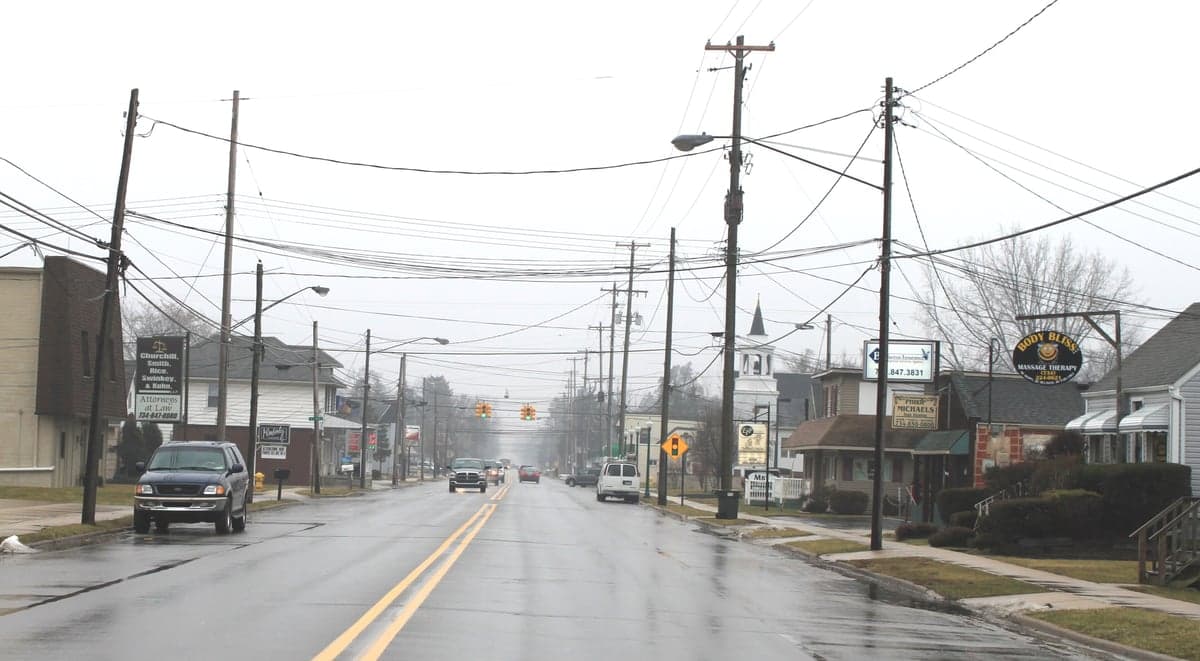
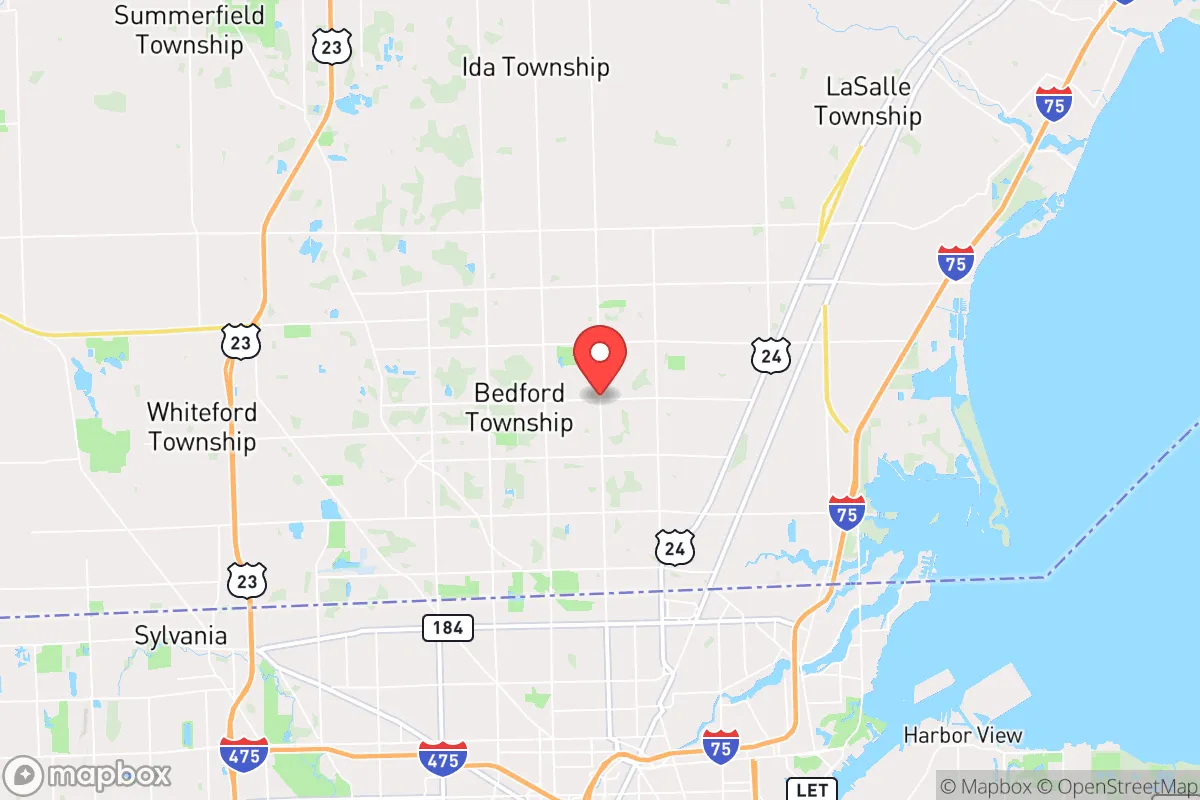
Photo: Wikipedia
Demographics of Temperance, MI
Affluence Level in Temperance, MI
A middle-class area roughly in line with national averages across income, home values, education, and employment.
People of Temperance, MI
The 8,495 residents of Temperance, Michigan form a predominantly white, family-oriented community with a strong conservative character, where 84.6% of the population identifies as white and 8.3% as Hispanic. The city’s identity is rooted in its agricultural and working-class history, with a low foreign-born share of just 1.3% and a college attainment rate of 27.7%. Temperance feels more like a tight-knit small town than a suburb, with a density that preserves open space and a pace of life that appeals to those seeking stability and traditional values.
How the city was settled and grew
Temperance was originally settled in the 1830s by Yankee migrants from New England and upstate New York, drawn by the fertile soils of the Maumee River valley and the promise of farmland. The community’s name, adopted in the 1850s, reflected the temperance movement’s influence among these early Protestant settlers, who established small farms and churches. The arrival of the Michigan Southern Railroad in the 1840s spurred growth, connecting local farmers to Toledo markets. The original settlement clustered around what is now Lewis Avenue and Dean Road, an area still known as Old Town Temperance, where many of the earliest homes and the historic Temperance House hotel stood. A second wave of German and Polish immigrants arrived in the late 19th and early 20th centuries, drawn by farm labor and the region’s growing canning and fruit-processing industries. These families settled along Secor Road and St. Anthony Road, where they built St. Anthony’s Catholic Church (established 1898) and formed a distinct Catholic enclave that remains visible today in the area’s parish life and surnames. By 1950, Temperance was still a rural hamlet of fewer than 1,500 residents, overwhelmingly white and native-born, with a local economy tied to agriculture and small-scale manufacturing.
Modern era (post-1965)
The post-1965 period brought suburbanization as Toledo’s metropolitan area expanded northward into Monroe County. The construction of I-75 in the 1960s made Temperance a viable bedroom community for Toledo workers, and new subdivisions began filling former farm fields. The Bay Creek subdivision, developed in the 1970s and 1980s along Samaria Road, attracted middle-class white families seeking larger lots and lower taxes than Lucas County offered. A smaller wave of Hispanic families, primarily of Mexican heritage, began arriving in the 1990s, drawn by work in local nurseries, landscaping, and the nearby automotive parts plants in Monroe and Toledo. These families concentrated in the Luna Pier Road corridor and the Stony Creek area, where a handful of Hispanic-owned businesses and a Spanish-language church service now operate. The city’s Black population remains very small at 1.9%, and there are no recorded East/Southeast Asian or Indian-subcontinent residents, reflecting Temperance’s limited appeal to immigrant communities. The foreign-born share of 1.3% is among the lowest in Monroe County, and the population has remained overwhelmingly white (84.6%) even as the Hispanic share has grown modestly from near zero in 1990 to 8.3% today.
The future
Temperance’s population is projected to remain stable or grow slowly, with the Hispanic share likely increasing to 10-12% over the next decade as families already in the area age and new arrivals from Toledo’s Hispanic neighborhoods seek affordable housing. The white population will continue to age, with a median age of 42.3 years, and younger families are increasingly priced out of Toledo’s closer suburbs, turning to Temperance for its lower home prices and rural feel. New development is concentrating in the Stony Creek area and along Lewis Avenue south of I-75, where several 40- to 60-lot subdivisions are planned. The city’s cultural identity is likely to remain conservative and family-focused, with little pressure toward the diversity seen in larger Michigan cities. The small Black and Asian populations are not expected to grow significantly, as Temperance lacks the job base, transit links, or ethnic institutions that attract those groups.
Temperance is becoming a slightly more Hispanic, still overwhelmingly white, and deeply stable community — a place where demographic change is slow and incremental, not disruptive. For a family or individual moving in now, the city offers a predictable, low-crime environment with a clear cultural identity, but little racial or ethnic diversity beyond a growing Hispanic minority. It is a good fit for those who prioritize continuity, space, and traditional values over urban amenities or multicultural exposure.

* Values derived from national, state, county, city and local statistics and may differ in a specific area. Last updated: 2026-11-19T10:04:15.000Z
Narrative content on this page is AI-generated and may contain mistakes. Verify any details that matter before acting on them.
ReloMaps may earn a commission from affiliate links at no extra cost to you.

