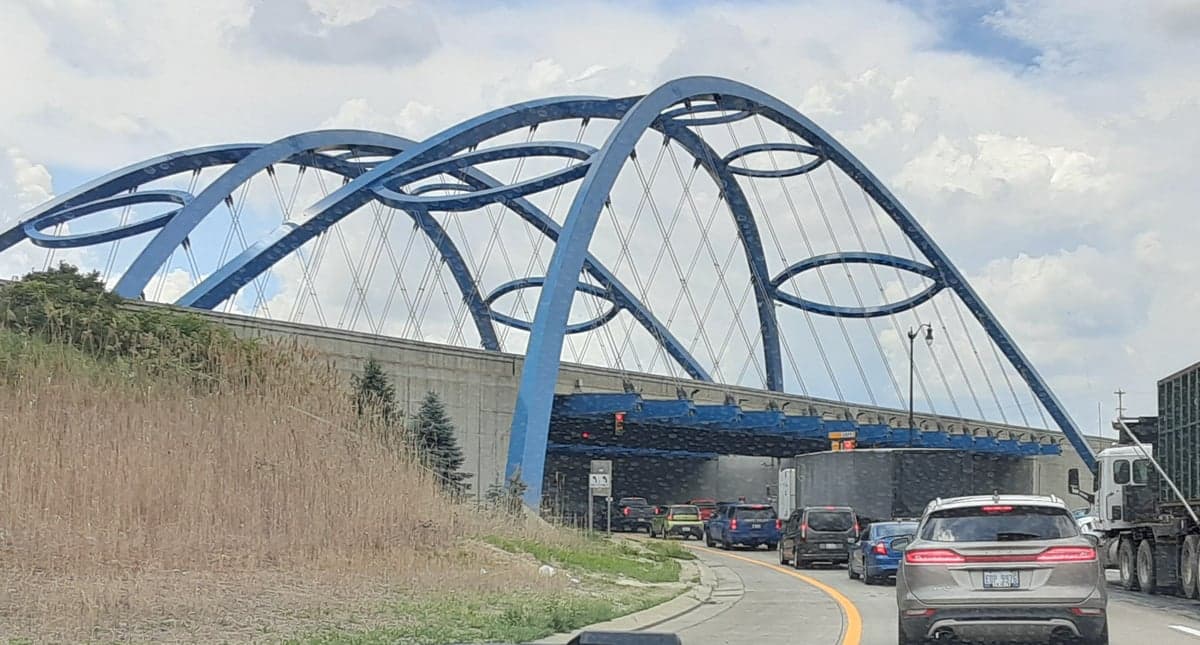
Photo: Wikipedia
Personal Sovereignty in Taylor, MI
Strong independent fundamentals that actively favor personal liberty and low regulation.
What does Personal Sovereignty tell us?
Personal Sovereignty measures your capacity for self-reliance and independence with minimal government friction. Higher scores mean fewer barriers between you and the way you want to live... but it assumes you have the space you need and good neighbors.
What does this tell us?
Personal Sovereignty measures your capacity for self-reliance and independence with minimal government friction. Higher scores mean fewer barriers between you and the way you want to live... but it assumes you have the space you need and good neighbors.
State Policy
Energy independence: Importer (20% of energy produced in-state)
Personal Liberty
Homesteading

Personal Liberty Analysis
Taylor, Michigan, offers a mixed bag for those prioritizing personal sovereignty, where a relatively affordable cost of living and a blue-collar, self-reliant ethos clash with a state government that has increasingly centralized power in Lansing. For the survivalist or prepper, the city itself is a suburban environment with limited immediate off-grid potential, but it sits within a region where strategic autonomy is still achievable with careful planning. The key trade-off here is between the lower financial overhead of a working-class suburb and the regulatory creep that comes with Michigan’s current political trajectory, making it a location that demands vigilance rather than passive acceptance.
Tax burden and regulatory posture in a high-tax state
Michigan’s tax structure is a significant factor for anyone seeking to maximize personal financial sovereignty. The state imposes a flat income tax of 4.25% on all individual income, which is moderate compared to some high-tax states but still a direct reduction of personal earnings. Property taxes in Taylor are notably high, with a typical effective rate around 2.5% of assessed value, driven by local school and municipal millages. This means a $150,000 home could carry an annual tax bill of roughly $3,750, a substantial recurring cost that eats into self-reliance budgets. On the regulatory front, Michigan has a mixed record: it is a right-to-work state (though that status is under constant political threat), which provides some workplace autonomy, but it also has stringent environmental regulations that can complicate small-scale homesteading or property modifications. The state’s regulatory posture leans toward oversight rather than laissez-faire, meaning any attempt to build a self-sufficient setup—like a workshop, greenhouse, or alternative energy system—will likely require permits and inspections. For the prepper, this means budgeting not just for gear, but for compliance costs and potential legal fees if you push boundaries.
Self-defense and gun law specifics in Michigan
Michigan’s gun laws are a critical consideration for personal sovereignty, and they have become more restrictive in recent years. The state now requires a license to purchase a pistol (though not long guns), and all firearm purchases from licensed dealers require a background check. Open carry of handguns is legal without a permit, but concealed carry requires a Concealed Pistol License (CPL), which involves an 8-hour training course, fingerprinting, and a background check. The CPL process is straightforward for law-abiding citizens, but it does create a paper trail. More concerning for the prepper is that Michigan has a “red flag” law (Extreme Risk Protection Order) that allows authorities to temporarily seize firearms based on a court order without a criminal conviction—a clear erosion of due process and a tool that could be abused. Taylor itself is a relatively safe city with a violent crime rate below the national average, but the surrounding Wayne County has seen property crime spikes. For self-defense, the legal environment favors responsible gun ownership, but the trend is toward more state control, not less. Stand-your-ground laws exist in Michigan, but they are not as robust as in states like Florida or Texas, and the burden of proof in a self-defense shooting can be higher. Anyone serious about armed autonomy should consider a CPL and stay current on legislative changes in Lansing.
Self-reliance and homesteading viability in a suburban grid
Taylor is a densely developed suburb of Detroit, so traditional homesteading—large gardens, livestock, or significant off-grid infrastructure—is severely limited. Typical residential lot sizes range from 0.15 to 0.25 acres, which is enough for a modest vegetable garden and perhaps a few chickens (if local ordinances allow, which they generally do with restrictions), but not for goats, pigs, or substantial food production. Zoning is strictly residential, with no allowance for commercial-scale agriculture or workshops that could support a trade. Off-grid feasibility is low: the city is fully connected to municipal water, sewer, and electricity, and disconnecting from these services would likely violate building codes. Solar panels are permitted but must be grid-tied and approved by the utility, meaning you cannot truly go off-grid without a fight. Rainwater collection is legal but limited to 50 gallons per property without a permit, and composting toilets are not allowed in most residential zones. For the prepper, this means Taylor is a “bug-in” location only for short-term emergencies (72 hours to a week) unless you invest heavily in stealth modifications—like hidden water storage, underground root cellars, or a basement workshop. The real homesteading potential lies in the rural areas north and west of Taylor, such as Monroe or Washtenaw counties, where land is cheaper and zoning is looser. Taylor works best as a base for those who work in the metro area but have a secondary property for long-term self-sufficiency.
Personal liberties: parental rights, medical autonomy, and property
Parental rights in Michigan are generally strong, but they have been under pressure. The state does not have a formal “parental bill of rights” law, but parents retain significant control over their children’s education, medical decisions, and upbringing. School choice is available through charter schools and inter-district transfers, giving families some autonomy from the local public school system. However, Michigan has mandatory vaccination requirements for school attendance (with medical and religious exemptions), and the state health department has broad authority to mandate public health measures—a concern for those wary of government overreach in medical autonomy. Medical freedom is limited: the state has a prescription drug monitoring program, and telehealth restrictions have eased but not disappeared. On property rights, Michigan is a “property rights” state in theory, but local zoning boards have wide latitude to restrict land use. The Taylor city government has a reputation for being business-friendly but strict on residential code enforcement, meaning you cannot simply do what you want with your property without permits. Free speech is protected under the First Amendment, but Michigan has no specific shield laws for journalists or activists, and local ordinances can limit public assembly. For the conservative-leaning individual, the biggest threat to personal liberty here is the slow creep of state-level mandates—from vaccine requirements to red flag laws—that erode the autonomy that was once taken for granted.
Overall, Taylor, Michigan, offers a baseline level of personal sovereignty that is adequate for those willing to stay informed and engaged, but it falls short of the high-autonomy environments found in states like Texas, Idaho, or New Hampshire. The city’s low cost of living and relatively safe streets provide a stable platform for building a self-reliant lifestyle, but the regulatory and tax burdens from Lansing and Wayne County create a constant drag. For the survivalist or prepper, Taylor is a viable “Phase 1” location—a place to establish a foothold, build skills, and network with like-minded individuals—but it is not a long-term sanctuary. The smart play is to use Taylor as a base while scouting rural properties in Michigan’s Upper Peninsula or northern Lower Peninsula, where land is cheap, zoning is minimal, and the state’s reach is weaker. In the current national climate, Taylor represents a compromise: you can live affordably and exercise most of your rights, but you must remain vigilant against the steady erosion of those rights from above.

* Values derived from national, state, county, city and local statistics and may differ in a specific area. Last updated: 2026-04-24T20:05:59.000Z
Narrative content on this page is AI-generated and may contain mistakes. Verify any details that matter before acting on them.
ReloMaps may earn a commission from affiliate links at no extra cost to you.

