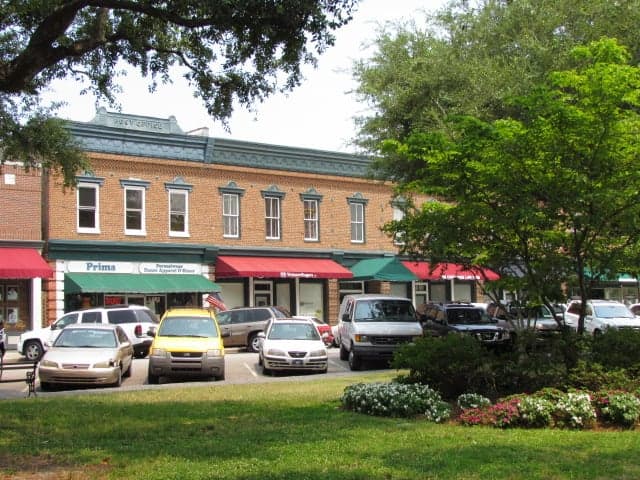
Photo: Wikipedia
Political ClimatePolitical Climate in Summerville, SC
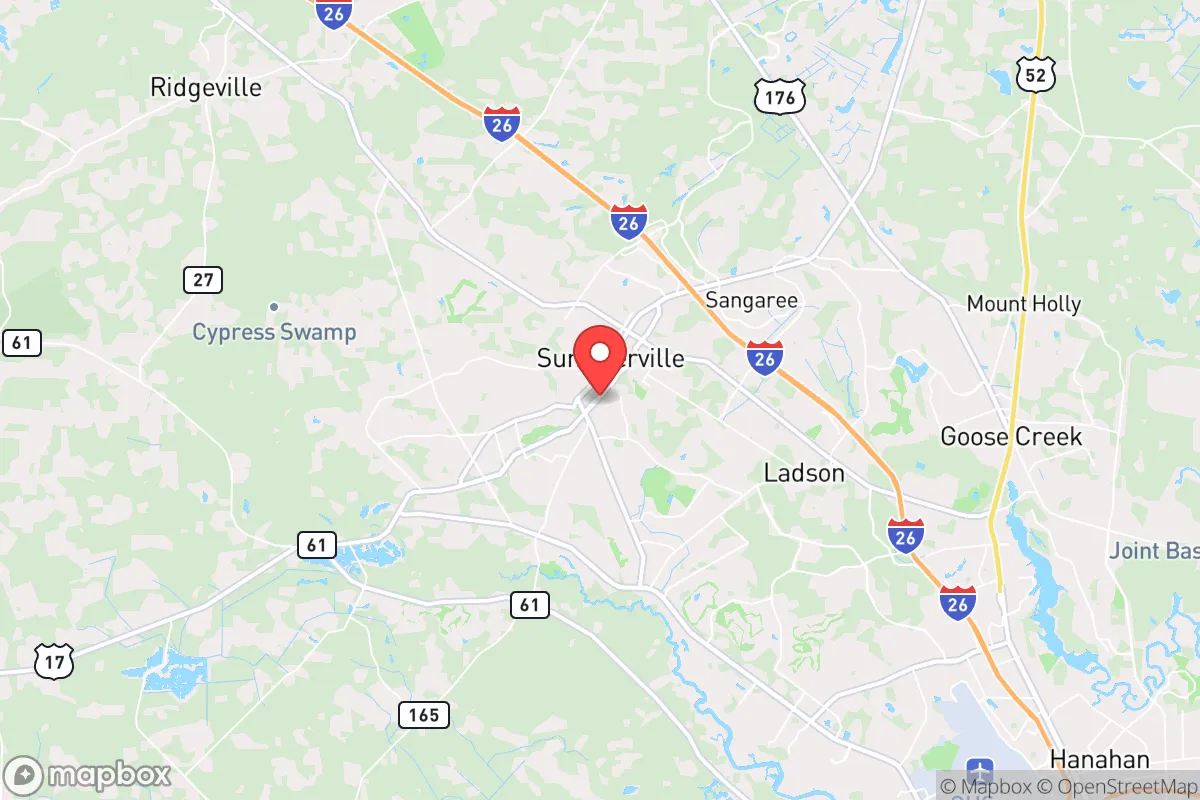
District shown is the primary district for this city’s centroid. Cities may span multiple districts.
Local Political AnalysisPolitical Analysis of Summerville, SC
Summerville, South Carolina, has long been a reliably conservative community, and the numbers back that up with a Cook PVI of R+6, meaning the district leans about six points more Republican than the national average. But if you’ve lived here as long as I have, you’ve seen the political winds start to shift, especially as folks from up north and out west pour into the Lowcountry. The town’s core still votes red, but the edges are getting a little purple, and that’s something worth keeping an eye on if you value limited government and personal freedoms.
How it compares
Summerville sits in a bit of a political bubble compared to its neighbors. Head east toward Charleston, and you’re in a deep-blue stronghold where progressive policies on taxes, zoning, and public spending are the norm. Drive north to Moncks Corner or west to Walterboro, and you’ll find communities that are even more conservative than Summerville, with less appetite for new regulations or government expansion. Summerville itself is a mix: the older, established neighborhoods near the historic district tend to vote reliably Republican, while the newer subdivisions filled with transplants from New York, New Jersey, and California are starting to bring more moderate—and sometimes outright progressive—ideas to local school board and town council races. That’s where the real tension is, because those newcomers often don’t understand why we’ve always kept government small here.
What this means for residents
For folks who’ve been here a while, the biggest concern is that the political drift could lead to more government overreach into daily life. We’ve already seen it in small ways: stricter noise ordinances, debates over short-term rental caps, and a push for more public spending on bike lanes and green spaces that sound nice but come with higher property taxes and more red tape. The school board has become a battleground, with some candidates pushing for curriculum changes that align with national progressive trends, while longtime residents fight to keep local control and parental rights front and center. If you’re moving here, you should know that the local Republican club is still active and influential, but you’ll also find a growing number of independent voters who could tip the scales in close elections. The key is staying engaged—if you don’t show up to those town hall meetings, the progressive agenda will fill the void.
One thing that sets Summerville apart culturally is its strong sense of community and tradition, which acts as a buffer against rapid political change. The annual Flowertown Festival, the historic district’s preservation efforts, and the local churches all reinforce a conservative, family-oriented way of life that doesn’t easily bend to outside pressure. That said, the influx of new residents is real, and with it comes a slow but steady push for policies that prioritize collective goals over individual freedoms. If you’re looking for a place where your rights to speak your mind, keep your taxes low, and raise your kids without government interference are still respected, Summerville is still a good bet—but don’t take it for granted. The next few election cycles will tell us whether this town stays the course or starts to look more like its coastal neighbors.

State Political ClimatePolitical Climate in South Carolina
State Political AnalysisPolitical Environment in the State
South Carolina has long been a reliably red state, but the political climate here is more layered than a simple party label suggests. The state leans solidly Republican at the statewide level, with a dominant coalition of conservative voters in the suburbs, rural areas, and the Upstate, but the past decade has seen a slow, steady shift in the Lowcountry and the Midlands as newcomers pour in. Over the last 10-20 years, the GOP has tightened its grip on the legislature and governor’s mansion, yet the cultural and demographic changes—especially around Charleston and Greenville—are creating new fault lines that any conservative considering a move here should watch closely.
Urban vs. rural divide
The political map of South Carolina is a study in contrasts. The Upstate, anchored by Greenville and Spartanburg, remains the GOP’s stronghold—think evangelical churches, military families, and a booming manufacturing base that leans heavily conservative. Greenville County itself voted +18 points for Trump in 2020, and the surrounding counties of Pickens, Oconee, and Anderson are even redder. Down in the Lowcountry, Charleston is the state’s most politically dynamic metro. Charleston County has been trending blue for years, driven by an influx of out-of-state professionals, tech workers, and retirees from the Northeast. In 2020, it went for Biden by a slim margin, but the surrounding suburbs—Mount Pleasant, Summerville, and Goose Creek—still vote reliably Republican, though with less enthusiasm than a decade ago. The Midlands, centered on Columbia, is a true battleground. Richland County (Columbia proper) is deep blue thanks to the state university and a large African American population, while Lexington County just across the river is deep red. The rural counties—Horry County (Myrtle Beach), York County (Rock Hill), and the Pee Dee region—are overwhelmingly Republican, but their populations are aging and growing slower than the coastal metros. The real story is the suburban drift: places like Bluffton near Hilton Head and Fort Mill near Charlotte are seeing explosive growth, and while they still lean right, the margin is shrinking as new arrivals bring more moderate views on taxes and social issues.
Policy environment
South Carolina’s policy environment is broadly conservative, but with some notable wrinkles. The state has a flat income tax rate of 6.4% (with a scheduled phase-down to 6.0% by 2026), and no estate or inheritance tax, which is a big draw for retirees and business owners. Property taxes are low—among the lowest in the nation—but sales taxes can add up, especially in counties that tack on local options. On education, the state has a robust school choice program, including the Education Scholarship Trust Fund, which provides vouchers for private school tuition, and a growing charter school network. However, the public school system remains underfunded, and rural districts often struggle. Healthcare is a mixed bag: South Carolina did not expand Medicaid under the Affordable Care Act, which keeps government involvement low but leaves many low-income residents uninsured. The state has a strong right-to-work law and is a “shall issue” state for concealed carry permits, with no permit required for open carry as of 2024. Election laws are strict: voter ID is required, early voting was expanded in 2022 to two weeks, but absentee voting remains limited compared to blue states. The legislature is firmly GOP-controlled, with a supermajority in both chambers, and Governor Henry McMaster is a reliable conservative. The judiciary is elected by the legislature, which keeps it aligned with conservative values, though the state supreme court has occasionally surprised on issues like abortion (it struck down a six-week ban in 2023 on privacy grounds, but a new six-week ban was quickly passed).
Trajectory & freedom
On the whole, South Carolina has been moving in a more freedom-oriented direction over the past five years, but the path is not without bumps. The biggest win for personal liberty was the 2024 passage of a constitutional carry law, allowing law-abiding adults to carry a concealed firearm without a permit. This was a long fight, and it signals that the legislature still respects the Second Amendment. On parental rights, the state passed a “Parents’ Bill of Rights” in 2023, which requires schools to notify parents about curriculum changes and medical services, and it bans instruction on sexual orientation and gender identity in K-5 classrooms. This is a clear win for families who want to keep government out of their children’s upbringing. On the downside, the state’s medical marijuana bill has stalled repeatedly, and recreational cannabis remains illegal, which frustrates some libertarian-leaning conservatives. Property rights are generally strong, but there have been fights over eminent domain for industrial projects, especially in rural counties. The biggest red flag for freedom-minded folks is the state’s handling of COVID-era mandates: while South Carolina never imposed a statewide mask or vaccine mandate, some local governments—particularly in Charleston and Columbia—did, and the legislature has since passed laws to limit local emergency powers. The trajectory is positive, but the battle over local control versus state preemption is ongoing.
Civil unrest & political movements
South Carolina has a relatively low level of visible civil unrest compared to states like Oregon or New York, but there are flashpoints. The most significant in recent memory was the 2020 Black Lives Matter protests in Charleston and Columbia, which saw some property damage and clashes with police, but were smaller and shorter-lived than in many other cities. The state has a strong, organized conservative grassroots movement, particularly around gun rights and school choice, with groups like the South Carolina Firearms Coalition and the Palmetto Family Council wielding real influence in the legislature. Immigration politics are less heated here than in border states, but there is a growing concern about the influx of migrants into the Lowcountry for construction and hospitality jobs. The state has no sanctuary cities, and the legislature passed a law in 2024 requiring local law enforcement to cooperate with ICE. Election integrity remains a hot-button issue: after the 2020 election, the state conducted a full audit and found no widespread fraud, but the legislature tightened absentee ballot rules anyway. You won’t see daily protests or street-level activism in most of the state, but the political energy is real—it just shows up at town halls and school board meetings, not in the streets.
Projection
Looking ahead 5-10 years, South Carolina is likely to remain a red state, but the shade of red will lighten. The biggest driver is in-migration: the state is adding about 100,000 new residents per year, and many of them come from blue states like New York, California, and Illinois. These newcomers tend to be more moderate on social issues and more concerned with infrastructure and education quality than with culture war battles. The coastal counties—Charleston, Beaufort, and Horry—will continue to trend purple, while the Upstate and rural areas will stay deep red. The state’s growing tech and manufacturing sectors, especially in Greenville and Spartanburg, are attracting younger, more diverse workers who may not share the same cultural conservatism as the older generation. The legislature will likely remain GOP-controlled, but the margin may shrink, and we could see more intra-party fights between establishment conservatives and populist firebrands. On policy, expect continued movement on school choice, tax cuts, and gun rights, but also pressure to expand Medicaid and invest in infrastructure. For a conservative moving in now, the state will still feel like a safe haven in a decade, but the culture will be less homogeneous, and the politics will require more active engagement to keep things headed in the right direction.
For a new resident, the bottom line is this: South Carolina offers a low-tax, high-freedom environment that is still overwhelmingly conservative, but the coastal bubbles are changing fast. If you’re looking for a place where your values are the default, stick to the Upstate or the rural counties. If you want to be near the beach and are willing to fight for your principles, the Lowcountry is still worth it—just know that the political landscape is shifting under your feet. The state is a great bet for conservatives, but it’s not a static one. Stay engaged, vote in every primary, and keep an eye on your local school board.
* Values derived from national, state, county, city and local statistics and may differ in a specific area. Last updated: 2026-04-30T03:26:00.000Z
Narrative content on this page is AI-generated and may contain mistakes. Verify any details that matter before acting on them.
ReloMaps may earn a commission from affiliate links at no extra cost to you.

