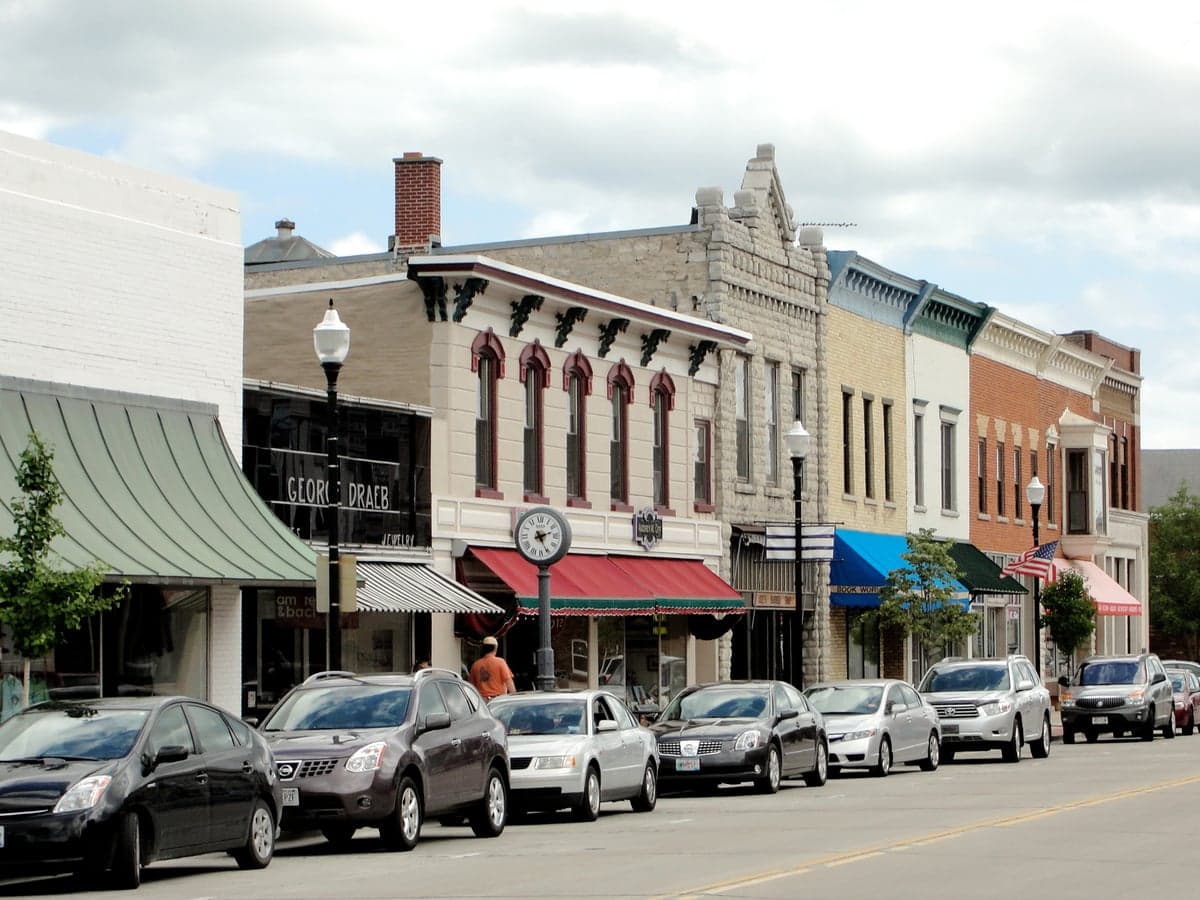
Photo: Wikipedia
Personal Sovereignty in Sturgeon Bay, WI
Viable for self-reliance. Generally workable, though some barriers may limit total independence.
What does Personal Sovereignty tell us?
Personal Sovereignty measures your capacity for self-reliance and independence with minimal government friction. Higher scores mean fewer barriers between you and the way you want to live... but it assumes you have the space you need and good neighbors.
What does this tell us?
Personal Sovereignty measures your capacity for self-reliance and independence with minimal government friction. Higher scores mean fewer barriers between you and the way you want to live... but it assumes you have the space you need and good neighbors.
State Policy
Energy independence: Importer (18% of energy produced in-state)
Personal Liberty
Homesteading

Personal Liberty Analysis
Sturgeon Bay, Wisconsin, offers a notably high degree of personal sovereignty, anchored in Wisconsin’s strong tradition of local control, a relatively light regulatory touch, and robust protections for individual rights. For a conservative-leaning individual or family, the city presents an environment where self-reliance is not just possible but culturally embedded, with state-level policies on taxes, self-defense, and parental rights generally favoring personal autonomy over government intervention. While Door County’s tourism-driven economy introduces some local regulatory nuance, the overall framework in Sturgeon Bay leans decisively toward empowering residents to make their own choices in daily life, property use, and family matters.
Tax burden and regulatory posture in Door County
Wisconsin’s tax structure is moderate compared to high-tax states, and Sturgeon Bay benefits from this balance. The state’s flat income tax rate of 4.4% (as of 2026) is predictable and relatively low, while the state sales tax is 5%, with Door County adding a 0.5% local sales tax for a total of 5.5% on most goods. Property taxes are the primary local revenue source, and Door County’s effective property tax rate is roughly 1.5% of assessed value, which is above the national average but typical for Wisconsin’s rural and lakeside counties. The regulatory posture in Sturgeon Bay is generally light-touch for residential life. The city does not impose rent control, and zoning is straightforward for standard single-family homes. Business licensing is handled efficiently through the city clerk’s office, and there are no county-level occupational licenses that restrict common trades like landscaping or home repair. However, Door County’s environmental sensitivity—due to its shoreline and tourism—means that shoreline development and wetland permits from the Wisconsin DNR can be more involved than in inland counties. For a homeowner not building on the water, the regulatory burden is minimal, and the city’s planning department is known for being accessible and practical.
Self-defense and gun law specifics in Wisconsin
Wisconsin is a “shall-issue” state for concealed carry permits, meaning that if you meet basic criteria (age 21, no disqualifying criminal record, completion of a state-approved training course), the county sheriff must issue the permit. Sturgeon Bay residents apply through the Door County Sheriff’s Department, and processing times are typically under 30 days. The state also has preemption of local firearm ordinances, so Sturgeon Bay cannot enact its own bans on carry or storage that are stricter than state law. This means no local magazine bans, no “assault weapon” registries, and no additional waiting periods beyond the state’s 48-hour handgun purchase waiting period. Wisconsin law also provides a strong castle doctrine with no duty to retreat in one’s home, vehicle, or place of business. The state’s self-defense statute (Wis. Stat. § 939.48) allows the use of deadly force if a person reasonably believes it is necessary to prevent imminent death or great bodily harm to themselves or others. Stand-your-ground protections extend to any place a person is lawfully present, though the law is not as expansive as in some Southern states—Wisconsin does not have a specific “stand your ground” statute, but case law and the castle doctrine effectively provide similar protections in most scenarios. Open carry is legal without a permit for anyone legally allowed to possess a firearm, though local practice in Sturgeon Bay is more discreet carry. The Door County Sheriff’s Office is generally supportive of Second Amendment rights, and there are no known local policies that create friction for lawful gun owners.
Self-reliance and homesteading viability in Sturgeon Bay
For those seeking a self-reliant lifestyle, Sturgeon Bay and the surrounding Door County peninsula offer genuine opportunities. Within the city limits, standard residential lots are typically 0.25 to 0.5 acres, which is enough for a substantial vegetable garden, a small chicken coop, and a few fruit trees. The city’s zoning code permits keeping chickens (hens only, no roosters) on lots of 10,000 square feet or more, with a permit and coop setback requirements. Beekeeping is also allowed with registration. For larger homesteading ambitions, properties just outside city limits in the town of Sturgeon Bay or neighboring towns like Nasewaupee offer 2- to 10-acre parcels at prices significantly lower than lakeshore frontage. Zoning in these rural towns is permissive: livestock (goats, sheep, a family cow) are generally allowed on parcels of 5 acres or more, and there are no county-level bans on rainwater collection or composting toilets, though septic system permits are required. Off-grid feasibility is moderate. Wisconsin’s net metering policy allows grid-tied solar systems to offset electricity bills, and the state has a renewable energy property tax exemption for solar installations. Going fully off-grid (no utility connection) is legally possible but requires a private well (permitted by the DNR) and an approved septic system. The county health department is pragmatic about alternative wastewater systems, but they must meet state code. Winter heating is a serious consideration—wood stoves are common and legal, but must comply with EPA emissions standards. Overall, the regulatory environment for homesteading in Door County is one of the most accommodating in the Upper Midwest, especially compared to more restrictive states like Minnesota or Illinois.
Personal liberties: parental rights, medical autonomy, speech, and property
Wisconsin law provides strong protections for parental rights. The state’s parental consent law for minors’ medical procedures (including abortion and most non-emergency treatments) is among the more robust in the region. Parents have broad authority over their children’s education, with open enrollment options between public school districts and a well-established voucher program for private schools. Sturgeon Bay’s public schools (Sturgeon Bay School District) are responsive to parental input, and the district does not have policies that override parental decisions on curriculum or health matters. Medical autonomy for adults is generally respected. Wisconsin does not have a state-level vaccine mandate for adults, and while COVID-era restrictions were present, they were lifted early compared to neighboring states. The state has a right-to-try law for terminally ill patients and a medical marijuana program (limited to severe conditions as of 2026), though full recreational cannabis remains illegal. Free speech protections are strong, with no local hate speech ordinances that go beyond state law, and public forums (city council meetings, county board meetings) are open with reasonable time limits. Property rights are well-protected under Wisconsin’s eminent domain laws, which require a public purpose and just compensation, and the state has a relatively low rate of regulatory takings claims. Door County does have a land use planning framework that can affect large-scale development, but for individual homeowners, there are no special assessments or HOA-style overlays unless you choose a subdivision with covenants. The city’s enforcement of nuisance ordinances (noise, junk vehicles) is complaint-driven and not aggressive, allowing residents considerable freedom in how they maintain their property.
In the broader context of the Midwest, Sturgeon Bay offers a top-tier environment for personal sovereignty. It combines Wisconsin’s pro-gun, pro-parental-rights state framework with Door County’s practical, small-town governance that rarely intrudes on daily life. The tax burden is moderate but predictable, the regulatory climate for homesteading is favorable, and the community’s culture of self-reliance—shaped by farming, fishing, and tourism—reinforces individual responsibility. For a conservative-leaning family or individual who values freedom from overbearing government, Sturgeon Bay is a strong contender, offering a balance of autonomy and community that is increasingly rare in the United States.

* Values derived from national, state, county, city and local statistics and may differ in a specific area. Last updated: 2026-11-22T17:31:58.000Z
Narrative content on this page is AI-generated and may contain mistakes. Verify any details that matter before acting on them.
ReloMaps may earn a commission from affiliate links at no extra cost to you.

