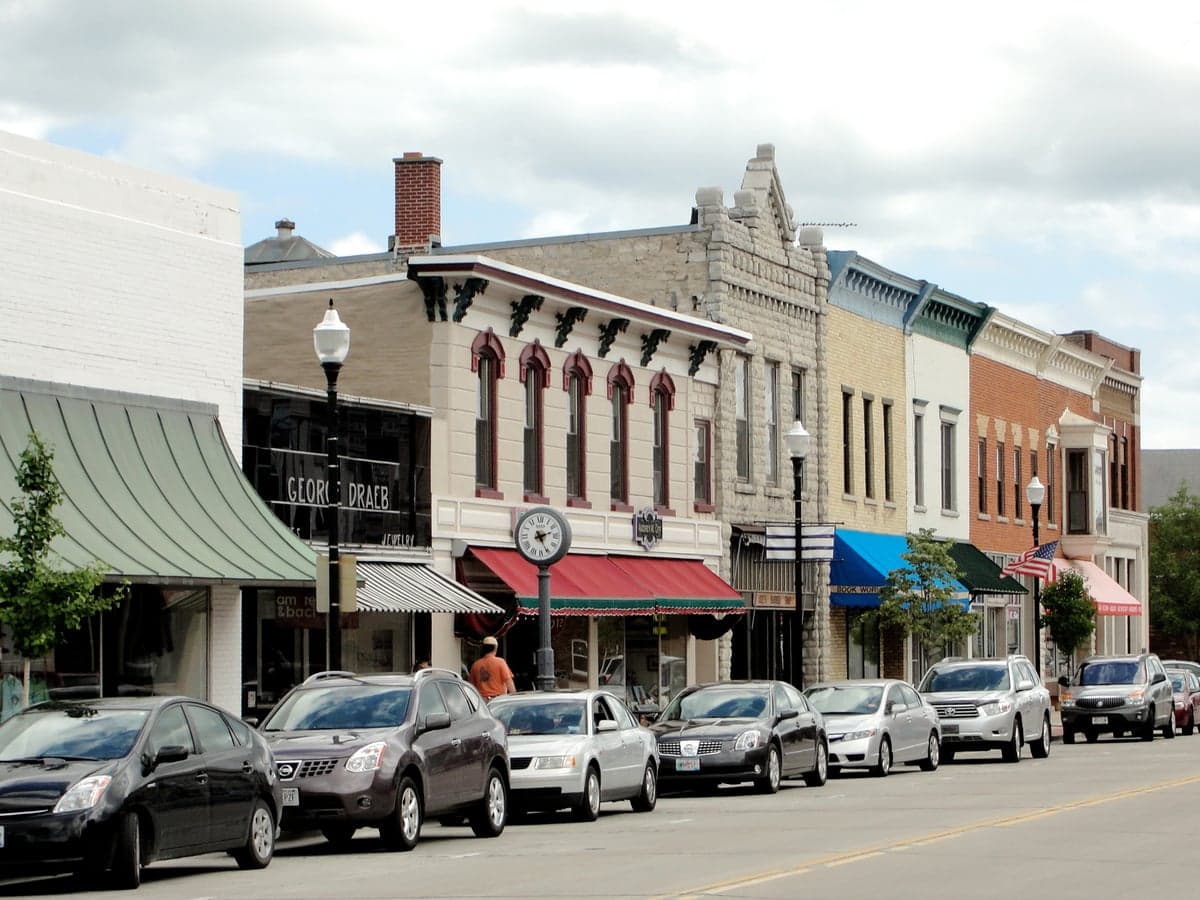
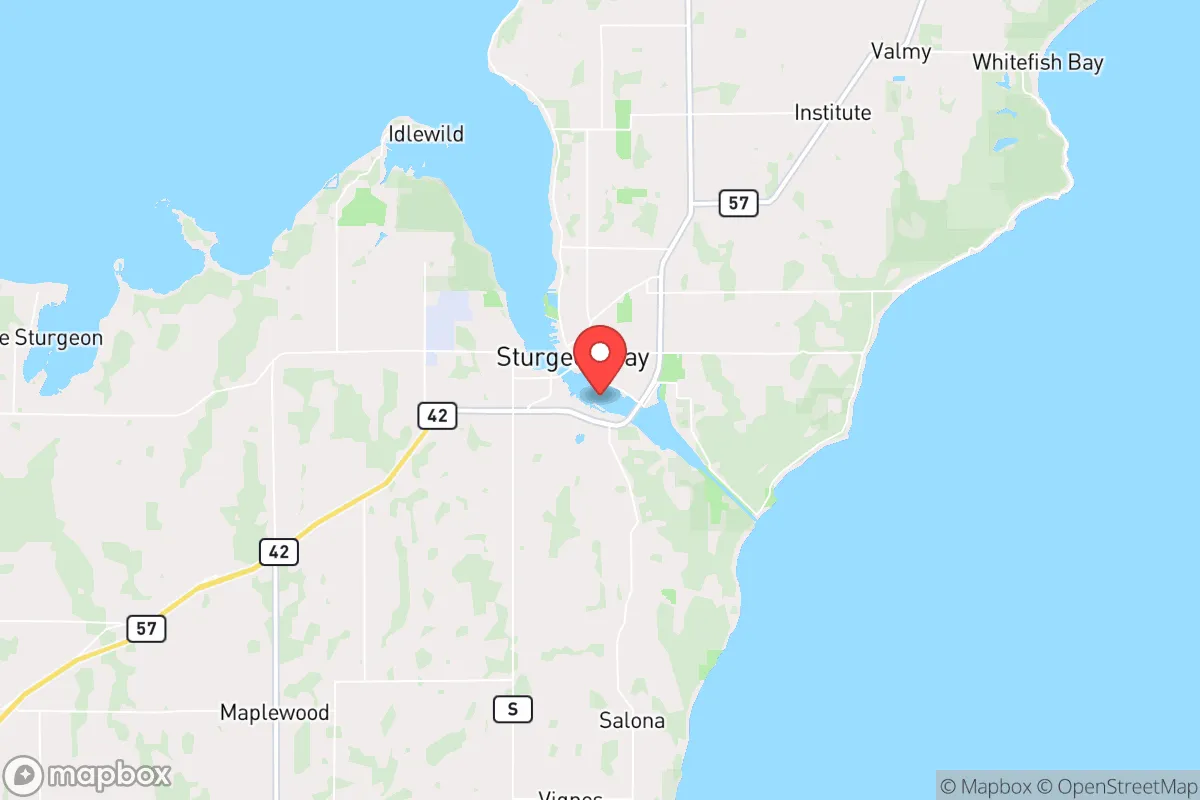
Photo: Wikipedia
Demographics of Sturgeon Bay, WI
Affluence Level in Sturgeon Bay, WI
A middle-class area roughly in line with national averages across income, home values, education, and employment.
People of Sturgeon Bay, WI
The people of Sturgeon Bay, Wisconsin, today number 9,702 and form a predominantly white (89.0%) community with a small but growing Hispanic population (5.2%) and a very low foreign-born share (0.7%). The city is the urban anchor of Door County, known for its working-class shipbuilding heritage and a distinctive blend of Scandinavian-American and German-American cultural traditions. With 27.9% of adults holding a college degree, the population is less educated than the state average but retains a strong sense of local identity rooted in maritime industry and tourism. The city is notably homogeneous compared to the broader region, with Black (1.0%), East/Southeast Asian (0.5%), and Indian subcontinent (0.1%) communities each representing tiny shares.
How the city was settled and grew
Sturgeon Bay’s human history begins with the indigenous Potawatomi and Ho-Chunk peoples, who used the sheltered bay as a seasonal fishing and trading site. European-American settlement began in earnest in the 1830s and 1840s, when Yankee and German immigrants arrived to exploit the area’s abundant timber. The construction of the Sturgeon Bay Ship Canal (completed 1881) transformed the city into a major Great Lakes shipping and shipbuilding hub, drawing waves of Scandinavian immigrants—primarily Norwegian and Swedish—who settled in the West Side neighborhoods near the shipyards. These workers built the city’s iconic red-brick commercial blocks along Third Avenue and established Lutheran churches that remain community anchors. A second wave of German and Polish immigrants arrived in the 1890s-1910s, settling in the East Side district around Michigan Street, where they worked in the growing shipbuilding and limestone quarrying industries. By 1920, Sturgeon Bay was a thriving industrial port with a population of roughly 4,000, overwhelmingly Northern European in origin. The Sunset Park neighborhood, developed in the 1920s, housed middle-class shipyard foremen and small business owners, while the Bayshore area along the waterfront became home to fishing families and seasonal laborers.
Modern era (post-1965)
After the 1965 Hart-Cellar Act, Sturgeon Bay saw virtually no immigration-driven diversification—its foreign-born population remains below 1% today. The city’s demographic story since the 1970s has been one of domestic out-migration of young adults and a modest influx of Hispanic workers, primarily of Mexican origin, drawn by seasonal tourism and agricultural jobs in Door County’s cherry and apple orchards. These families have concentrated in the South Side neighborhoods near the industrial park and along Highway 42/57, where lower housing costs and proximity to seasonal work created a small but visible Hispanic community. The Ottawa neighborhood, a post-war subdivision on the city’s northern edge, absorbed most of the white-collar professionals who commuted to Green Bay or worked in the county’s growing healthcare sector. Meanwhile, the historic West Side and East Side districts have seen population decline as shipbuilding employment shrank from its 1970s peak, leaving older, aging-in-place populations. The city’s Black and East/Southeast Asian populations remain negligible—each under 1.5%—and are dispersed without forming distinct ethnic enclaves.
The future
Sturgeon Bay’s population is projected to remain stable or decline slightly over the next decade, as the city’s median age (roughly 45) and low birth rate offset any in-migration. The Hispanic share is likely to grow gradually, potentially reaching 8-10% by 2035, as Door County’s tourism and agriculture sectors continue to rely on seasonal labor that often becomes permanent. These families will likely continue concentrating in the South Side and along the Highway 42/57 corridor, where affordable housing exists. The white population will continue aging in place in the West Side and East Side historic districts, with younger white families increasingly drawn to newer subdivisions like Idlewild on the city’s western edge. The city’s cultural identity is slowly shifting from a purely Scandinavian-German working-class character to a slightly more diverse, tourism-oriented community, but the pace of change is slow. For a newcomer, Sturgeon Bay offers a stable, safe, and culturally homogeneous environment where the dominant values remain those of its shipbuilding and farming heritage—hard work, neighborliness, and a strong attachment to place.
Sturgeon Bay is becoming a slightly more Hispanic and more service-oriented community, but its core identity as a white, working-to-middle-class Great Lakes town with deep Scandinavian roots will persist for at least another generation. For a family or individual moving in now, the city offers low crime, strong community institutions, and a slower pace of life, but very limited racial or ethnic diversity and a population that skews older. The neighborhoods to watch are the South Side for growing Hispanic community life and Idlewild for newer family housing, while the historic West Side remains the heart of the city’s traditional character.

* Values derived from national, state, county, city and local statistics and may differ in a specific area. Last updated: 2026-11-22T17:31:58.000Z
Narrative content on this page is AI-generated and may contain mistakes. Verify any details that matter before acting on them.
ReloMaps may earn a commission from affiliate links at no extra cost to you.

