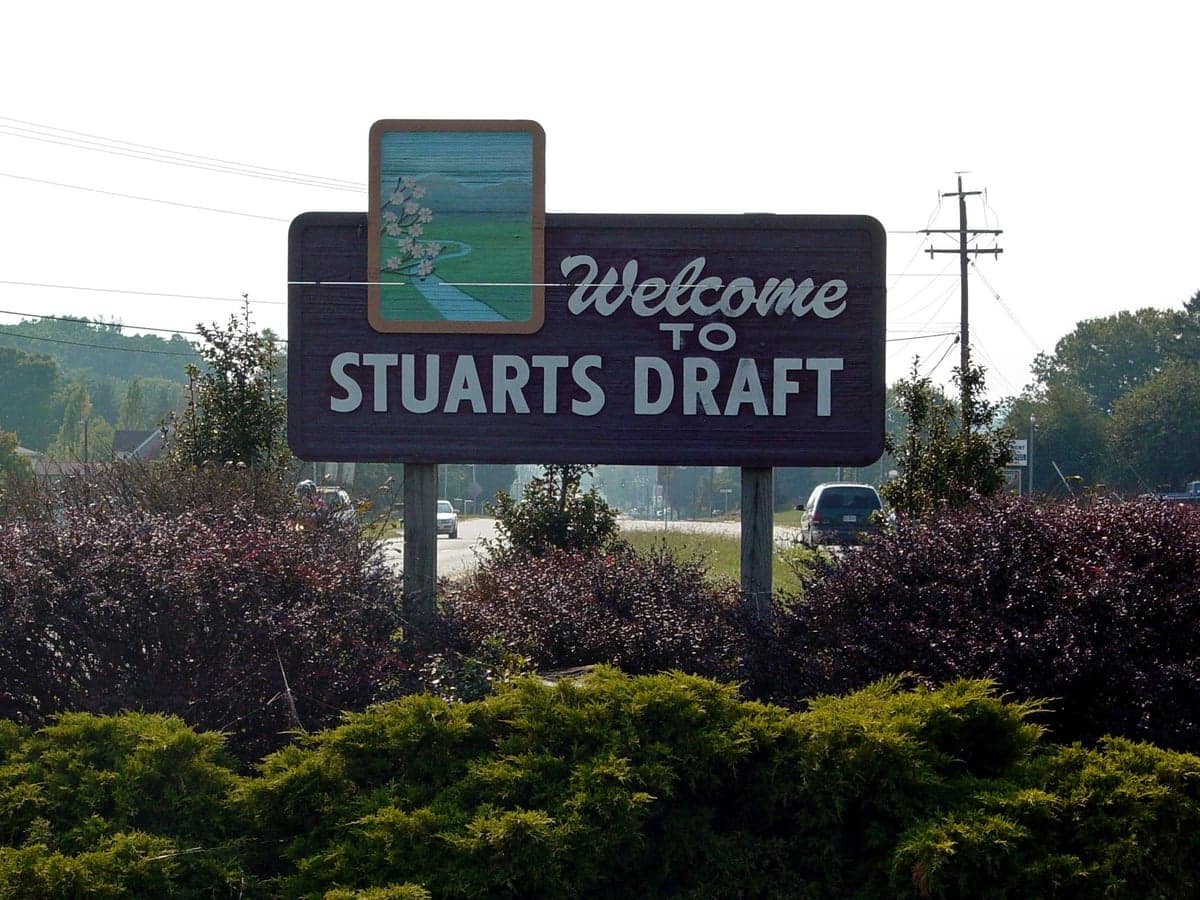
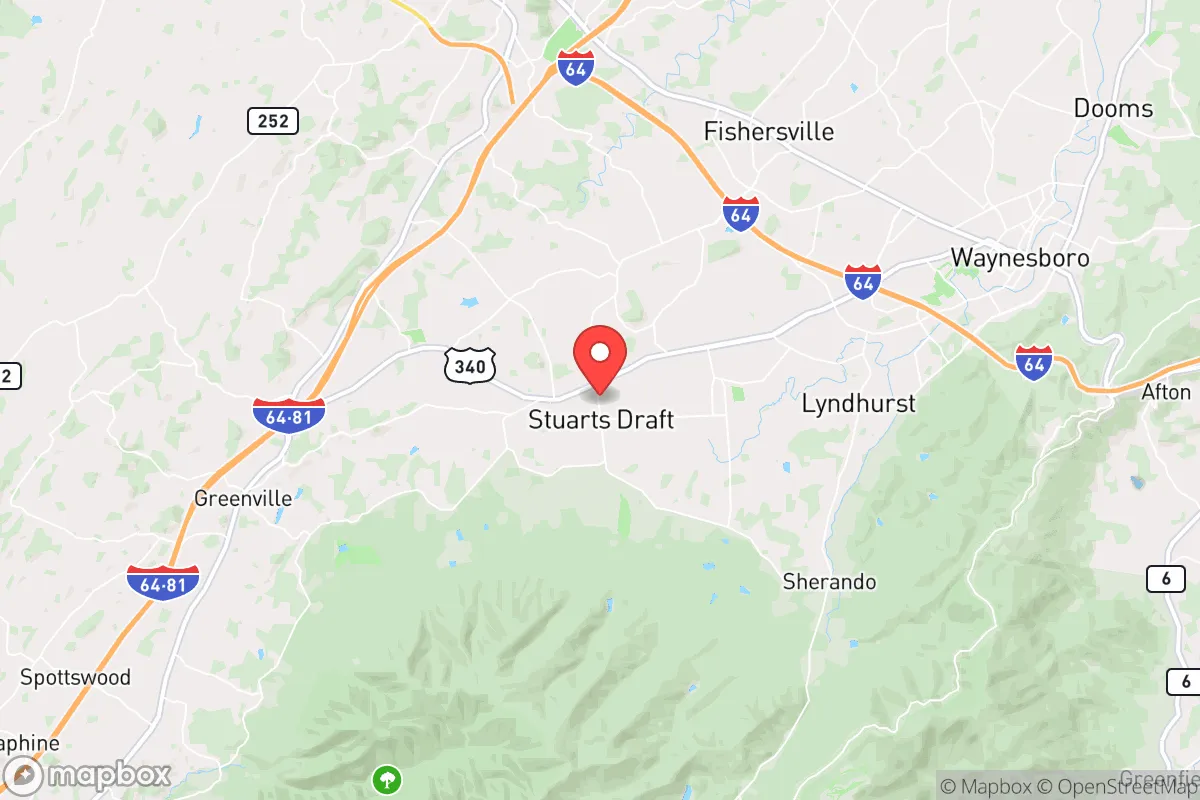
Photo: Wikipedia
Personal Sovereignty in Stuarts Draft, VA
Viable for self-reliance. Generally workable, though some barriers may limit total independence.
What does Personal Sovereignty tell us?
Personal Sovereignty measures your capacity for self-reliance and independence with minimal government friction. Higher scores mean fewer barriers between you and the way you want to live... but it assumes you have the space you need and good neighbors.
What does this tell us?
Personal Sovereignty measures your capacity for self-reliance and independence with minimal government friction. Higher scores mean fewer barriers between you and the way you want to live... but it assumes you have the space you need and good neighbors.
State Policy
Energy independence: Importer (32% of energy produced in-state)
Personal Liberty
Homesteading

Personal Liberty Analysis
Stuarts Draft, Virginia, offers a personal sovereignty environment that leans heavily on the state’s strong preemption laws and a rural, low-density local culture, creating a practical zone of autonomy for residents who value minimal government interference. While Augusta County, where Stuarts Draft is located, does not have the extreme libertarian reputation of some western states, its combination of Virginia’s Second Amendment sanctuary status, relatively low property taxes, and a county government that generally avoids over-regulation makes it a solid choice for those prioritizing self-reliance. The area’s autonomy is less about explicit legal protections for off-grid living and more about the de facto freedom that comes from low population density and a county commission that tends to favor property rights over zoning enforcement.
Tax burden and regulatory posture in Augusta County
Augusta County maintains a relatively light tax burden compared to Northern Virginia and many urban areas, with a real property tax rate of approximately $0.54 per $100 of assessed value as of 2025. This is below the Virginia state average and significantly lower than cities like Charlottesville or Fairfax County. The county does not impose a local income tax, and Virginia’s state income tax is a flat rate of 5.75% for most earners. Sales tax in Augusta County is 5.3% (state plus local), which is moderate. The regulatory posture is best described as pragmatic and low-touch for most residential and agricultural uses. The county’s zoning ordinance is relatively permissive in rural areas, with no countywide building code enforcement for single-family homes outside of subdivisions—though the Virginia Uniform Statewide Building Code applies to new construction. Permits are required for structural work, but enforcement is complaint-driven rather than proactive. Business licensing is straightforward, and there are no county-level occupational taxes that burden independent contractors or small-scale home-based businesses. For a reader comparing to states like California or New York, Augusta County’s regulatory environment feels notably hands-off.
Self-defense and gun law specifics in Stuarts Draft
Virginia is a shall-issue state for concealed handgun permits, and Augusta County has been a vocal Second Amendment sanctuary since 2019, with the Board of Supervisors passing a resolution affirming its commitment to not fund enforcement of any future state-level gun restrictions deemed unconstitutional. This means local law enforcement is unlikely to cooperate with aggressive state firearm regulations. Open carry is legal without a permit for anyone 18 or older who can legally possess a firearm. Concealed carry requires a permit, but the process is straightforward: a background check and proof of a firearms safety course. Virginia does not have a red flag law as of 2026, though it was debated in prior sessions. There are no county-specific magazine capacity or assault weapon bans—those would have to come from the state level, and Augusta County’s sanctuary status provides a layer of local resistance. For self-defense in the home, Virginia law codifies the Castle Doctrine, with no duty to retreat if you are lawfully present. Stand Your Ground laws apply in public spaces as well. The sheriff’s office in Augusta County is generally viewed as pro-Second Amendment, and permit processing times are typically under 45 days. For a family or individual prioritizing firearm rights, Stuarts Draft offers one of the more favorable environments in the Mid-Atlantic region.
Self-reliance and homesteading viability: lot sizes, zoning, and off-grid feasibility
Augusta County’s zoning code allows for substantial homesteading flexibility in its Agricultural (A) and Rural Residential (RR) districts, which cover most of the Stuarts Draft area. Minimum lot sizes in the Agricultural district are 2 acres, but many parcels in the Draft area are 5 to 20 acres, providing ample space for gardens, small livestock, and even a few head of cattle. Chickens, goats, and bees are permitted without special permits in most rural zones, though pigs and larger livestock may require a conditional use permit depending on proximity to neighbors. Off-grid living is legally feasible but with caveats: Virginia state law requires new dwellings to have a septic system approved by the health department, and the county requires a well permit for private water. Solar panels are allowed by right, and there are no county-level restrictions on battery storage or generator use. However, complete off-grid independence is complicated by the requirement for a septic system—composting toilets are not recognized as a primary sanitation method under current health codes. Rainwater collection is legal and encouraged for non-potable uses. The county does not have a nuisance ordinance that would restrict clotheslines, composting, or keeping a modest number of free-range poultry. For a family wanting to grow food, raise animals, and reduce reliance on municipal utilities, Stuarts Draft’s rural zoning and light enforcement culture make it a viable location.
Personal liberties: parental rights, medical autonomy, speech, and property
Virginia law generally respects parental rights in education and medical decisions, though the state has moved toward more centralized control in recent years. Augusta County Public Schools, which serve Stuarts Draft, have a conservative school board that has resisted certain state mandates, including some LGBTQ+ curriculum requirements and mask mandates during the pandemic. Parents have the right to opt their children out of specific instructional content, and the district maintains a policy of notifying parents about changes in a student’s health or well-being. Medical autonomy is a mixed picture: Virginia does not have a state-level vaccine mandate for adults, and COVID-19 mandates were never enforced locally. However, the state does require certain childhood immunizations for school attendance, with medical and religious exemptions available. The religious exemption process has been tightened in recent years, but Augusta County’s health department has not been aggressive in enforcement. Speech and assembly rights are fully protected under the First Amendment, and the county has not passed any local ordinances restricting political signage, leafleting, or public gatherings. Property rights are strong: Augusta County does not have a countywide historic preservation overlay that restricts exterior modifications, and there are no rent control or landlord licensing ordinances. Eminent domain is rarely used for non-transportation projects. For a reader concerned about government overreach in family and medical matters, Stuarts Draft offers a relatively permissive environment compared to Virginia’s urban crescent.
Overall, Stuarts Draft provides a high degree of personal sovereignty relative to most of Virginia and the Mid-Atlantic, particularly for those who value firearm rights, low taxes, and the ability to live semi-independently on a rural lot. It does not match the extreme libertarian legal frameworks of states like Alaska or New Hampshire, but within the constraints of Virginia state law, Augusta County’s local governance is notably hands-off. The trade-off is that residents must accept Virginia’s state-level income tax and some regulatory baseline—such as septic requirements and school immunization mandates—that are more restrictive than in the most freedom-oriented states. For a conservative-leaning family or individual seeking a balance of autonomy, affordability, and community, Stuarts Draft ranks well above the national median for personal liberty, with the added benefit of being within a two-hour drive of major employment centers like Charlottesville and Harrisonburg.

* Values derived from national, state, county, city and local statistics and may differ in a specific area. Last updated: 2026-11-22T13:57:50.000Z
Narrative content on this page is AI-generated and may contain mistakes. Verify any details that matter before acting on them.
ReloMaps may earn a commission from affiliate links at no extra cost to you.

