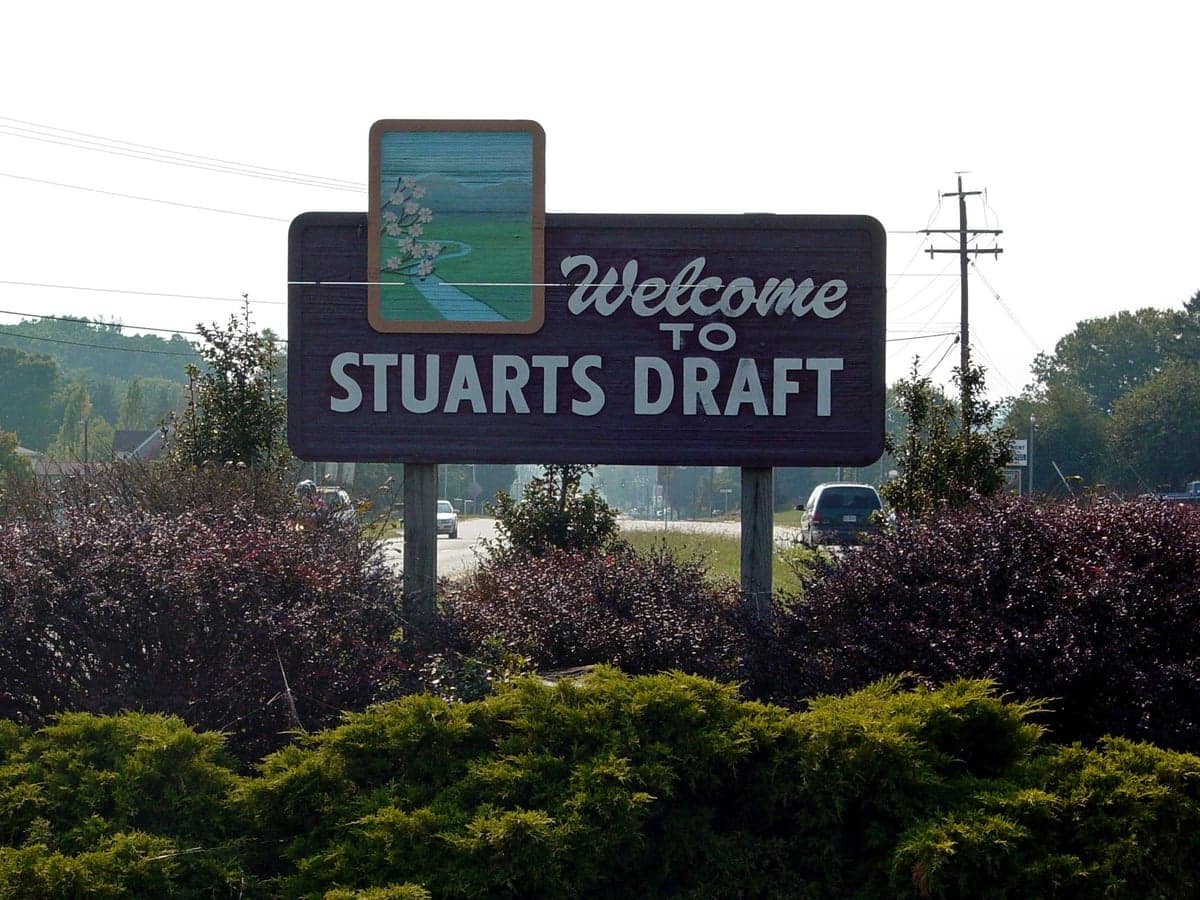
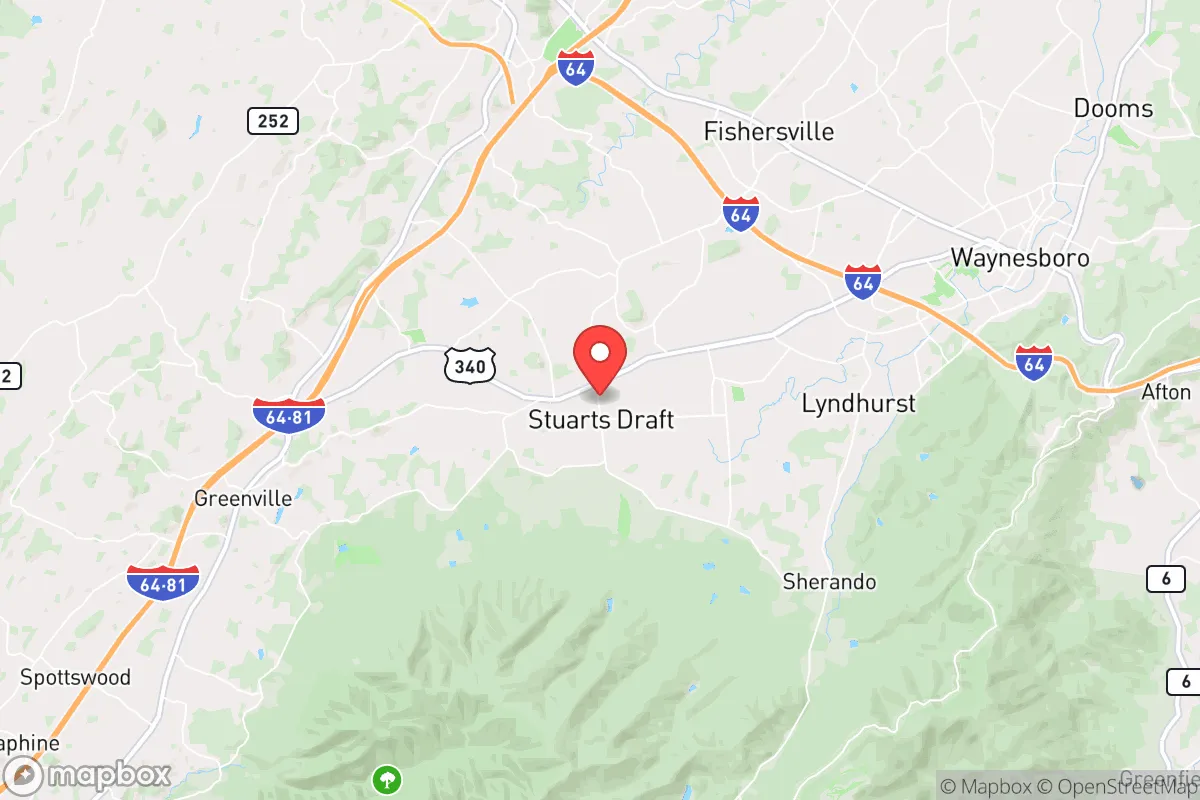
Photo: Wikipedia
Demographics of Stuarts Draft, VA
Affluence Level in Stuarts Draft, VA
A middle-class area roughly in line with national averages across income, home values, education, and employment.
People of Stuarts Draft, VA
Stuarts Draft, Virginia, is a small, predominantly white community of nearly 12,000 residents, shaped by its rural Appalachian roots and a steady, modest influx of families seeking affordable housing and proximity to the Shenandoah Valley’s employment centers. The population is notably less diverse than the national average, with 89.4% identifying as white, and a foreign-born share of just 1.7%—a figure that underscores the area’s limited immigration history. Residents often describe the town as a tight-knit, family-oriented place where church communities and local sports leagues form the social backbone, and where the pace of life remains slower than in nearby Staunton or Waynesboro. For a newcomer, Stuarts Draft offers a quiet, low-crime environment, but those seeking significant ethnic or cultural diversity will find it largely absent.
How the city was settled and grew
Stuarts Draft’s original population was drawn by the fertile soils of the South River valley and the promise of land grants following the American Revolution. The area was named after an early settler, William Stuart, who operated a grist mill along a “draft” (a stream) in the late 1700s. The first wave of settlers were primarily Scots-Irish and German farmers, who established homesteads along what is now the Old White Bridge Road corridor and the Lyndhurst area to the south. These families built the region’s earliest churches, such as Tinkling Spring Presbyterian Church (founded 1740), which remain community anchors today. Throughout the 19th and early 20th centuries, the population grew slowly, tied to agriculture and later to the railroad that passed through the Stuarts Draft Depot district. By 1950, the town was still a crossroads hamlet of fewer than 1,000 residents, almost entirely white and native-born, with a handful of Black families living in the Old Greenville Road area, descendants of post-Civil War sharecroppers.
Modern era (post-1965)
The modern demographic story of Stuarts Draft begins after 1965, but unlike many American towns, it was not driven by the Hart-Cellar Act’s immigration reforms. Instead, the population grew through domestic in-migration from other parts of Virginia and the Mid-Atlantic, attracted by the expansion of manufacturing and distribution centers along the I-81 corridor. The opening of the Stuarts Draft Industrial Park in the 1970s, anchored by companies like the Hershey Company’s chocolate plant (which opened in 1973), drew working-class families from rural Appalachia and the Rust Belt. These new arrivals settled in subdivisions like South River Estates and Draftwood, which expanded the town’s footprint northward. The Hispanic population, now 4.0%, began to appear in the 1990s, primarily as laborers in poultry processing and agriculture, with a small cluster forming near the Draft Avenue corridor. The Black population, also 4.0%, has remained stable, concentrated in the historic Old Greenville Road area and newer rental developments near the industrial park. The East/Southeast Asian population (0.4%) is negligible, consisting of a handful of families employed in professional roles at the local hospital or university in nearby Harrisonburg. The Indian-subcontinent population is effectively zero. The college-educated share stands at just 20.1%, reflecting the town’s blue-collar character, where a high school diploma and trade certification remain the norm.
The future
Stuarts Draft is likely to remain a predominantly white, working-class community over the next 10–20 years, with only modest demographic shifts. The Hispanic share may grow slowly, driven by continued demand for agricultural and manufacturing labor, but the foreign-born population is unlikely to exceed 3–4% given the area’s limited rental housing stock and lack of established ethnic enclaves. The white population will continue to age in place, while younger families—many priced out of Charlottesville or Northern Virginia—will move into new subdivisions like Mountain View Estates and the planned South River Crossing development. These newcomers are likely to be culturally conservative and family-oriented, reinforcing the town’s existing identity. The Black and Asian populations are expected to remain static, as there are no major employers or institutions attracting significant non-white migration. The town’s cultural identity will remain rooted in evangelical Christianity, outdoor recreation, and local sports, with little pressure toward the kind of diversification seen in larger Virginia cities.
For a family or individual moving to Stuarts Draft today, the bottom line is this: you are choosing a stable, affordable, and culturally homogeneous community where change comes slowly. The population is not becoming more diverse in any meaningful sense, and the social fabric is built around long-established churches, schools, and family networks. If you value low crime, good schools, and a predictable, conservative social environment, Stuarts Draft will feel like a safe bet. If you seek ethnic diversity, a vibrant immigrant community, or a rapidly evolving cultural scene, you will need to look elsewhere in the Shenandoah Valley.

* Values derived from national, state, county, city and local statistics and may differ in a specific area. Last updated: 2026-11-22T13:57:50.000Z
Narrative content on this page is AI-generated and may contain mistakes. Verify any details that matter before acting on them.
ReloMaps may earn a commission from affiliate links at no extra cost to you.

