
Photo: Wikipedia
Political ClimatePolitical Climate in Stonington, CT
District shown is the primary district for this city’s centroid. Cities may span multiple districts.
Local Political AnalysisPolitical Analysis of Stonington, CT
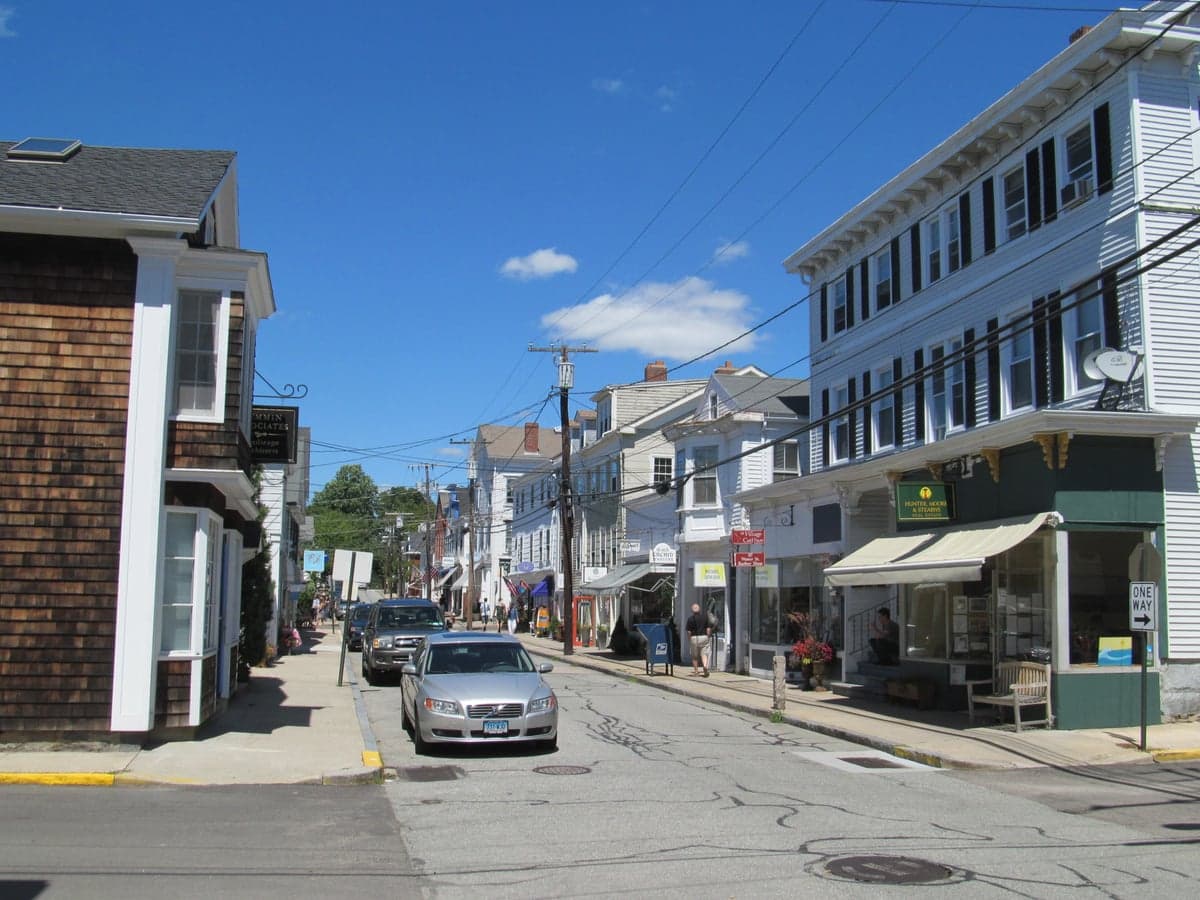
Stonington, Connecticut, has a Cook PVI of D+4, meaning it leans about four points more Democratic than the national average, but don't let that number fool you into thinking it's a monolithic progressive stronghold. The real story here is a town caught between its old-school, live-and-let-live New England character and the creeping influence of coastal Connecticut's liberal machine. You'll find a lot of folks who've been here for generations who vote their conscience, not a party line, and they're getting increasingly uneasy about how fast things are shifting under their feet.
How it compares
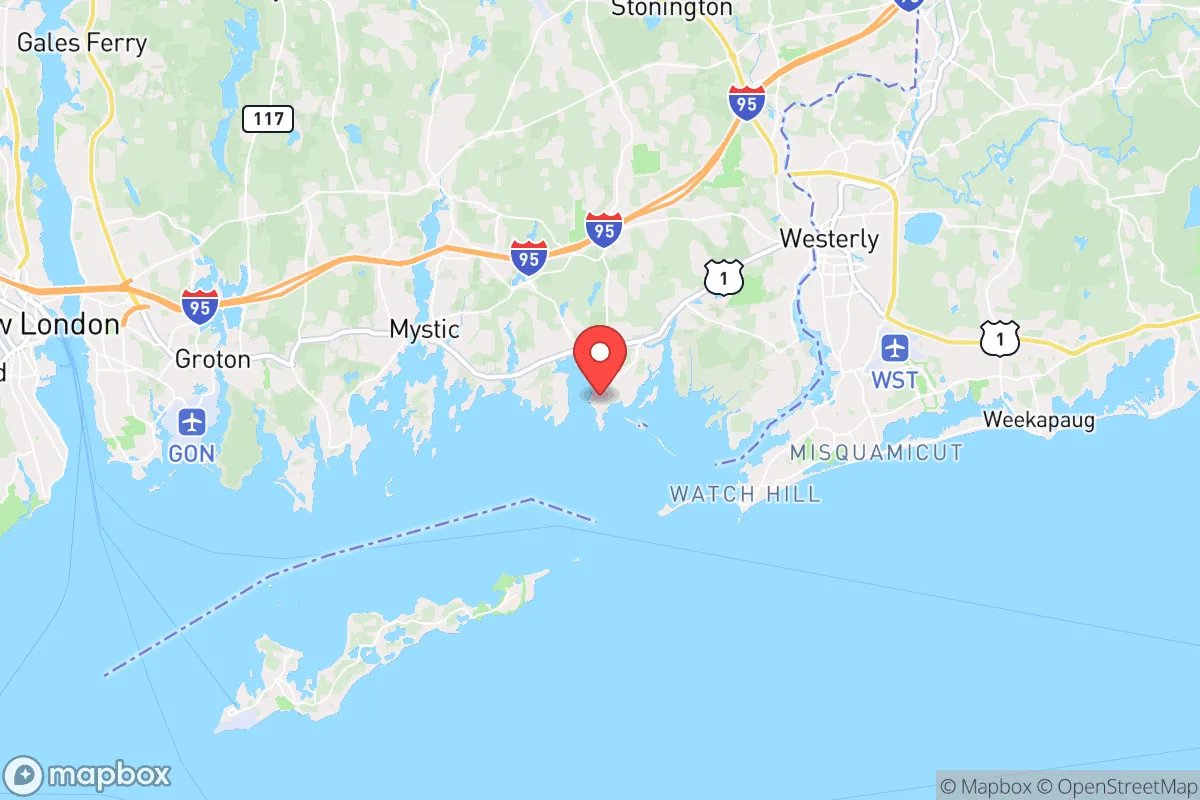
To really get Stonington, you have to look at its neighbors. Head west to Mystic, and you're in a tourist-driven bubble where the politics are reliably blue and the conversations revolve around boutique zoning and bike lanes. Go north to North Stonington or east into Hopkinton, Rhode Island, and you're in deep-red territory where the Second Amendment is practically a birthright and property taxes are the main political fight. Stonington sits right in the middle, but the pressure is coming from the coast. The village of Stonington Borough, with its waterfront mansions and art galleries, votes like a mini-Brooklyn, while the more rural, working-class parts of town—Pawcatuck, the farms out by the Rhode Island line—still hold onto that independent streak. The D+4 rating masks a real cultural divide: the Borough and Mystic pull the numbers left, but the rest of town is fighting to keep its character.
What this means for residents
For a long-time resident, the biggest red flag is how local government has started to mirror Hartford's priorities. You're seeing more talk about "equity" in school policies and zoning changes that sound good on paper but end up giving town hall more say over what you can do with your own property. The push for denser housing, for example, is framed as affordability, but it's really about overriding the single-family zoning that let families have a little breathing room. The school board has gotten more activist, and there's a growing sense that if you don't fall in line with the progressive consensus on everything from energy mandates to diversity training, you're labeled as out of touch. It's not a full-on takeover yet, but the trajectory is concerning—more regulations, more committees, less trust in residents to make their own choices.
On the ground, this means you have to be more careful about who you talk to at the town dump or the local diner. The old Stonington, where you could disagree with your neighbor over a beer and still help him fix his tractor, is fading. Now, political conversations get tense fast. The tax burden is also a quiet issue—property taxes keep climbing to fund school programs and town staff that a lot of people never asked for. If you're a homeowner or a small business owner, you feel the squeeze, and you wonder when the next mandate will come down from the state capital.
Culturally, Stonington still has its charms—the fishing fleet, the quiet beaches, the stone walls—but the policy drift is real. The town's embrace of coastal resilience plans and climate action committees sounds reasonable until you realize it's another layer of bureaucracy telling you how to maintain your seawall or what kind of car you can drive. For now, the best advice is to keep your head down, vote in every local election, and remember that the D+4 label doesn't have to be permanent—it just takes a few more folks showing up to town meetings to remind everyone that personal freedom isn't a partisan issue.

State Political ClimatePolitical Climate in Connecticut
State Political AnalysisPolitical Environment in the State
Connecticut has shifted from a classic swing state to a reliably blue stronghold over the past two decades, with Democrats now holding every statewide office, both U.S. Senate seats, and a supermajority in the state House. The state voted for Hillary Clinton by 13 points in 2016, Joe Biden by 20 points in 2020, and Kamala Harris by roughly 14 points in 2024, reflecting a durable Democratic lean driven by the affluent, educated suburbs of Fairfield County and the urban cores of Hartford and New Haven. For a conservative considering relocation, the state’s political trajectory is unmistakably progressive, with a tax-and-regulate posture that has intensified since the early 2010s.
Urban vs. rural divide
The political map of Connecticut is a tale of three regions. Fairfield County, anchored by cities like Stamford, Bridgeport, and Danbury, is the state’s Democratic engine—Stamford alone delivered a 30-point margin for Biden in 2020. The I-95 corridor from Greenwich to New Haven is packed with commuters to New York City, and these towns vote like Manhattan suburbs: heavily blue, socially liberal, and economically interventionist. In contrast, the eastern half of the state—places like Windham County and towns such as Killingly and Plainfield—is more rural, working-class, and leans Republican, though not enough to offset the population weight of the coast. The Litchfield Hills in the northwest, including Torrington and Litchfield itself, are a mixed bag, with some conservative pockets but trending purple as second-home buyers from New York move in. The real divide isn’t just urban vs. rural—it’s the wealthy, educated coastal corridor versus the rest of the state, and the coast has the numbers.
Policy environment
Connecticut’s policy environment is a case study in progressive governance. The state has a progressive income tax with rates up to 6.99%, one of the highest property tax burdens in the nation (average effective rate around 2.1%), and a sales tax of 6.35% that exempts most services but hits goods hard. In 2023, the legislature passed a paid family and medical leave program funded by a 0.5% payroll tax on all workers, and a clean slate law that automatically erases certain criminal records after seven years. On education, Connecticut spends more per pupil than almost any other state, but school choice is limited—charter schools are capped, and the state’s Open Choice program is small and lottery-based. Healthcare is heavily regulated, with a state-run exchange (Access Health CT) and strict insurance mandates. Election laws are among the most liberal: no-excuse absentee voting was made permanent in 2023, and early voting was expanded to 14 days in 2024. For a conservative, the message is clear: the state government is comfortable taxing, spending, and regulating at levels that would be unthinkable in Texas or Florida.
Trajectory & freedom
On personal liberty, Connecticut has been moving in one direction—less free—especially on gun rights, parental rights, and medical autonomy. The state already had some of the strictest gun laws in the nation after Sandy Hook, but in 2023, the legislature passed HB 6667, which banned open carry of handguns, raised the minimum age to buy a long gun to 21, and required a permit for purchasing any firearm. In 2024, a new law SB 1164 expanded the state’s “red flag” law to allow police to seize firearms without a court order in certain emergency situations. On parental rights, the state passed a law in 2023 that prohibits school districts from notifying parents if a child changes their gender identity or pronouns—a direct blow to parental authority. On medical autonomy, Connecticut was one of the first states to pass a shield law protecting doctors who prescribe abortion pills to out-of-state patients, and it expanded Medicaid coverage for gender-affirming care. Property rights are also constrained: the state’s affordable housing statute (8-30g) allows developers to override local zoning if a town doesn’t have enough affordable housing, a policy that has sparked fierce resistance in suburbs like Fairfield and Westport. The trajectory is clear: more regulation, less individual discretion.
Civil unrest & political movements
Connecticut hasn’t seen the kind of violent protests that rocked Portland or Seattle, but it has its flashpoints. In 2020, Black Lives Matter protests in New Haven and Hartford were large but mostly peaceful, though they led to calls to defund the police that were largely rejected by moderate Democrats. The state’s sanctuary policy—enacted in 2013 via Executive Order 42 and codified into law in 2021—limits local police cooperation with ICE, and has been a source of tension in more conservative towns like Bristol and Southington, where residents have pushed back against the policy. Election integrity became a hot issue after the 2020 election, when the state’s expanded absentee voting (due to COVID) led to a lawsuit from the Republican Party alleging irregularities, though no widespread fraud was found. The most visible political movement on the right is the “We the People” coalition, which has organized around school board races and parental rights, particularly in the eastern part of the state. In Killingly, a school board dispute over a transgender student’s participation in sports drew national attention in 2022, with conservative parents packing meetings. These are localized battles, not a statewide uprising, but they show the cultural fault lines.
Projection
Over the next 5-10 years, Connecticut is likely to become more, not less, progressive. The demographic trends are unfavorable for conservatives: the state’s population is aging, with a net outflow of younger families to lower-tax states like Florida and Texas, while the remaining population is increasingly concentrated in the coastal cities and suburbs. In-migration from New York City—driven by remote work—has brought more liberal voters to Fairfield County and even into Litchfield County. The state’s fiscal situation is precarious, with a massive unfunded pension liability (over $30 billion), which will likely force either higher taxes or cuts to services—neither of which will attract conservatives. The Republican Party in Connecticut is weak, with no statewide elected officials and a shrinking base in the suburbs. A conservative moving in now should expect to live under a one-party state where their vote for governor or senator is essentially symbolic. The best-case scenario is that the state’s fiscal crisis eventually forces moderation, but that’s a long shot.
For a conservative considering Connecticut, the bottom line is this: you’ll be paying high taxes for a government that is actively hostile to gun rights, parental authority, and local control. The state’s natural beauty, excellent schools in certain districts, and proximity to New York are real draws, but they come at the cost of living under a policy regime that is increasingly at odds with traditional values. If you’re looking for a place where your vote matters and your freedoms are respected, Connecticut is not it. If you’re willing to pay a premium for coastal living and can navigate the regulatory maze, you’ll find a quiet, safe place—but don’t expect the political winds to shift in your favor anytime soon.
* Values derived from national, state, county, city and local statistics and may differ in a specific area. Last updated: 2026-04-19T08:24:39.000Z
Narrative content on this page is AI-generated and may contain mistakes. Verify any details that matter before acting on them.
ReloMaps may earn a commission from affiliate links at no extra cost to you.

