

Photo: Wikipedia
Political ClimatePolitical Climate in Stockbridge, GA
District shown is the primary district for this city’s centroid. Cities may span multiple districts.
Local Political AnalysisPolitical Analysis of Stockbridge, GA
Stockbridge, Georgia, sits deep in a Democratic stronghold, with a Cook PVI of D+21 that makes it one of the most reliably blue spots in the Atlanta metro area. That wasn't always the case—I remember when this town was a quiet, conservative-leaning crossroads where folks kept to themselves and the county commission didn't meddle much. But over the last decade or so, the political winds have shifted hard, driven by rapid suburban growth and an influx of voters from more progressive parts of the metro. Today, Stockbridge votes overwhelmingly Democratic in national and state races, and the local government has followed suit, pushing policies that many longtime residents see as creeping government overreach into everyday life.
How it compares
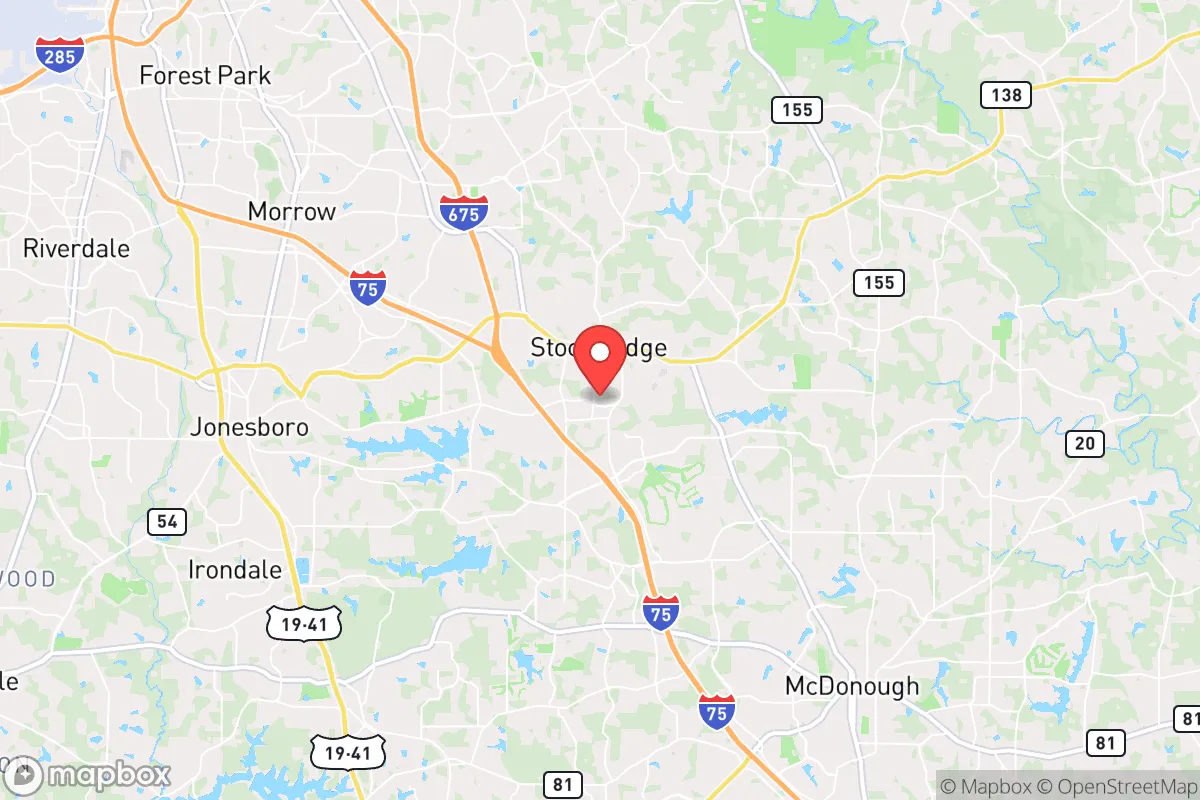
To understand Stockbridge's politics, you have to look at its neighbors. Just a few miles north, McDonough in Henry County leans more moderate—still blue, but with a D+12 PVI that reflects a slower pace of change and a stronger base of fiscal conservatives. Head west to Fayetteville in Fayette County, and you're in a solidly red area (R+15) where property taxes stay low and the school board fights to keep curriculum decisions local. Even closer, Hampton and Locust Grove in Henry County have pockets of conservative resistance, but Stockbridge itself is the epicenter of the county's progressive shift. The contrast is stark: while McDonough still has a Republican mayor, Stockbridge's city council has moved to expand rental inspection programs and zoning overlays that feel like the government getting too cozy with your private property decisions.
What this means for residents
For folks who value personal freedoms, the trend in Stockbridge is concerning. The local government has been aggressive with new ordinances—think stricter noise regulations, limits on short-term rentals, and a push for higher minimum wages that small business owners say squeeze them out. Property taxes have crept up as the city funds more social programs and public art projects, and there's talk of a citywide composting mandate that would require homeowners to separate food waste. It's the kind of stuff that sounds good on paper but feels like the government is inserting itself into your kitchen and backyard. On the flip side, if you're a renter or a young professional who likes walkable development and government services, you might appreciate the new sidewalks and bus routes. But for anyone who moved here to escape the bureaucracy of Atlanta proper, the vibe is shifting uncomfortably in that direction.
Cultural and policy distinctions
One thing that still sets Stockbridge apart is its strong church community—there are more houses of worship per capita than in neighboring Clayton County, and many of them lean theologically conservative, even if the politics don't match. That creates a weird tension: you'll hear sermons about traditional values on Sunday, then see the city council vote to expand nondiscrimination ordinances that some pastors argue infringe on religious liberty. The school board has also been a flashpoint, with debates over critical race theory and gender-inclusive policies that have drawn heated town hall meetings. Long-term, I see Stockbridge continuing to drift left as more young families and commuters from Atlanta move in, drawn by lower home prices but bringing big-city expectations. If you value limited government and local control, it might be worth looking at Hampton or even Griffin to the south, where the political climate still respects the idea that your life is your own business.

State Political ClimatePolitical Climate in Georgia
State Political AnalysisPolitical Environment in the State
Georgia has shifted from a reliably Republican stronghold to a true battleground state over the past two decades, with the 2020 presidential election being decided by fewer than 12,000 votes and both Senate seats flipping Democratic in 2021. The state’s overall partisan lean now sits at roughly R+3 to D+1 depending on the cycle, driven by explosive growth in the Atlanta metro area and a counterbalancing consolidation of rural and exurban conservative votes. For a conservative considering relocation, the key takeaway is that Georgia remains politically competitive but is trending leftward in its urban core, while the rest of the state holds firm—and in some areas, is pushing back harder than ever.
Urban vs. rural divide
The political map of Georgia is a tale of two Georgias. Metro Atlanta—specifically Fulton, DeKalb, Cobb, Gwinnett, and Clayton counties—now accounts for over 60% of the state’s population and votes overwhelmingly Democratic. Gwinnett County flipped from red to blue in 2016 and has only deepened since, while Cobb County, once a Republican suburban stronghold, went for Biden by 14 points in 2020. Meanwhile, rural and small-town Georgia—places like Rome, Valdosta, and Tifton—vote Republican by margins of 30 to 50 points. The exurban ring of counties like Forsyth, Cherokee, and Paulding remain solidly red, with Forsyth County voting 65% for Trump in 2020. The divide isn’t just geographic; it’s cultural. Atlanta’s core is increasingly progressive, cosmopolitan, and diverse, while the rest of the state is traditional, churchgoing, and skeptical of government overreach. This tension defines every statewide election.
Policy environment
Georgia’s state-level policy environment is broadly conservative, but with notable exceptions. The state has a flat income tax of 5.49%, which is being phased down to 4.99% by 2029 under HB 1437, signed by Governor Brian Kemp in 2022. Property taxes are relatively low, with a median effective rate of 0.87%, and there is no state estate or inheritance tax. On education, Georgia has a robust school choice program—the Georgia Promise Scholarship Act (SB 233), passed in 2024, provides up to $6,500 per student for private school tuition or homeschooling expenses. However, the state also expanded Medicaid under the Affordable Care Act in 2023 via a limited waiver, which some conservatives view as a step toward government-run healthcare. Election laws were tightened after 2020 with SB 202, which added voter ID requirements for absentee ballots, limited drop boxes, and restricted third-party ballot collection. Critics call it voter suppression; supporters call it election integrity. For a conservative, the policy environment is favorable but not perfect—the tax burden is moderate, school choice is real, and the regulatory climate is business-friendly, but the Medicaid expansion and ongoing urban growth signal a slow drift leftward.
Trajectory & freedom
Georgia’s trajectory on personal freedom is mixed. On the positive side, the state passed constitutional carry (HB 218) in 2022, allowing permitless carry of firearms for anyone 21 or older who can legally possess a gun. This was a major win for Second Amendment advocates. On parental rights, Georgia enacted HB 1178 in 2023, which requires schools to notify parents of any changes to a student’s mental, emotional, or physical health—effectively a “parental rights in education” law that prevents schools from hiding gender transitions from parents. However, the state also saw the passage of a hate crimes law (HB 426) in 2020, which some conservatives argue creates special protections for certain groups and could be used to chill speech. Medical freedom took a hit with the 2023 expansion of Medicaid, which ties more Georgians to government healthcare, but the state did not impose COVID-19 vaccine mandates and actually banned them for state employees and contractors via executive order. Property rights remain strong, with no statewide rent control and relatively few zoning restrictions outside of Atlanta. Overall, Georgia is becoming more free on gun rights and parental rights, but less free on healthcare and speech protections.
Civil unrest & political movements
Georgia has been a flashpoint for political activism on both sides. The “Stop Cop City” movement in Atlanta—opposing the construction of a police training facility in DeKalb County—led to months of protests, arson attacks, and the passage of a state law (SB 44) in 2023 that expanded penalties for domestic terrorism and riot-related activities. This law was a direct response to the unrest and is seen by conservatives as necessary to maintain order. Immigration politics are heated: Georgia has a strict E-Verify requirement for employers (HB 87, 2011), but the influx of migrants through the southern border has put pressure on rural counties like Hall County (Gainesville), where the poultry industry relies heavily on immigrant labor. There is no sanctuary city policy in Georgia—state law actually prohibits it—but Atlanta’s city council has declared itself a “welcoming city,” creating tension with state officials. Election integrity remains a live issue: the 2020 election saw a hand recount and multiple lawsuits, and the 2024 cycle is expected to be closely watched. For a new resident, the political climate is visible in yard signs, bumper stickers, and local news—it’s not a place where politics is ignored.
Projection
Over the next 5-10 years, Georgia will likely continue its slow leftward drift, driven by in-migration from blue states into the Atlanta suburbs. The 2020 census showed Georgia gaining a 14th congressional seat, and most of that growth is in Democratic-leaning areas. However, the exurban and rural vote is not shrinking—it’s just being outpaced. The state’s Republican majority in the legislature is likely to hold for the next decade, but statewide races (governor, Senate) will remain toss-ups. For a conservative moving in now, expect to see more blue-leaning policies from the Atlanta city government and possibly from the state if Democrats win the governorship. The key battleground will be the suburban counties of Cobb, Gwinnett, and Henry, where the fight for the soul of Georgia is being waged. If you’re looking for a state where your vote still matters and where conservative values are defended at the state level, Georgia is a good bet—but it’s not Texas or Florida. It’s a purple state with a red legislature and a blue metro, and that tension isn’t going away.
For a new resident, the bottom line is this: Georgia offers a relatively low tax burden, strong gun rights, school choice, and a business-friendly environment, but you’ll need to be politically engaged to keep it that way. The state is not a conservative fortress—it’s a battleground. If you’re moving here, expect to see your values contested in every election, and plan to vote accordingly. The good news is that your vote actually matters here, unlike in deep blue or deep red states. The bad news is that the fight is constant. If you’re okay with that, Georgia is a great place to live, raise a family, and build a business. Just don’t expect it to stay the same—it’s changing fast, and the direction depends on who shows up.
* Values derived from national, state, county, city and local statistics and may differ in a specific area. Last updated: 2026-04-29T23:24:04.000Z
Narrative content on this page is AI-generated and may contain mistakes. Verify any details that matter before acting on them.
ReloMaps may earn a commission from affiliate links at no extra cost to you.

