Photo: Wikipedia
Demographics of Stevensville, MD
Affluence Level in Stevensville, MD
An upper-middle-class area. Household wealth, education levels, and homeownership run ahead of national benchmarks.
People of Stevensville, MD
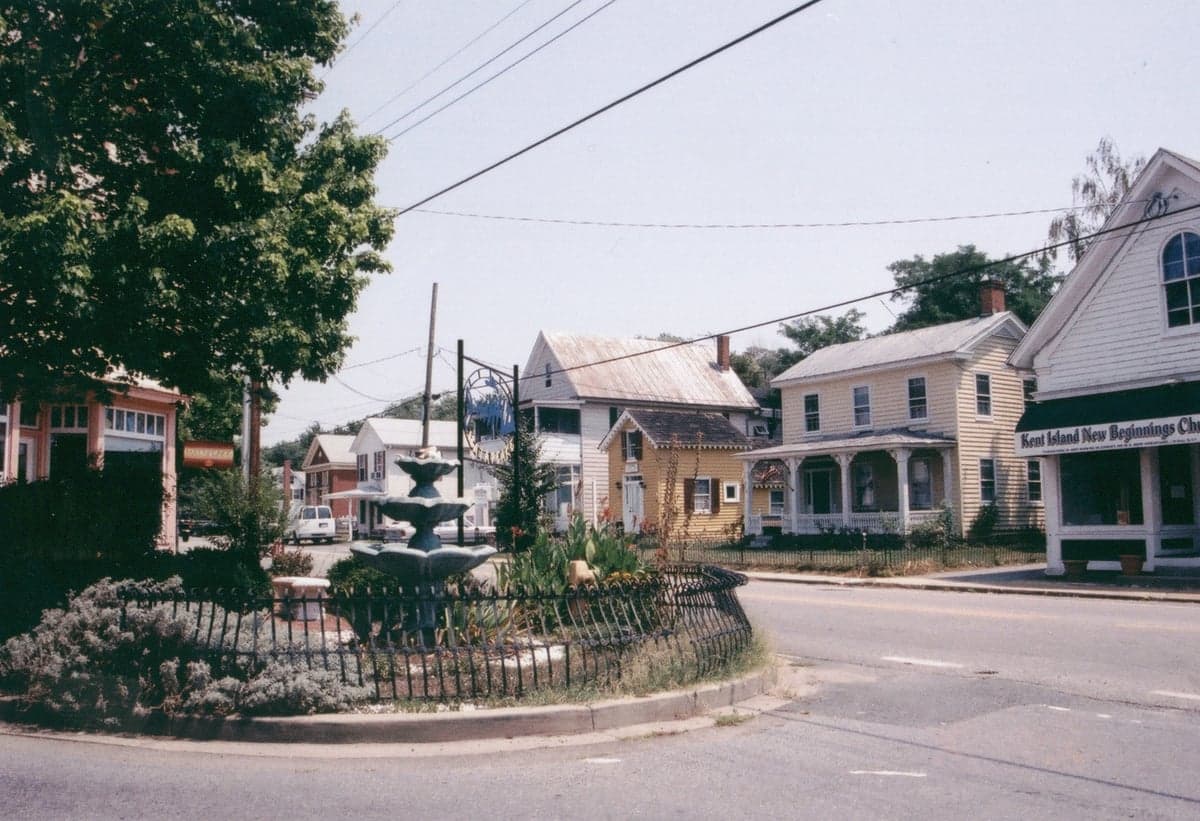
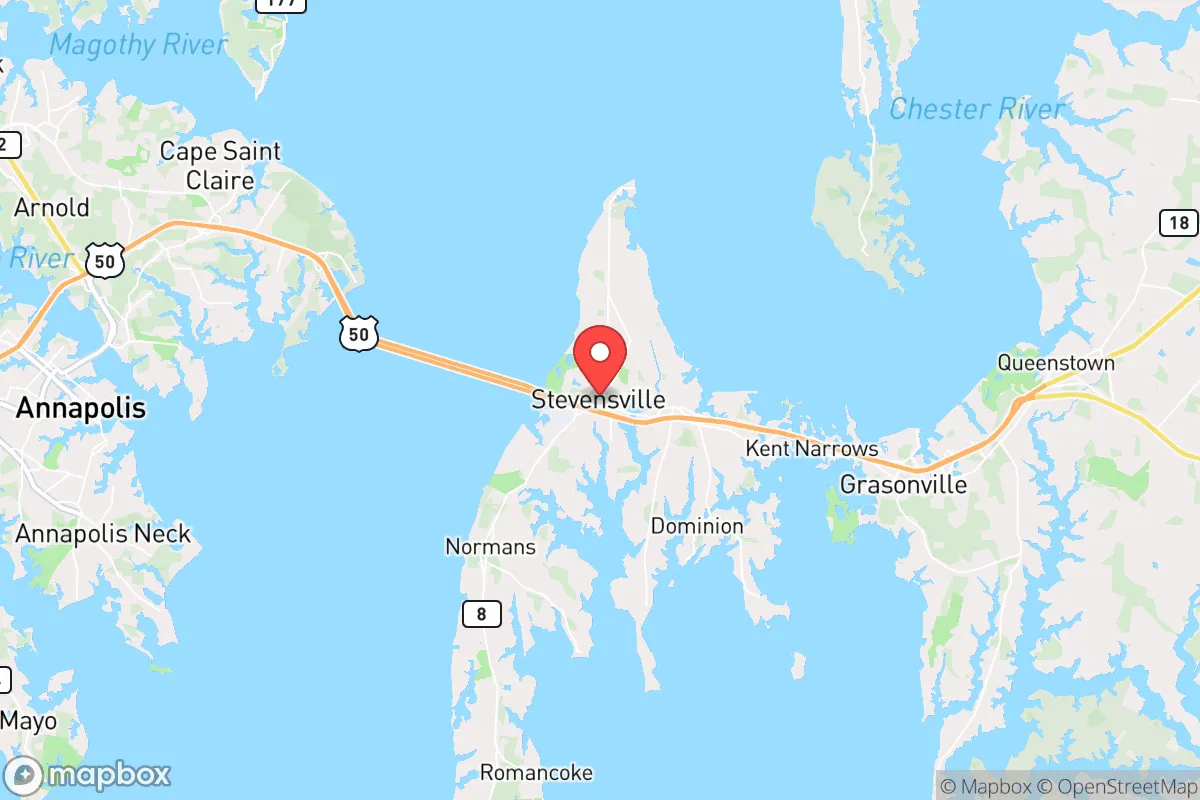
Stevensville, Maryland, is a small, predominantly white community of 8,693 residents on Kent Island, where a strong sense of local heritage and a quiet, family-oriented lifestyle define daily life. With a low foreign-born population of just 1.5% and a college attainment rate of 41.6%, the town is characterized by its established, educated, and largely native-born populace. The population is notably less diverse than the broader state of Maryland, with 83.6% of residents identifying as white, and a cultural identity deeply rooted in the Chesapeake Bay’s maritime and agricultural history. This is a place where generational roots run deep, and new arrivals are often drawn by the promise of good schools, waterfront living, and a slower pace of life within commuting distance of Annapolis and Baltimore.
How the city was settled and grew
Stevensville’s human history begins with the Indigenous peoples of the Eastern Woodlands, primarily the Matapeake tribe, who inhabited Kent Island for thousands of years before European contact. The first permanent English settlement in Maryland was established on Kent Island in 1631 by William Claiborne, a fur trader from Virginia, predating the founding of St. Mary’s City. This early wave of English colonists, along with a small number of indentured servants and enslaved Africans, built the area’s first tobacco plantations and trading posts. The historic Stevensville Historic District, centered on Love Point Road and Cockey’s Lane, contains 18th and 19th-century homes built by these early farming and maritime families, including the Cockey and Stevens families for whom the town is named. By the mid-19th century, the population remained overwhelmingly of English and Scottish descent, with a small free Black community concentrated in the area around Thompson Creek, where many worked as watermen and farm laborers.
Modern era (post-1965)
The construction of the Chesapeake Bay Bridge in 1952 was the single most transformative event in Stevensville’s modern history, transforming it from an isolated rural village into a suburban bedroom community. After the Immigration and Nationality Act of 1965, Stevensville saw very little direct impact from new international immigration; the foreign-born share remains at just 1.5% today. Instead, the post-1965 population shift was driven by domestic in-migration of white families from the Baltimore-Washington metropolitan area seeking larger homes and lower taxes. The Kent Island Estates neighborhood, developed in the 1970s and 1980s, became a primary destination for these new suburbanites, offering single-family homes on larger lots. The Black population, which had been a small but steady presence in the Thompson Creek area for generations, declined slightly as younger generations moved to larger cities for employment, leaving the current Black share at 5.2%. The Asian population, at 2.3%, is a very recent arrival, with families settling in newer subdivisions like Harbour Towne and Chester Cove, often drawn by professional jobs in Annapolis or the tech sector. The Hispanic population, at 2.2%, is also small and dispersed, with no single ethnic enclave, and is largely employed in the service and construction industries that support the island’s growing tourism and residential sectors.
The future
Stevensville’s population is projected to remain predominantly white and native-born over the next 10-20 years, with only modest increases in diversity. The town’s low foreign-born share and lack of major immigrant-attracting industries suggest that future growth will continue to come from domestic migration, particularly from young families and retirees from the Baltimore and Washington D.C. suburbs. New residential development is concentrated in the Four Seasons area and along the Romancoke Road corridor, where large-lot subdivisions are being built to accommodate this influx. The Hispanic and Asian populations are expected to grow slowly, likely reaching 4-5% each by 2040, as the broader Anne Arundel and Queen Anne’s County economies diversify. The cultural identity of Stevensville is likely to remain rooted in its Chesapeake Bay heritage, with a growing tension between long-time residents who value the rural character and newcomers who desire more amenities and services. For a family or individual moving in now, Stevensville offers a stable, safe, and largely homogeneous community with excellent schools and easy access to the Bay, but with limited racial or ethnic diversity compared to the nearby metropolitan core.
Stevensville is becoming a more affluent and slightly more diverse suburb, but its core identity remains that of a tight-knit, predominantly white, and family-oriented community. For those seeking a quiet, waterfront lifestyle with strong schools and a deep sense of local history, it is a compelling choice, though newcomers should expect a population that is far less diverse than the national average and a culture that values tradition and stability over rapid change.

* Values derived from national, state, county, city and local statistics and may differ in a specific area. Last updated: 2026-07-21T20:15:42.000Z
Narrative content on this page is AI-generated and may contain mistakes. Verify any details that matter before acting on them.
ReloMaps may earn a commission from affiliate links at no extra cost to you.

