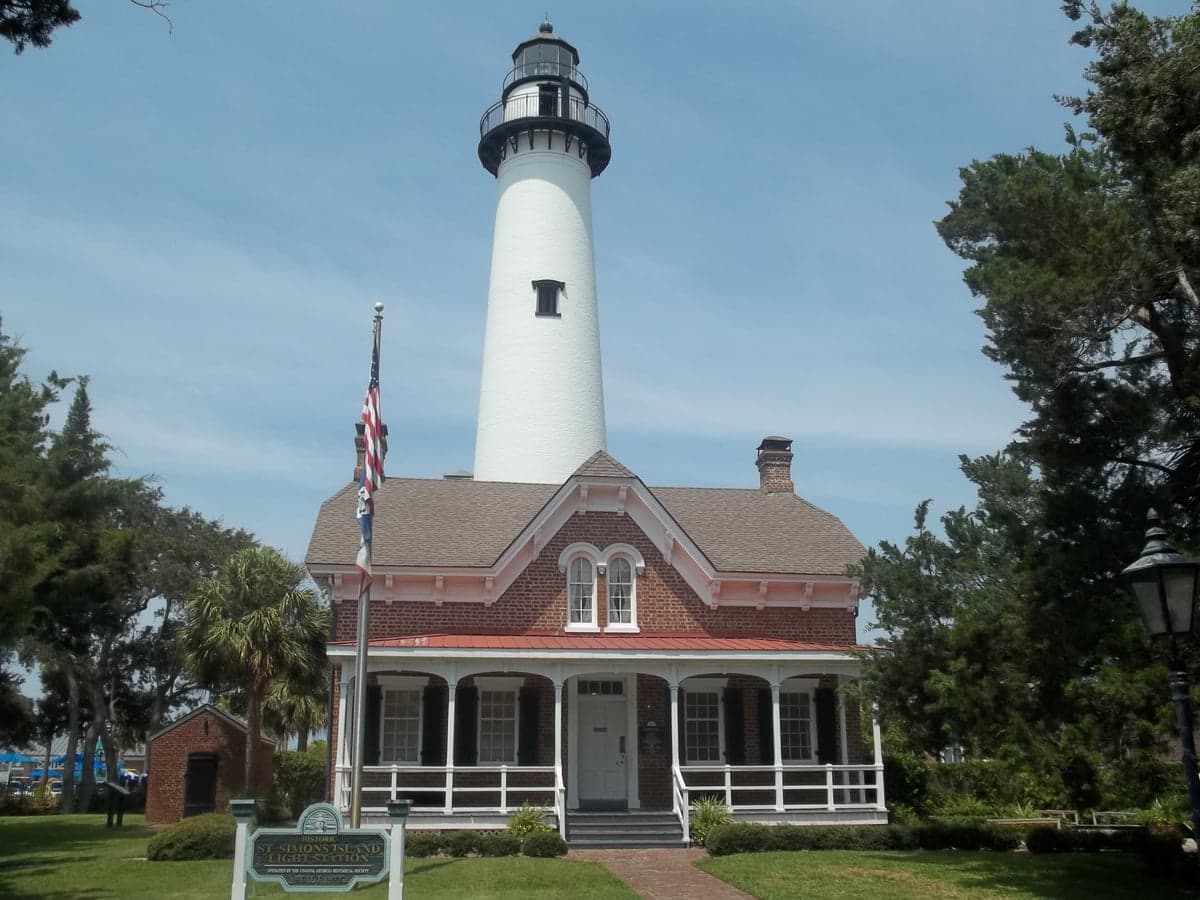
Photo: Wikipedia
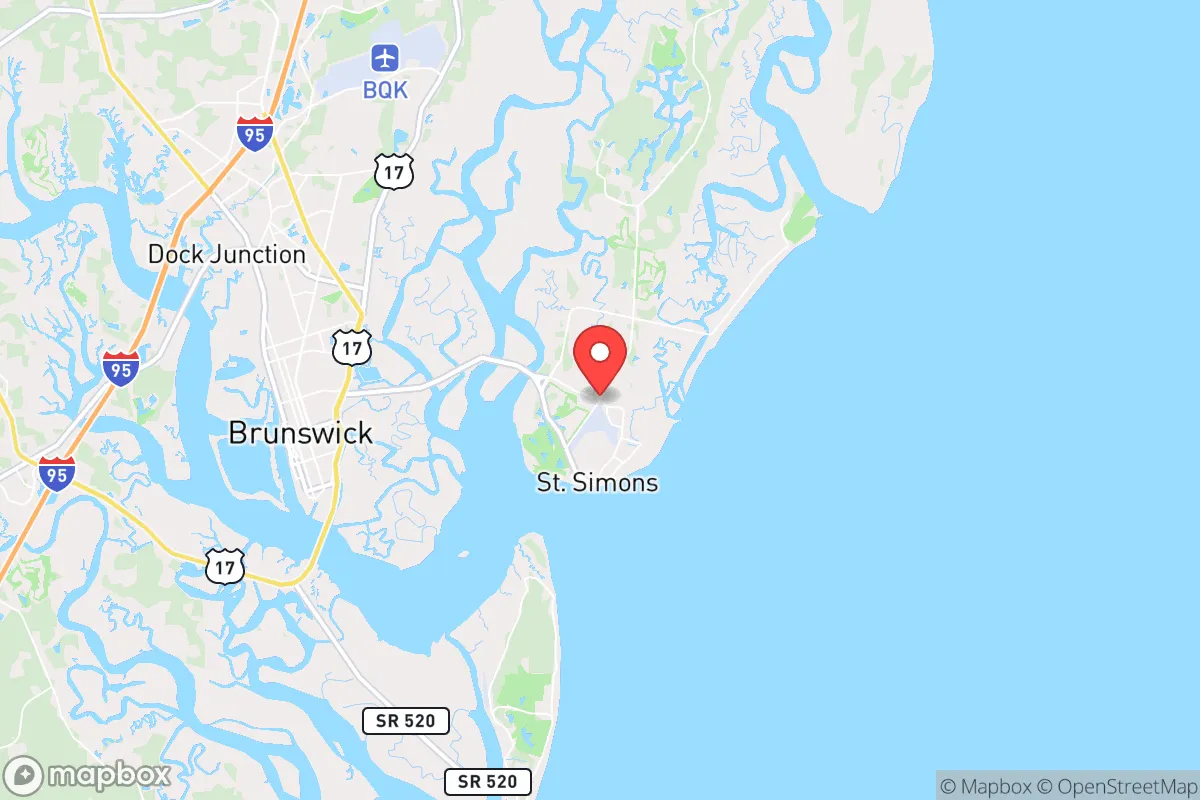
Personal Sovereignty in St. Simons Island, GA
Viable for self-reliance. Generally workable, though some barriers may limit total independence.
What does Personal Sovereignty tell us?
Personal Sovereignty measures your capacity for self-reliance and independence with minimal government friction. Higher scores mean fewer barriers between you and the way you want to live... but it assumes you have the space you need and good neighbors.
What does this tell us?
Personal Sovereignty measures your capacity for self-reliance and independence with minimal government friction. Higher scores mean fewer barriers between you and the way you want to live... but it assumes you have the space you need and good neighbors.
State Policy
Energy independence: Importer (12% of energy produced in-state)
Personal Liberty
Homesteading

Personal Liberty Analysis
St. Simons Island, Georgia, offers a personal sovereignty environment shaped by Georgia's broader legal framework as a right-to-work, low-tax, and gun-friendly state, tempered by the unique regulatory dynamics of a coastal barrier island community. For individuals and families who prioritize autonomy—whether in financial decisions, self-defense, or lifestyle choices—the island provides a blend of state-level freedoms and local constraints that require careful navigation. The key distinction lies between the permissive state laws and the more restrictive local ordinances typical of Glynn County, which can affect everything from property use to daily liberties.
Tax burden and regulatory posture in Glynn County
Georgia is a historically low-tax state, and St. Simons Island residents benefit directly from this posture. The state imposes a flat income tax rate of 5.49% (as of 2026), with no local income tax, meaning your earnings are not further eroded by county or city levies. Property taxes in Glynn County are moderate: the millage rate for unincorporated areas (which includes most of St. Simons) hovers around 12.5 mills, translating to roughly $1,250 annually per $100,000 of assessed value. This is slightly above the Georgia median but remains competitive nationally. Crucially, Georgia offers a homestead exemption of up to $10,000 for county taxes, and Glynn County provides an additional $5,000 exemption for residents aged 65 and older. Sales tax in Glynn County is 7%, which includes a 1% local option for education and infrastructure. The regulatory environment at the state level is light-touch: Georgia has no state-level rent control, no prevailing wage laws for private construction, and a right-to-work law that prohibits mandatory union membership. However, St. Simons Island operates under Glynn County’s zoning and environmental regulations, which are notably stricter than inland Georgia. The island is subject to the Georgia Coastal Marshlands Protection Act and local tree preservation ordinances, meaning any significant land alteration—clearing, building, or even removing certain native vegetation—requires county permits. This creates a paradox: while your income and business face low taxation, your physical property use is more regulated than in rural Georgia. For a freedom-oriented reader, the trade-off is clear: lower financial burden but higher bureaucratic friction for land use.
Self-defense and gun law specifics on St. Simons Island
Georgia is a strong Second Amendment state, and St. Simons Island residents enjoy the full scope of state preemption on firearms. Georgia is a permitless carry state as of 2022: any legal resident 21 or older can carry a concealed handgun without a permit, both openly and concealed. No state-level registration, waiting period, or magazine capacity restrictions exist. The state also has a "stand your ground" law with no duty to retreat in any place where a person is lawfully present. For those who wish to obtain a Georgia Weapons Carry License (GWCL) for reciprocity with other states, Glynn County Probate Court processes applications, typically within 30 days, with a fee of $30 for residents. The island itself has no local gun ordinances that conflict with state law—Glynn County does not ban firearms in parks or public spaces, though federal law prohibits carry in post offices and military facilities. One practical consideration: St. Simons Island is a dense, tourist-heavy community with narrow roads and limited public land for recreational shooting. There are no public shooting ranges on the island; the nearest is the Georgia Southern Shooting Complex in Statesboro, about 90 minutes away. For self-defense in the home, the legal environment is permissive, but the physical environment—tight neighborhoods, close proximity to neighbors—means that discharging a firearm in self-defense could have heightened legal scrutiny compared to a rural setting. Overall, the legal framework for self-defense is among the most favorable in the Southeast, but the island’s geography imposes practical limits on how that freedom is exercised.
Self-reliance and homesteading viability: lot sizes, zoning, and off-grid feasibility
St. Simons Island presents significant challenges for traditional homesteading or off-grid living. The minimum lot size in most residential zones is 10,000 square feet (roughly 0.23 acres), though many lots are smaller, especially in older neighborhoods like the Village or Ocean Forest. Agricultural zoning is virtually nonexistent on the island; the county’s comprehensive plan designates nearly all of St. Simons as suburban residential or conservation. Raising livestock—chickens, goats, or bees—is permitted only with a conditional use permit from Glynn County, and the process is discretionary, with neighbors often objecting. Chickens are allowed in some residential zones but limited to six hens (no roosters) and require a 50-foot setback from any dwelling. Off-grid systems face even higher hurdles. Georgia state law does not explicitly prohibit rainwater harvesting, but Glynn County’s plumbing code requires connection to the municipal water system for any habitable structure. Solar panels are permitted but must comply with the county’s architectural review board (the Glynn County Planning Commission), which can deny installations that are visible from the street or deemed aesthetically incompatible. Composting toilets are not recognized as a primary sanitation method; all new construction must connect to the county sewer system or install a state-approved septic system, which is expensive and subject to percolation tests. The island’s high water table and proximity to the marsh make septic approvals difficult. For a reader seeking self-reliance, St. Simons is not a viable location for off-grid homesteading. The regulatory environment is designed for suburban comfort, not independence. Those serious about homesteading should look inland to Glynn County’s rural areas (e.g., Sterling or Country Club Estates) where lot sizes of 1-5 acres are common and zoning is less restrictive.
Personal liberties: parental rights, medical autonomy, speech, and property
Georgia law provides a strong foundation for personal liberties, and St. Simons Island residents benefit from these state-level protections. Parental rights are explicitly protected under Georgia Code § 20-2-786, which requires school districts to notify parents of any changes to a student’s health or well-being and prohibits schools from withholding information about a child’s mental or physical health. Glynn County Schools, which serve St. Simons Island, have adopted policies aligned with this law, including parental opt-in requirements for sex education and mental health screenings. Medical autonomy is less clear-cut: Georgia has not expanded Medicaid, and the state’s certificate-of-need (CON) laws limit the number of healthcare facilities, which can reduce choice. However, the island has two hospitals (Southeast Georgia Health System and a smaller urgent care), and telehealth is widely available. Vaccine mandates are prohibited for state employees and contractors, but private employers retain the right to require them. Speech is broadly protected under Georgia’s state constitution, which includes a strong free speech clause. St. Simons Island has no local noise ordinances that restrict political or religious speech, though amplified sound after 10 PM is regulated. Property rights are robust: Georgia is a "property rights" state with strong eminent domain protections, requiring just compensation and a public purpose. However, the island’s historic preservation overlay district in the Village area imposes design review on exterior modifications, which can feel intrusive to property owners who value aesthetic freedom. For a conservative-leaning reader, the balance is generally favorable: state law protects parental and speech rights, but local land-use regulations can limit property autonomy. The key is understanding that St. Simons is a high-demand coastal community where collective aesthetic and environmental values sometimes override individual property rights.
Overall, St. Simons Island offers a personal sovereignty profile that is strong on financial and self-defense freedoms but constrained on land use and homesteading. Compared to inland Georgia or states like Texas or Florida, the island’s regulatory posture is moderate—not as permissive as rural counties but far less restrictive than coastal California or the Northeast. For a family or individual who values low taxes, gun rights, and parental control, St. Simons is a solid choice. For those seeking to live entirely off-grid, raise livestock, or build without permits, the island will feel restrictive. The smartest approach is to treat St. Simons as a place to enjoy the freedoms of a low-tax, high-amenity coastal lifestyle while accepting that true self-reliance requires moving inland. The island’s sovereignty is real but bounded by the realities of a dense, environmentally sensitive community—a trade-off that many find acceptable for the privilege of living on one of Georgia’s most beautiful barrier islands.

* Values derived from national, state, county, city and local statistics and may differ in a specific area. Last updated: 2026-09-01T10:05:22.000Z
Narrative content on this page is AI-generated and may contain mistakes. Verify any details that matter before acting on them.
ReloMaps may earn a commission from affiliate links at no extra cost to you.

