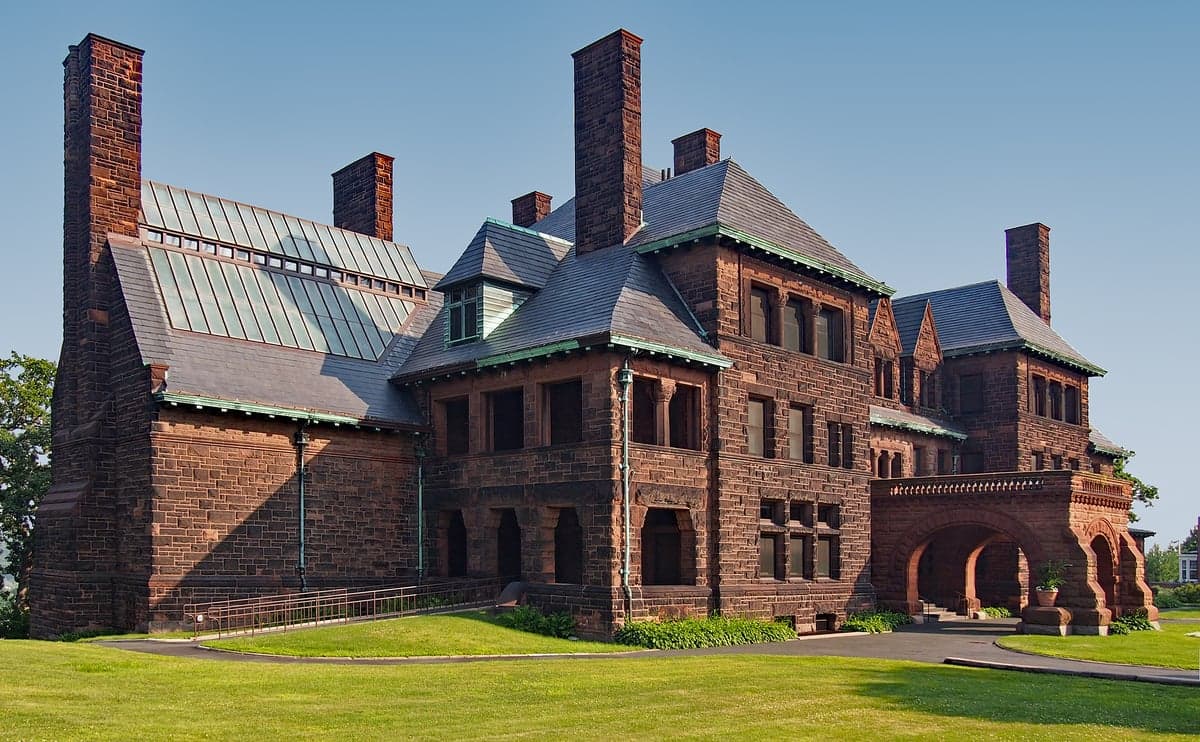
Photo: Wikipedia
Political ClimatePolitical Climate in St Paul, MN
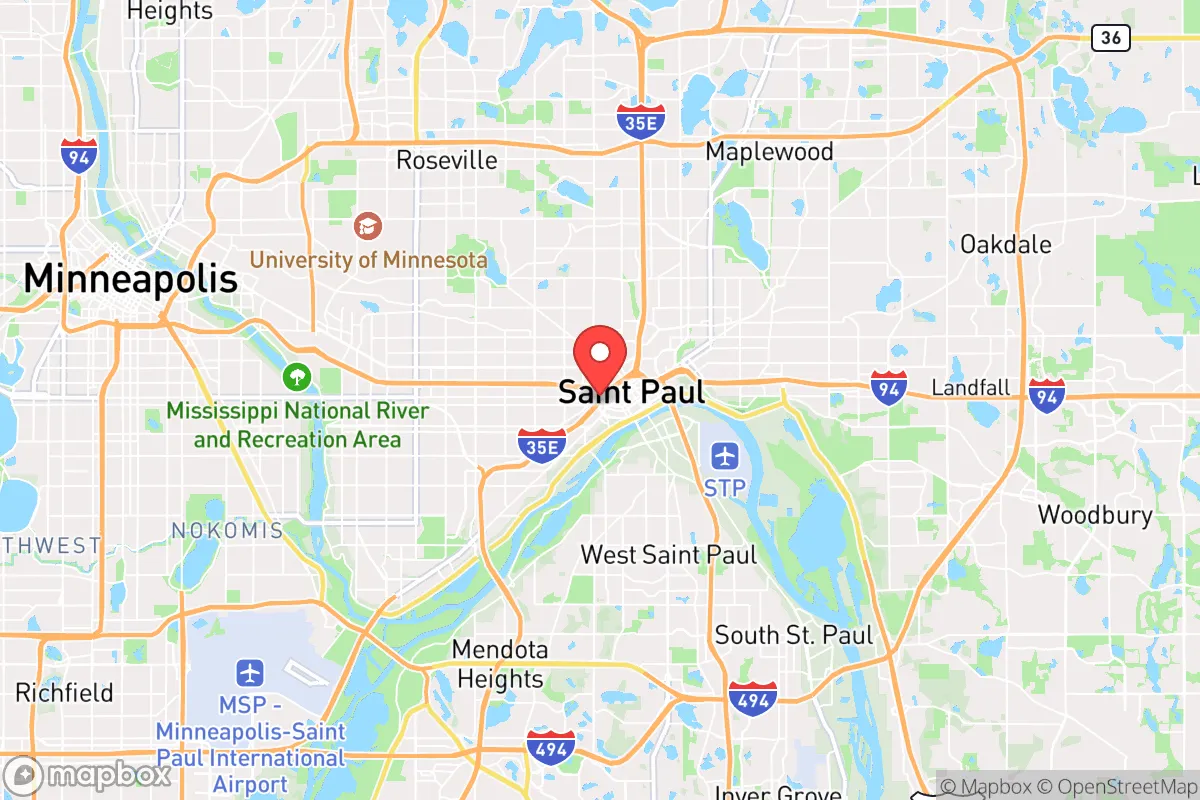
District shown is the primary district for this city’s centroid. Cities may span multiple districts.
Local Political AnalysisPolitical Analysis of St Paul, MN
St. Paul, Minnesota, leans heavily Democratic, with a Cook PVI of D+18, meaning the city votes about 18 points more Democratic than the national average. This isn't a recent shift—it's been a deep-blue stronghold for decades, but the character of that blue has changed. In the past, you had a more moderate, union-friendly, working-class Democrat here, the kind who might disagree with you on social issues but respected your right to live your life. Now, the political energy is coming from a much more progressive, activist-driven wing, and the old-school balance is fading fast. If you value personal freedoms and limited government interference, the trajectory here is genuinely concerning.
How it compares
The contrast with the surrounding suburbs is stark. Head just a few miles west to Edina or Wayzata, and you'll find reliably Republican-leaning areas where taxes are lower and the local government is far less likely to meddle in things like zoning, business operations, or school curriculum. Even neighboring Minneapolis, while also very liberal, has a different political culture—more chaotic, more focused on city council infighting. St. Paul's politics feel more institutional, more entrenched. The city council and mayor's office are overwhelmingly progressive, and there's very little organized opposition. The surrounding suburbs and exurbs, like Woodbury or Lakeville, offer a completely different political climate, where your vote actually has a chance to push back against the dominant party line.
What this means for residents
For a resident who values personal liberty, the practical effects are real and growing. You see it in the city's approach to housing—strict rent control measures that limit what you can do with your own property, and a push for "inclusionary zoning" that dictates what kind of housing can be built where. You see it in the tax burden: property taxes are high and climbing, funding a city government that seems to expand its reach every year. The school district has embraced progressive curriculum changes that many parents find intrusive, and there's a growing sense that the city's priorities are shifting away from basic services like public safety and infrastructure toward social engineering projects. The police department has faced significant defunding pressure, and while the city hasn't gone as far as some activists want, the result is a noticeable decline in responsiveness and a rise in property crime that the city seems reluctant to address directly.
On a cultural level, St. Paul has a distinct identity that's worth understanding. It's not as flashy or trendy as Minneapolis—it's more of a "city of neighborhoods," with a strong Catholic and working-class history that still lingers in places like the East Side or Dayton's Bluff. But that older, more conservative cultural fabric is being rapidly overwritten by a younger, more activist population moving in from other parts of the country. The city's politics are now heavily shaped by non-profit organizations, activist groups, and a city bureaucracy that sees its role as a driver of social change rather than a provider of basic services. If you're looking for a place where the government stays out of your business, respects your property rights, and lets you raise your family without constant political messaging, St. Paul is moving in the opposite direction. The long-term trend is toward even more progressive policies, more regulation, and a shrinking space for traditional values and personal freedom.

State Political ClimatePolitical Climate in Minnesota
State Political AnalysisPolitical Environment in the State
Minnesota has shifted from a classic purple battleground to a solidly blue state over the past two decades, with Democrats now controlling the governorship, both legislative chambers, and the entire federal delegation. The state voted for Hillary Clinton by 1.5 points in 2016, then Joe Biden by 7 points in 2020, and Kamala Harris by 4 points in 2024 — a clear leftward drift driven almost entirely by the explosive growth of the Twin Cities metro area. For a conservative considering relocation, the state’s political trajectory is unmistakable: the rural and exurban counties that once kept things competitive are shrinking in influence, while the urban core and its inner-ring suburbs dictate policy for everyone else.
Urban vs. rural divide
The political map of Minnesota is a tale of two worlds. The Twin Cities metro — Hennepin, Ramsey, and Dakota counties — now casts roughly 55% of the state’s total vote, and those counties have become reliably Democratic strongholds. Hennepin County alone gave Biden 71% of the vote in 2020. Meanwhile, greater Minnesota — places like St. Cloud, Rochester, and Duluth — has been trending redder, but not fast enough to offset the metro’s weight. In 2020, St. Louis County (Duluth) flipped from Obama to Trump, a sign that even the Iron Range is losing its union-Democrat roots. The real story is in the exurbs: Scott County (Shakopee) and Wright County (Buffalo) are now solidly Republican, but they’re small compared to the metro’s core. The 2024 election saw Anoka County, a longtime bellwether, shift left by 3 points — a canary in the coal mine for conservatives hoping for a comeback.
Policy environment
Minnesota’s policy environment has become aggressively progressive since Democrats took full control in 2023. The state now has a progressive income tax with a top rate of 9.85% on income over $190,000, one of the highest in the nation. Property taxes are moderate, but sales taxes are applied to a broad base, including clothing and groceries in some cities. The regulatory posture is heavy: the Minnesota Pollution Control Agency and Department of Natural Resources have broad authority over land use, and the state’s environmental review process can delay projects for years. Education policy is a flashpoint — the state has a $2 billion surplus that Democrats used to fund universal free school meals and expand pre-K, but also passed a law requiring schools to adopt “ethnic studies” curricula that critics say prioritize identity politics over academics. Healthcare is dominated by the state’s public option, MinnesotaCare, and the state has aggressively expanded Medicaid under the Affordable Care Act. Election laws are among the most liberal in the country: same-day voter registration, no-excuse absentee voting, and automatic voter registration at DMVs are all in place. The 2023 law restoring felon voting rights upon release from prison was a particular concern for conservatives worried about election integrity.
Trajectory & freedom
Over the past three years, Minnesota has become measurably less free by any standard measure of personal liberty. The 2023 legislative session was a firehose of progressive bills: a “red flag” extreme risk protection order law that allows courts to temporarily seize firearms from individuals deemed a threat, a ban on “conversion therapy” for minors, and a law requiring all new buildings to meet strict energy codes that effectively ban natural gas hookups in new construction. On parental rights, the state passed a law that allows minors as young as 16 to consent to gender-affirming care without parental notification — a major concern for conservative families. The state also created a “safe harbor” for out-of-state minors seeking abortion or gender care, effectively nullifying other states’ laws. On the economic freedom front, the state enacted a paid family and medical leave program funded by a payroll tax, and a new “clean energy standard” requiring 100% carbon-free electricity by 2040. The only bright spot for conservatives was the defeat of a proposed constitutional amendment to enshrine abortion rights in 2024, but that was a narrow victory. The trajectory is clear: more mandates, more taxes, and less room for individual choice.
Civil unrest & political movements
Minnesota has been a national flashpoint for civil unrest since the murder of George Floyd in Minneapolis in 2020, which sparked the largest protests in the state’s history and led to the destruction of a police precinct and dozens of businesses. The aftermath saw a wave of defund-the-police activism that resulted in the Minneapolis City Council voting to disband the police department (later reversed after a public backlash). The state has since become a hub for left-wing organizing, with groups like Reclaim the Block and the Minnesota Freedom Fund wielding significant influence in local elections. On the right, the Minnesota Gun Owners Caucus and the Minnesota Family Council have been active, but they’re fighting an uphill battle. Immigration politics are tense: Minnesota is a sanctuary state, with a 2023 law prohibiting state and local law enforcement from cooperating with federal immigration authorities. The city of St. Paul has a “safe city” ordinance that goes even further. Election integrity remains a hot-button issue — the 2020 election saw a court challenge over the state’s use of ballot drop boxes, and the 2024 election was marred by allegations of voter roll irregularities in Hennepin County. A new resident will notice the political polarization in everyday life: yard signs, bumper stickers, and even conversations at the grocery store can quickly turn contentious.
Projection
Looking ahead 5-10 years, Minnesota’s political trajectory is likely to continue leftward, but with some caveats. The Twin Cities metro is growing faster than the rest of the state, and its demographic composition — younger, more diverse, more educated — favors Democrats. However, the state’s population growth is slowing, and out-migration to lower-tax states like Florida and Texas is accelerating. The 2024 election showed that Democrats can no longer take the state for granted — Harris’s 4-point margin was down from Biden’s 7 points, and the rural vote is becoming more Republican. If the GOP can make inroads with working-class voters in the Iron Range and Greater Minnesota, and if the metro’s growth slows, the state could become competitive again by 2032. But for now, the legislative supermajority Democrats enjoy means that policy will continue to shift left. A new resident moving in today should expect to see more gun control, higher taxes, and a continued erosion of parental rights. The state’s “freedom” score, as measured by the Cato Institute, is likely to drop further.
For a conservative considering Minnesota, the bottom line is this: you’ll find like-minded communities in the exurbs and rural areas, but you’ll be fighting an uphill battle against a state government that is actively hostile to your values. The schools will push progressive curricula, the tax code will penalize your success, and your Second Amendment rights will be under constant threat. If you’re willing to be a political minority and engage in the fight, Minnesota offers beautiful natural resources and a strong economy. But if you’re looking for a state that respects your personal freedoms and lets you live your life without government interference, you’d be better off looking at the Dakotas, Iowa, or Wisconsin — where the political winds are blowing in a different direction.
* Values derived from national, state, county, city and local statistics and may differ in a specific area. Last updated: 2026-04-24T18:35:50.000Z
Narrative content on this page is AI-generated and may contain mistakes. Verify any details that matter before acting on them.
ReloMaps may earn a commission from affiliate links at no extra cost to you.

