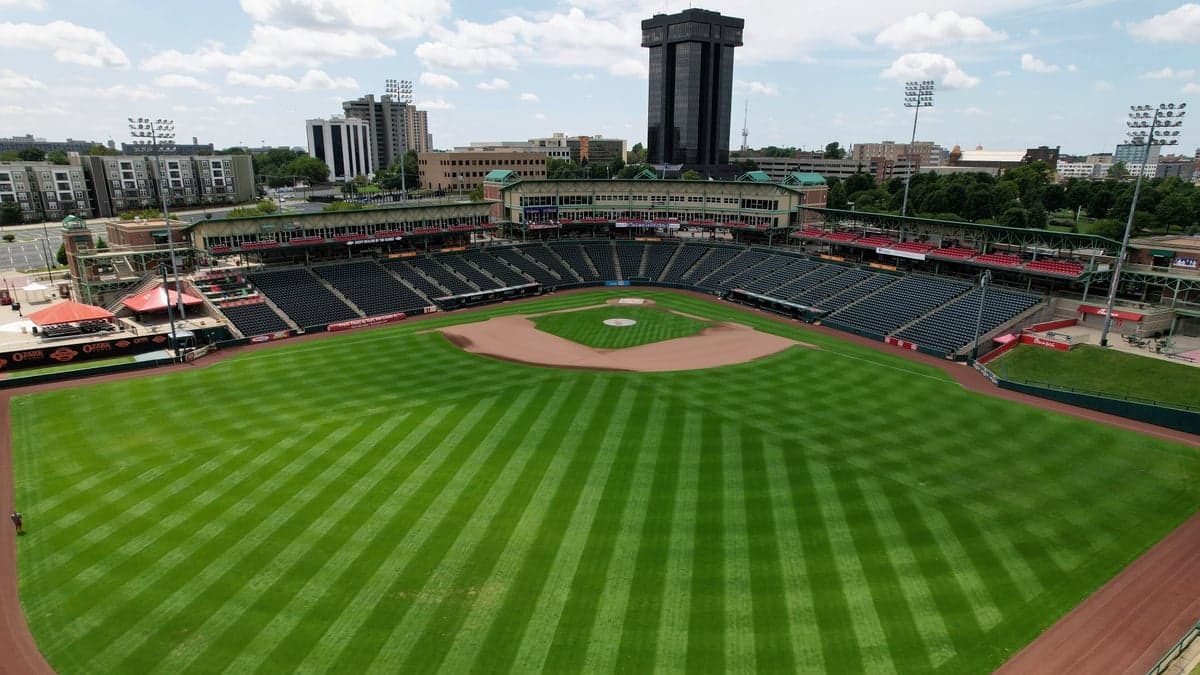
Photo: Wikipedia
Strategic Assessment of Springfield, MO
Workable tactical position. Some exposure to population density or targets, but generally defensible in a crisis.
What does the Strategic Assessment tell us?
Our Strategic Assessment grades tactical survivability of an area. Major population centers, military targets, fallout zones, natural disasters, and border exposure all drive risk — lower exposure means a more defensible position in a crisis.
This is heavily inspired by Joel Skousen's Strategic Relocation book. Highly recommended you checkout the book ($)What does this tell us?
Our Strategic Assessment grades tactical survivability of an area. Major population centers, military targets, fallout zones, natural disasters, and border exposure all drive risk — lower exposure means a more defensible position in a crisis.
This is heavily inspired by Joel Skousen's Strategic Relocation book. Highly recommended you checkout the book ($)Strategic Pillars

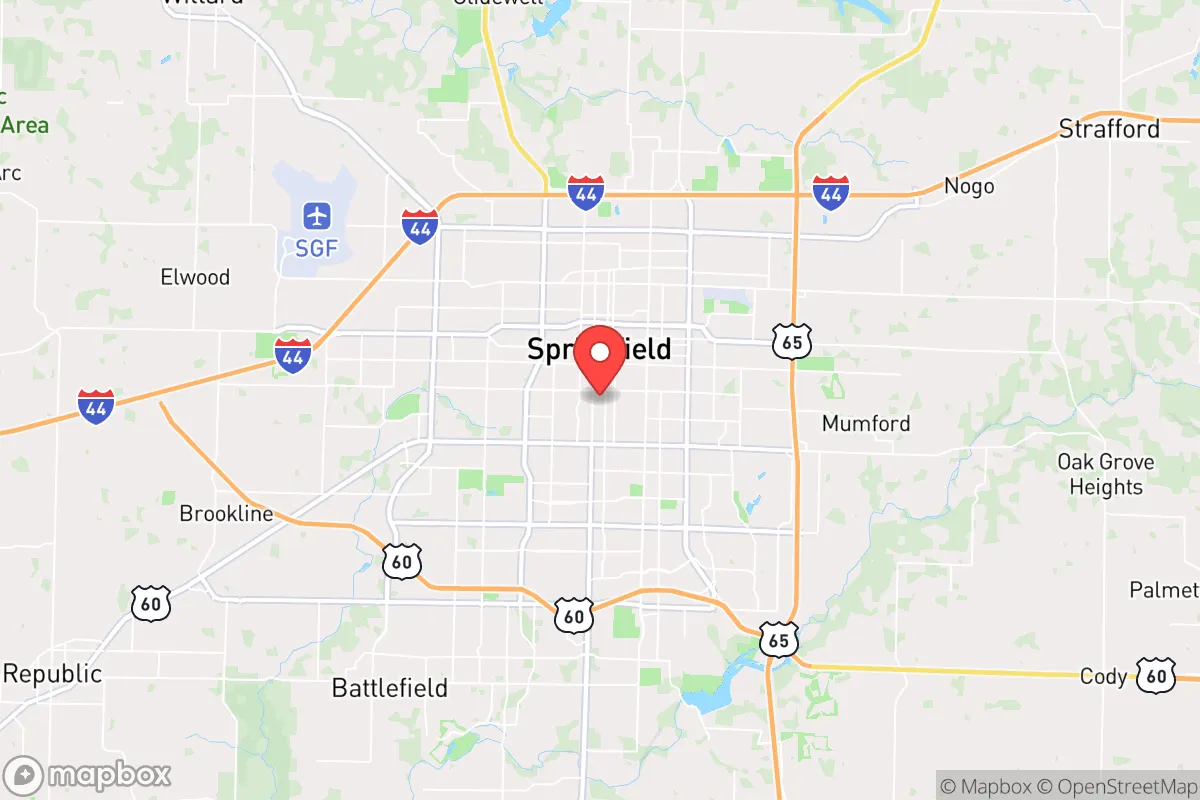
Key Distances
Regional Safe Places
Below is our recommended "safe zones" in Missouri and the surrounding area based on our strategic heuristics. For most people, it's unrealistic to live in a “safe zone” full-time due to work, family or other personal reasons. They tend to be more rural. However, many of these areas are perfect for second homes and retreat properties that double as a vacation home or even a short-term rental.


Important Note: For informational purposes only. This does not mean nothing bad ever happens in the green zones. Please use common sense. This is based on public data and modeled with AI. We tried to take a conservative approach but mistakes happen. We update this regularly as new information becomes available.
Solar Generator Recommendations
Backup power matters more here than in safer locations. We've picked three solar generators across budgets and capacity tiers — start with the budget unit if you only need a few essentials, or step up if you want to run a fridge and HVAC for days at a time.

Jackery Portable Power Station Explorer 300
Budget OptionPower on the Go: Weighing only 11 lbs, it's convenient to set up and store with book-sized foldable solar panels

BLUETTI Portable Power Station AC180
Designed for both indoor and outdoor scenarios, AC180 is highly capable as it has a robost capacity and continuous output power.

EF ECOFLOW DELTA Pro Ultra Power Station
Upgraded PickEcoFlow DELTA Pro Ultra is a whole-home energy system designed to grow with your family. Integrated with the Smart Home Panel 2, it scales to meet your evolving energy needs — keeping your home powered, intelligent, and secure through every stage of life.
We earn a commission, at no additional cost to you.
Strategic Assessment Analysis
Springfield, Missouri, sits in a geographic sweet spot that makes it one of the more strategically resilient mid-sized cities in the central United States for those thinking about long-term preparedness. Positioned roughly 200 miles from both Kansas City and St. Louis, and about 70 miles north of the Arkansas border, it offers enough distance from major population centers to avoid the worst of urban collapse scenarios while still maintaining access to regional infrastructure. The city's location in the Ozark Mountains provides natural defensive terrain, abundant freshwater sources, and a climate that supports year-round agriculture, making it a viable base for a self-sufficient lifestyle in an increasingly uncertain national landscape.
Geographic position and natural advantages for long-term security
Springfield's placement in the Ozark Plateau is its single greatest strategic asset. The region is characterized by rolling hills, limestone bluffs, and dense hardwood forests, which create natural barriers against large-scale movement and provide ample cover for those seeking privacy. The area sits atop the Ozark Aquifer, one of the most productive freshwater sources in the Midwest, with over 1,000 springs and numerous rivers including the James River and Finley Creek running through the metro area. This water abundance is a critical factor for long-term resilience, as surface water and groundwater are both plentiful and generally clean. The climate is temperate with four distinct seasons, allowing for a growing season of roughly 200 days, which is sufficient for staple crops like corn, beans, squash, and hardy greens. The local soil, while rocky in places, is workable for small-scale farming, and the surrounding national forests—Mark Twain National Forest is just south of the city—offer additional foraging and timber resources. For a relocator, this means you can realistically plan for food and water independence without relying on fragile supply chains.
Risks, exposures, and proximity to fallout-relevant landmarks
No location is without vulnerabilities, and Springfield has a few that demand attention. The most significant risk is its proximity to Whiteman Air Force Base, located about 90 miles east near Knob Noster. Whiteman is home to the B-2 Spirit stealth bomber and is a high-priority target in any major conflict scenario. While 90 miles provides a reasonable buffer, prevailing winds from the west could carry fallout toward the Springfield area in a nuclear exchange. Additionally, Interstate 44 runs directly through the city, connecting it to St. Louis and Tulsa. In a crisis, this highway could become a choke point for refugees fleeing larger cities, potentially bringing civil unrest and resource competition. The city itself has a population of about 170,000, with a metro area of roughly 470,000, which is manageable but not negligible. Springfield also sits near the New Madrid Seismic Zone, which poses a low-probability but high-consequence earthquake risk. A major quake could disrupt transportation and utilities for weeks. On the positive side, the area has no nuclear power plants within 100 miles, and the nearest major military target—Fort Leonard Wood—is about 70 miles east, which is far enough to avoid direct blast effects but close enough to be a concern for secondary disruptions.
Practical resilience for a relocator: food, water, energy, and defensibility
For someone serious about preparedness, Springfield offers a strong foundation. Water is the easiest resource to secure here. The Ozark Aquifer means private wells are common and reliable, and rainwater collection is viable with average annual precipitation of 45 inches. The city's municipal water comes from Stockton Lake and Fellows Lake, both of which are large reservoirs with significant capacity. For food, the region has a robust agricultural base. Greene County alone has over 1,200 farms, and the Springfield Farmers Market is one of the largest in the state, indicating a strong local food network. You can realistically source land for a homestead within 20-30 minutes of downtown, with prices still reasonable compared to the coasts or even the Front Range. Energy resilience is also achievable. The area has good solar exposure, with about 210 sunny days per year, and wind patterns are consistent enough for small-scale turbines. Wood heating is practical given the surrounding forests, and many rural properties already have propane tanks for backup. Defensibility is where the Ozarks shine. The terrain makes it easy to secure a property with natural sightlines and limited access points. The local culture is heavily oriented toward self-reliance, with a strong hunting and firearms tradition. Missouri is a constitutional carry state, and Greene County has a sheriff's office that is generally supportive of Second Amendment rights. The community is also tight-knit; church networks and local volunteer fire departments provide a social fabric that can be activated in emergencies. The main drawback is that the city itself has some urban problems—property crime rates are above the national average, and the downtown area has seen some decline—but these are manageable with situational awareness and proper security measures.
Overall, Springfield presents a balanced strategic picture for the conservative prepper. It avoids the extreme risks of coastal cities or those near major military targets, while offering abundant natural resources and a culture that values independence. The key trade-off is that you are close enough to larger cities to benefit from their infrastructure—hospitals, airports, supply chains—but far enough to avoid being caught in the initial wave of chaos. The Ozarks provide a natural redoubt, and the local economy is diversified enough to weather economic downturns. For a single individual or a family looking to build a resilient life in an uncertain future, Springfield deserves serious consideration as a base of operations. The smart move is to secure a property with a well, some acreage, and good solar access, and to integrate into the local community before any crisis hits. That way, you're not just surviving—you're thriving in a place that was built for it.

* Values derived from national, state, county, city and local statistics and may differ in a specific area. Last updated: 2026-04-29T19:11:01.000Z
Narrative content on this page is AI-generated and may contain mistakes. Verify any details that matter before acting on them.
ReloMaps may earn a commission from affiliate links at no extra cost to you.

