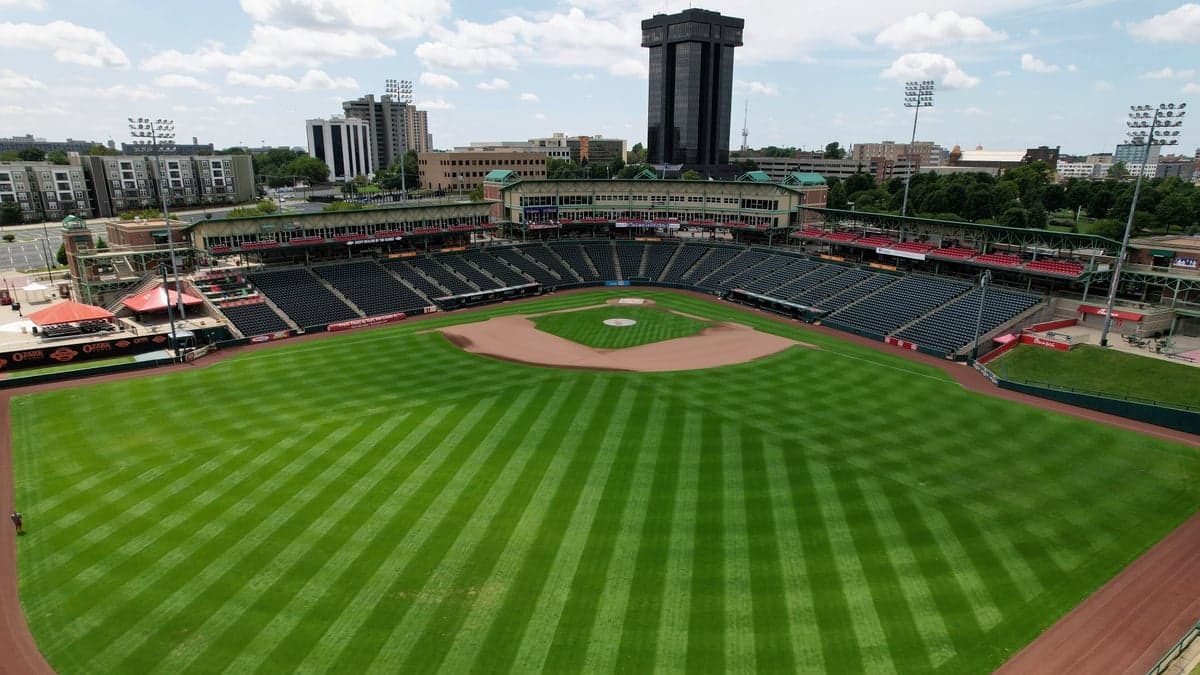
Photo: Wikipedia
Political ClimatePolitical Climate in Springfield, MO
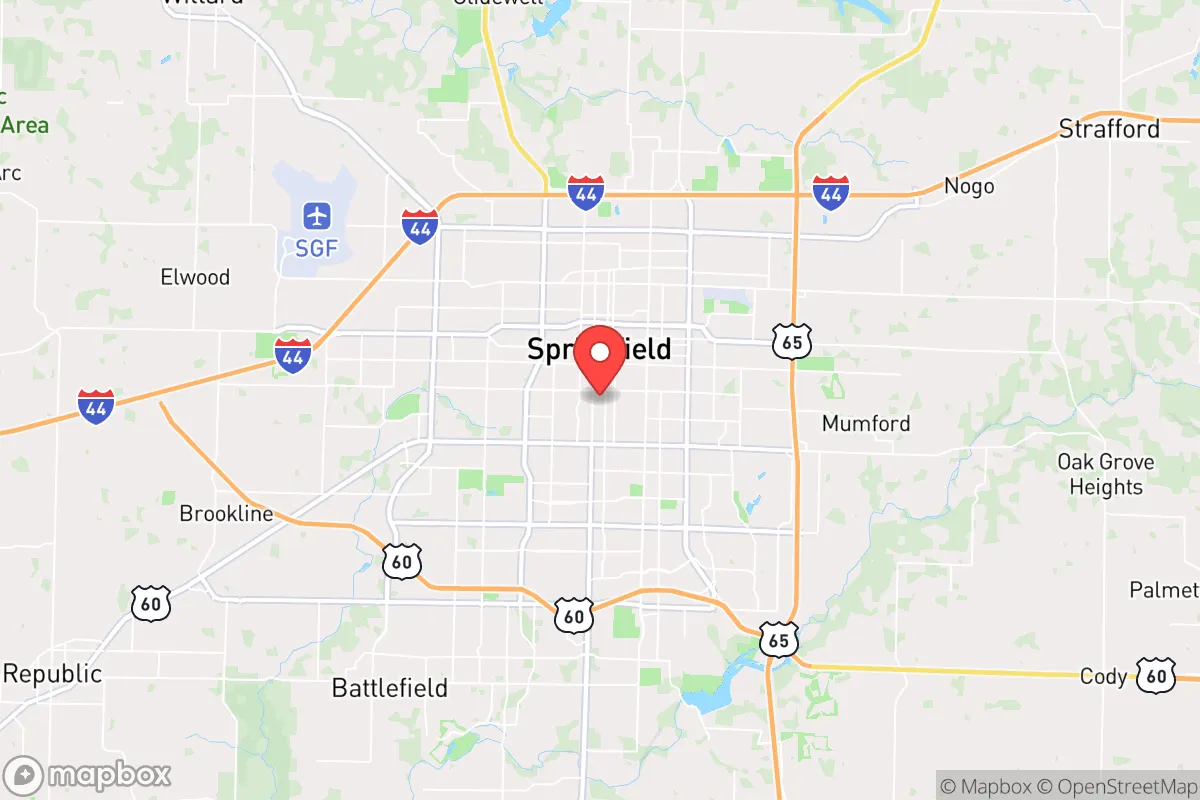
District shown is the primary district for this city’s centroid. Cities may span multiple districts.
Local Political AnalysisPolitical Analysis of Springfield, MO
Springfield, Missouri, is about as solidly conservative as it gets in the Show-Me State, with a Cook PVI of R+21 that tells you everything you need to know about the local voting patterns. The city itself leans Republican, but the real story is the surrounding Greene County and the broader southwest Missouri region, which have been reliably red for decades. If you look at the 2024 election, Greene County went for Trump by a comfortable margin, and the state legislature districts covering Springfield are held by Republicans who aren't shy about their conservative values. That said, there's been a subtle shift in the last five to ten years, with some younger residents and newcomers from places like Kansas City or St. Louis bringing more progressive ideas into local conversations, especially around city council races and school board elections. It's not a blue wave by any stretch, but it's enough to make longtime residents pay attention.
How it compares
Compared to other parts of Missouri, Springfield is a conservative anchor. Drive an hour north to Columbia, home of the University of Missouri, and you'll find a deep blue bubble that votes Democratic by double digits. Even closer, the college town of Rolla to the east is more purple, but Springfield holds its ground. The contrast is even sharper with St. Louis and Kansas City, where progressive policies on everything from taxes to public safety have taken hold. In Springfield, you don't see the same push for higher property taxes or expansive government programs. The surrounding towns like Nixa, Ozark, and Republic are even more conservative, often voting +30 or more for Republican candidates. If you're looking for a place where the government keeps its hands off your business and your family, Springfield and its neighbors are a safe bet. The local culture here values personal responsibility over government handouts, and that's reflected in the low tax burden and limited regulation compared to the coasts or even the big Missouri cities.
What this means for residents
For residents, the political climate translates into a few concrete realities. First, you won't see the kind of government overreach that's become common in blue states—no mask mandates that drag on for years, no heavy-handed business closures, and no aggressive zoning laws that make it hard to start a small business or build a home. The city council and county commission generally take a hands-off approach, trusting individuals and local businesses to make their own decisions. Property taxes are low, and there's no state income tax on retirement income, which is a big draw for families and retirees alike. The downside? If you're hoping for big government-funded projects like expanded public transit or massive social programs, you'll be disappointed. The local schools are decent but not lavishly funded, and infrastructure improvements move at a slower pace. For most folks here, that trade-off is worth it—they'd rather keep their money and their freedom than trade it for government services they don't want.
One thing that sets Springfield apart culturally is the strong influence of faith-based organizations and conservative nonprofits, which often step in where government might otherwise try to fill a gap. You'll see churches running food pantries, private schools thriving, and community groups handling things like homeless outreach without a lot of bureaucratic red tape. That's the Springfield way—people helping people, not the government telling them how to do it. The recent push for "diversity, equity, and inclusion" initiatives in some local institutions has raised eyebrows, with many residents viewing it as a Trojan horse for progressive ideology that undermines merit and individual rights. The long-term trend to watch is whether the influx of remote workers and retirees from blue states will start to shift the local politics. So far, most of them seem to move here because they like the conservative values, but a few have tried to bring their old voting habits with them. For now, Springfield remains a place where personal freedom and limited government are still the rule, not the exception.

State Political ClimatePolitical Climate in Missouri
State Political AnalysisPolitical Environment in the State
Missouri has long been considered a reliable red state, but the reality on the ground is more nuanced than the presidential map suggests. The state has shifted rightward over the past two decades, with Donald Trump winning it by 15 points in 2016 and 18.5 points in 2020, a significant jump from the 9-point margins of the 2000s. However, this overall lean masks a fierce internal tug-of-war: the fast-growing, culturally conservative suburbs and rural areas are pulling the state redder, while the two major urban cores—St. Louis and Kansas City—remain deep blue strongholds that drive the state’s legislative and cultural battles. For a conservative looking to relocate, Missouri offers a solidly Republican state government, but the political climate varies dramatically depending on which county you land in.
Urban vs. rural divide
The political map of Missouri is a textbook case of the urban-rural split. The two major metros—St. Louis (St. Louis City and County) and Kansas City (Jackson County)—are the Democratic engines, consistently delivering 60-70% of their votes to Democratic candidates. These areas are home to the state’s progressive activist base, major universities, and a growing population of out-of-state transplants. In contrast, the rest of the state is overwhelmingly Republican. The rural counties in the Ozarks, like Christian County (home to Nixa and Ozark) and Greene County (Springfield), vote 70-80% Republican. The real story is in the suburbs. St. Charles County, just west of St. Louis, has become a GOP stronghold, with Trump winning it by 30 points in 2020. Cass County, south of Kansas City, flipped hard red in the 2010s and is now reliably +25 Republican. The Lake of the Ozarks region (Camden and Miller Counties) is a conservative haven, with Trump winning by over 40 points. The only real blue dot outside the major cities is Boone County (Columbia), home to the University of Missouri, which is a liberal island in a sea of red.
Policy environment
Missouri’s state-level policy environment is broadly conservative, but with some notable wrinkles. The state has a flat income tax rate of 4.95%, which is being phased down to 4.5% by 2027 under a 2022 law. Property taxes are among the lowest in the nation, with an effective rate around 0.9%. The state is a right-to-work state (though the law was repealed by ballot initiative in 2018, the legislature has since passed other union-restricting measures). On education, Missouri has a robust school choice landscape, including charter schools in St. Louis and Kansas City, and a new MOScholars tax-credit scholarship program (expanded in 2023) that allows parents to use state funds for private school tuition. The state also passed a constitutional carry law in 2016, allowing permitless concealed carry. On the flip side, Missouri has a medicaid expansion that was forced through by ballot initiative in 2020, which conservatives view as a government overreach. The state also has a highly restrictive abortion law (trigger ban after Dobbs, with no exceptions for rape or incest), which is currently tied up in court. Election laws are moderately conservative: voter ID is required, and the state has a 2022 law that banned ballot drop boxes and tightened absentee voting rules.
Trajectory & freedom
Missouri’s trajectory on personal freedom is a mixed bag, but the trend is generally positive for conservatives. On gun rights, the state passed the Second Amendment Preservation Act (SAPA) in 2021, which declares federal gun laws that violate the Second Amendment to be null and void in Missouri. This is a major expansion of personal liberty, though it has led to a legal standoff with the DOJ. On parental rights, the legislature passed the Missouri Parents’ Bill of Rights in 2022, which requires schools to notify parents of any curriculum changes related to sexual orientation or gender identity, and gives parents the right to opt their children out of such instruction. This was a direct response to progressive overreach in school districts like Clayton and Ladue. On medical freedom, Missouri passed a 2022 law banning vaccine mandates for state employees and contractors, and a 2023 law prohibiting businesses from requiring proof of vaccination for entry. However, the state has not gone as far as some others on medical autonomy—there is no broad religious exemption for medical procedures, and the state’s medical marijuana program (legalized in 2018) is tightly regulated. The biggest concern for liberty-minded residents is property rights: Missouri has a strong eminent domain law that has been used aggressively for economic development projects, particularly in St. Louis County. The state also has a sales tax on groceries, which is a regressive burden that has been a target for repeal, but has not yet been eliminated.
Civil unrest & political movements
Missouri has been a flashpoint for civil unrest, particularly in the St. Louis area. The 2014 Ferguson riots following the Michael Brown shooting were a national turning point, and the city has seen periodic protests since, including the 2020 George Floyd protests that turned violent in downtown St. Louis and Kansas City. The St. Louis Metropolitan Police Department has been under a consent decree with the DOJ since 2017, which conservatives view as federal overreach. On the right, the Missouri State Capitol in Jefferson City has been the site of large pro-gun and pro-life rallies, and the Missouri Freedom Caucus has become a powerful force in the legislature, pushing for more aggressive nullification measures and school choice. Immigration politics are a hot topic: Missouri has a 2008 law requiring all state agencies to verify immigration status, and in 2023, the legislature passed a bill banning sanctuary city policies, with a specific target on St. Louis City, which had considered such measures. Election integrity remains a live issue: the 2020 election saw no major fraud scandals, but the 2022 law tightening absentee voting was driven by lingering distrust. The Missouri Republican Party is currently split between the establishment wing and the more populist, anti-establishment faction, which has led to some legislative gridlock on issues like tax reform.
Projection
Over the next 5-10 years, Missouri is likely to continue its rightward drift, but the pace will depend on in-migration patterns. The suburban growth in St. Charles, Cass, and Christian counties is bringing in conservative families from blue states, which will reinforce the GOP majority. However, the urban cores of St. Louis and Kansas City are also growing, driven by young professionals and immigrants, which could slowly shift the state’s overall demographics. The I-70 corridor from Kansas City to St. Louis is the battleground: if the suburbs continue to vote red at 60-70%, the state will remain solidly Republican. If they start to shift purple, as has happened in some suburban counties in other states, Missouri could become more competitive. The 2024 election will be a key test: if Trump wins by 20+ points, the state will be seen as a safe red haven. If the margin shrinks, expect more internal GOP infighting. The biggest wildcard is St. Louis City, which is losing population and could be at risk of state takeover of its police department or school system, which would be a major political flashpoint. For a conservative moving in now, expect to find a state that is broadly friendly to your values, but with a growing cultural and political war in the suburbs and cities.
For a new resident, the bottom line is this: Missouri offers a low-tax, pro-gun, and increasingly pro-parental rights environment, but you need to choose your county carefully. If you want a deep red, safe community with good schools and low crime, look at St. Charles County, Christian County (Nixa/Ozark), or the Lake of the Ozarks. If you want to be near a city but still in a red area, Cass County (south of Kansas City) or Jefferson County (south of St. Louis) are solid bets. Avoid St. Louis City and Jackson County if you want to avoid progressive politics and high crime. The state’s trajectory is positive for conservatives, but the fight over the suburbs is just beginning. You’ll have a strong voice in that fight if you show up and vote.
* Values derived from national, state, county, city and local statistics and may differ in a specific area. Last updated: 2026-04-29T19:11:01.000Z
Narrative content on this page is AI-generated and may contain mistakes. Verify any details that matter before acting on them.
ReloMaps may earn a commission from affiliate links at no extra cost to you.

