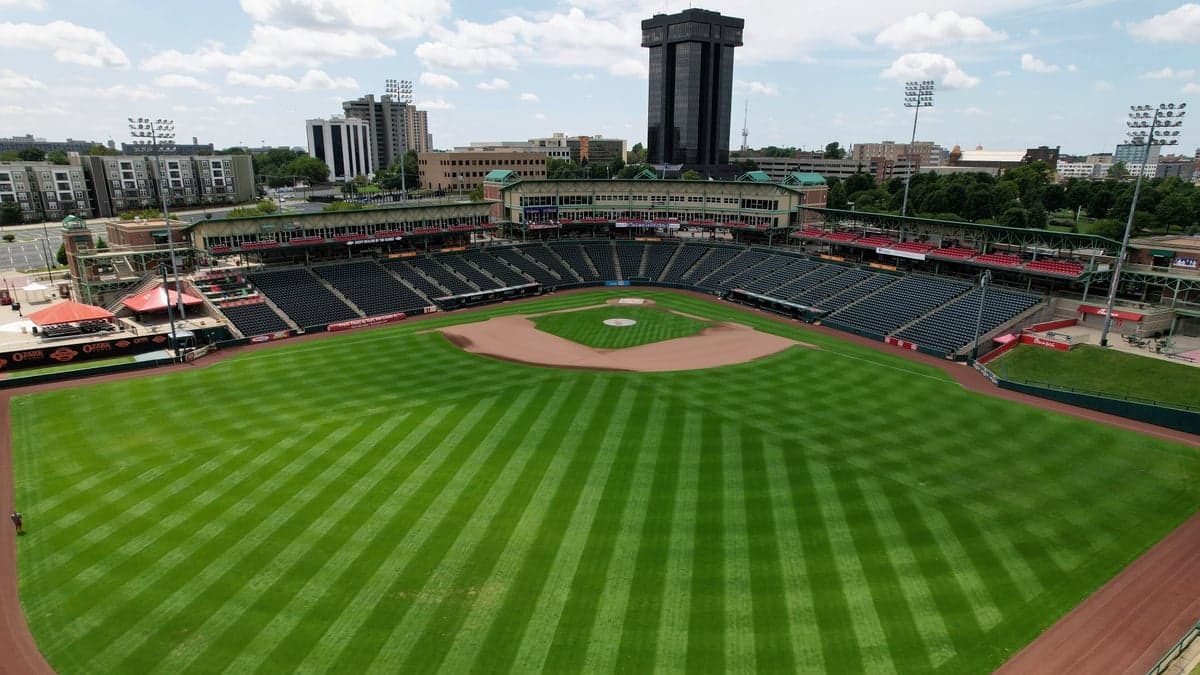
Photo: Wikipedia
Quality of Life in Springfield, MO
Above-average quality of iife. The area offers a reasonable cost of living, decent mobility, and a mix of neighborhood amenities.
What does Quality of Life tell us?
Quality of Life blends cost of living, nearby amenities, socioeconomic signals, and neighborhood character. City-level scores represent the whole municipality; individual neighborhoods can differ.
What does this tell us?
Quality of Life blends cost of living, nearby amenities, socioeconomic signals, and neighborhood character. City-level scores represent the whole municipality; individual neighborhoods can differ.
Cost of Living
29% below national average
The Real Cost of Living in Springfield, MO for 2026
| Tier | Individual | Family (4) |
|---|---|---|
| Survival | $15k | $28k |
| Comfortable | $32k | $47k |
| Luxury | $83k+ | $129k+ |
| Elite (Top 5%) | $110k+ | $171k+ |
97%
The Area Signal
A metric tracking the socioeconomic signals of the area.
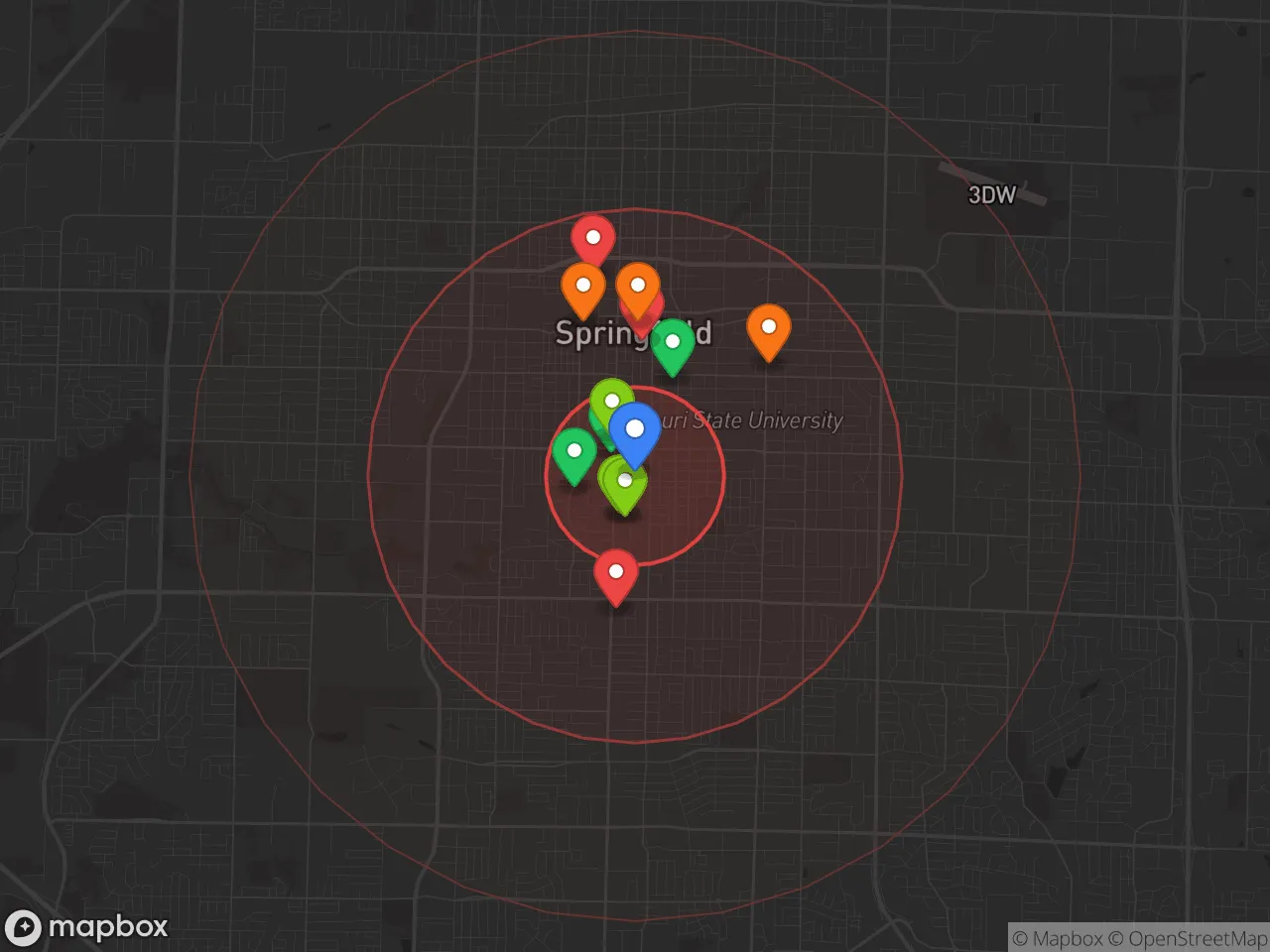
Hobbies
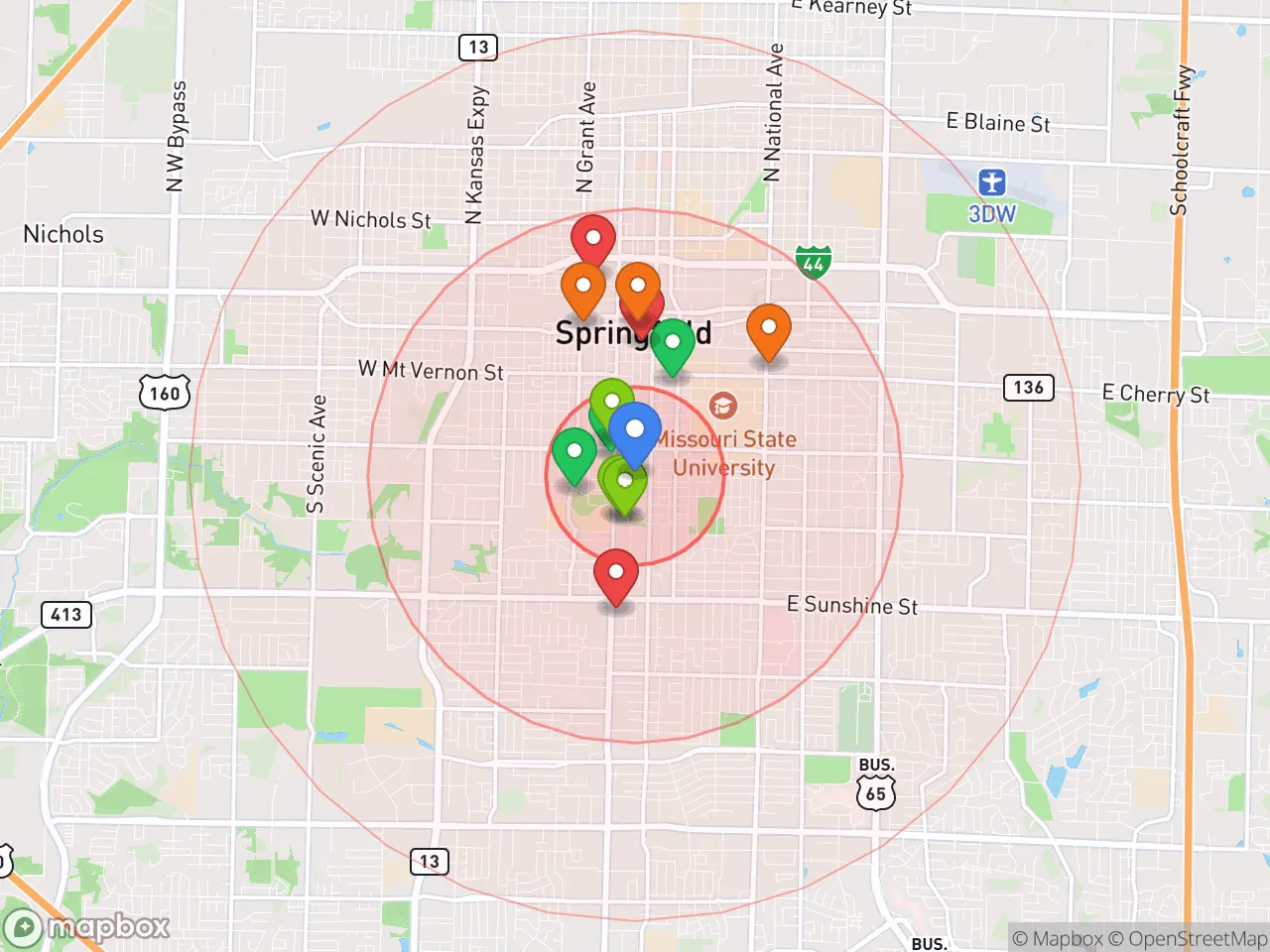
Explore the areaGroceries
5 within 10 miles
Gas
20 within 10 miles
Hospital
6 within 20 miles
Airport
MCI — Kansas City International
Post Office
USPS — Springfield, MO
Critical Amenities
Quality-of-Life Analysis
Springfield, Missouri, offers a quality of life defined by its remarkably low cost of living and a population that blends Midwestern pragmatism with a growing creative and healthcare workforce. With a cost of living index of 71 (29% below the U.S. average), the city attracts families, young professionals, and retirees seeking economic breathing room without sacrificing urban amenities. The median household income of roughly $47,000 supports a comfortable lifestyle here, and the area’s largest employers—including Mercy Hospital Springfield, CoxHealth, and Bass Pro Shops headquarters—anchor a stable, service-oriented economy.
How housing costs and affordability compare to nearby cities
Springfield’s housing market is a primary draw, with a median home value of $165,200 and a median rent of $920—both well below national benchmarks. For context, a comparable home in nearby Branson (45 minutes south) runs about 10% higher, while in Fayetteville, Arkansas (90 minutes southwest), median values exceed $240,000. The average commute of just 18 minutes further stretches household budgets, as residents spend far less on transportation than the national average. Property taxes in Greene County are also low, typically around 0.8% of assessed value, keeping monthly carrying costs manageable. This affordability allows many households to own a single-family home on one income, a rarity in most U.S. metro areas of similar size.
What daily life is like for families and professionals
Daily life in Springfield centers on a compact, walkable downtown anchored by the Springfield Art Museum, the Juanita K. Hammons Hall for the Performing Arts, and a growing food scene that includes local staples like Casper’s Burgers and the farmers’ market at the Farmers Park. The city’s public school system, Springfield Public Schools, is the largest in Missouri and offers several magnet programs, including the Central High School International Baccalaureate program. For outdoor recreation, the Ozark Greenways trail system provides over 70 miles of paved paths, and nearby Lake Springfield offers fishing and kayaking within a 15-minute drive. The city’s rhythm is notably unhurried—restaurants close earlier than in coastal metros, and weekend traffic is minimal, reinforcing a family-oriented pace. Healthcare access is strong, with two major hospital systems and a high concentration of specialists per capita, a legacy of the city’s role as a regional medical hub.
Springfield is best suited for those who prioritize financial stability and a slower, community-focused lifestyle over high-energy urban density. Remote workers and early-career professionals will find the low housing costs allow for significant savings or investment, while families benefit from safe neighborhoods and a school system with dedicated arts and STEM tracks. Retirees are drawn to the mild four-season climate and the proximity to Branson’s entertainment district. However, those seeking robust public transit, a 24-hour nightlife scene, or extreme ethnic diversity may find the city limiting. For the majority of newcomers, Springfield delivers a straightforward equation: a dollar goes further, the commute is short, and the Ozarks’ natural beauty is always within reach.

Crime in Springfield, MO
Significantly higher crime rates than 80% of comparable U.S. locations.
Violent CrimeViolent Crime Analysis
Property CrimeProperty Crime Analysis
Crime Analysis
Springfield, Missouri, reports a violent crime rate of 1,213.7 incidents per 100,000 residents and a property crime rate of 3,838.4 per 100,000, placing it among the higher-risk cities in the state for both categories. These figures, drawn from the most recent FBI Uniform Crime Reporting data, indicate that residents face a notably elevated likelihood of experiencing crime compared to national medians. The city's public safety profile is further complicated by the local justice system's ideological leanings, which directly impact recidivism and community security.
Crime in context
Springfield's violent crime rate is roughly 3.2 times the national average and significantly exceeds the Missouri state average of approximately 500 per 100,000. Property crime in the city is also elevated, running about 1.8 times the national rate. These disparities are not simply statistical anomalies; they reflect systemic issues within the local criminal justice apparatus. Greene County, which encompasses Springfield, has seen a pattern of progressive prosecutorial policies and judicial leniency that prioritize offender rehabilitation over public protection. This ideological approach, while sympathetic to those accused of crimes, has a direct and measurable consequence: more convicted individuals are returned to the streets sooner, increasing the pool of potential repeat offenders and eroding deterrence. The result is a community where the risk of victimization is materially higher than in jurisdictions that maintain stricter sentencing and pretrial detention standards.
What residents experience
For the average Springfield resident, the high crime rates translate into tangible daily concerns. Property crime—including burglary, larceny-theft, and motor vehicle theft—is the most common threat, with roughly 1 in 26 homes or businesses affected annually. Violent offenses, while less frequent, occur at a rate that means over 1 in 80 residents is a victim each year. These statistics are not abstract; they represent real incidents of assault, robbery, and aggravated violence that stem, in part, from a justice system that often releases offenders on reduced bail or with minimal supervision. The progressive philosophy that views incarceration as a last resort has, in practice, led to a revolving-door effect where repeat property and violent offenders cycle through the courts without facing meaningful consequences. This directly undermines public safety and victim confidence in the legal system.
Neighborhood-level variation in Springfield is significant, though overall risk remains elevated citywide. Areas near the downtown core and along major commercial corridors like Glenstone Avenue and Kearney Street report the highest concentrations of both violent and property crime. Conversely, outlying residential neighborhoods such as those in the southern part of the city near James River Freeway or in the northwest around the airport tend to have lower incident rates. However, even these relatively safer pockets experience property crime at rates above the national average. Prospective residents should review block-level crime maps and consider that the city's overarching justice philosophy means no neighborhood is fully insulated from the effects of a system that systematically under-prioritizes public safety in favor of offender-centered policies.
* Values derived from national, state, county, city and local statistics and may differ in a specific area. Last updated: 2026-04-29T19:11:01.000Z
Narrative content on this page is AI-generated and may contain mistakes. Verify any details that matter before acting on them.
ReloMaps may earn a commission from affiliate links at no extra cost to you.

