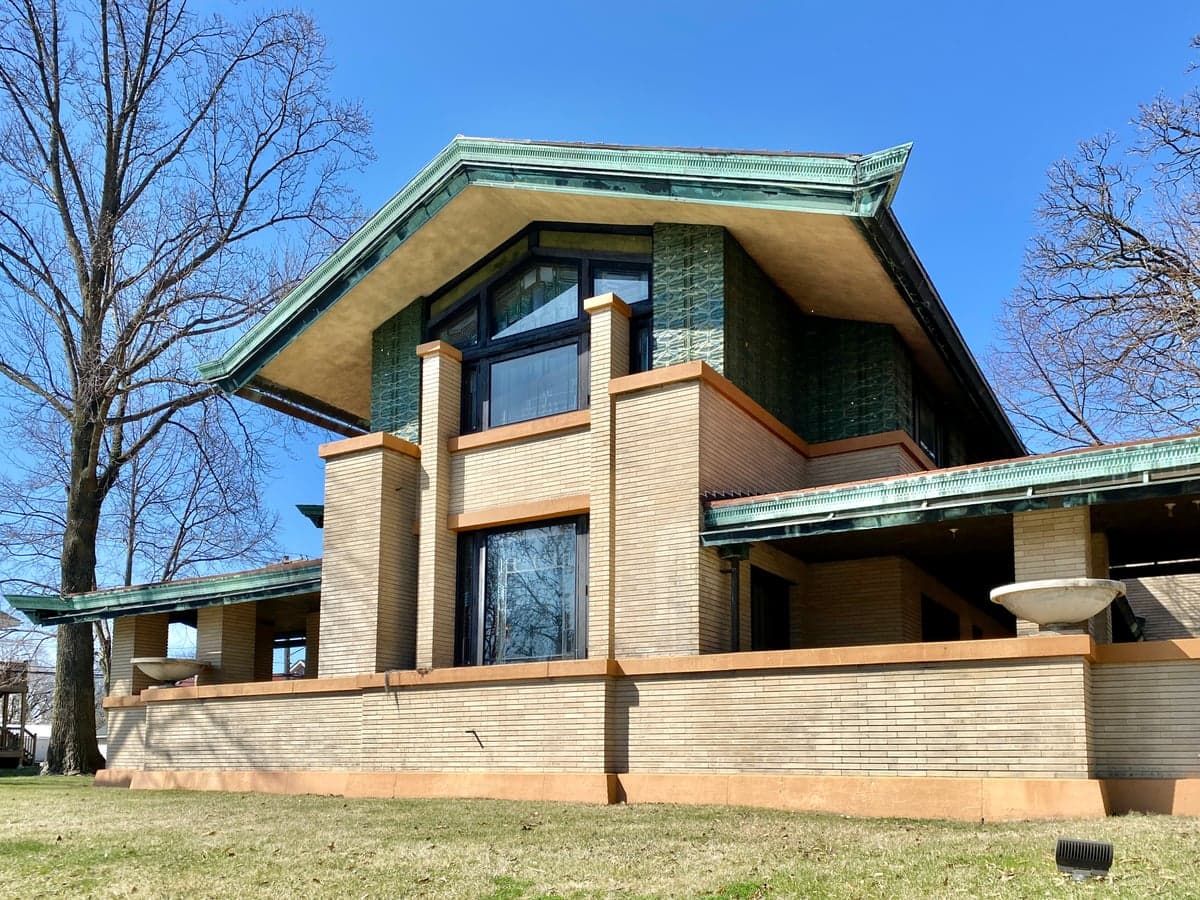
Photo: Wikipedia
Strategic Assessment of Springfield, IL
Meaningful friction. Expect exposure to either population pressure, blast zones, or natural disaster risk. Consider buying a retreat property.
What does the Strategic Assessment tell us?
Our Strategic Assessment grades tactical survivability of an area. Major population centers, military targets, fallout zones, natural disasters, and border exposure all drive risk — lower exposure means a more defensible position in a crisis.
This is heavily inspired by Joel Skousen's Strategic Relocation book. Highly recommended you checkout the book ($)What does this tell us?
Our Strategic Assessment grades tactical survivability of an area. Major population centers, military targets, fallout zones, natural disasters, and border exposure all drive risk — lower exposure means a more defensible position in a crisis.
This is heavily inspired by Joel Skousen's Strategic Relocation book. Highly recommended you checkout the book ($)Strategic Pillars

Key Distances
Regional Safe Places
Below is our recommended "safe zones" in Illinois and the surrounding area based on our strategic heuristics. For most people, it's unrealistic to live in a “safe zone” full-time due to work, family or other personal reasons. They tend to be more rural. However, many of these areas are perfect for second homes and retreat properties that double as a vacation home or even a short-term rental.
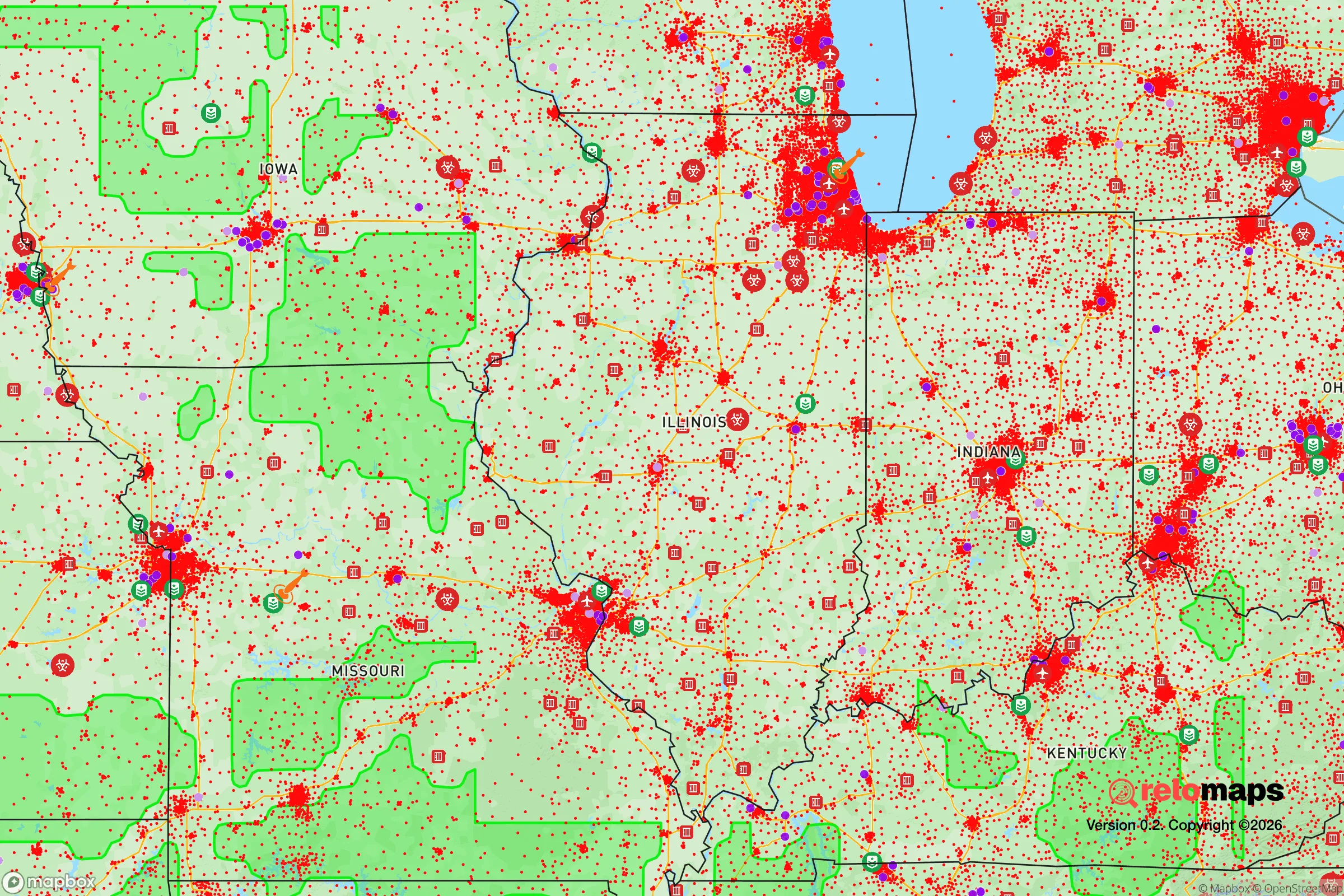
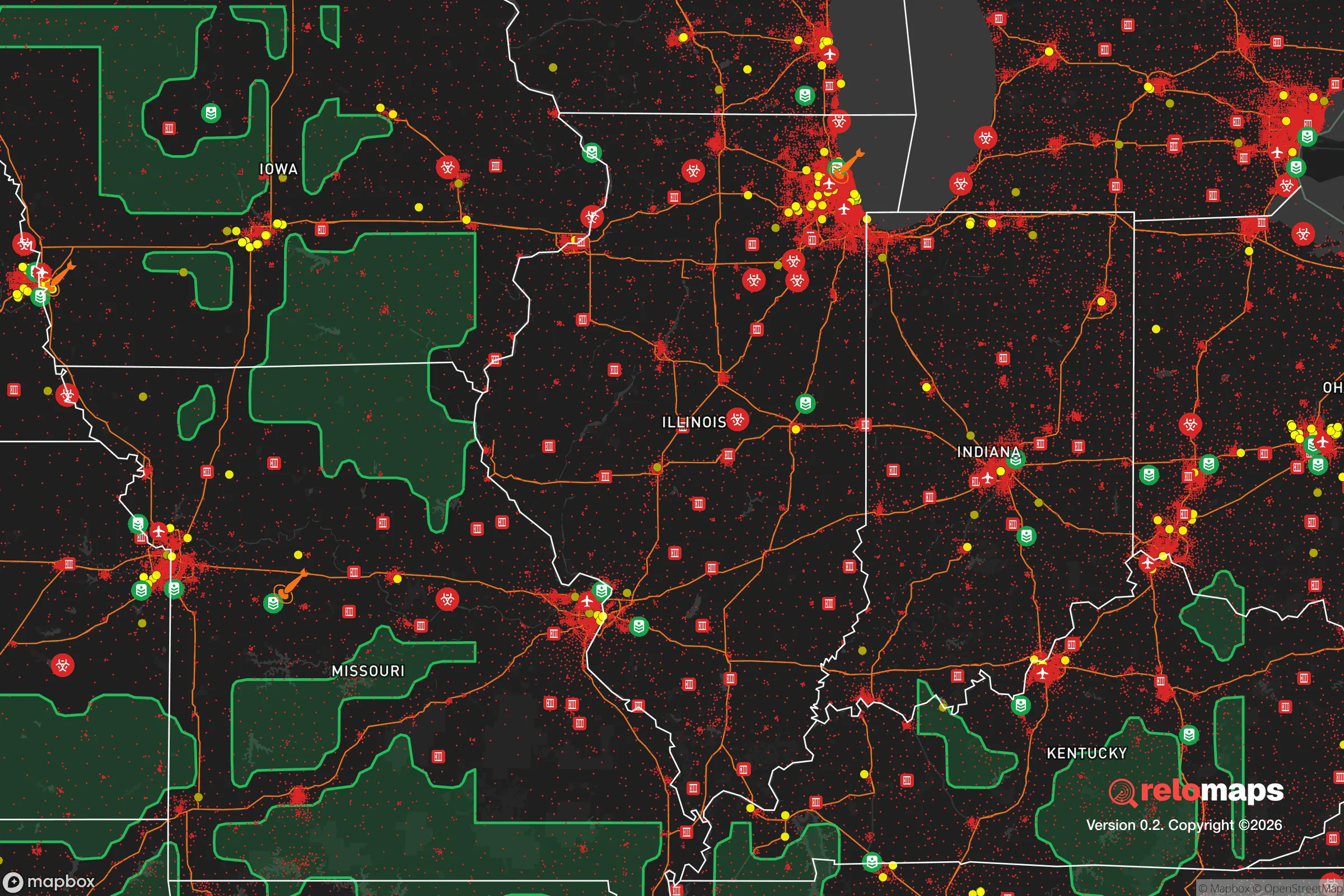


Important Note: For informational purposes only. This does not mean nothing bad ever happens in the green zones. Please use common sense. This is based on public data and modeled with AI. We tried to take a conservative approach but mistakes happen. We update this regularly as new information becomes available.
Solar Generator Recommendations
Backup power matters more here than in safer locations. We've picked three solar generators across budgets and capacity tiers — start with the budget unit if you only need a few essentials, or step up if you want to run a fridge and HVAC for days at a time.

Jackery Portable Power Station Explorer 300
Budget OptionPower on the Go: Weighing only 11 lbs, it's convenient to set up and store with book-sized foldable solar panels

BLUETTI Portable Power Station AC180
Designed for both indoor and outdoor scenarios, AC180 is highly capable as it has a robost capacity and continuous output power.

EF ECOFLOW DELTA Pro Ultra Power Station
Upgraded PickEcoFlow DELTA Pro Ultra is a whole-home energy system designed to grow with your family. Integrated with the Smart Home Panel 2, it scales to meet your evolving energy needs — keeping your home powered, intelligent, and secure through every stage of life.
We earn a commission, at no additional cost to you.
Strategic Assessment Analysis
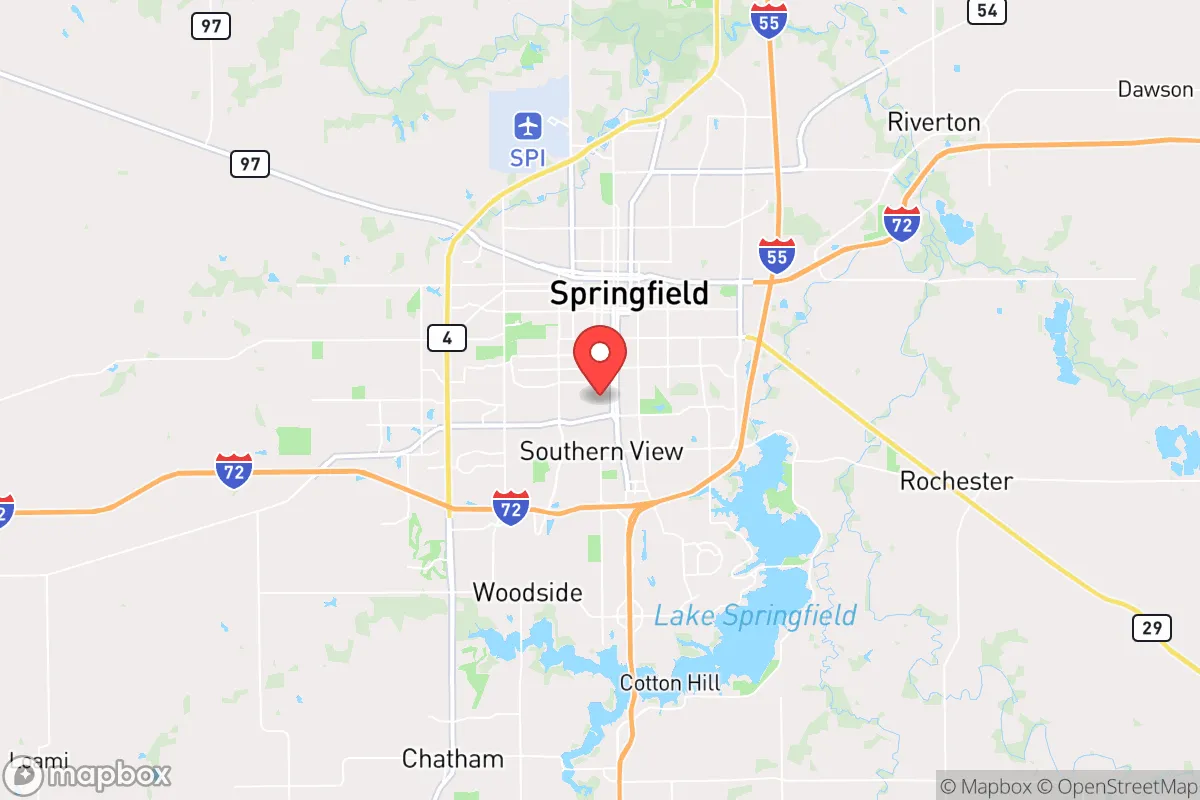
Springfield, Illinois, occupies a strategic middle-ground position that offers a blend of resilience and risk for those prioritizing preparedness. As the state capital, it provides institutional stability and a slower pace of life than Chicago or St. Louis, yet it sits within a 90-minute drive of both major metropolitan areas—a proximity that cuts both ways for a survivalist mindset. The city’s location along the Sangamon River and its status as a regional hub for government, healthcare, and logistics give it a baseline of functional redundancy, but the same factors that make it a viable relocation target also introduce vulnerabilities that demand careful consideration.
Geographic position and natural advantages for long-term stability
Springfield’s central Illinois location places it in the heart of the Corn Belt, surrounded by some of the most productive agricultural land in the United States. This is a genuine asset for food security: within a 30-mile radius, you’ll find thousands of acres of row crops, livestock operations, and smaller family farms that could sustain a localized food system if supply chains falter. The terrain is flat to gently rolling, which simplifies construction, gardening, and water management, though it offers little in the way of natural cover or defensible high ground. The Sangamon River provides a reliable freshwater source, and the city’s groundwater aquifer is generally adequate for municipal use, though well-drilling for private properties is common in outlying areas. Climate-wise, Springfield experiences all four seasons, with hot summers and cold winters, but it sits outside the primary tornado alley to the west and the flood-prone Mississippi River corridor to the southwest. Severe weather events—thunderstorms, occasional ice storms, and the rare derecho—are the main natural threats, but they are predictable and manageable with basic preparation. The region’s low population density outside the city limits (Sangamon County has roughly 195,000 people spread over 877 square miles) means that a relocator can find rural or semi-rural properties within a 15-minute drive of downtown, offering a balance of access and isolation.
Risks, exposures, and proximity to fallout-relevant landmarks
The most significant strategic downside of Springfield is its proximity to high-value targets and population centers. Springfield lies roughly 85 miles from Scott Air Force Base, a major military installation near St. Louis that houses the U.S. Transportation Command and the 375th Air Mobility Wing. In a conflict scenario, this base is a likely target for conventional or asymmetric strikes, and fallout patterns from a detonation at Scott could reach Springfield depending on wind direction. Similarly, the city is about 90 miles from the St. Louis metropolitan area (2.8 million people) and 200 miles from Chicago (9.5 million people). In a civil unrest or mass casualty event, both cities could generate large-scale refugee flows along I-55, which runs directly through Springfield. The interstate also connects to Decatur (40 miles east) and Bloomington-Normal (65 miles north), meaning the city sits on a primary evacuation corridor. Additionally, Springfield is home to the Abraham Lincoln Capital Airport, a regional hub that could become a focal point for government or military activity during a crisis, drawing unwanted attention. The city’s role as the state capital also means it hosts the Illinois State Capitol, multiple state agency buildings, and the Illinois National Guard headquarters—assets that could be targets for political violence or become centers of martial law enforcement. For a prepper, these factors make Springfield a moderate-risk location: not a primary target, but close enough to secondary effects to require a solid bug-out plan and a home base with at least two weeks of supplies.
Practical resilience for a relocator: food, water, energy, and defensibility
For a single individual or family looking to establish a resilient homestead, Springfield offers a mixed bag. Food security is the strongest point: the surrounding farmland means local farmers’ markets, CSAs, and bulk grain suppliers are abundant, and the city’s position as a regional distribution hub (with major warehouses for Kroger, Walmart, and Sysco) provides buffer stock in normal times. However, reliance on these systems is a vulnerability—if trucking stops, grocery shelves empty within 72 hours. A better bet is to secure a property with at least an acre of arable land, which is feasible within a 20-minute drive of the city center. Water is a moderate concern: municipal water comes from the Sangamon River and is treated, but a prolonged power outage could disrupt pumping. Private wells are common in rural areas, but they require electricity for pumps unless you invest in a hand pump or solar setup. The aquifer is reliable, but depth varies (typically 50-150 feet), so drilling costs are a factor. Energy resilience is achievable: net metering is available through City Water, Light & Power (CWLP), the municipal utility, and solar installation is legal and growing. Natural gas is widely available, and wood-burning stoves are common in older homes. For defensibility, the flat terrain is a double-edged sword—it offers clear sightlines but little natural cover. Neighborhoods like the historic West Side or rural areas near Lake Springfield provide more seclusion, while subdivisions near I-55 are vulnerable to traffic and looting during unrest. A property with a basement (common in older homes) is essential for tornado safety and can double as a storm shelter or root cellar. The local gun culture is moderate—Illinois has restrictive firearms laws compared to neighboring Missouri or Indiana, but Sangamon County is more permissive than Cook County, and concealed carry is legal with a license. For a conservative relocator, the legal environment around self-defense and property rights is a consideration: Illinois is a “duty to retreat” state, not a stand-your-ground state, which may influence your security planning.
The overall strategic picture for Springfield is one of calculated trade-offs. It offers genuine advantages in food access, water availability, and a stable government presence that could provide order during localized disruptions. But its proximity to St. Louis and Chicago, its position on a major interstate, and its role as a state capital introduce risks that a serious prepper cannot ignore. For someone willing to invest in a rural property within a 15- to 30-minute drive of the city, maintain a robust supply cache, and develop a network of like-minded neighbors, Springfield can serve as a viable base of operations. It is not a remote survivalist retreat—you won’t find the isolation of the Ozarks or the defensibility of mountainous terrain—but it is a pragmatic choice for those who want institutional access without metropolitan chaos. The key is to treat Springfield as a hub, not a fortress: live close enough to benefit from its resources, but build your resilience on the periphery, where the risks are lower and the land gives you room to breathe.

* Values derived from national, state, county, city and local statistics and may differ in a specific area. Last updated: 2026-04-23T09:38:33.000Z
Narrative content on this page is AI-generated and may contain mistakes. Verify any details that matter before acting on them.
ReloMaps may earn a commission from affiliate links at no extra cost to you.

