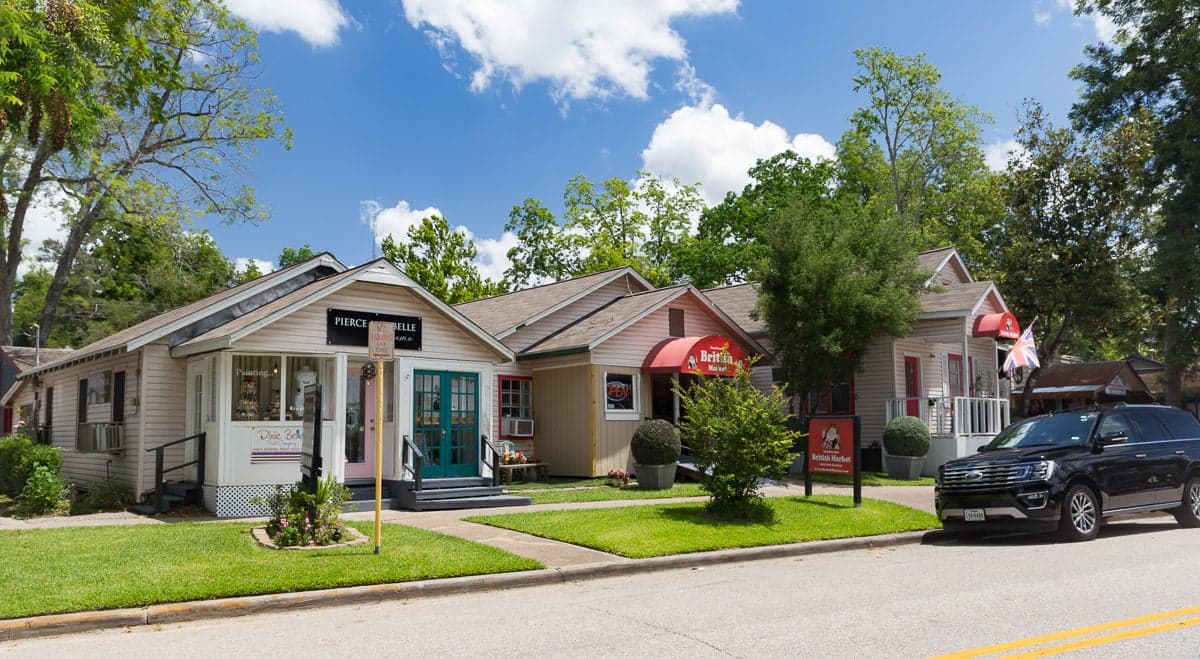
Photo: Wikipedia
Political ClimatePolitical Climate in Spring, TX
District shown is the primary district for this city’s centroid. Cities may span multiple districts.
Local Political AnalysisPolitical Analysis of Spring, TX
Spring, Texas, is a reliably conservative area, with a Cook Partisan Voting Index (PVI) of R+12, making it significantly more Republican than the state of Texas as a whole, which sits at R+4. This isn't a new development; the area has been a Republican stronghold for decades, but the intensity of that lean has deepened in recent years, especially as the broader Houston metro area has become more competitive. If you've lived here a while, you've seen the shift from a moderate, "country club" Republicanism to a more solid, culturally conservative base, driven by an influx of families and retirees from other parts of the state and country who are looking for a more traditional, lower-tax environment.
How it compares
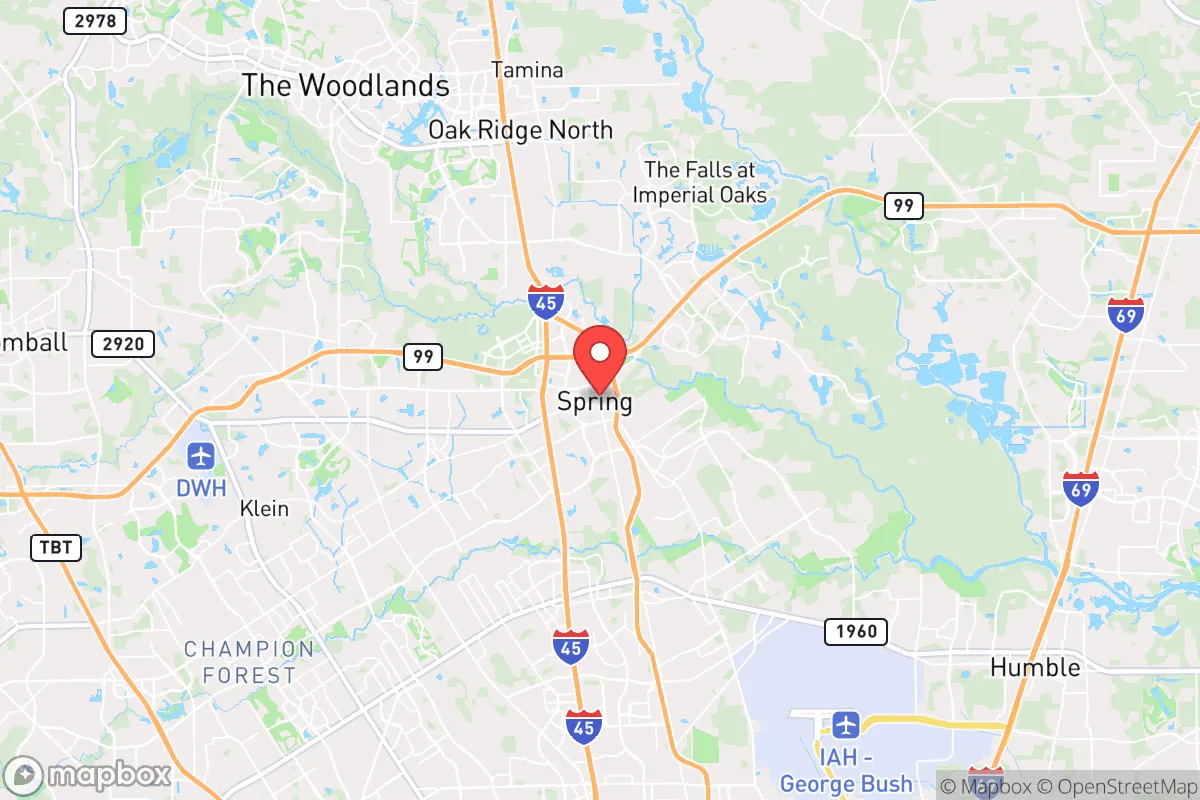
To understand Spring's politics, you have to look at its neighbors. Drive south into the city of Houston proper, and you'll hit areas like the Heights or Montrose, which are solidly Democratic and have a Cook PVI of D+18 or more. Head west to Tomball or Magnolia, and you'll find areas even more conservative than Spring, often with a PVI of R+15 or higher. The contrast is stark: Spring acts as a kind of political buffer zone between the deep-blue urban core and the deep-red exurbs. This means local elections here are often decided in the Republican primary, not the general election. The surrounding state of Texas, with its R+4 rating, is a battleground in a way that Spring simply isn't. While statewide races for governor or senator can be competitive, Spring's voters reliably deliver 60-65% of their ballots for the Republican candidate, making it a safe bet for the party.
What this means for residents
For a conservative resident, this political climate is comfortable. Your views on taxes, gun rights, and school choice are likely the majority view. You'll see plenty of "Don't Tread on Me" flags and Trump signs during election season, and local government tends to be pro-business and skeptical of new regulations. For a liberal resident, life is more of a balancing act. You'll find like-minded people, especially in the newer, more diverse subdivisions near the Grand Parkway, but you won't see your values reflected in the local city council or school board. You might feel a bit out of step at a neighborhood HOA meeting or a local restaurant. The practical effect is that the area's politics are stable and predictable—there's no real chance of a sudden policy shift on property taxes or zoning. The downside for some is that the political discourse can feel one-sided, and it can be hard to find a local candidate who reflects a more moderate or progressive viewpoint.
One cultural distinction that sets Spring apart from the rest of Texas is its relationship with the "don't mess with Texas" attitude. While that sentiment is strong statewide, in Spring it's often paired with a specific focus on local control and property rights. You'll hear more talk about "keeping the county rural" and resisting annexation by Houston than you will about national issues. The area's rapid growth has also created a tension between the old guard—who remember when Spring was just a few stop signs and a feed store—and the newcomers who want more amenities and services. This dynamic plays out in local politics, where the biggest fights are often about road bonds, school district boundaries, and development regulations, not the culture war issues that dominate national headlines. In practice, this means that while the area votes solidly red, the day-to-day political reality is more about managing growth and preserving a certain quality of life than about any grand ideological project.

State Political ClimatePolitical Climate in Texas
State Political AnalysisPolitical Environment in the State
Texas is a solidly Republican state with a Cook PVI of R+4, meaning it typically votes about four points more Republican than the national average. The dominant coalition is a mix of suburban conservatives, rural voters, and a growing number of Hispanic and working-class voters who have shifted right in recent cycles. Over the past 20 years, the state has moved from a deep-red stronghold to a more competitive but still reliably Republican environment, driven by explosive growth in the suburbs of Dallas-Fort Worth, Houston, and San Antonio, while Austin and El Paso have become Democratic strongholds. The 2020 and 2024 elections saw the GOP hold the state by narrower margins than in the 2000s, but the party’s grip on the legislature and statewide offices remains firm.
Urban vs. rural divide
The political map of Texas is a classic urban-rural split, but with a twist. The major metros—Houston, Dallas, San Antonio, and Austin—are Democratic-leaning, with Austin being the most liberal city in the state. However, the suburbs around these cities, particularly in Collin County (north of Dallas) and Fort Bend County (southwest of Houston), have been trending blue, though they still lean Republican in many races. Rural and exurban counties like Lubbock’s home of Lubbock County and the vast stretches of West Texas and the Panhandle are deeply red. The Rio Grande Valley, once a Democratic stronghold, has seen a notable shift toward the GOP, with counties like Hidalgo and Cameron flipping or narrowing significantly in 2020 and 2024. This urban-rural divide means that a resident’s political experience varies dramatically—living in downtown Austin feels like a blue island, while a drive to Waco or Amarillo quickly returns to deep-red territory.
Policy environment
Texas’s policy environment is defined by a low-tax, low-regulation posture. There is no state income tax, and property taxes are high to compensate—averaging about 1.6% of home value, among the highest in the nation. The state’s regulatory climate is business-friendly, with minimal zoning in many areas and a right-to-work law that limits union power. Education policy is a flashpoint: the state funds schools through a complex local property tax system, leading to wide disparities between wealthy and poor districts. School choice and voucher programs have been hotly debated, with Governor Greg Abbott pushing for a universal education savings account (ESA) program in 2023, which failed in the House. Healthcare policy is similarly contentious—Texas has the highest uninsured rate in the country (around 18% as of 2024), and the state has not expanded Medicaid under the Affordable Care Act. Election laws have tightened since 2021 with Senate Bill 1, which added ID requirements for mail-in voting, limited drive-through and 24-hour voting, and gave poll watchers more access. For a relocator, the practical takeaway is that Texas offers fiscal freedom but expects residents to navigate a patchwork of local services and high property taxes.
Recent policy direction
Recent legislation in Texas has moved decisively toward expanding individual liberties in some areas while restricting them in others. On gun rights, the state enacted permitless carry (HB 1927) in 2021, allowing most adults to carry a handgun without a license. Self-defense laws are strong, with a “stand your ground” statute and no duty to retreat. Parental rights were bolstered by the 2023 passage of the “Parental Bill of Rights” (HB 900), which requires schools to notify parents of instructional materials and medical decisions. On education, the state banned critical race theory in public schools (SB 3, 2021) and restricted how teachers discuss race and gender. Speech and privacy saw a major shift with the 2023 law (HB 20) that prohibits social media platforms from moderating content based on viewpoint, though it’s been tied up in court. Medical and bodily autonomy is heavily restricted: Texas has one of the strictest abortion bans in the nation (SB 8, 2021, and the trigger law effective in 2022), with no exceptions for rape or incest. Property rights are strong, with no state-level rent control and a robust homestead exemption that protects a primary residence from creditors. Voting access has been tightened, as noted, but early voting remains generous (two weeks). The overall direction is toward more individual freedom in economic and self-defense matters, but with significant government intervention in social and medical decisions.
Civil unrest & political movements
Texas has seen its share of civil unrest and political movements, particularly around immigration and abortion. The 2021 “Operation Lone Star” border security initiative, launched by Governor Abbott, deployed state troopers and National Guard to the border, leading to ongoing tensions with the federal government and immigrant rights groups. Sanctuary city bans (SB 4, 2017) have made local law enforcement cooperate with federal immigration authorities, a flashpoint in cities like Austin and Houston. Secession rhetoric has flared among some far-right groups, but it remains fringe—the Texas Nationalist Movement has little mainstream support. Election integrity controversies have been persistent, with the 2020 and 2022 cycles seeing lawsuits over mail-in voting and drop boxes, though no widespread fraud has been proven. On the left, the 2021 “People’s March” in Austin drew tens of thousands protesting the abortion ban, and the 2020 Black Lives Matter protests in Dallas and Houston were large but largely peaceful. A new resident would notice these tensions most at the border, in the political signage in rural areas, and in the polarized local news coverage.
Projection
Over the next 5-10 years, Texas is likely to remain Republican but become more competitive. Demographic shifts are key: the state’s population is growing fastest among Hispanic and Asian communities, who are not monolithic but are trending more Republican in recent cycles. In-migration from blue states like California and New York is bringing more moderate and liberal voters to the suburbs, particularly in Travis County (Austin) and Harris County (Houston). The GOP’s hold on the legislature is secure due to gerrymandering, but statewide races could tighten—the 2022 gubernatorial race saw Abbott win by 11 points, down from 13 in 2018. The biggest wildcard is the rural-urban divide: if suburban voters continue to drift left, Texas could become a swing state by the early 2030s. For someone moving in now, expect a decade of political flux, with the state’s conservative core holding firm in the legislature but the cultural and electoral landscape shifting toward a more purple hue.
For a new resident, the bottom line is that Texas offers a politically conservative environment with low taxes and strong gun rights, but it’s not a monolith. You’ll find deep-blue pockets in Austin and El Paso, and a growing suburban middle ground in places like Frisco and Round Rock. The practical takeaway: if you value fiscal freedom and self-defense laws, Texas is a strong fit. If you prioritize expansive social services or abortion access, you’ll find the state’s policies restrictive. The political climate is intense but stable—expect passionate debates but not chaos, and know that your vote will matter more here than in a deep-blue or deep-red state.
* Values derived from national, state, county, city and local statistics and may differ in a specific area. Last updated: 2026-07-30T01:58:28.000Z
Narrative content on this page is AI-generated and may contain mistakes. Verify any details that matter before acting on them.
ReloMaps may earn a commission from affiliate links at no extra cost to you.

