Photo: Wikipedia
Demographics of Spring, TX
Affluence Level in Spring, TX
A middle-class area roughly in line with national averages across income, home values, education, and employment.
People of Spring, TX
The people of Spring, Texas, today form a majority-minority community of 67,103 residents, defined by a Hispanic plurality (40.6%), a substantial Black population (22.5%), and a White population (30.2%) that is now a minority. The city is a dense, unincorporated suburban hub in northern Harris County, where foreign-born residents make up 9.7% of the population and 25.4% of adults hold a college degree. Its identity is a blend of historic Southern roots, post-1965 immigration, and rapid Sun Belt growth, creating a place that feels both established and transitional.
How the city was settled and grew
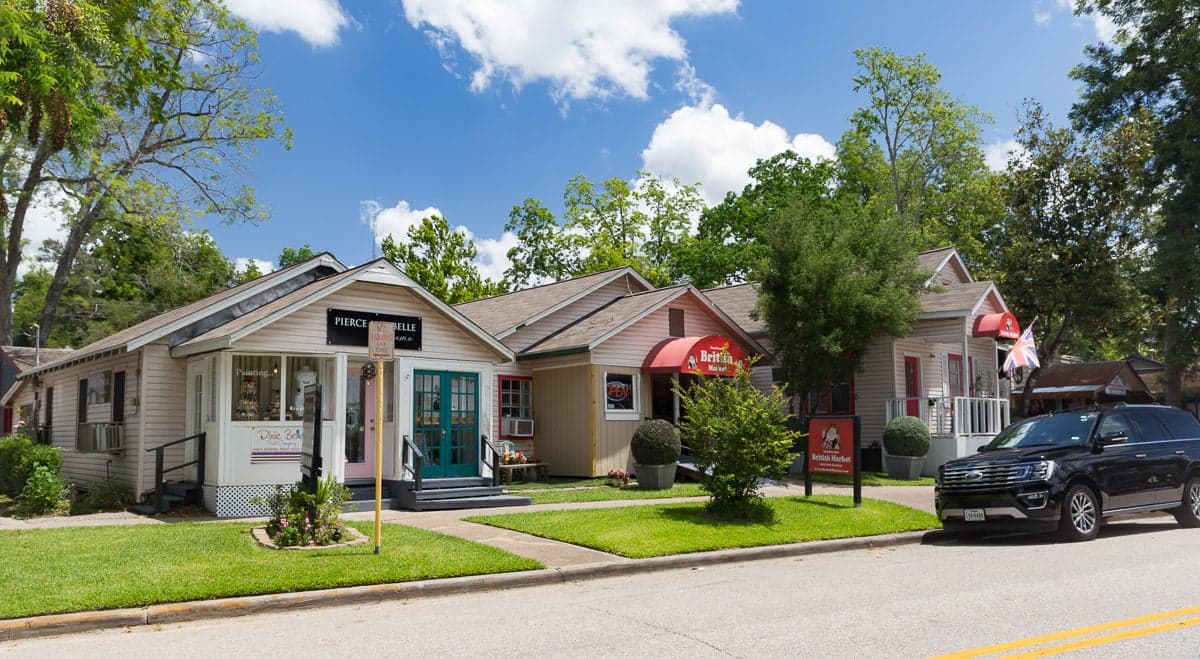
Spring’s original population was drawn by the railroad and timber industries in the mid-19th century. The Houston and Great Northern Railroad arrived in the 1870s, and the town was officially platted in 1873. Early settlers were predominantly Anglo-American farmers and merchants from the Deep South, who built the original commercial core around what is now Old Town Spring. This historic district, with its preserved 19th-century storefronts, was the heart of the community for generations. A second wave of White working-class families arrived during the early 20th-century lumber boom, settling in the Spring Creek area along the northern edge of town. The population remained small and overwhelmingly White through the 1950s, with fewer than 5,000 residents, as the local economy shifted from timber to agriculture and light manufacturing.
Modern era (post-1965)
The post-1965 era transformed Spring’s demographics. The 1965 Hart-Cellar Act opened immigration from Latin America and Asia, while the expansion of Houston’s suburban sprawl drew domestic migrants from across the country. The first major Hispanic influx arrived in the 1970s and 1980s, largely Mexican-American families seeking affordable housing and construction jobs in the booming Houston metro. They concentrated in the Birnamwood and Fox Run neighborhoods, where Hispanic-owned businesses and Spanish-language churches became community anchors. A second wave of Black residents, many relocating from inner-city Houston neighborhoods like Fifth Ward and Third Ward, moved to Spring in the 1990s and 2000s, drawn by newer housing stock and lower crime rates. They settled heavily in the Ponderosa Forest and Bammel North subdivisions, which today have some of the highest Black population shares in the city. East and Southeast Asian communities (2.2% of the population) arrived more gradually, with Vietnamese and Chinese families clustering in the Gleannloch Farms area, drawn by the highly rated Klein Independent School District. The Indian subcontinent population (0.7%) remains small but has grown modestly, with families settling in the same school-attendance zones. By 2020, Spring had shifted from a 90% White town in 1970 to a majority-minority city, with the Hispanic share rising from under 10% to over 40% in that span.
The future
Spring’s population is projected to continue diversifying, though the pace of change may slow. The Hispanic share is expected to rise toward 45-48% by 2040, driven by both natural increase and continued migration from Latin America. The Black population share is likely to stabilize around 22-24%, as the area becomes less affordable for lower-income households. The White share will continue to decline, possibly falling below 25% by 2040. New residential development is pushing eastward into the Springwoods Village area, a master-planned community near the Grand Parkway that is attracting a more mixed-income, college-educated population. This area is drawing younger families, including a growing number of mixed-race households and second-generation Hispanic and Black professionals. The cultural identity of Spring is evolving from a historically White, rural-adjacent suburb into a multiethnic, middle-class hub where no single group dominates. For someone moving in now, Spring offers a community where diversity is the norm, schools are a primary draw, and the population is still young enough to shape the city’s future identity.
Spring is becoming a solidly majority-minority, middle-class suburb where Hispanic, Black, and White residents coexist in roughly equal measure, with smaller but growing Asian and Indian communities. For a new resident, this means a place where the old racial boundaries are fading, but where economic and educational divides between neighborhoods remain real. The city’s trajectory points toward greater integration and a more suburban, family-oriented character, anchored by the Klein ISD and proximity to Houston’s job market.

* Values derived from national, state, county, city and local statistics and may differ in a specific area. Last updated: 2026-07-30T01:58:28.000Z
Narrative content on this page is AI-generated and may contain mistakes. Verify any details that matter before acting on them.
ReloMaps may earn a commission from affiliate links at no extra cost to you.

