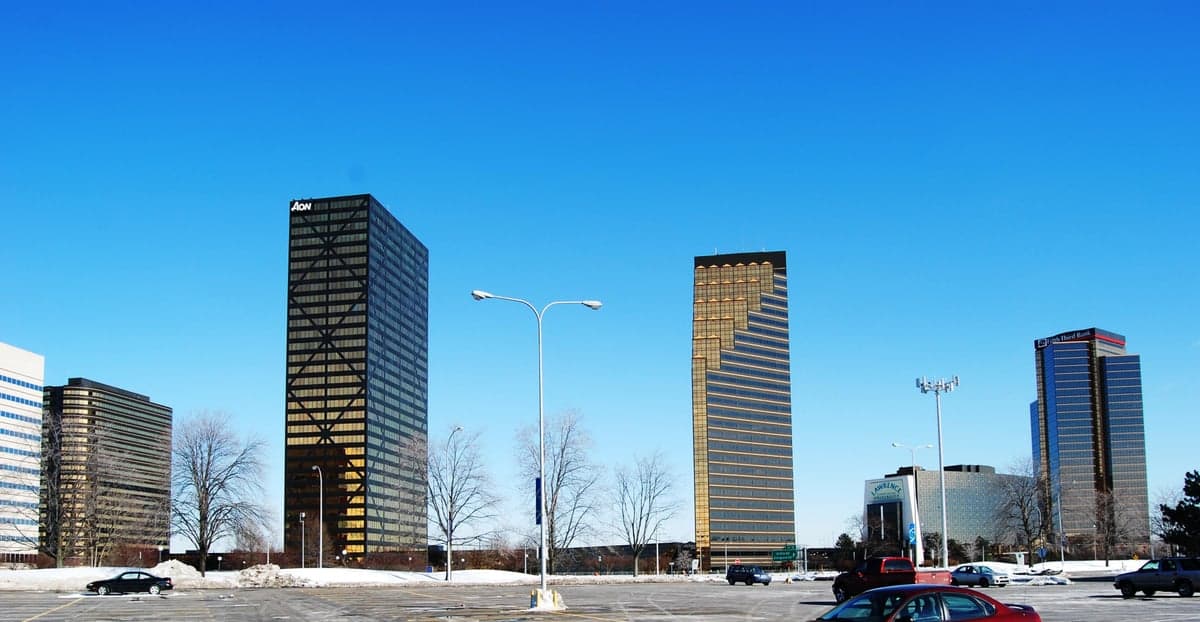
Photo: Wikipedia
Political ClimatePolitical Climate in Southfield, MI
District shown is the primary district for this city’s centroid. Cities may span multiple districts.
Local Political AnalysisPolitical Analysis of Southfield, MI
Southfield, Michigan, is a deeply blue city, with a Cook PVI of D+21, meaning it votes about 21 points more Democratic than the national average. This wasn't always the case, though. Back in the 70s and 80s, Southfield was a classic middle-class, largely white suburb with a mix of conservative and moderate voters. Over the last three decades, the city has shifted hard left, mirroring the broader transformation of Oakland County's urban core. Today, you're looking at a place where progressive policies are the baseline, not the exception, and that shift has real consequences for anyone who values personal freedom and limited government.
How it compares
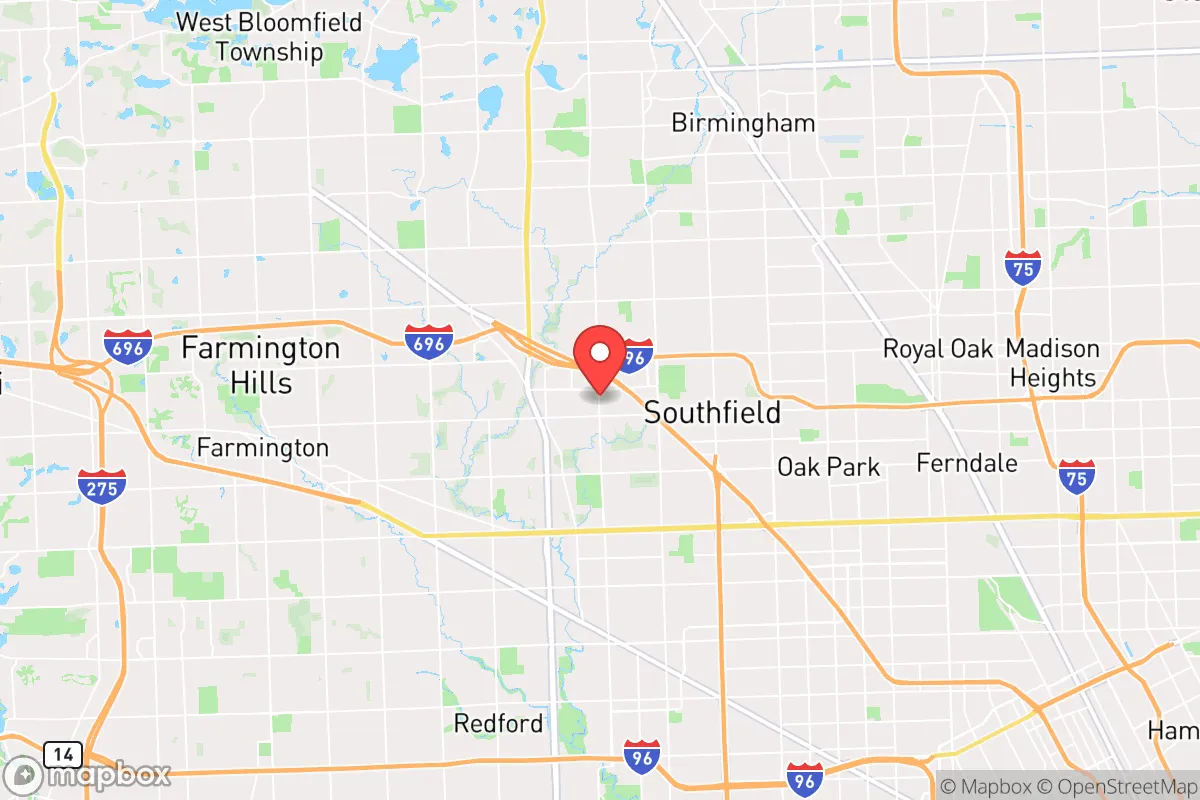
To understand Southfield's politics, you have to look at its neighbors. Drive ten minutes north to Farmington Hills or Novi, and you'll find a more balanced political mix—still blue-leaning, but with a noticeable conservative minority that keeps things from going off the rails. Head west to Walled Lake or Wixom, and you're in solidly purple territory, where local officials still remember that not everyone wants a government solution for every problem. But Southfield? It's surrounded by cities like Oak Park and Lathrup Village that are just as progressive, creating a regional bubble where left-wing ideas face little pushback. The contrast is stark: in Southfield, you're far more likely to see city-funded social programs, strict zoning rules, and a council that votes in lockstep with the county's progressive agenda. Meanwhile, in places like Rochester Hills or Troy, you still get a healthy debate about taxes, property rights, and school choice.
What this means for residents
For the average person living here, the political climate translates into a few concrete realities. First, property taxes are high—among the highest in Oakland County—because the city consistently votes for new millages and bond proposals. Second, business regulations are tight: if you want to open a small shop or run a home-based business, you'll face more red tape than you would in less progressive suburbs. Third, school policy leans heavily toward progressive curricula, with the Southfield Public Schools district emphasizing DEI initiatives and social-emotional learning over traditional academics. For a conservative family, this can feel like the government is dictating how you raise your kids. The city also has a strong rental inspection program and strict noise ordinances, which some residents see as necessary order and others view as government overreach into private property rights.
Looking ahead, the trajectory is concerning. Southfield's population is aging, and younger, more progressive transplants are replacing the older, more moderate homeowners. The city council has become increasingly comfortable with expanding government services—from free citywide Wi-Fi to subsidized housing programs—all funded by higher taxes and fees. There's little appetite for cutting spending or rolling back regulations. In the long term, unless there's a significant shift in the electorate, Southfield will likely become even more uniformly progressive, making it a tough place for anyone who values fiscal conservatism, school choice, or the right to live without constant government oversight. If you're looking for a place where your vote actually matters for something other than rubber-stamping the next tax hike, you might want to look north or west.

State Political ClimatePolitical Climate in Michigan
State Political AnalysisPolitical Environment in the State
Michigan has long been a political battleground, but over the past decade it has shifted from a reliably blue state in presidential elections to a true purple toss-up, with a slight but persistent Democratic lean at the state level. The state’s 2022 midterms saw Democrats win full control of state government for the first time in 40 years, but the margins are razor-thin — Governor Gretchen Whitmer won by 10 points in 2022, while the state House and Senate majorities are just a few seats. The 10-20 year trajectory shows a state that was once a Rust Belt Democratic stronghold, then a Trump-flipping state in 2016, and now a state where the suburbs are trending left while the rural areas are hardening right. For a conservative considering relocation, the picture is mixed: the state’s political power is concentrated in the Detroit metro area and a few college towns, but the rest of the state — particularly the western and northern Lower Peninsula — remains deeply red.
Urban vs. rural divide
The political map of Michigan is a stark study in contrasts. The entire state’s Democratic margin is driven by Wayne County (Detroit), Oakland County (suburban Detroit), Washtenaw County (Ann Arbor), and Ingham County (Lansing). In 2020, Wayne County alone gave Biden a 400,000-vote margin, while the rest of the state nearly canceled it out. The city of Detroit is overwhelmingly Democratic, but the real story is the suburbs: Oakland County, once a Republican stronghold, has flipped decisively blue over the past two cycles, driven by educated professionals and a growing minority population. Meanwhile, Macomb County — the classic “Reagan Democrat” territory — remains a bellwether, swinging from Obama to Trump and back to a narrow Biden win. Outside of the southeast, the state is deeply red. The entire Upper Peninsula, once reliably Democratic, has shifted hard right, with counties like Gogebic and Dickinson voting for Trump by 20+ points. The western side of the state, including Grand Rapids (Kent County), is a fascinating microcosm: the city itself is blue, but the surrounding townships and rural areas are deeply conservative. The Thumb region and the northern Lower Peninsula (think Traverse City, but the rural areas around it) are solidly Republican. For a conservative, the best places to land are the exurbs of Grand Rapids, the Lake Michigan shoreline communities, or the rural counties north of Flint and west of Lansing.
Policy environment
Michigan’s policy environment has taken a sharp progressive turn since Democrats won the trifecta in 2023. The state’s income tax is a flat 4.25%, which is moderate, but the property taxes are high — the average effective rate is about 1.5%, and the “Headlee Amendment” that limits annual increases has been eroded by court rulings. The biggest red flag for conservatives is the repeal of Right-to-Work in March 2023, making Michigan the first state in 60 years to repeal such a law. This means union dues can now be mandatory for private-sector workers, which is a direct blow to economic freedom. On education, the state has eliminated the “Read by Grade Three” retention law and expanded the “MI Choice” school voucher program, but the overall K-12 system remains heavily unionized and underperforming. Healthcare policy is dominated by the expansion of Medicaid under the Affordable Care Act, which has been in place since 2014. On election law, Michigan has become a national flashpoint: the state now has no-excuse absentee voting, nine days of early voting, and ballot drop boxes — all mandated by a 2022 ballot initiative (Proposal 2) that passed with 60% support. This has raised concerns among conservatives about election integrity, especially given the 2020 controversies in Detroit and the 2024 election cycle. The state also has a “red flag” law (extreme risk protection order) that was passed in 2023, allowing courts to temporarily seize firearms from individuals deemed a threat.
Trajectory & freedom
Michigan is clearly trending toward less personal freedom in several key areas. The most significant contraction is on gun rights: in 2023, the legislature passed universal background checks, safe storage requirements, and the red flag law mentioned above. This is a major shift for a state that was once a stronghold for gun rights, and it has energized the conservative base. On parental rights, the picture is mixed: the state has not passed any “Don’t Say Gay” style laws, and the Department of Education has issued guidance supporting LGBTQ+ inclusion in schools, which has caused friction in conservative districts. On medical autonomy, Michigan has no parental consent requirement for minors seeking abortions, and the 2022 ballot initiative (Proposal 3) enshrined a “fundamental right to reproductive freedom” in the state constitution, including abortion up to viability. This is a major concern for pro-life conservatives. On property rights, the state has a strong “right to farm” law, but the regulatory environment for new housing construction is burdensome in many municipalities. The tax burden is moderate but not low, and the state’s pension debt — over $30 billion for the state employees’ retirement system — is a ticking time bomb that will likely require higher taxes in the future. The overall trajectory is one of a state that is moving left on social and cultural issues while maintaining a relatively moderate economic posture, but the repeal of Right-to-Work is a clear signal that the labor unions are back in control.
Civil unrest & political movements
Michigan has been a hotbed of political activism on both sides. The Wolverine Watchmen plot to kidnap Governor Whitmer in 2020 was a national story, and it exposed a deep vein of anti-government sentiment in the state’s rural areas. The “Operation Gridlock” protests at the state capitol in 2020, where armed protesters demanded an end to COVID-19 lockdowns, were a defining moment for the conservative movement in the state. On the left, the “Stand Up Michigan” movement has been active in pushing for renewable energy mandates and environmental justice. Immigration politics are less visible in Michigan than in border states, but the city of Detroit has a “sanctuary city” policy, and the state has a law that prevents local law enforcement from inquiring about immigration status in most situations. Election integrity remains a live issue: the 2020 election in Detroit saw allegations of irregularities, and the 2024 cycle has seen ongoing litigation over voter rolls and ballot processing. The “Michigan Election Integrity Fund” is a conservative group that has been active in challenging the state’s election laws. The most visible flashpoint for a new resident would be the constant political ads on TV and the intensity of local activism — Michigan is a swing state, and it shows.
Projection
Over the next 5-10 years, Michigan is likely to continue its slow drift leftward at the state level, driven by the continued growth of the Detroit suburbs and the in-migration of younger, more educated people to cities like Grand Rapids and Ann Arbor. The rural areas will continue to harden right, but they are losing population. The key demographic trend is the aging of the white working-class base in the Thumb and the UP, which is not being replaced by younger families. Meanwhile, the state’s in-migration from other states is net negative — more people are leaving than arriving, and those who leave tend to be conservatives heading to Florida, Texas, or Tennessee. The state’s economy is heavily dependent on the auto industry, which is undergoing a painful transition to electric vehicles, and this will create political friction. The most likely scenario is that Michigan remains a purple state with a slight Democratic lean, but the margin will be determined by how the suburbs of Detroit and Grand Rapids vote. For a conservative moving in now, the expectation should be that the state government will be controlled by Democrats for the foreseeable future, but that local control in conservative counties and townships can still provide a buffer against the worst of the progressive agenda.
Bottom line for a new resident: If you are a conservative looking to move to Michigan, you need to be strategic about where you land. The state government is hostile to gun rights, parental rights, and economic freedom, but the rural and exurban areas — places like Allegan County, Livingston County, or the Leelanau Peninsula — offer a high quality of life with like-minded neighbors. You will be fighting a constant political battle at the state level, but the local communities are strong. The tax burden is manageable, but the property taxes are high, and the union resurgence is a real concern. If you value low taxes, strong gun rights, and school choice, Michigan is not the best option in the Midwest — Indiana or Ohio might be better. But if you have family ties or job opportunities in the state, you can still find a good life here by choosing your county wisely and getting involved in local politics. Just know that the state as a whole is not trending in a conservative direction.
* Values derived from national, state, county, city and local statistics and may differ in a specific area. Last updated: 2026-04-29T21:34:21.000Z
Narrative content on this page is AI-generated and may contain mistakes. Verify any details that matter before acting on them.
ReloMaps may earn a commission from affiliate links at no extra cost to you.

