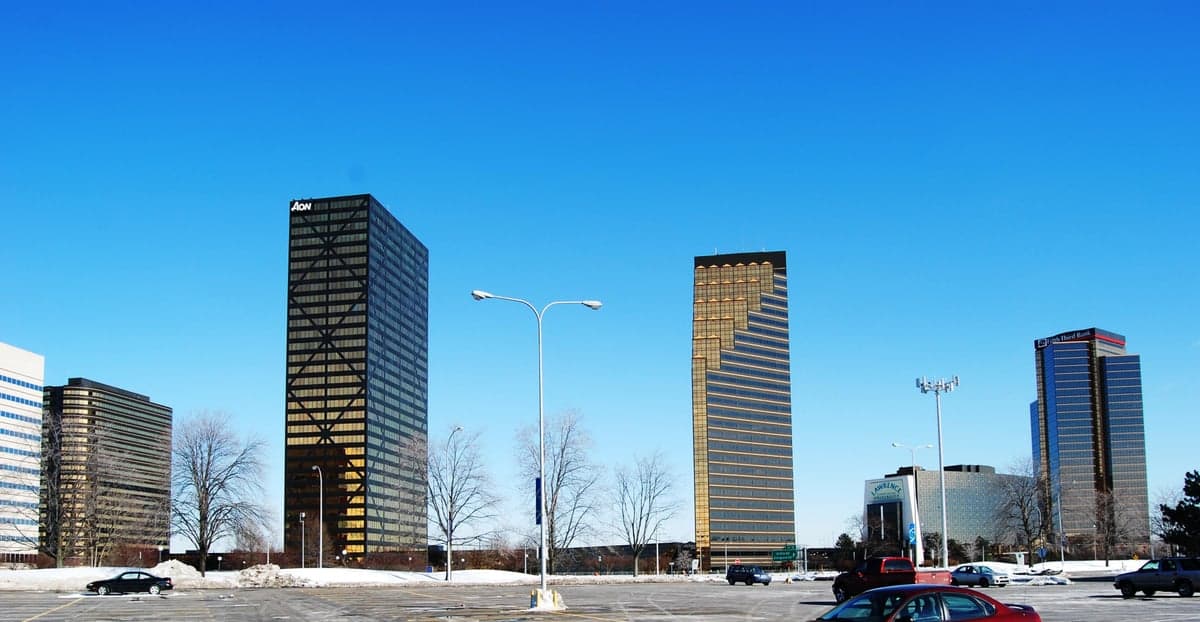
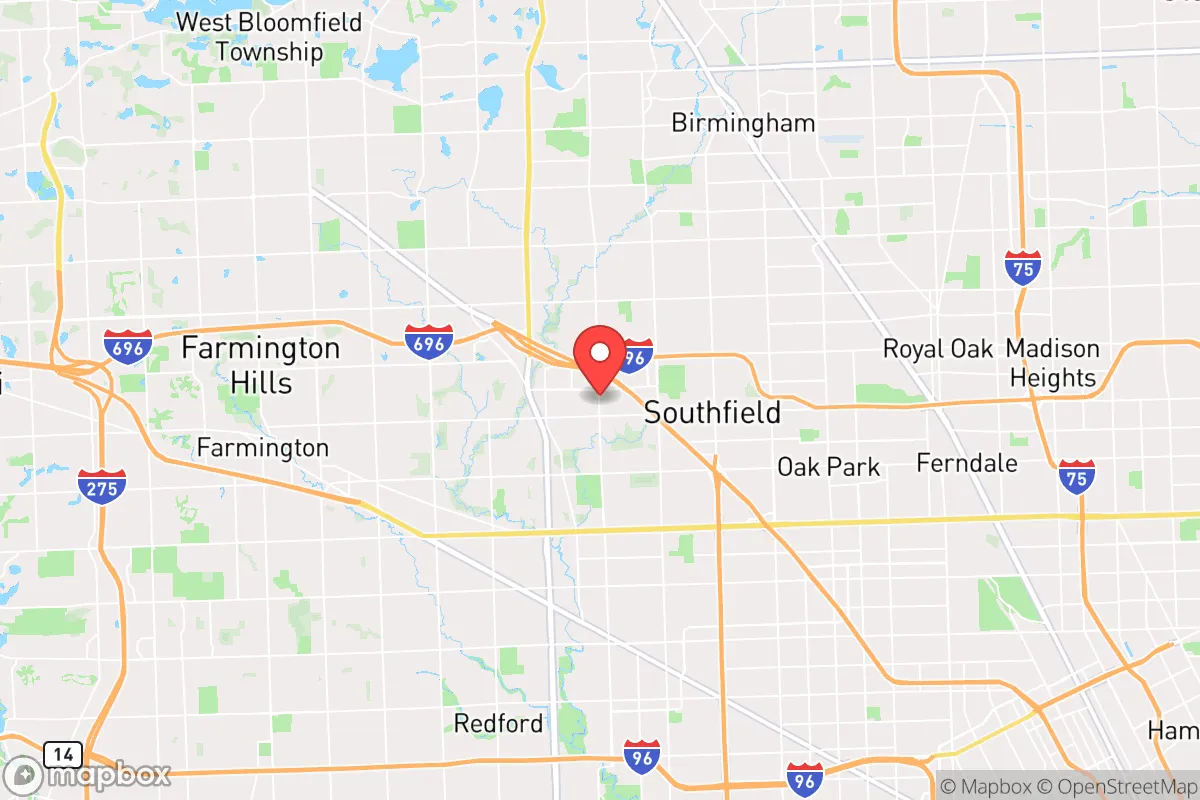
Photo: Wikipedia
Personal Sovereignty in Southfield, MI
Strong independent fundamentals that actively favor personal liberty and low regulation.
What does Personal Sovereignty tell us?
Personal Sovereignty measures your capacity for self-reliance and independence with minimal government friction. Higher scores mean fewer barriers between you and the way you want to live... but it assumes you have the space you need and good neighbors.
What does this tell us?
Personal Sovereignty measures your capacity for self-reliance and independence with minimal government friction. Higher scores mean fewer barriers between you and the way you want to live... but it assumes you have the space you need and good neighbors.
State Policy
Energy independence: Importer (20% of energy produced in-state)
Personal Liberty
Homesteading

Personal Liberty Analysis
Southfield, Michigan, presents a complex sovereignty picture for the liberty-minded individual. While the city itself operates within a dense, suburban regulatory framework, the broader state context offers some surprising latitude for those willing to navigate the system. For the prepper or survivalist, Southfield is less a sanctuary and more a strategic outpost—you'll have to work harder to carve out autonomy here than in rural Michigan, but the legal foundations for self-defense and property rights are stronger than in many coastal states. The key is understanding where the state empowers you and where the city constrains you.
Tax burden and regulatory posture: How Michigan's fiscal policies affect your autonomy
Michigan's tax structure is a mixed bag for the sovereignty-minded. The state income tax is a flat 4.25% as of 2026, which is moderate but not negligible. Property taxes in Southfield are notably high, with a millage rate around 60 mills for the city and school district combined, meaning a $200,000 home carries roughly $12,000 annually in property taxes. This is a significant drain on self-reliance capital. However, Michigan has no estate tax and no inheritance tax, which preserves your ability to pass assets to heirs without state confiscation. The regulatory posture in Southfield is typical of a first-ring suburb: building permits are required for most modifications, and the city enforces zoning codes strictly. For the prepper, this means you cannot simply erect a workshop or storage shed without city approval. The state's Right to Farm Act offers some protection for agricultural activities, but it is largely preempted by local ordinances in urbanized areas like Southfield. If you value minimal government interference in your property, Southfield's regulatory density will feel stifling compared to rural Michigan counties like Oscoda or Alcona.
Self-defense and gun law specifics: What Michigan's legal landscape means for your right to carry
Michigan is a "shall issue" state for concealed pistol licenses (CPL), and as of 2024, permitless concealed carry is legal for adults 21 and older who are not prohibited persons. This is a significant win for personal sovereignty. Southfield itself is a home-rule city, but it cannot preempt state firearms laws. You can legally carry a concealed firearm in most public spaces, including parks and sidewalks, though schools, courthouses, and bars that derive more than 50% of revenue from alcohol sales remain off-limits. The state also has a "stand your ground" law, codified in MCL 780.972, which removes the duty to retreat in any place you have a legal right to be. This is critical for the survivalist mindset: if you are lawfully present and face a threat of death or great bodily harm, you are legally justified in using deadly force. However, Michigan does not have a "castle doctrine" statute per se—the stand your ground law effectively covers your home, but the legal nuance means you should still expect a thorough investigation if you use force. Magazine capacity is not restricted at the state level, and there is no firearm registration for most long guns. For the prepper, Michigan's gun laws are among the more favorable in the Midwest, but Southfield's proximity to Detroit means you should be aware of potential local police attitudes toward armed citizens.
Self-reliance and homesteading viability: Lot sizes, zoning, and off-grid feasibility in Southfield
Southfield is a densely developed suburb with typical lot sizes ranging from 0.15 to 0.5 acres. This is not homesteading country. Zoning codes prohibit livestock, limit garden structures to small sheds, and require connection to municipal water and sewer. Off-grid living is effectively illegal here—the city mandates grid-tied utilities for any habitable structure. For the serious prepper, Southfield's zoning is a hard no for self-sufficiency. You cannot raise chickens, keep bees, or install a composting toilet without running afoul of city ordinances. The soil is also heavily urbanized, with lead and other contaminants from decades of automotive use, making large-scale gardening risky without raised beds and soil testing. If self-reliance is your primary goal, you would be better served by looking at townships in northern Oakland County, such as Brandon or Groveland, where lot sizes of 2-5 acres are common and agricultural zoning is more permissive. Southfield's value lies in its strategic location near major infrastructure, not in its capacity for homesteading.
Personal liberties: Parental rights, medical autonomy, speech, and property protections
Michigan has a mixed record on personal liberties that directly affect the sovereignty-minded individual. Parental rights are relatively strong: the state does not have a universal vaccine mandate for schoolchildren, and parents can opt out of sex education with a written request. However, Michigan's Child Protective Services (CPS) has broad authority, and homeschooling families must file an intent to homeschool with the local school district and provide a list of subjects taught. Medical autonomy is a contentious area. Michigan does not have a religious exemption for vaccine mandates in healthcare settings, and during the COVID-19 pandemic, the state imposed some of the strictest lockdowns in the Midwest. For the prepper, this history suggests that future public health emergencies could again see government overreach into personal medical decisions. Free speech is protected under the First Amendment, but Southfield has a noise ordinance that can be used to restrict amplified speech or protests. Property rights are generally respected, but the city's zoning board has significant discretion over land use, and eminent domain is a real risk for large-scale redevelopment projects. The Michigan Supreme Court has been more property-rights-friendly in recent years, but local governments still hold considerable power.
Overall, Southfield offers a strategic compromise for the liberty-minded individual. You get strong self-defense laws, no state income tax on retirement income, and a legal framework that respects the right to keep and bear arms. But you pay for it with high property taxes, dense zoning that precludes self-sufficiency, and a regulatory environment that can feel intrusive. Compared to rural Michigan, where you can own 40 acres and shoot on your own land, Southfield is a cage. Compared to New York or California, it's a breath of fresh air. For the survivalist who needs proximity to urban resources but values legal autonomy, Southfield is a viable base—just don't expect to live off the grid here. Your sovereignty will be exercised through your firearm, your vote, and your ability to navigate the system, not through land independence.

* Values derived from national, state, county, city and local statistics and may differ in a specific area. Last updated: 2026-04-29T21:34:21.000Z
Narrative content on this page is AI-generated and may contain mistakes. Verify any details that matter before acting on them.
ReloMaps may earn a commission from affiliate links at no extra cost to you.

