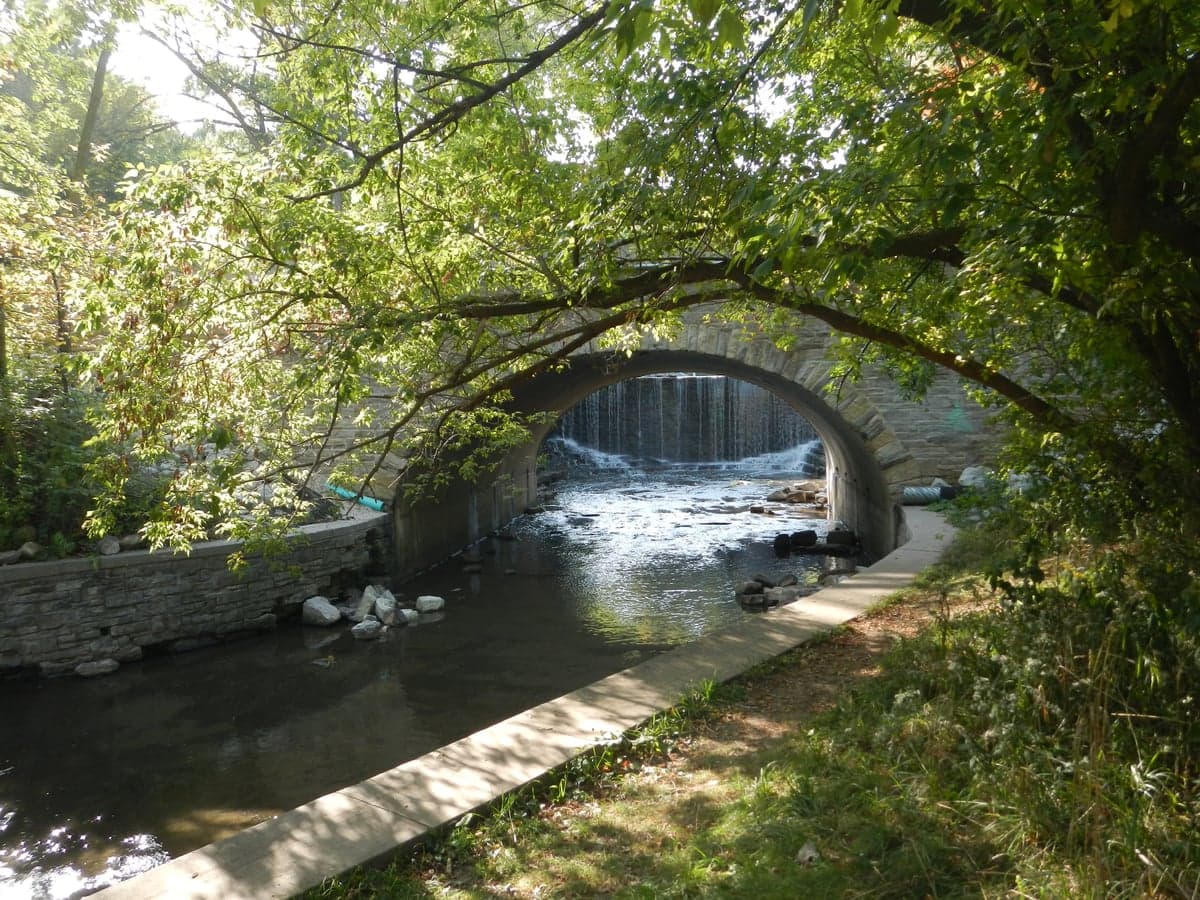
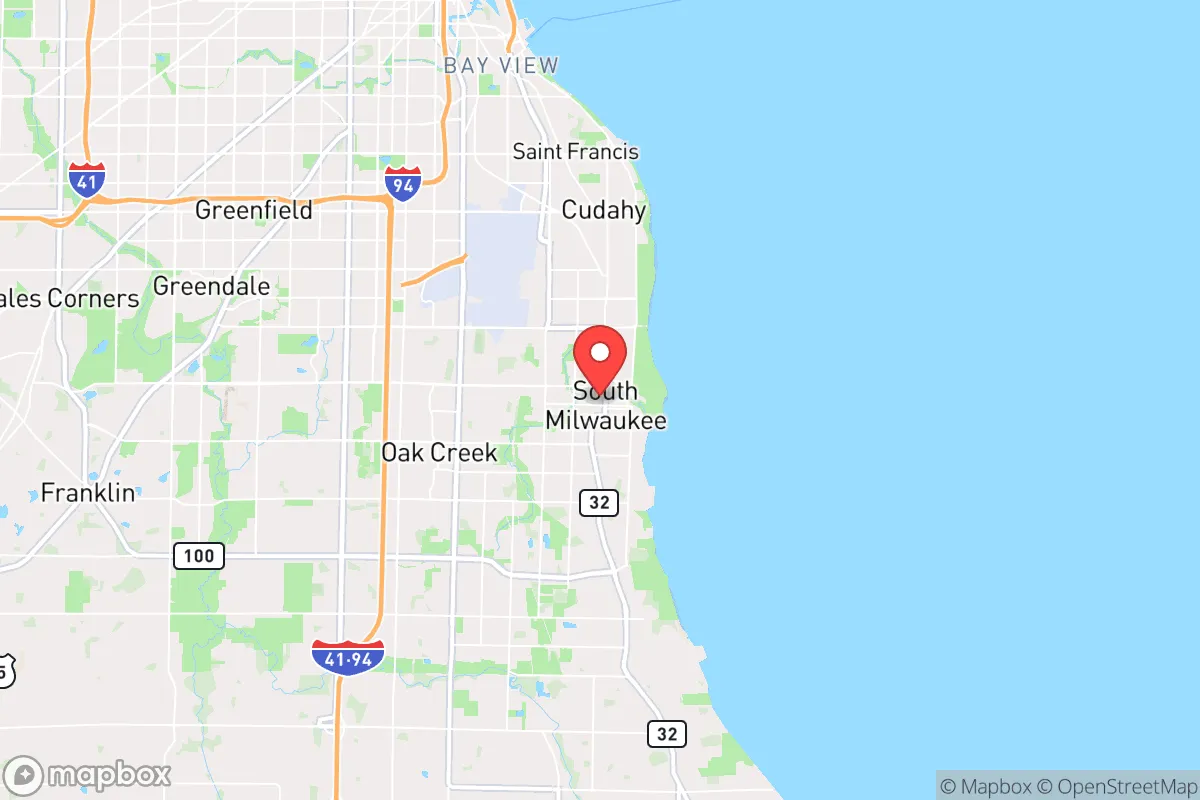
Photo: Wikipedia
Political ClimatePolitical Climate in South Milwaukee, WI
District shown is the primary district for this city’s centroid. Cities may span multiple districts.
Local Political AnalysisPolitical Analysis of South Milwaukee, WI
South Milwaukee has long been a working-class community where folks value their independence and don't take kindly to being told how to live their lives. The city's Cook PVI of R+2 might look modest on paper, but it reflects a deep-seated skepticism of big government and progressive overreach that's been baked into the local DNA for generations. You can feel it in the air at a Friday fish fry or a high school football game — this is a place where people still believe their paycheck and their property are their own business, not the state's. That said, the political winds have shifted noticeably in the last decade, with the city trending more conservative as neighboring Milwaukee proper has lurched leftward, creating a sharper contrast than you'd have seen even twenty years ago.
How it compares
Drive ten minutes north into Milwaukee city limits, and you're in a different political universe — a Democratic stronghold where the city council and county board have pushed progressive policies on everything from policing to zoning to tax-funded social programs. South Milwaukee, by contrast, has held the line. The city sits in Milwaukee County, which overall leans blue, but South Milwaukee itself has consistently voted for Republican candidates in recent statewide and national races. Compare it to nearby Oak Creek, which is also conservative-leaning but more suburban and affluent, or to Cudahy and St. Francis, which are similar blue-collar communities but have seen more mixed results. What sets South Milwaukee apart is its stubborn resistance to the progressive tide that's swept through the county's core. The city's voters have repeatedly rejected tax hikes and bond measures that would expand government programs, preferring to keep their own money and make their own choices.
What this means for residents
For someone living here, the political climate means you're not constantly fighting city hall over basic freedoms. The local government has generally stayed out of your business — no mask mandates that lasted longer than necessary, no heavy-handed business closures during the pandemic, and a police department that focuses on real crime rather than ideological crusades. Property taxes, while not low by national standards, are kept in check by a city council that understands overtaxation drives out the very families and small businesses that keep the community alive. The school board has also resisted the kind of curriculum overhauls and DEI initiatives that have caused turmoil in other districts, sticking closer to traditional academics and local control. That said, there's always pressure from the county level, where progressive supervisors try to extend their reach into the suburbs. Residents need to stay engaged and vote in every local election — not just the big ones — because the real battles over your rights happen at the city council and school board level.
Culturally, South Milwaukee still feels like a place where your word is your bond and your neighbor's business is their own. The annual South Milwaukee Community Days and the strong presence of the Knights of Columbus and local veterans' organizations reflect a community that values tradition and self-reliance over the latest social experiments. The biggest policy distinction you'll notice is the city's approach to development — it's pro-business but not pro-corporate-welfare, meaning they'll work with a small manufacturer or a family-owned shop, but they're not handing out tax breaks to big-box chains that undercut local wages. Looking ahead, the long-term concern is that Milwaukee County's progressive machine will keep trying to erode local control through regional planning boards and unfunded mandates. If that happens, South Milwaukee's conservative identity will be tested, but for now, it remains one of the last places in the county where you can still live your life without a government official looking over your shoulder.

State Political ClimatePolitical Climate in Wisconsin
State Political AnalysisPolitical Environment in the State
Wisconsin is a classic purple state that has been trending redder in recent cycles, but it remains a battleground where the outcome hinges on a few thousand votes in the suburbs of Milwaukee and the reliably conservative rural north. Over the past 20 years, the state has shifted from a reliably Democratic stronghold in presidential races to a toss-up, with Donald Trump winning it in 2016 by less than 23,000 votes and Joe Biden flipping it back in 2020 by a similarly razor-thin margin. The dominant coalitions are a deeply entrenched Democratic base in Milwaukee and Madison, pitted against a growing conservative coalition in the WOW counties (Waukesha, Ozaukee, Washington) and the vast rural expanse north of Highway 29.
Urban vs. rural divide
The political map of Wisconsin is a textbook case of the urban-rural split. Milwaukee County, home to the state’s largest city, consistently delivers 65-70% of its vote to Democrats, while Dane County (Madison) is even more lopsided, often hitting 75% Democratic. These two counties alone produce a massive blue vote that the rest of the state must overcome. The counterweight is the WOW counties—Waukesha, Ozaukee, and Washington—which are among the most reliably Republican suburban areas in the nation, routinely giving GOP candidates 60-65% of the vote. The real battleground is the so-called "Blue Wall" counties like Brown (Green Bay), Outagamie (Appleton), and Winnebago (Oshkosh), which have been trending rightward. In 2020, Brown County flipped to Trump after supporting Obama twice, and the surrounding Fox Valley region is now a solid red stronghold. The rural north, from Hayward to Rhinelander to Marinette, votes 60-70% Republican, driven by gun rights, farming, and a deep distrust of Madison’s regulatory reach.
Policy environment
Wisconsin’s policy environment is a mixed bag that leans conservative on fiscal matters but has seen progressive encroachment on social issues. The state has a flat income tax of 4.4% (down from 7.75% in 2011), and property taxes are below the national average, thanks to Act 10 (2011), which severely limited public-sector union bargaining power and saved local governments billions. The state legislature, gerrymandered by Republicans in 2011 and again in 2021, has passed a slew of conservative priorities: a 2023 law expanding school choice to nearly all families, a 2022 law requiring photo ID to vote, and a 2024 law banning transgender surgeries for minors. However, Democratic Governor Tony Evers has vetoed over 100 bills since 2019, including a 2023 bill to ban abortion at 14 weeks and a 2024 bill to restrict ballot drop boxes. The result is a policy stalemate: taxes are low, but the governor’s veto pen has blocked conservative wins on abortion, election integrity, and parental rights in schools. Healthcare is a flashpoint—Wisconsin did not expand Medicaid under the Affordable Care Act until 2023, and the state’s individual insurance market remains expensive, with premiums 15% above the national average.
Trajectory & freedom
On personal freedom, Wisconsin is a tale of two trends. The good news: the state has expanded gun rights significantly. In 2011, it passed shall-issue concealed carry, and in 2023, it eliminated the requirement for a permit to carry a concealed firearm (constitutional carry). The state also has a strong Castle Doctrine law and a "stand your ground" provision. Property rights are solid—there is no state-level rent control, and zoning is largely local, though Madison and Milwaukee have imposed strict landlord regulations. The bad news: the Evers administration has pushed vaccine mandates for state workers, expanded absentee ballot access (including indefinite "indefinitely confined" status that allows anyone to vote by mail without an excuse), and signed a 2024 bill that allows non-citizens to obtain driver’s licenses. The state Supreme Court flipped to a 4-3 liberal majority in 2023 after a $45 million election, and that court is now considering a case that could overturn the 2011 legislative maps, which would likely cost Republicans their supermajority. The trajectory is concerning: the left is using the courts to undo conservative gains, and the 2024 election saw a record number of absentee ballots in Milwaukee and Madison, raising integrity questions that remain unresolved.
Civil unrest & political movements
Wisconsin has a history of political flashpoints. The 2011 Act 10 protests in Madison drew over 100,000 people to the Capitol and shut down the building for weeks—a preview of the left’s willingness to use civil disobedience. In 2020, the Kenosha riots after the Jacob Blake shooting resulted in two deaths and $50 million in property damage, with the left defending the arson and looting as "mostly peaceful." The state has a strong grassroots conservative movement, led by groups like Wisconsin Family Action and the Wisconsin Institute for Law & Liberty, which have successfully pushed for school choice and parental rights. Immigration politics are relatively quiet—Wisconsin has no sanctuary cities, and the state’s foreign-born population is only 5%, but Milwaukee has seen a surge in illegal immigration from Central America, straining schools and hospitals. Election integrity remains a hot-button issue: the 2020 election saw Zuckerberg-funded "grants" to Milwaukee and Madison that were used to run partisan get-out-the-vote operations, and a 2022 audit found 68,000 potentially invalid voter registrations. The 2024 election saw similar concerns, with drop boxes returning after a court ruling. A new resident would notice the "Impeach Evers" signs in rural areas and the "Defund the Police" graffiti in Madison—the cultural divide is stark.
Projection
Over the next 5-10 years, Wisconsin is likely to become more competitive, not less. The demographic trends favor the GOP: the rural north and Fox Valley are growing slowly but reliably, while Milwaukee is losing population. However, Dane County is booming—Madison grew 15% from 2010 to 2020, driven by tech and biotech jobs, and those new residents are overwhelmingly progressive. The wild card is the state Supreme Court: if the liberal majority redraws legislative maps in 2025, Republicans could lose their majorities, leading to a wave of progressive legislation on abortion, gun control, and taxes. In-migration from Illinois is accelerating—over 100,000 Illinoisans moved to Wisconsin between 2020 and 2024—and they bring their Chicago voting habits with them. The bottom line: if you move to the WOW counties or the rural north, you’ll find a conservative haven with low taxes and strong gun rights. If you move to Madison or Milwaukee, you’ll be in a blue bubble with high taxes and progressive policies. The state as a whole is a battleground, and the next decade will determine whether it becomes a red state like Indiana or a blue state like Minnesota.
For a new resident, the practical takeaway is this: choose your county carefully. If you value low taxes, school choice, and gun rights, stick to the WOW counties, the Fox Valley, or the rural north. If you want a more progressive environment, Madison and Milwaukee are your options. The state’s political future is uncertain, but the conservative infrastructure is strong, and the fight for freedom is far from over. Just be prepared for a cold winter and a hot political climate.
* Values derived from national, state, county, city and local statistics and may differ in a specific area. Last updated: 2026-04-21T10:36:34.000Z
Narrative content on this page is AI-generated and may contain mistakes. Verify any details that matter before acting on them.
ReloMaps may earn a commission from affiliate links at no extra cost to you.

