Photo: Wikipedia
Demographics of South Lyon, MI
Affluence Level in South Lyon, MI
A middle-class area roughly in line with national averages across income, home values, education, and employment.
People of South Lyon, MI
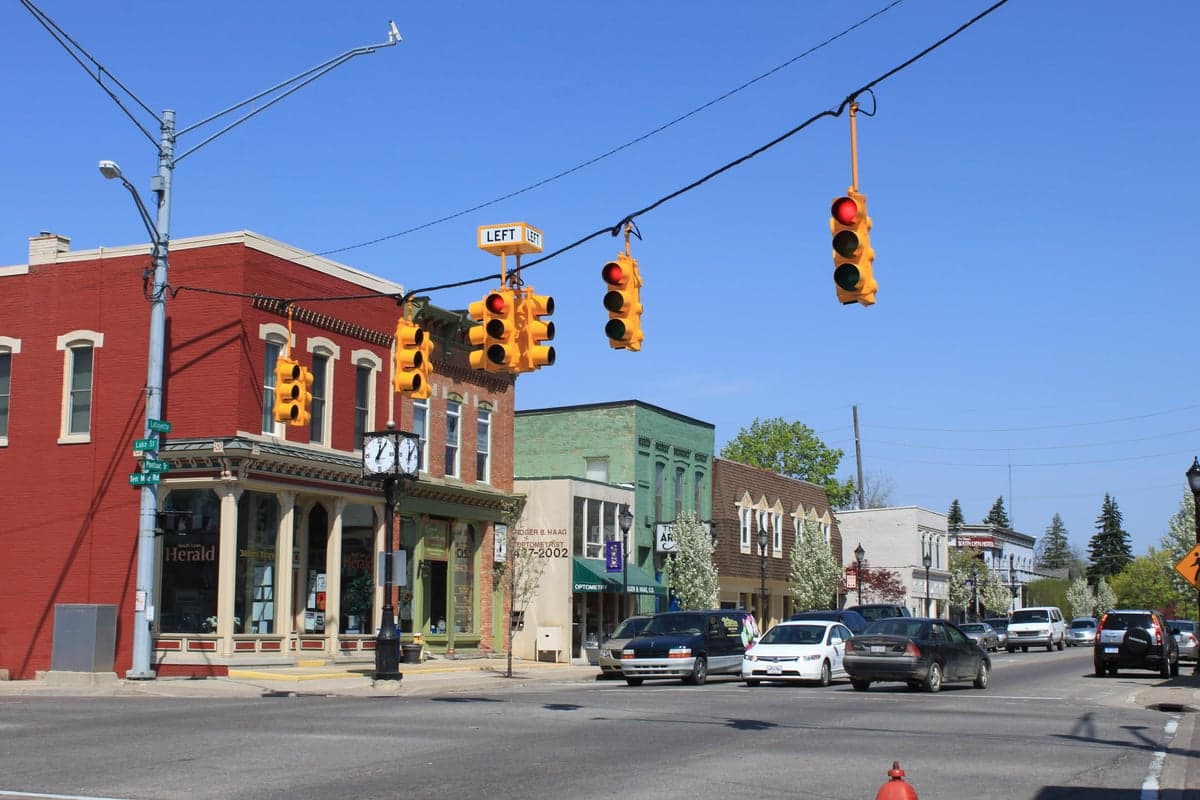
South Lyon, Michigan, is a predominantly white, family-oriented city of 11,825 residents where nearly half of adults hold a college degree, giving it an educated, professional character. The city’s population is notably less diverse than the broader Detroit metro area, with 89.0% of residents identifying as white, a 3.6% Hispanic share, and small but established East/Southeast Asian (2.0%) and Black (1.5%) communities. Its identity is rooted in a historic downtown and a strong sense of local tradition, shaped by successive waves of European settlement and recent suburban expansion.
How the city was settled and grew
South Lyon’s human history began with the 1832 land purchase by Alanson and Esther Lyon, who founded the village along the Huron River. The original population was overwhelmingly of Yankee and English Protestant stock, drawn by the area’s fertile farmland and water-powered mills. The arrival of the Grand Trunk Western Railroad in 1871 transformed the settlement into a shipping hub for grain and lumber, attracting a second wave of Irish and German immigrants who built homes in the Old Village district, centered around Lake Street and Liberty Street. By the early 1900s, Polish and Italian families arrived to work in the area’s growing manufacturing sector, settling in modest homes along the East Lake Corridor near the railroad tracks. The city’s population remained small and overwhelmingly white through the mid-20th century, reaching just 2,200 by 1960.
Modern era (post-1965)
After the 1965 Hart-Cellar Act, South Lyon saw little direct international immigration compared to larger cities. Instead, its modern growth came from domestic in-migration: white families from Detroit and inner-ring suburbs seeking larger lots and lower taxes. The 1990s and 2000s brought a surge of new subdivisions, most notably in the Fox Creek and Honey Creek neighborhoods, which attracted professionals and commuters working in Ann Arbor and Oakland County. These areas remain overwhelmingly white and owner-occupied. The city’s small East/Southeast Asian community (2.0%) is concentrated in newer developments like Lyon Oaks and the Twelve Oaks area, reflecting a pattern of educated professionals moving into higher-priced housing. The Black population (1.5%) and Hispanic population (3.6%) are more dispersed, with no single neighborhood showing a majority-minority concentration. The foreign-born share sits at just 3.8%, well below the national average, indicating that South Lyon has not been a primary destination for recent immigrants.
The future
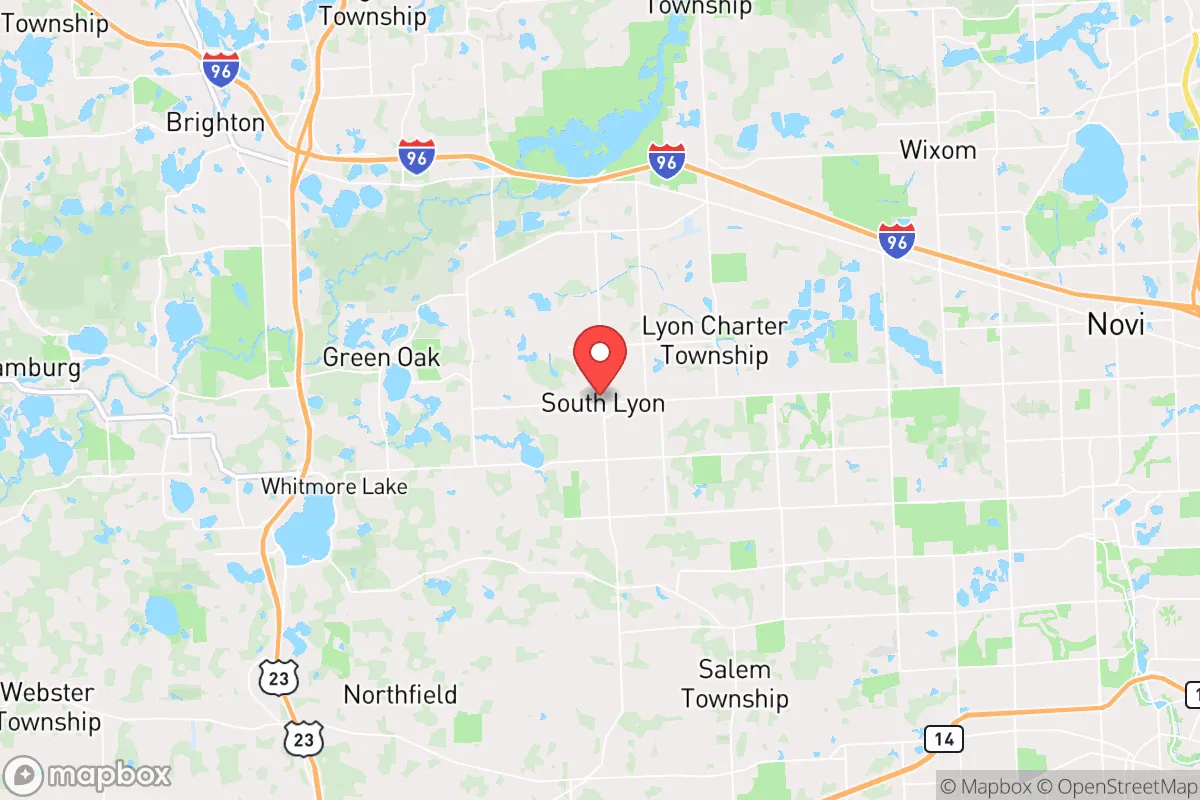
South Lyon’s population is projected to grow modestly, driven by continued suburban expansion along the I-96 corridor. The city’s demographic future points toward gradual diversification, but at a slower pace than the region as a whole. New housing developments, such as the planned South Lyon Crossing mixed-use district near the new high school, are likely to attract a slightly more diverse mix of young families and professionals, including more East/Southeast Asian and Hispanic households. However, the city’s high home values and limited rental stock will continue to filter for higher-income, predominantly white buyers. The Indian-subcontinent population remains negligible at 0.1%, and no significant growth is expected without a major employer or university anchor. Culturally, South Lyon is evolving from a rural farm town into a commuter suburb, but its civic identity remains centered on local schools, the historic downtown, and community events like the annual Lyon Festival.
For someone moving in now, South Lyon offers a stable, low-crime, and highly educated community where the population is slowly diversifying but remains overwhelmingly white and family-oriented. The city is becoming a more polished suburb, but its growth is measured and its cultural change gradual—ideal for those seeking a traditional small-town feel with modern amenities, rather than a rapidly transforming melting pot.

* Values derived from national, state, county, city and local statistics and may differ in a specific area. Last updated: 2026-10-08T08:47:51.000Z
Narrative content on this page is AI-generated and may contain mistakes. Verify any details that matter before acting on them.
ReloMaps may earn a commission from affiliate links at no extra cost to you.

