Photo: Wikipedia
Demographics of South Dakota
Affluence Level in South Dakota
A middle-class area roughly in line with national averages across income, home values, education, and employment.
People of South Dakota
The people of South Dakota today number just under 900,000, making it one of the least densely populated states in the nation, with a character shaped by its Native American heritage, a deep Scandinavian and German agricultural settlement, and a growing but still small Hispanic presence. The state is 80.3% white, with the largest non-white group being Native Americans at roughly 8-9% (concentrated on the nine reservations), followed by a Hispanic population of 4.6% and a Black population of 2.2%. Its foreign-born share is just 2.2%, the lowest in the country, reflecting a population that has been overwhelmingly shaped by domestic migration and historic immigration waves rather than recent arrivals. The state’s identity remains rooted in rural independence, Lakota and Dakota history, and a conservative, self-reliant ethos that draws families seeking space, safety, and traditional values.
Settlement & growth (pre-1960)
Long before European contact, the land now called South Dakota was home to the Arikara, Mandan, and Cheyenne peoples, who lived in semi-permanent earth-lodge villages along the Missouri River. By the 1700s, the Lakota (Sioux) had migrated westward from Minnesota, becoming the dominant force on the northern Plains, controlling the Black Hills and the vast buffalo range. The first European presence was French fur traders in the 1740s, followed by a brief Spanish claim, but the region saw no significant non-Native settlement until the 1800s.
The Louisiana Purchase of 1803 brought the area under U.S. control, and the Lewis and Clark Expedition passed through in 1804-1806, wintering near present-day Fort Pierre. The first permanent American settlement was Fort Pierre itself, established as a fur-trading post in 1817. The 1850s saw the first real wave of homesteaders, drawn by the promise of cheap land under the 1862 Homestead Act. These early settlers were overwhelmingly Yankee (English-descended Americans from the Northeast and Midwest), who founded towns like Vermillion (1859) and Yankton (1858), the latter serving as the first territorial capital.
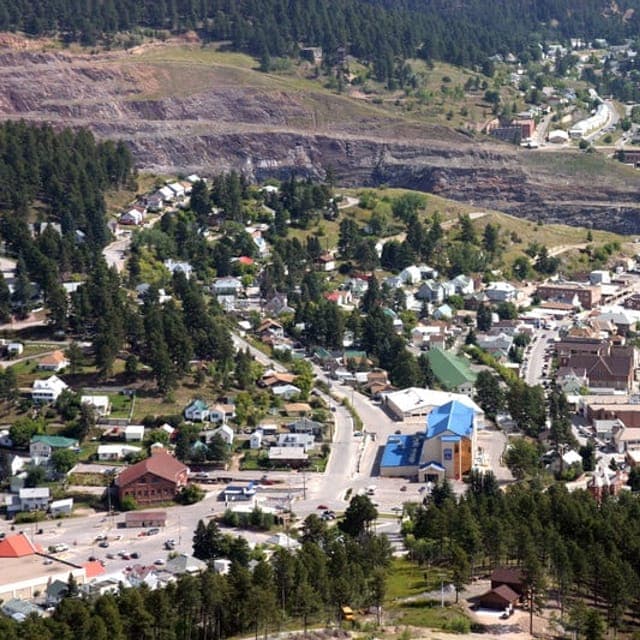
The great transformative event was the discovery of gold in the Black Hills in 1874, which triggered a rush that brought tens of thousands of miners, merchants, and speculators to places like Deadwood and Lead. This influx violated the 1868 Fort Laramie Treaty with the Lakota, leading to the Great Sioux War of 1876-77 and the eventual confinement of the tribes to reservations. By 1889, when South Dakota achieved statehood, the population had surged past 300,000, built on a foundation of mining and the rapid expansion of railroad-linked agriculture.
The next major wave came from Northern and Central Europe between 1880 and 1910. Norwegians and Swedes poured into the eastern and central counties, founding communities like Sioux Falls (which grew from a small trading post into a regional hub), Brookings, and Madison. Germans from Russia — ethnic Germans who had lived for generations in the Volga River region — arrived in large numbers, settling in the Hutchinson County area around Freeman and Parkston, where they maintained their language and Mennonite or Lutheran faiths well into the 20th century. Czechs and Dutch also formed smaller enclaves, notably around Tabor and Platte. These groups were drawn by the promise of 160-acre homesteads and the chance to own land, which was impossible for peasant farmers in Europe.
The Dust Bowl of the 1930s hit South Dakota hard, driving many farmers off the land and accelerating a rural-to-urban shift that continues to this day. However, the state’s population remained overwhelmingly white, rural, and agricultural through the 1950s, with Native Americans largely confined to reservations and excluded from the state’s economic mainstream. By 1960, the population was 680,514, with Sioux Falls emerging as the only real city of note.
Modern era (post-1965)
The 1965 Hart-Cellar Act had minimal direct impact on South Dakota, as the state’s economy — dominated by agriculture, meatpacking, and small-scale manufacturing — did not attract the large immigrant flows seen in coastal states. The foreign-born share remained below 2% through the 1990s. Instead, the major demographic shift of the modern era has been domestic: the steady depopulation of the rural plains and the concentration of people in a few growing urban centers.
Sioux Falls has been the primary beneficiary, growing from about 65,000 in 1960 to over 200,000 today. This growth has been driven by the expansion of health care (Sanford Health and Avera Health are now the state’s largest employers), finance (Citibank established a major credit-card operation in 1981), and meatpacking (John Morrell & Co., now Smithfield Foods). The city has attracted migrants from rural South Dakota, Minnesota, Iowa, and Nebraska — mostly white, conservative-leaning families seeking jobs and amenities without the crime and cost of larger metros.
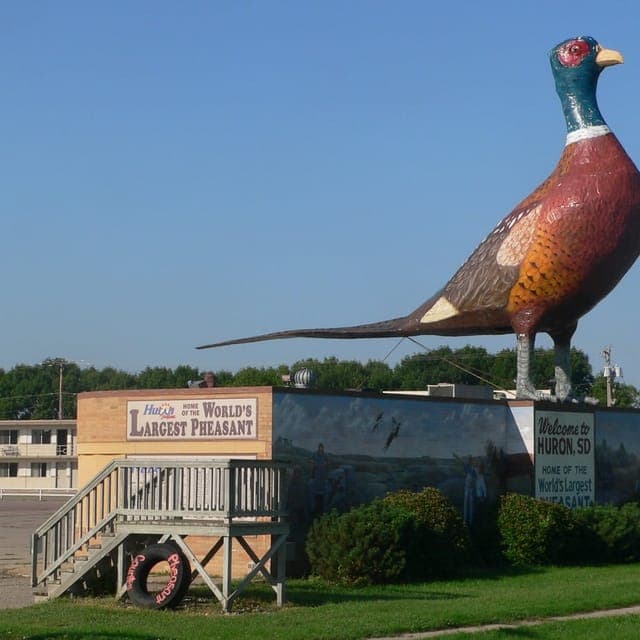
The most notable new ethnic presence has been Hispanic, primarily Mexican and Central American, drawn by jobs in meatpacking plants. Sioux Falls and Huron (home to a large turkey-processing plant) have seen the most growth, with Hispanic residents now making up about 4.6% of the state’s population. A smaller East/Southeast Asian community (1.0% of the state) has formed around Sioux Falls, including Hmong and Vietnamese families, many of whom arrived as refugees in the 1970s and 1980s. The Black population (2.2%) is also concentrated in Sioux Falls, with a mix of African American families who moved from the Midwest and a growing number of African immigrants, particularly from Sudan and Ethiopia, who work in meatpacking and manufacturing.
Native American communities remain the state’s most distinctive demographic feature. The nine reservations — including Pine Ridge (Oglala Lakota), Rosebud (Sicangu Lakota), and Cheyenne River (Itazipco Lakota) — are among the poorest places in the United States, with unemployment often exceeding 50%. However, a growing Native middle class has emerged in Rapid City and Sioux Falls, where tribal members have moved for education and jobs. The Indian population (from the subcontinent) is negligible at 0.3%, mostly professionals in health care and tech in Sioux Falls.
The future
South Dakota’s population is projected to grow slowly, reaching roughly 950,000 by 2040, driven almost entirely by the continued expansion of Sioux Falls and, to a lesser extent, Rapid City. The rural counties — especially those west of the Missouri River — will continue to lose population, with many small towns shrinking to near ghost-town status. The state is not homogenizing into a single culture; rather, it is tribalizing into distinct zones: a growing, moderately diverse, service-economy metro in Sioux Falls; a conservative, white, agricultural east; a Native-majority west-central region on the reservations; and a tourism-and-mining economy in the Black Hills around Rapid City and Deadwood.
The Hispanic population is growing steadily, particularly in meatpacking towns, but remains a small share and is assimilating into the state’s conservative culture. The Native American population is young and growing, but faces persistent economic challenges that limit its political and social integration. The white population is aging and, in rural areas, declining. The state’s low foreign-born share means that cultural change will come slowly, primarily through domestic migration of conservative-leaning families from other states who are drawn by low taxes, low crime, and a traditional lifestyle.
For a conservative individual or family moving to South Dakota today, the state offers a clear choice: the growing, job-rich, moderately diverse environment of Sioux Falls, or the quieter, more homogeneous, and more isolated life of a small town or rural area. The state’s political culture — reliably Republican, with a strong libertarian streak — is unlikely to shift significantly in the next decade, as the growing Hispanic and Native populations are not large enough to alter the electoral math. The biggest challenge for newcomers will be the harsh winters and the long distances between services, not cultural dislocation.

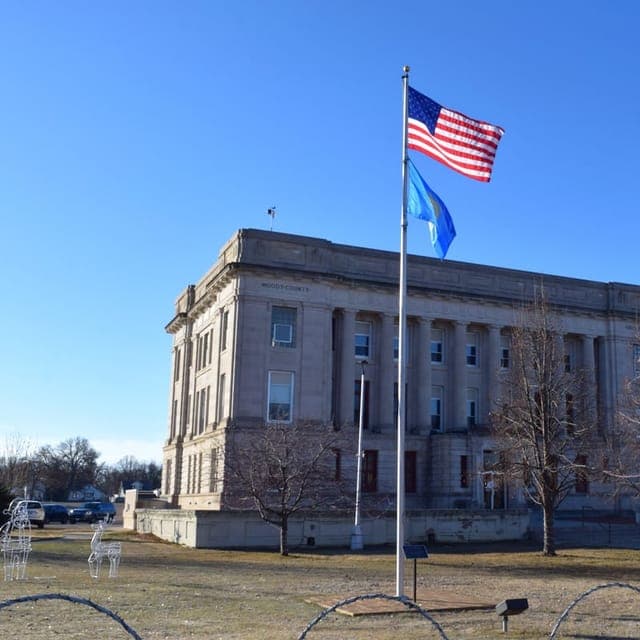
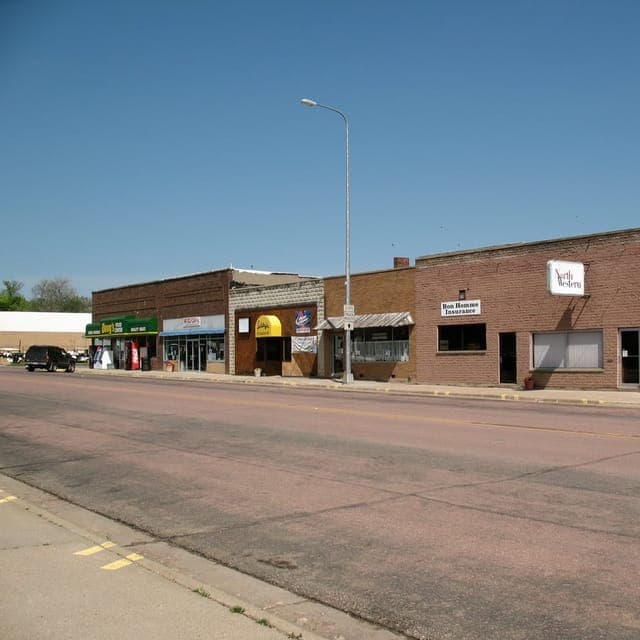
Most Diverse Cities in South Dakota

Most Homogenous Cities in South Dakota

* Values derived from national, state, county, city and local statistics and may differ in a specific area. Last updated: 2026-06-03T06:25:02.000Z
Narrative content on this page is AI-generated and may contain mistakes. Verify any details that matter before acting on them.
ReloMaps may earn a commission from affiliate links at no extra cost to you.

