
Photo: Wikipedia
Strategic Assessment of Moody County
Strong survivability profile. Good buffer from population centers, with manageable environmental and tactical risks.
What does the Strategic Assessment tell us?
Our Strategic Assessment grades tactical survivability of an area. Major population centers, military targets, fallout zones, natural disasters, and border exposure all drive risk — lower exposure means a more defensible position in a crisis.
This is heavily inspired by Joel Skousen's Strategic Relocation book. Highly recommended you checkout the book ($)What does this tell us?
Our Strategic Assessment grades tactical survivability of an area. Major population centers, military targets, fallout zones, natural disasters, and border exposure all drive risk — lower exposure means a more defensible position in a crisis.
This is heavily inspired by Joel Skousen's Strategic Relocation book. Highly recommended you checkout the book ($)Strategic Pillars

Key Distances
Strategic Assessment Analysis
Moody County, South Dakota, offers a compelling balance of rural self-sufficiency and strategic positioning for those prioritizing disaster resilience and long-term preparedness. Located along the eastern edge of the state, the county provides a buffer from the denser populations and critical infrastructure targets of the Midwest, while still maintaining practical access to supply chains and medical facilities. For a relocator focused on security, sustainability, and community stability, Moody County presents a defensible, resource-rich environment that merits serious consideration.
Geographic position and natural advantages for long-term security
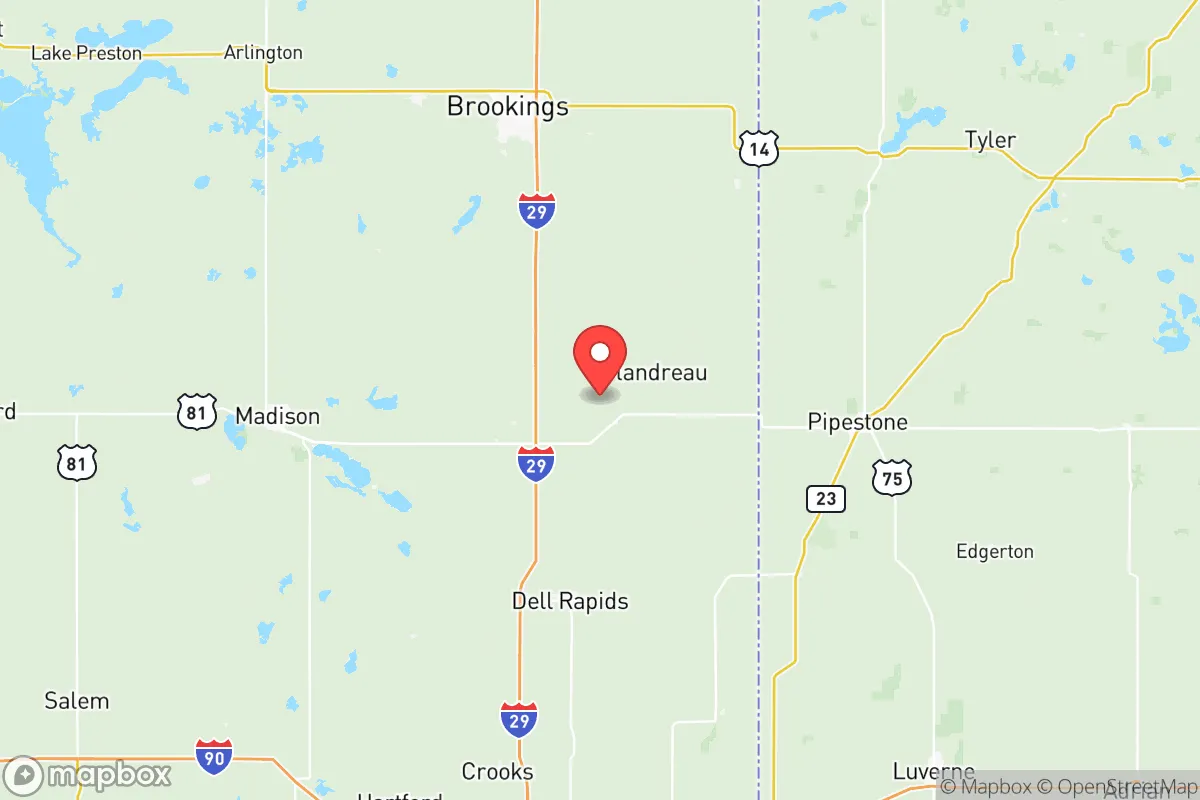
Moody County sits in a transitional zone between the fertile plains of the upper Midwest and the more arid landscapes of the western Dakotas, giving it a distinct agricultural advantage. The county seat, Flandreau, is roughly 45 miles north of Sioux Falls and about 30 miles west of the Minnesota border, placing it within a reasonable distance of regional services while remaining insulated from the immediate fallout risks associated with larger urban centers. The Big Sioux River runs through the county, providing a reliable surface water source that is less contested than in more arid regions. The area's topography is gently rolling, offering natural drainage and limited flood risk compared to river-bottom communities. The county's position in the eastern part of the state also means it receives more annual precipitation than western South Dakota, supporting rain-fed agriculture and reducing dependency on irrigation. This combination of water availability, arable land, and moderate climate makes Moody County a strong candidate for long-term food security and sustainable living.
Risks, exposures, and proximity to fallout-relevant landmarks
While Moody County benefits from its distance from major metropolitan areas, it is not without exposure to man-made and natural risks. The county lies roughly 100 miles from the nearest significant military installation, Ellsworth Air Force Base near Rapid City, which is a potential target in a conflict scenario. However, this distance provides a substantial buffer from any immediate blast or fallout effects. More relevant to daily preparedness, the county is situated within the broader agricultural and food processing corridor of the upper Midwest, which includes grain elevators, ethanol plants, and fertilizer storage facilities in towns like Flandreau and nearby Pipestone, Minnesota. These are not high-value strategic targets, but they could become secondary concerns in a widespread disruption. Natural risks in Moody County are relatively low compared to coastal or seismically active regions. The area experiences occasional severe thunderstorms, hail, and tornadoes, but the frequency of direct hits is moderate. Winter storms can be severe, with blizzards and extreme cold posing the primary seasonal threat. The county's low population density—roughly 6,500 residents spread over 520 square miles—reduces the risk of cascading failures from infrastructure collapse or disease spread, a key advantage for those seeking to avoid the vulnerabilities of dense urban environments.
Practical resilience for a relocator: food, water, energy, and defensibility
For a relocator serious about self-sufficiency, Moody County offers several practical advantages. The county's agricultural base means that locally grown food is accessible, and residents with even modest land holdings can establish gardens, orchards, or small livestock operations. The Big Sioux River and its tributaries provide surface water, and groundwater is generally available through wells, though prospective buyers should verify well depth and yield before purchasing property. The county is served by several rural electric cooperatives, including Sioux Valley Energy, which have a track record of relatively reliable service, though backup power generation—solar panels with battery storage or a propane generator—is a prudent investment given the potential for winter storm outages. Defensibility is a strong point: the county's rural character means properties are often set back from main roads, with natural sightlines and limited through-traffic. Flandreau, the only incorporated town, has a small police department and a county sheriff's office, but in a prolonged disruption, community cooperation and personal preparedness would be the primary security mechanisms. The county's population is stable and largely homogenous, which can foster trust and mutual aid among neighbors, a factor often overlooked in resilience planning. For those willing to invest in infrastructure—wells, solar, food storage, and secure outbuildings—Moody County provides a blank canvas for building a resilient homestead.
The overall strategic picture for Moody County is one of moderate risk and high potential reward for the prepared relocator. Its geographic isolation from major military and industrial targets, combined with abundant water and agricultural land, makes it a strong candidate for those prioritizing long-term security over immediate convenience. The county's exposure to severe weather is manageable with proper planning, and its low population density reduces the likelihood of social collapse in a crisis. While not immune to the ripple effects of national or global disruptions, Moody County offers a realistic foundation for a self-reliant lifestyle. For the reader who values preparedness, community, and a direct connection to the land, this corner of eastern South Dakota deserves a close look.

* Values derived from national, state, county, city and local statistics and may differ in a specific area. Last updated: 2026-07-02T18:21:56.000Z
Narrative content on this page is AI-generated and may contain mistakes. Verify any details that matter before acting on them.
ReloMaps may earn a commission from affiliate links at no extra cost to you.

