Photo: Wikipedia
Political ClimatePolitical Climate in Fall River County
Showing state-level results — no local-only data available.
Local Political AnalysisPolitical Analysis of Fall River County
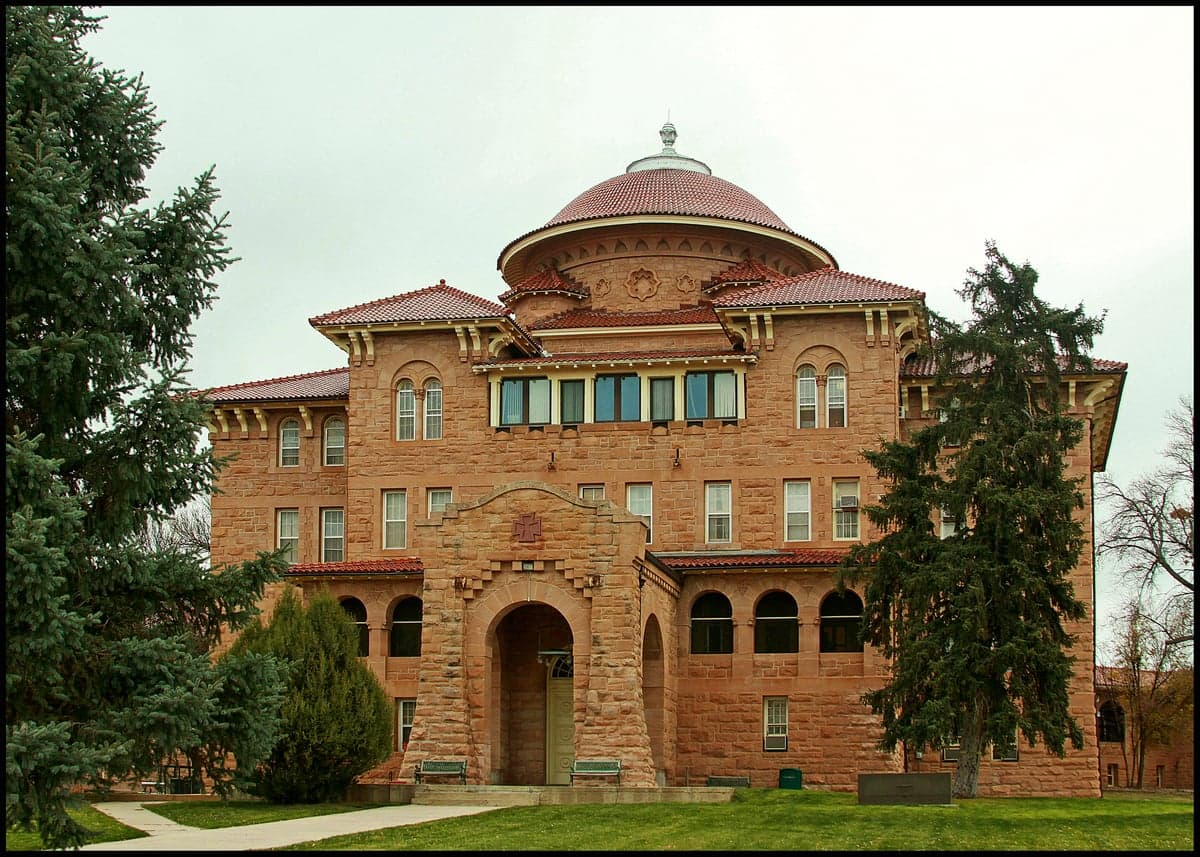
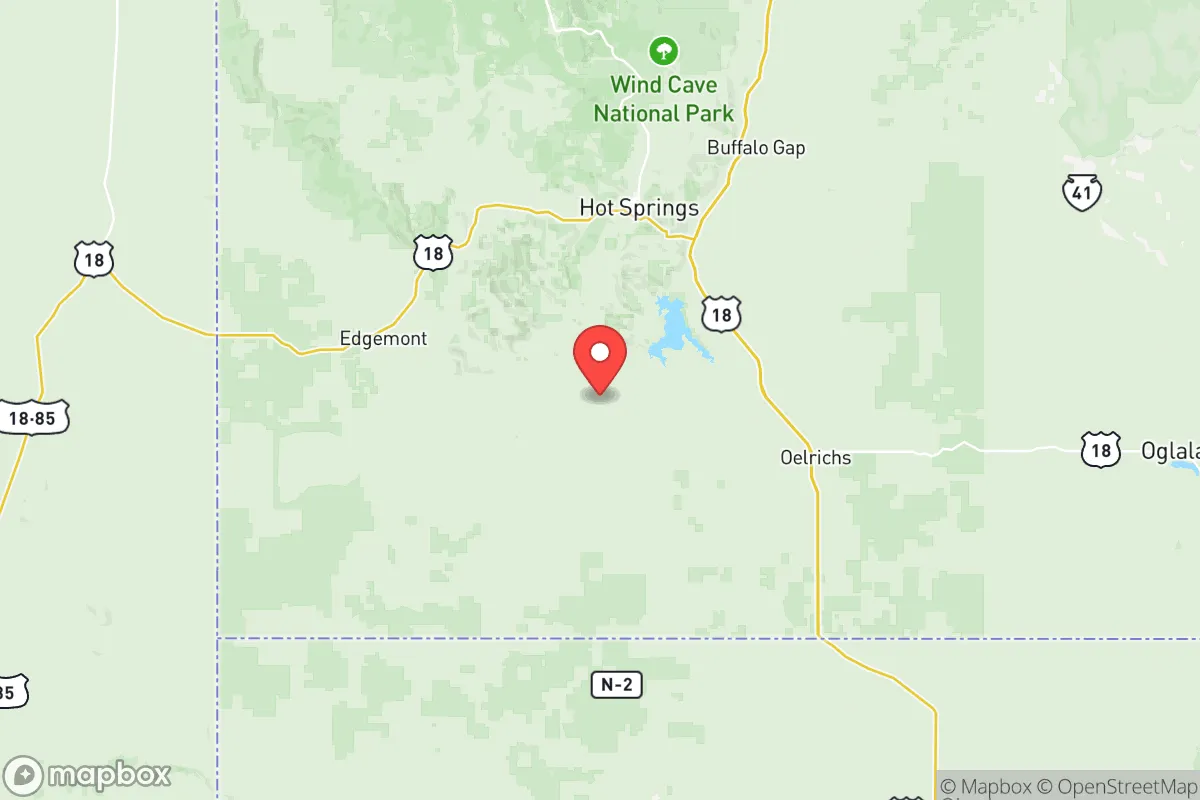
Fall River County in far southwestern South Dakota has been a reliably Republican stronghold for decades, but the margins have tightened noticeably in recent presidential cycles. In 2020, Donald Trump carried the county by about 25 points, down from a 35-point margin in 2016, signaling a slow but real shift. The county seat, Hot Springs, is the political bellwether — it contains most of the county's registered Democrats and independents, while the smaller towns like Edgemont and Oelrichs vote heavily Republican. The county's overall Cook PVI is not publicly calculated, but surrounding South Dakota as a whole leans R+16, making Fall River County somewhat more conservative than the state average, though less so than neighboring Custer or Pennington counties.
How it compares to South Dakota as a whole
Fall River County's political profile is more moderate than the state's deep-red eastern counties like Minnehaha or Lincoln, but it's still solidly to the right of the national average. The county's Republican lean is about 5-8 points stronger than the state overall, driven by its rural character and older population. However, Hot Springs — home to the VA medical center and a significant retiree community — has a notable Democratic presence that softens the county's overall red tint. In 2020, Biden won the Hot Springs precinct by a narrow 2-point margin, while Edgemont and Oelrichs precincts went for Trump by 40+ points. This intra-county split mirrors the broader state dynamic where Rapid City and Sioux Falls lean more purple, but the rural areas are deeply red.
What this means for residents
For conservative residents, Fall River County offers a comfortable political environment where local offices — from county commission to school board — are held by Republicans, and conservative values are reflected in policy decisions like limited zoning and low property taxes. The county's Republican lean means that national issues like gun rights and energy development are generally supported without much local pushback. For liberal residents, the political reality is more isolating but not hostile. Hot Springs provides a small but active Democratic club and a handful of progressive-leaning businesses and nonprofits. The county's small population means that personal relationships often transcend party lines, and local governance tends to be pragmatic rather than ideological. The biggest practical difference from the state as a whole is that Fall River County residents experience less political polarization than in the eastern part of the state — people here are more likely to agree on local issues like water rights and tourism development, even if they disagree on national politics.
Culturally, Fall River County stands apart from the rest of South Dakota in its strong connection to the Black Hills and its reliance on tourism and outdoor recreation rather than agriculture. The county's politics reflect this: there's broad bipartisan support for maintaining public lands, protecting the Hot Springs artesian waters, and keeping the area's small-town character. The local Republican Party here is more libertarian-leaning than the state party, with less emphasis on social issues and more on economic freedom and property rights. This creates a political climate that feels distinct from the rest of the state — more focused on local quality-of-life issues than on national culture wars. For anyone moving here, the key takeaway is that Fall River County is politically conservative but in a practical, live-and-let-live way that makes it workable for people across the spectrum, as long as they respect the area's traditions and pace of life.

State Political ClimatePolitical Climate in South Dakota
State Political AnalysisPolitical Environment in the State
South Dakota has been a reliably Republican state for decades, but the nature of that conservatism has shifted noticeably since the early 2000s. The state’s overall partisan lean is deeply red — Donald Trump won it by over 26 points in 2024 — but the dominant coalition has moved from a more traditional, small-government, libertarian-leaning conservatism toward a culturally assertive, Trump-aligned populism. Over the last 10-20 years, the political center of gravity has drifted rightward on social issues while maintaining a fiercely anti-tax, low-regulation economic posture. The state’s small population and low density mean that a few thousand votes in the right places can still shape outcomes, but the overall trajectory is clear: South Dakota is getting redder and more culturally conservative, even as its two small metro areas — Sioux Falls and Rapid City — grow and diversify.
Urban vs. rural divide
The political map of South Dakota is a classic story of a few blue or purple dots in a sea of red. Sioux Falls, the state’s largest city and economic engine in Minnehaha County, is the most competitive area — it voted for Trump in 2024 but by a much narrower margin, and it occasionally elects Democrats to local office. Rapid City in Pennington County leans Republican but is more moderate than the surrounding ranch and reservation country, with a noticeable libertarian streak tied to its tourism and military economy. The real Republican strongholds are the vast rural stretches: Brown County (Aberdeen), Brookings County, and the agricultural counties along the Missouri River consistently deliver 70-80% Republican margins. The nine Native American reservations — including Pine Ridge and Rosebud — vote overwhelmingly Democratic, but their populations are small and turnout is often suppressed by distance and poverty. The urban-rural divide here isn’t about suburbs versus cities so much as it is about the two small metros versus everything else. A new resident moving to Sioux Falls will encounter a more mixed political environment than someone settling in Spearfish or Mitchell, where conservative social norms are more uniformly assumed.
Policy environment
South Dakota’s policy environment is defined by three pillars: no state income tax, minimal regulation, and a recent push to codify cultural conservatism into law. The state has no personal or corporate income tax, relying instead on sales tax, property tax, and federal transfers. This makes it attractive for remote workers and retirees, but the trade-off is that local services — especially in rural areas — can be thin. The regulatory posture is among the most business-friendly in the country; permitting for construction or business licensing is straightforward and fast. On education, the state has leaned into school choice and parental rights, including a 2023 law that allows parents to challenge instructional materials and a 2024 expansion of the state’s voucher-like program for private school tuition. Healthcare policy is mixed: the state expanded Medicaid under the Affordable Care Act in 2023 after a ballot measure forced the issue, but the legislature has resisted further expansion of government-run health programs. Election laws have tightened in recent years: voter ID is required, absentee ballot drop boxes are restricted, and the 2024 legislative session passed a law limiting third-party ballot collection. For a conservative relocator, the policy environment is broadly welcoming; for a liberal one, it feels increasingly restrictive on social and voting issues.
Recent policy direction
The last five years have seen South Dakota’s legislature move aggressively on a range of cultural and liberty-related fronts. On gun and self-defense law, the state enacted permitless carry in 2019 and in 2024 passed a law prohibiting local governments from enforcing federal gun regulations — a direct nullification-style measure. Parental and education rights have been a major focus: the 2023 "Parents’ Bill of Rights" law requires schools to notify parents about curriculum changes and allows them to opt their children out of certain instruction. On speech and privacy, the state passed a 2023 law requiring social media platforms to obtain parental consent for minors, and in 2024 it banned TikTok on state-owned devices. Medical and bodily autonomy is sharply restricted: a near-total abortion ban was triggered in 2022 after the Dobbs decision, with exceptions only for life endangerment, and the legislature has rejected multiple attempts to add rape or incest exceptions. Property rights are strongly protected — the state has no estate tax and limits eminent domain for private development. Taxation remains a core identity: the 2024 session cut the state sales tax on groceries from 4.2% to 3.2%, and there is ongoing pressure to eliminate it entirely. Voting and ballot access have tightened: the 2024 legislative session passed a law requiring proof of citizenship for voter registration and shortening the absentee ballot request window. For a relocator weighing personal freedoms, the trade-off is clear: South Dakota maximizes economic and property liberty while sharply restricting social and medical autonomy.
Civil unrest & political movements
South Dakota is not a state known for frequent street protests, but it has seen notable political flashpoints. The most visible in recent years has been the Noem administration’s conflict with the Oglala Sioux Tribe over the Keystone XL pipeline and later over the governor’s rhetoric on tribal sovereignty. In 2023, the governor threatened to use state law enforcement to enforce a ban on drag shows near the Pine Ridge Reservation, drawing protests from Native rights and LGBTQ groups. The 2020-2021 COVID restrictions were a major dividing line: Governor Noem refused to issue a mask mandate or lockdown, drawing both praise from conservatives and criticism from public health officials, and the state saw scattered protests from both anti-lockdown activists and healthcare workers. Election integrity has been a recurring theme — the 2022 secretary of state race featured a candidate who promoted conspiracy theories about voting machines, though the more establishment Republican won. Immigration politics are less visible here than in border states, but the 2024 legislature passed a bill allowing state law enforcement to enforce federal immigration law, a symbolic gesture given the state’s small immigrant population. A new resident will find that political activism in South Dakota is less about street demonstrations and more about county commission meetings, school board races, and legislative testimony — the state’s small scale means that a handful of motivated people can have outsized influence.
Projection
Over the next 5-10 years, South Dakota’s political trajectory points toward continued cultural conservatism with a slowly diversifying electorate. The two growth engines — Sioux Falls and the Black Hills region around Rapid City — are attracting new residents from more liberal states, but the in-migration so far has been disproportionately conservative or libertarian-leaning, drawn by the low taxes and gun-friendly laws. The Native American population is growing but remains politically marginalized by low turnout and geographic isolation. The biggest wild card is the state’s aging demographic: South Dakota has one of the oldest median ages in the country, and as the rural population shrinks, the political weight of the metros will increase. That could slowly moderate the state on economic issues — Sioux Falls has a growing tech and healthcare sector that may push for more investment in education and infrastructure — but on social and cultural issues, the legislature is likely to continue moving right. A person moving in now should expect that in a decade, South Dakota will still be a deeply red state, but with a more visible urban-rural tension and a political conversation increasingly shaped by the tension between the libertarian economic tradition and the newer cultural populism.
For a new resident, the bottom line is that South Dakota delivers on its promises of low taxes, light regulation, and a culturally conservative social environment, but those benefits come with trade-offs in public services, healthcare access, and personal autonomy on medical decisions. If you align with the state’s dominant political values, you’ll find a welcoming, low-friction place to live where your vote counts and your voice carries. If you don’t, you’ll find a state where the political culture is increasingly assertive and where the small population means you can’t easily avoid it. Either way, the state’s trajectory is clear: it’s getting redder, more culturally defined, and more confident in its political identity.
* Values derived from national, state, county, city and local statistics and may differ in a specific area. Last updated: 2026-10-13T16:20:22.000Z
Narrative content on this page is AI-generated and may contain mistakes. Verify any details that matter before acting on them.
ReloMaps may earn a commission from affiliate links at no extra cost to you.

