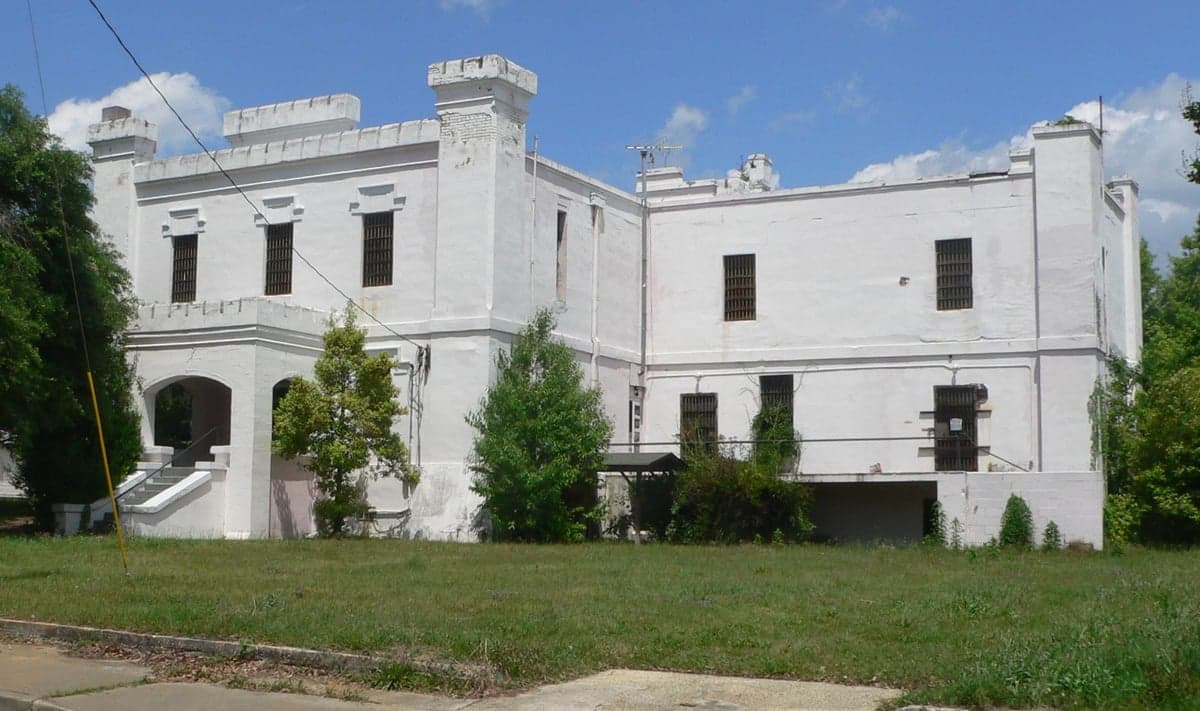
Photo: Wikipedia
Political ClimatePolitical Climate in Orangeburg County
Showing district-level results — no local-only data available.
Local Political AnalysisPolitical Analysis of Orangeburg County
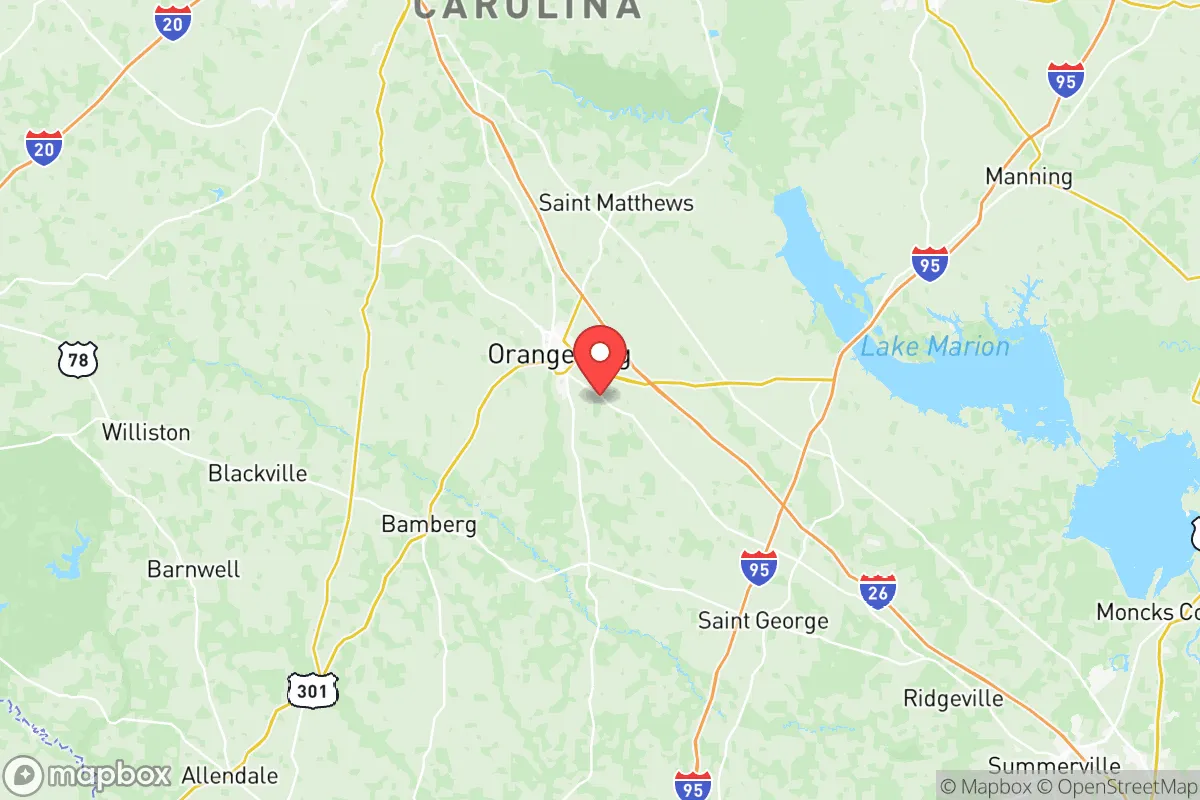
Orangeburg County is a Democratic stronghold in an otherwise deep-red state, carrying a Cook Partisan Voting Index of D+13 while the surrounding state of South Carolina sits at R+8. That 21-point gap makes the county one of the most politically distinctive areas in the Palmetto State, and it's not just a historical artifact — the lean has held steady through the last three presidential cycles. In 2020, Joe Biden won the county by roughly 17 points, and while that margin has narrowed slightly from previous Democratic performances, the county has not voted Republican in a presidential race since 1964. The real story, though, is how that countywide number masks a sharp urban-rural split: the city of Orangeburg itself and the college precincts around South Carolina State University vote overwhelmingly blue, often by 70-80 point margins, while the more rural precincts in the northern and western parts of the county — places like Norway, Rowesville, and the area around Holly Hill — lean Republican, sometimes by double digits. The swing precincts tend to cluster around the I-26 corridor and the southern edge near the Santee Cooper lakes, where a mix of retirees and commuters to Charleston and Columbia create more competitive races at the local level.
How it compares to South Carolina as a whole
South Carolina statewide is R+8, meaning a generic Republican candidate starts with an 8-point structural advantage in federal races. Orangeburg County flips that script entirely: a generic Democrat starts with a 13-point advantage here. That makes Orangeburg one of only a handful of counties in the state — along with Richland (Columbia), Charleston, and Allendale — where Democrats can reliably expect to win without a massive ground game. But the comparison gets more interesting at the local level. In state legislative races, Orangeburg County is split between districts that are safely Democratic (like House District 93, covering most of the city of Orangeburg and S.C. State) and districts that are genuinely competitive (like House District 91, which stretches into more rural parts of the county and neighboring Calhoun County). The county commission itself has been reliably Democratic for decades, but the margin of control has tightened slightly in recent cycles as rural precincts have trended redder. What this means in practice is that a conservative voter in Norway or Rowesville lives under a county government that is uniformly Democratic, while a liberal voter in the city of Orangeburg lives under a state government that is uniformly Republican — both groups experience a degree of political mismatch that shapes daily life.
What this means for residents
For liberal residents, especially in the city of Orangeburg and around the universities, the local political environment is broadly aligned with their values — the county council, school board, and municipal governments tend to reflect Democratic priorities on issues like funding for public schools, affordable housing, and economic development incentives. The trade-off is that state-level policy, from abortion restrictions to education funding formulas to gun laws, is set by a Republican supermajority in Columbia that has little incentive to cater to Orangeburg's preferences. For conservative residents in the rural parts of the county, the dynamic is reversed: they live under a county government that may not reflect their views on spending or regulation, but they are well-represented at the state level. The practical effect is that Orangeburg County tends to get less state funding per capita than more politically aligned counties in the Upstate, and local officials of both parties have learned to work across the aisle to secure grants and infrastructure projects. The county's economic development strategy — focused on the Santee Cooper lakes, the regional medical center, and the universities — is pursued on a nonpartisan basis, and both conservative and liberal residents tend to agree that the biggest local issues are jobs, infrastructure, and education, not the culture-war flashpoints that dominate state politics.
Culturally, Orangeburg County has a distinct identity that sets it apart from both the coastal Lowcountry and the Upstate. It is historically a center of African American political power and higher education — South Carolina State University and Claflin University are both located in the city of Orangeburg — and that legacy shapes everything from the local civil rights history (the Orangeburg Massacre of 1968 is still a defining event) to the annual festival calendar. The county is also deeply tied to the Santee Cooper lakes, which drive a tourism and second-home economy that brings in a more transient, often more conservative population from elsewhere in the Southeast. That mix of a historically Black, Democratic-leaning core and a growing recreational and retirement population creates a political culture that is more pragmatic and less ideologically rigid than the state as a whole. You don't see the same kind of partisan primary battles here that you do in Greenville or Charleston — most local elections are decided in the Democratic primary, and the general election is often a formality. For both conservative and liberal residents, the bottom line is that Orangeburg County is a place where local politics are relatively low-drama and consensus-driven, even as the county sits at the center of the state's sharpest political divide.

State Political ClimatePolitical Climate in South Carolina
State Political AnalysisPolitical Environment in the State
South Carolina is a solidly Republican state with a Cook PVI of R+8, meaning it typically votes about eight points more Republican than the national average. The dominant coalition is a blend of traditional conservatives in the suburbs and rural areas, evangelical Christians in the Upstate and Midlands, and a growing number of fiscally conservative transplants from the Northeast and Midwest. Over the last 10-20 years, the state has shifted rightward on cultural issues while maintaining a pro-business, low-tax posture, though the fast-growing coastal areas around Charleston and Myrtle Beach are introducing more competitive dynamics in local races.
Urban vs. rural divide
The political map breaks down along a clear urban-rural line, with a few notable exceptions. Charleston and its immediate suburbs (Mount Pleasant, North Charleston) lean Democratic, driven by a mix of tourism workers, port employees, and a growing tech and creative class. Columbia, the state capital and home to the University of South Carolina, is a blue island in a red sea, with Richland County consistently voting Democratic by double digits. Greenville, once reliably red, has become more competitive as transplants from the Northeast and West Coast move in for jobs at BMW, Michelin, and the growing health care sector; Greenville County voted for Trump by only 8 points in 2020, down from 18 points in 2016. The rural Lowcountry, the Pee Dee region around Florence, and the Upstate counties like Spartanburg and Anderson are deeply Republican, with margins often exceeding 30 points. The Myrtle Beach area (Horry County) is a swing zone — retirees and tourism workers make it Republican-leaning, but the rapid growth is introducing more moderate and Democratic-leaning voters, especially in the city limits.
Policy environment
South Carolina’s policy environment is defined by low taxes, limited regulation, and a strong cultural conservative bent. The state has a flat income tax rate of 6.4%, with a phase-down to 6.0% scheduled by 2026, and no estate or inheritance tax. Sales tax is 6% statewide, with local options pushing it to 9% in some areas like Charleston. Property taxes are among the lowest in the country, with a 4% assessment ratio for owner-occupied homes and a $50,000 exemption on the first $100,000 of value. Education policy is dominated by school choice: the state has a robust charter school law, a tax-credit scholarship program for low-income students, and in 2023 expanded Education Savings Accounts (ESAs) to all families, making it one of the most expansive school choice programs in the Southeast. Healthcare is a mixed bag: the state did not expand Medicaid under the ACA, leaving roughly 200,000 low-income adults in the coverage gap, but it has a strong network of rural hospitals and a growing telehealth sector. Election laws are restrictive by national standards: voter ID is required, early voting was expanded to 14 days in 2022, but absentee voting requires an excuse. The state also has a "fetal heartbeat" abortion ban (six weeks) passed in 2023, with no exceptions for rape or incest, though it is currently blocked by the state Supreme Court.
Recent policy direction
The last five years have seen a clear push to the right on cultural and regulatory issues. In 2023, the state passed a permitless carry law (Constitutional Carry), allowing any law-abiding adult to carry a concealed firearm without a permit. The same year, the legislature passed a Parents’ Bill of Rights, requiring schools to notify parents of any changes to a student’s health or well-being and banning instruction on sexual orientation or gender identity in K-5 classrooms. On education, the ESA expansion (the "Education Scholarship Trust Fund" program) was the biggest policy win for conservatives, effectively creating a universal school choice system. On the economic front, the state has aggressively courted manufacturing and tech jobs, offering generous incentives to companies like Scout Motors (a new EV plant in Blythewood) and Redwood Materials (a battery recycling facility near Charleston). Property rights remain strong — the state has no statewide zoning, and local governments are limited in their ability to regulate short-term rentals, though some cities like Charleston and Greenville have pushed back with local ordinances. Privacy and surveillance are less protected: the state has no comprehensive data privacy law, and law enforcement can access cell phone location data without a warrant in some cases. Voting access has been tightened, with the 2021 "Election Integrity Act" adding stricter ID requirements for absentee ballots and limiting drop boxes.
Civil unrest & political movements
South Carolina has a history of civil rights activism, but recent political movements are more focused on cultural flashpoints. The 2015 Charleston church shooting at Mother Emanuel AME Church sparked a statewide debate over the Confederate flag, leading to its removal from the Statehouse grounds — a rare moment of bipartisan consensus. Since then, the political energy has shifted to education and parental rights, with groups like Moms for Liberty gaining significant influence in school board races, particularly in Lexington and Greenville counties. Immigration politics are less heated than in border states, but there is a vocal anti-sanctuary movement; the state passed a law in 2019 requiring all law enforcement to cooperate with ICE, and several counties (including Spartanburg and Anderson) have declared themselves "Second Amendment sanctuaries." Election integrity remains a live issue: the 2020 election saw no major fraud cases in the state, but the 2021 law was driven by Republican base concerns. Protests have been relatively small and localized — the 2020 Black Lives Matter protests in Charleston and Columbia were largely peaceful, and the 2022 abortion protests after the Dobbs decision drew modest crowds. A new resident would notice that political signs and bumper stickers are common, especially in rural areas, but open political confrontation is rare outside of social media.
Projection
Over the next 5-10 years, South Carolina will likely remain Republican-leaning but become more competitive in the suburbs and coastal areas. The key demographic shift is in-migration: the state is growing by about 1.5% annually, with most newcomers coming from blue states like New York, New Jersey, and California. These transplants tend to be fiscally conservative but socially moderate, which could push the state toward a more libertarian-leaning Republicanism — lower taxes, less regulation, but more tolerance on cultural issues. The Greenville metro is the bellwether: if it continues to trend toward swing status, the state could see a Democratic governor or Senate candidate within a decade. Conversely, the rural areas are aging and shrinking, which could amplify their political weight through gerrymandering (the state legislature draws congressional maps, and the current map is heavily gerrymandered to favor Republicans). The biggest wildcard is the abortion issue: if the six-week ban is upheld, it could mobilize suburban women and moderate voters in a way that shifts the state’s trajectory faster than expected. For a new resident, the realistic expectation is a state that remains red but with more internal tension — a place where the politics of the Upstate and the Lowcountry increasingly diverge.
For someone moving to South Carolina, the bottom line is this: if you are a conservative, you will find a state that largely aligns with your values on taxes, guns, and education, with a government that is responsive to your concerns. If you are a liberal, you will find a state where your vote carries less weight in statewide races, but where cities like Charleston and Columbia offer progressive enclaves with strong local communities. The practical takeaway is that your experience will depend heavily on where you live — the political climate in Greenville is very different from Florence, and the policy environment is designed to give local governments significant leeway. Do your research on the specific county and city, because the state’s R+8 label hides a lot of local variation.
* Values derived from national, state, county, city and local statistics and may differ in a specific area. Last updated: 2026-08-08T12:01:26.000Z
Narrative content on this page is AI-generated and may contain mistakes. Verify any details that matter before acting on them.
ReloMaps may earn a commission from affiliate links at no extra cost to you.

