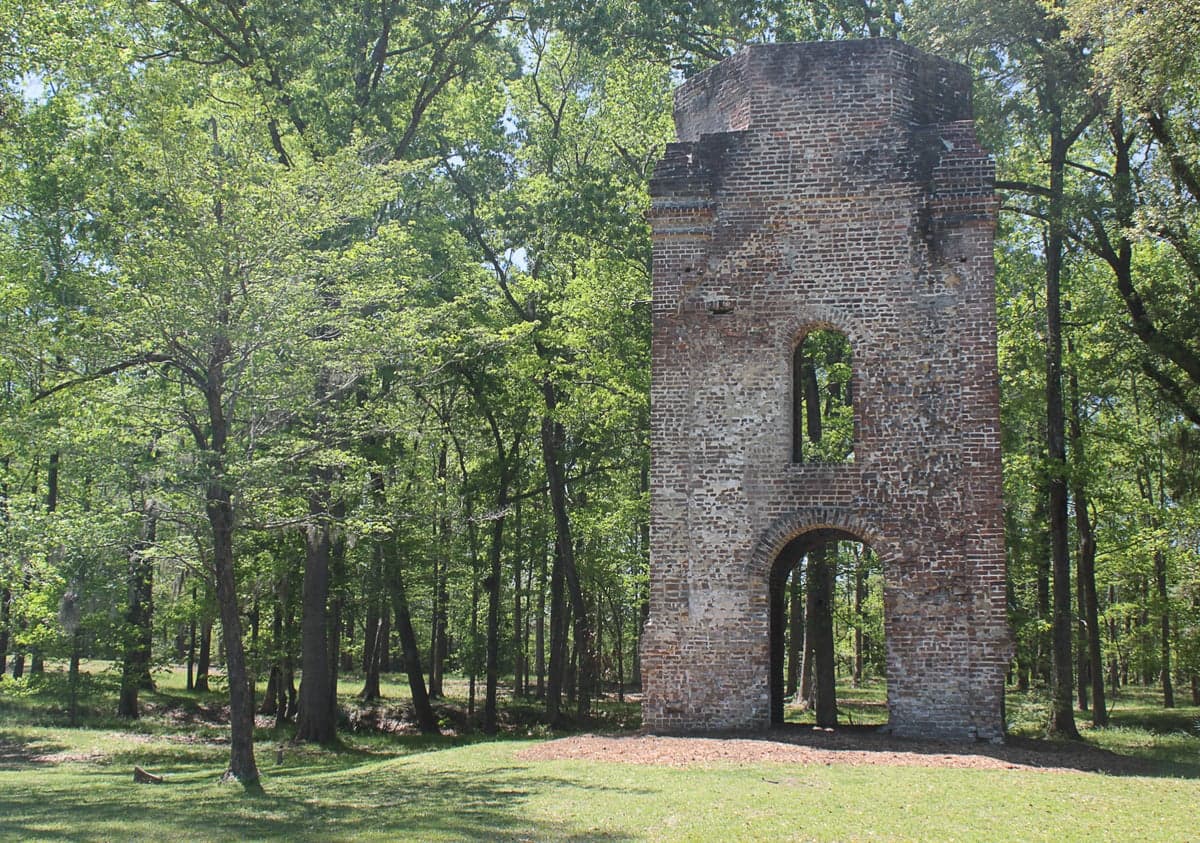
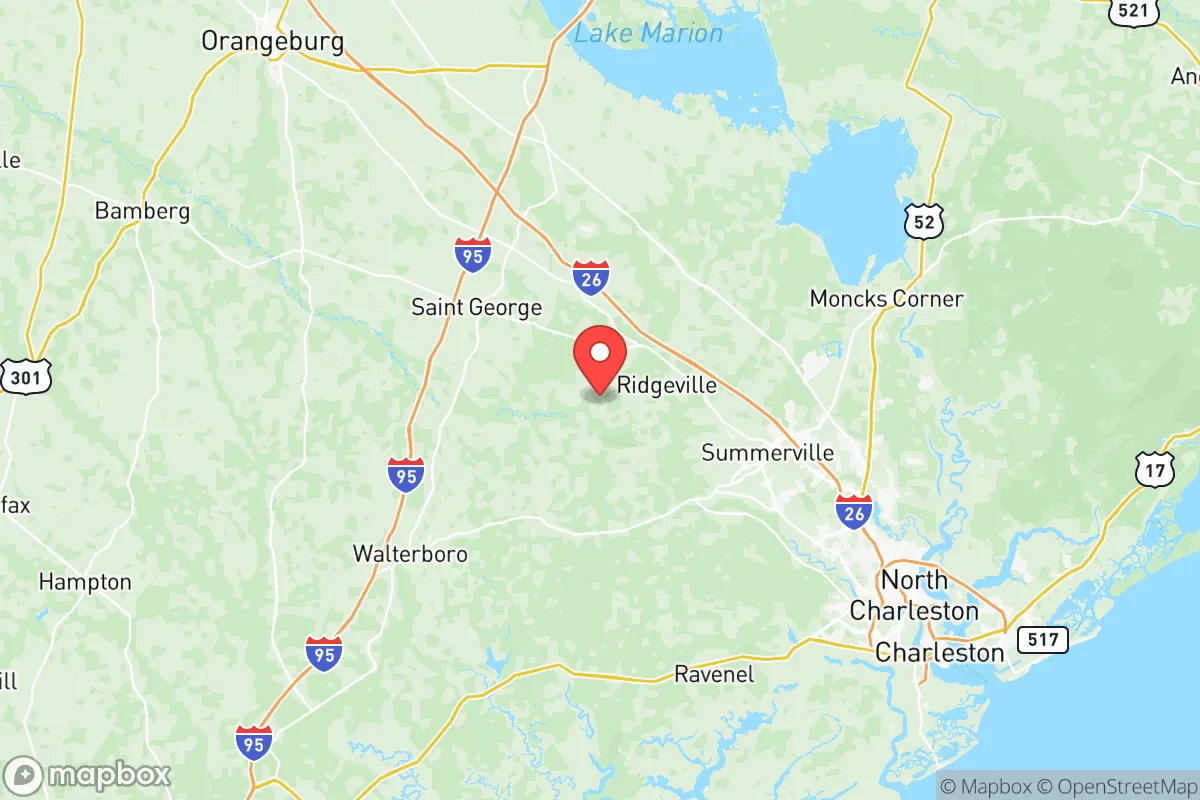
Photo: Wikipedia
Political ClimatePolitical Climate in Dorchester County
Showing district-level results — no local-only data available.
Local Political AnalysisPolitical Analysis of Dorchester County
Dorchester County, South Carolina, is a genuine political outlier in the Deep South, carrying a Cook Partisan Voting Index (PVI) of D+13 — meaning it votes about 13 points more Democratic than the nation as a whole. That stands in stark contrast to the state of South Carolina, which has a PVI of R+8. This isn't a recent fluke; the county has been a reliable Democratic stronghold for decades, driven largely by the dense, suburban precincts around Summerville and the more rural, historically Black communities in the southern part of the county. However, the political map is far from uniform, and the county's trajectory is shifting under the weight of rapid growth from the Charleston metro area.
How it compares
The gap between Dorchester County and the rest of South Carolina is enormous — a 21-point swing in partisan lean. While the state as a whole has been trending redder over the past decade, Dorchester has held steady as a blue island. The key to this is internal geography. Summerville, the county's largest town, is the Democratic engine: its newer subdivisions, townhomes, and the area around Nexton consistently deliver margins of 60-70% for Democratic candidates. In contrast, St. George, the county seat in the rural northern half, is deeply conservative, often voting 65-70% Republican. The swing precincts are in the unincorporated areas between Summerville and Ridgeville, where a mix of long-time rural families and new exurban commuters create tight races. In 2024, for example, the county as a whole still backed the Democratic presidential candidate by a comfortable margin, even as the state went for the Republican by double digits.
What this means for residents
For a liberal resident, Dorchester County offers a rare experience in South Carolina: your vote actually counts in local elections. School board races, county council seats, and sheriff's contests are genuinely competitive, often decided by a few hundred votes. You'll find active Democratic clubs in Summerville and a local government that, while not uniformly progressive, is generally moderate on issues like public transit and affordable housing. For a conservative resident, the reality is that you are in the minority at the county level, but your voice is still loud in the northern half of the county and in state-level politics. Your state representative and state senator are almost certainly Republican, and the county's Republican Party is well-organized, particularly around St. George. The practical effect is that both sides have to work together on bread-and-butter issues like road widening (a constant headache on I-26) and school funding, because neither party can simply steamroll the other.
Culturally, this political split creates a fascinating dynamic. Summerville feels like a small, progressive-leaning city with a walkable historic district, craft breweries, and a strong emphasis on public schools. Drive 20 minutes north to St. George, and you're in a world of hunting clubs, evangelical churches, and a deep skepticism of government expansion. The county's policy distinctions reflect this: Dorchester County has a relatively generous accommodations tax that funds arts and tourism in Summerville, while the northern precincts push for lower property taxes and fewer land-use regulations. Looking ahead, the county is likely to stay blue for the near term, as the Charleston metro's growth continues to fill Summerville with younger, more diverse, and more Democratic-leaning residents. But the rural north is not going anywhere, and the tension between these two worlds is what makes Dorchester County one of the most politically interesting places in South Carolina.

State Political ClimatePolitical Climate in South Carolina
State Political AnalysisPolitical Environment in the State
South Carolina has long been a reliably Republican state at the federal level, with a Cook PVI of R+8, but that number masks a more complicated reality. For the last 20 years, the GOP has dominated presidential races and held both U.S. Senate seats and a majority of the congressional delegation, but the state’s political center of gravity has shifted notably since 2010, driven mainly by explosive growth in the Upstate and the Lowcountry. The old "blue dog" Democratic tradition in the rural Black Belt has eroded, while a new wave of transplants from the Northeast and Midwest has made the suburbs of Charlotte, Charleston, and Columbia politically distinct and occasionally competitive.
Urban vs. rural divide
The political map breaks down cleanly along development corridors. The Upstate cities of Greenville and Spartanburg are strongly Republican, powered by a mix of native conservatives, manufacturing and aerospace industries, and a booming evangelical base. Greenville County itself has not voted for a Democratic presidential candidate since 1964, and its surburbs like Simpsonville and Mauldin are among the reddest spots in the state. Charleston, by contrast, has been trending blue for a decade. The city of Charleston proper and its inner ring (Mount Pleasant, James Island, West Ashley) now lean Democratic in national elections, driven by an influx of remote workers, professionals, and retirees from the Northeast. The lowcountry rural areas—like Beaufort, Colleton, and Jasper counties—remain conservative, but the coastal counties together have turned the 1st Congressional District from a safe GOP seat into a competitive one. The Midlands, anchored by Columbia and Richland County, is the state's lone reliably Democratic metro, fueled by the state capital’s government workforce, the University of South Carolina, and a significant African American voting bloc. Meanwhile, the vast rural interior—the Pee Dee, the Sandhills, and the Savannah River counties—remain strongly Republican, with the notable exception of the historic "Corridor of Shame" along I-95, where districts like Allendale and Bamberg still vote Democratic by habit, albeit with low turnout.
Policy environment
South Carolina’s policy lean is unmistakably conservative, but not as aggressive as some of its Deep South neighbors. There is no state income tax on the first roughly $3,000 of income; the top marginal rate is a flat 6.2% as of 2026, down from 7% in 2022 after a phased reduction passed in 2022. Property taxes are low by national standards—the effective rate is about 0.55% of home value—but there is a 4% sales tax on vehicles and a cap on local school property tax increases. The state is a "right-to-work" state with one of the lowest unionization rates in the country (around 2%), and it has no state-level minimum wage above the federal $7.25. Education policy is a patchwork: the state fully funds charter schools and has a robust public school choice program, but teacher pay ranks near the bottom nationally (though it’s rising). Healthcare is dominated by the absence of Medicaid expansion—South Carolina is one of the 10 holdout states—meaning about 50,000 working poor fall into a coverage gap. The regulatory posture is business-friendly, with no statewide building code in many rural counties and a "business court" system to expedite commercial disputes. Election laws have tightened since 2020: the state now has a strict voter ID law, no-excuse absentee voting was restricted in 2021 (requiring a notary or two witnesses), and same-day voter registration is not allowed. Early voting was expanded to two weeks in 2022, however.
Recent policy direction
The last three years have seen a burst of conservative legislation that gives a clear signal to relocators. In 2023, the General Assembly passed a near-total abortion ban at six weeks (the "Fetal Heartbeat Act"), with exceptions for rape and incest only up to 12 weeks and for the life of the mother. That same year, a permitless carry (constitutional carry) law went into effect, allowing any legal gun owner to carry a concealed weapon without a permit. The state also passed a Parents’ Bill of Rights in 2023, requiring schools to notify parents about "instructional materials with sexuality content" and banning instruction on sexual orientation and gender identity in K-5 classrooms (the "Don’t Say Gay" bill). On property rights, the state moved to limit "eminent domain for private development" after a 2023 Supreme Court ruling, and in 2024, a law was passed restricting foreign ownership of agricultural land (China, Russia, North Korea, Iran). On taxation, the 2022 income tax cut accelerates to bring the top rate to 6.0% by 2027, and the state eliminated the "marriage penalty" for joint filers. Voting access remains a flashpoint: the state Republican Party in 2024 sued to remove certain drop boxes, and the legislature is considering a bill to require a state-issued ID for all absentee ballots (as of early 2026). For libertarian-leaning relocators, the state has no asset forfeiture reform (law enforcement can keep property without a criminal conviction) and no broad privacy law—the state does not require a warrant for cell phone location data in non-emergency situations, unlike some other states that have passed "digital privacy" statutes.
Civil unrest & political movements
South Carolina has a quieter civil society than some states, but it has not been free of tension. The 2015 Charleston church shooting at Mother Emanuel AME Church led to the removal of the Confederate flag from the Statehouse grounds, a moment that still defines in-state political identity. Since then, debates over Confederate monuments have flared in smaller towns like McCormick and Edgefield, where local governments have resisted removal efforts. The state has seen periodic "Moms for Liberty" activism in school board elections, particularly in Lexington and York counties, where parents have pushed for book bans and curriculum transparency. Immigration politics are not as heated as in border states, but there is a 2008 law that requires employers to use E-Verify, and Governor Henry McMaster has sent National Guard troops to the Texas border as a symbolic show of force in 2023 and 2024. There is no city in South Carolina that operates as a formal "sanctuary city," though Charleston and Columbia have passed "welcoming city" resolutions that limit local police from cooperating with ICE on routine stops. Election integrity remains a live issue: the state’s 2020 election process was not challenged in court, but grassroots "Stop the Steal" groups still hold regular meetings in rural counties like Oconee and York, and the 2024 runoff for the state Senate District 8 (Greenville) was marred by allegations of absentee ballot irregularities that went unproven but generated headlines.
Projection
Looking out over the next 5 to 10 years, South Carolina is likely to become more politically competitive, but not necessarily blue. The state is growing faster than the national average—about 1.5% per year—and roughly two-thirds of new residents are coming from blue states (New York, New Jersey, California, and Illinois). Most of those transplants land in Charleston, Greenville, and the Lake Murray corridor around Lexington, and early evidence from voter registration shows they are registering as Republicans or unaffiliated at a rate of about 60-40 over Democrats, not the 90-10 split some predicted. The net effect is a "purpling" of the suburbs, while the deep rural counties are becoming even more Republican as the small African American populations there shrink. The state’s R+8 PVI could shift to R+5 or R+6 within a decade, which would still be solidly Republican but would put the 1st and 6th Congressional Districts in play. State legislative maps are gerrymandered aggressively in favor of Republicans, so the General Assembly will remain GOP-controlled for the foreseeable future. A relocator moving in now should expect that the state’s policy direction—lower taxes, looser gun laws, tighter abortion restrictions, and "parents’ rights" in schools—will continue for at least the next decade, but they will also see the beginning of a genuine two-party dynamic in the metros, especially Charleston and Greenville, where local elections are increasingly competitive.
For someone choosing South Carolina, the bottom line is this: if you’re conservative, you’ll feel the state is on your side legislatively and culturally, especially if you settle in Greenville, Spartanburg, or the Lake Murray area. If you’re liberal or moderate, you can still find a comfortable life in the cities of Charleston or Columbia, where Democrats hold local office and social life is progressive, but you’ll be living under a conservative state government that passes laws you likely disagree with. The state’s low taxes and business-friendly climate appeal to both sides, but its policies on abortion, guns, and education have sharp edges that are not softening. Know your metro, know your county, and you’ll know your political reality.
* Values derived from national, state, county, city and local statistics and may differ in a specific area. Last updated: 2026-06-25T07:12:34.000Z
Narrative content on this page is AI-generated and may contain mistakes. Verify any details that matter before acting on them.
ReloMaps may earn a commission from affiliate links at no extra cost to you.

