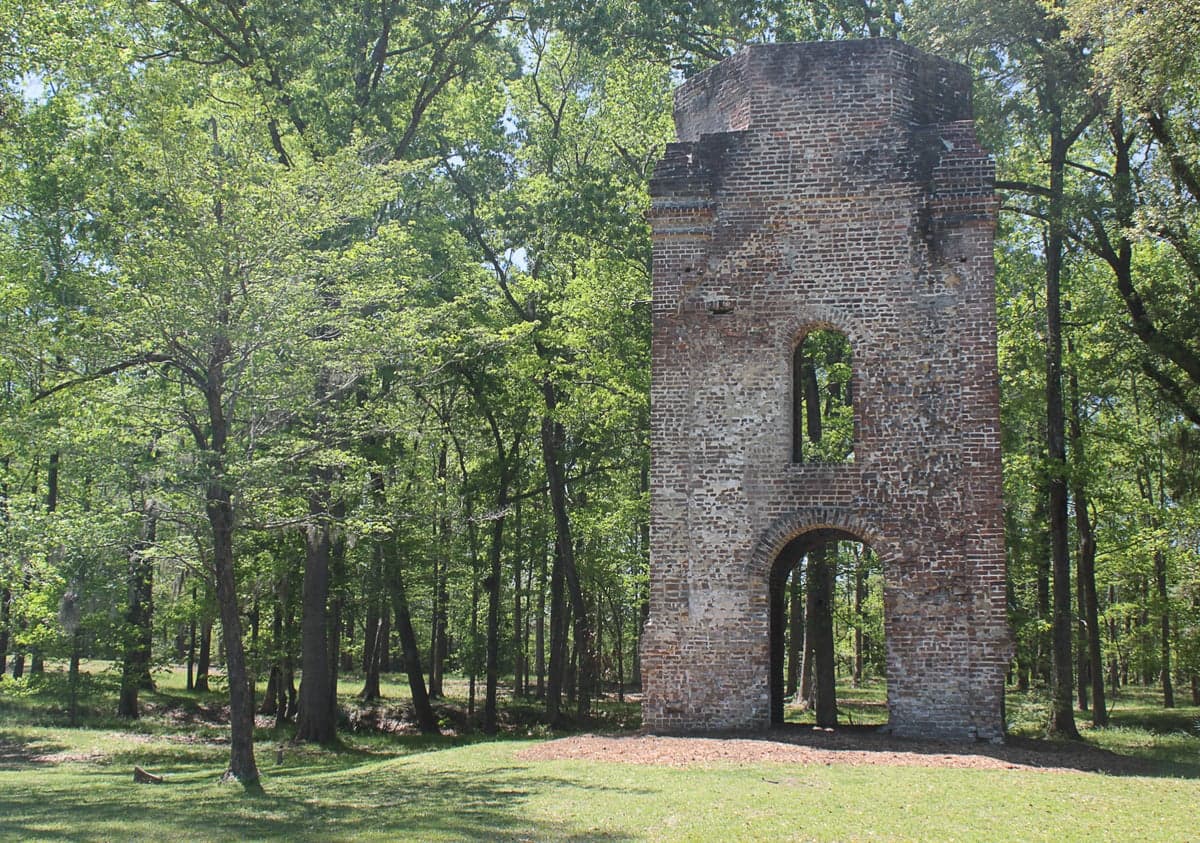
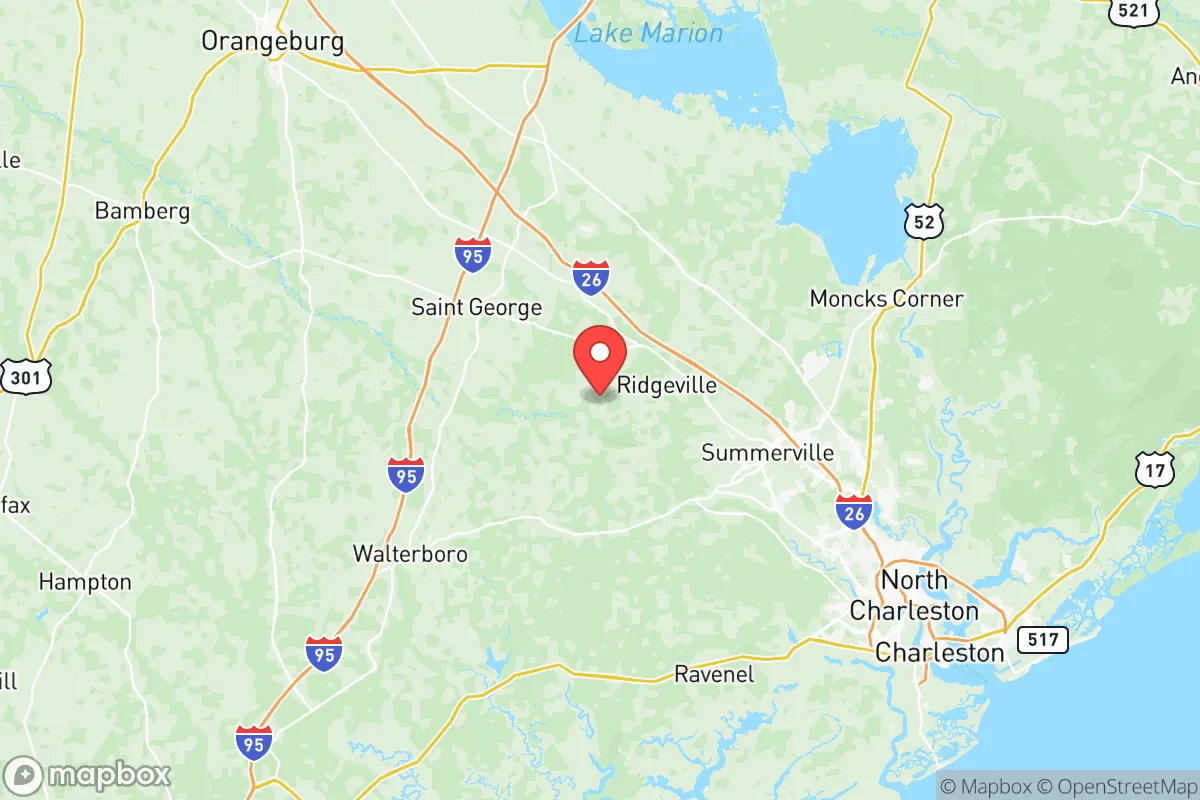
Photo: Wikipedia
Demographics of Dorchester County
Affluence Level in Dorchester County
A middle-class area roughly in line with national averages across income, home values, education, and employment.
People of Dorchester County
Dorchester County, South Carolina, today is home to 164,322 residents, a population that blends deep Southern roots with modern suburban growth. Its character is defined by a predominantly White (61.3%) and significant Black (24.8%) population, alongside small but growing Hispanic (6.9%) and East/Southeast Asian (1.9%) communities, with only 3.3% foreign-born. The county’s identity is split between the historic, low-country town of Summerville, the more rural St. George and Ridgeville, and expanding subdivisions that serve as a bedroom community for Charleston. This is a place where old plantation-era settlement patterns intersect with 21st-century Sun Belt migration, creating a culturally conservative but demographically diversifying landscape.
Settlement & growth (pre-1960)
Before European settlement, the area now called Dorchester County was the domain of the Etiwan and Edisto Native American nations, who lived along the Ashley River and its tributaries. European colonization began in earnest in the late 17th century, when English and Barbadian planters established rice and indigo plantations along the rivers, using enslaved African labor to create immense wealth. The county itself was not formed until 1897, carved from portions of Berkeley and Colleton counties, but its foundational population was already in place: a planter elite of English descent, a large enslaved Black majority, and a small number of free people of color.
The first major non-English wave arrived in the 1730s and 1740s: German and Swiss Protestants settled the town of Ridgeville, attracted by land grants in the township system. They established small farms and a distinct Lutheran community that remains a cultural marker in the area to this day. Simultaneously, Scots-Irish Presbyterians moved south along the fall line, settling in and around St. George, where they built churches and a subsistence-farming economy that contrasted with the plantation wealth downstream. These two groups — Germans in Ridgeville and Scots-Irish in St. George — created the county’s White rural backbone.
After the Civil War and Reconstruction, the Black population, newly freed, concentrated in rural hamlets and on former plantation lands, establishing independent communities like Knightsville (now part of Summerville) and Lincolnville. Lincolnville, founded in 1867 by African Americans on a 700-acre plot, became a rare all-Black incorporated town, serving as a refuge and center of Black civic life during Jim Crow. Into the early 20th century, the economy was dominated by timber, cotton, and phosphate mining, with the railroad connecting Summerville to Charleston and allowing the town to develop as a winter resort for wealthy Northerners escaping cold winters — the so-called “Flowertown in the Pines.” This tourism brought some permanent settlement from outside the region, but the county remained overwhelmingly native-born, rural, and divided by race until World War II.
The post-war period, particularly the 1950s, marked the first trickle of suburbanization. Summerville, with its pine-scented air and rail access to Charleston, began attracting military and civilian personnel from the adjacent Charleston Naval Base and Charleston Air Force Base. This wave was overwhelmingly White and native-born, pulled by affordable land and the promise of a slower pace of life within commuting distance of the city. By 1960, the county’s population was roughly 17,000 — small, rural, and racially segregated by law and custom.
Modern era (post-1965)
The post-1965 era transformed Dorchester County from a sleepy rural area into one of South Carolina’s fastest-growing counties. The 1965 Hart-Cellar Act had a modest direct effect — the county’s foreign-born share remains just 3.3% — but the domestic migration it enabled indirectly reshaped the population. The Charleston metro area boomed as the Navy base expanded, then after its 1996 closure, the region retooled for aerospace, manufacturing, and logistics, drawing a new wave of domestic migrants. The most transformative force was suburban sprawl: Summerville became the epicenter of growth, its population exploding from about 6,000 in 1970 to over 50,000 today. The I-26 corridor running through the county became a ribbon of subdivisions, strip malls, and business parks, connecting Charleston to Columbia and funneling commuters into the county.
Domestic migration accounts for the vast majority of the county’s post-1965 growth. White families from the Rust Belt (Ohio, Michigan, New York) and other Southern states moved in throughout the 1980s, 1990s, and 2000s, attracted by lower taxes, cheaper housing, and the Charleston region’s booming job market. Simultaneously, some African American families joined the Great Return migration from the North, moving back to the South and settling in the historic Black communities of Summerville, Lincolnville, and Ridgeville. The Black population share, however, dropped from a majority in 1960 to 24.8% today as White in-migration outpaced all other growth.
The Hispanic presence, while small at 6.9%, is concentrated in the construction and service industries, with communities forming in and around Summerville and St. George, often in newer subdivisions and mobile home parks. East/Southeast Asian residents (1.9%) are a more recent arrival, largely professionals drawn to the Volvo Cars plant and the healthcare sector in the tricounty area, settling in Summerville’s newer neighborhoods. The Indian-subcontinent population (0.2%) is negligible but growing slowly, with families found among engineering and medical professionals. Suburbanization has also accelerated: large master-planned communities like Nexton (a 5,800-acre development straddling the Berkeley-Dorchester line) and the Cane Bay area have absorbed tens of thousands of new residents, most of them White families with children, creating a demographic profile that is whiter than the county’s historic mix.
The future
Dorchester County is projected to continue its rapid growth for at least another decade, with population forecasts reaching 200,000 by 2035. The county is becoming more diverse, but slowly: the Hispanic share is expected to rise to 10-12% by 2040, and the East/Southeast Asian share to 3-4%, driven by continued job growth in advanced manufacturing, healthcare, and logistics. The Black population share is projected to hold steady or decline slightly as White and Hispanic in-migration dominates. The Indian subcontinent population will likely remain a small fraction of the total, confined to specific professional enclaves.
The most significant trend is the geographic dispersal of new communities. Summerville is nearing build-out, pushing development east toward the Berkeley County line and south toward Charleston. St. George and Ridgeville are seeing new subdivisions as land prices rise closer to the coast. The cultural identity of the county is bifurcating: the older rural and small-town South (St. George, Ridgeville, Lincolnville) coexists with an exurban, master-planned, amenity-driven lifestyle in the newer developments. This tension — between preservationist sentiment and development pressure — will define the next decade. The county’s politics, historically conservative, are likely to remain so, as the new arrivals are largely fiscally conservative families, though the growing diversity may moderate social positions over time.
For someone moving in now, Dorchester County offers the opportunity to live in a rapidly growing, still-affordable part of the Charleston metro with good schools and a low-tax environment. It is a place where the old low-country culture — Southern hospitality, church-centered social life, and a sense of place — is under pressure from a tide of newcomers, but has not yet been erased. The county is becoming more suburban, more diverse, and more connected to the regional economy, but it remains fundamentally a family-oriented, conservative community where the past and the future coexist, sometimes uneasily, in the same pine forests.

* Values derived from national, state, county, city and local statistics and may differ in a specific area. Last updated: 2026-06-25T07:12:34.000Z
Narrative content on this page is AI-generated and may contain mistakes. Verify any details that matter before acting on them.
ReloMaps may earn a commission from affiliate links at no extra cost to you.

