Photo: Wikipedia
Demographics of Smithsburg, MD
Affluence Level in Smithsburg, MD
A middle-class area roughly in line with national averages across income, home values, education, and employment.
People of Smithsburg, MD
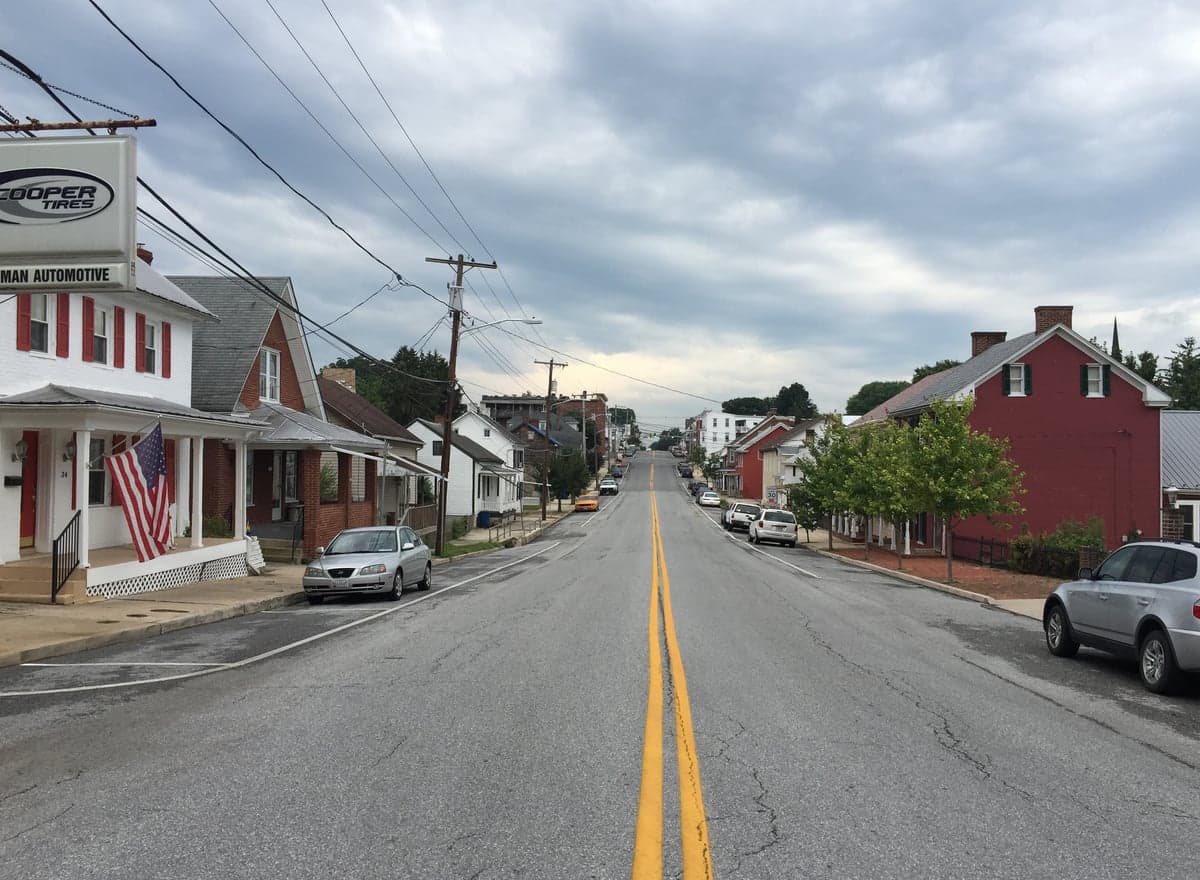
Smithsburg, Maryland, is a small, tight-knit community of 3,069 residents that remains overwhelmingly white (92.3%) and native-born, with a foreign-born population of just 0.7%. The town’s character is defined by its rural roots, a strong sense of local heritage, and a population that is less college-educated (22.9%) than the national average, reflecting a workforce historically tied to agriculture, trades, and nearby manufacturing. It is a place where family names and community ties run deep, and where the pace of life is distinctly unhurried compared to the nearby Washington, D.C., and Baltimore metro areas.
How the city was settled and grew
Smithsburg’s population history begins with German and Scots-Irish settlers who arrived in the mid-18th century, drawn by the fertile limestone valleys and land grants from the Calvert family, the proprietors of Maryland. The town was officially laid out in 1813 by Christopher "Stuffle" Smith, a German immigrant who purchased 100 acres and divided it into lots, creating the original Smithsburg Historic District along Water Street and Main Street. These early settlers were predominantly farmers and tradesmen, and the town grew slowly as a market center for the surrounding agricultural region. The arrival of the Western Maryland Railroad in the 1870s spurred a second wave of growth, bringing Irish and German laborers who settled in the Railroad Avenue area, building homes near the depot and working in the town’s new canning factories and mills. By the early 20th century, Smithsburg’s population remained almost entirely white and native-born, with a small number of African American families living in the Church Street area, many of whom worked as domestic servants or farm laborers for the town’s established families.
Modern era (post-1965)
After the 1965 Immigration and Nationality Act, Smithsburg saw virtually no influx of new immigrant groups, a pattern that continues today. The town’s demographic story in the modern era is one of domestic in-migration, not international diversity. Beginning in the 1980s and accelerating through the 2000s, Smithsburg attracted families and retirees from the Washington, D.C., and Baltimore suburbs seeking lower housing costs, larger lots, and a slower pace of life. This wave settled primarily in newer subdivisions like Smithsburg Meadows and Fox Run, built on former farmland along the town’s eastern and southern edges. These newcomers were overwhelmingly white and middle-class, and their arrival increased the town’s population by roughly 25% between 1990 and 2010. The town’s small Hispanic population (1.8%) and Black population (1.9%) are dispersed throughout these newer neighborhoods, with no single ethnic enclave forming. The East/Southeast Asian population (0.9%) is similarly scattered, often consisting of professionals working at nearby Fort Detrick or the Johns Hopkins Applied Physics Laboratory in Laurel. The Indian subcontinent population is effectively zero, reflecting the town’s lack of the tech-sector or academic magnets that draw that community to other parts of Maryland.
The future
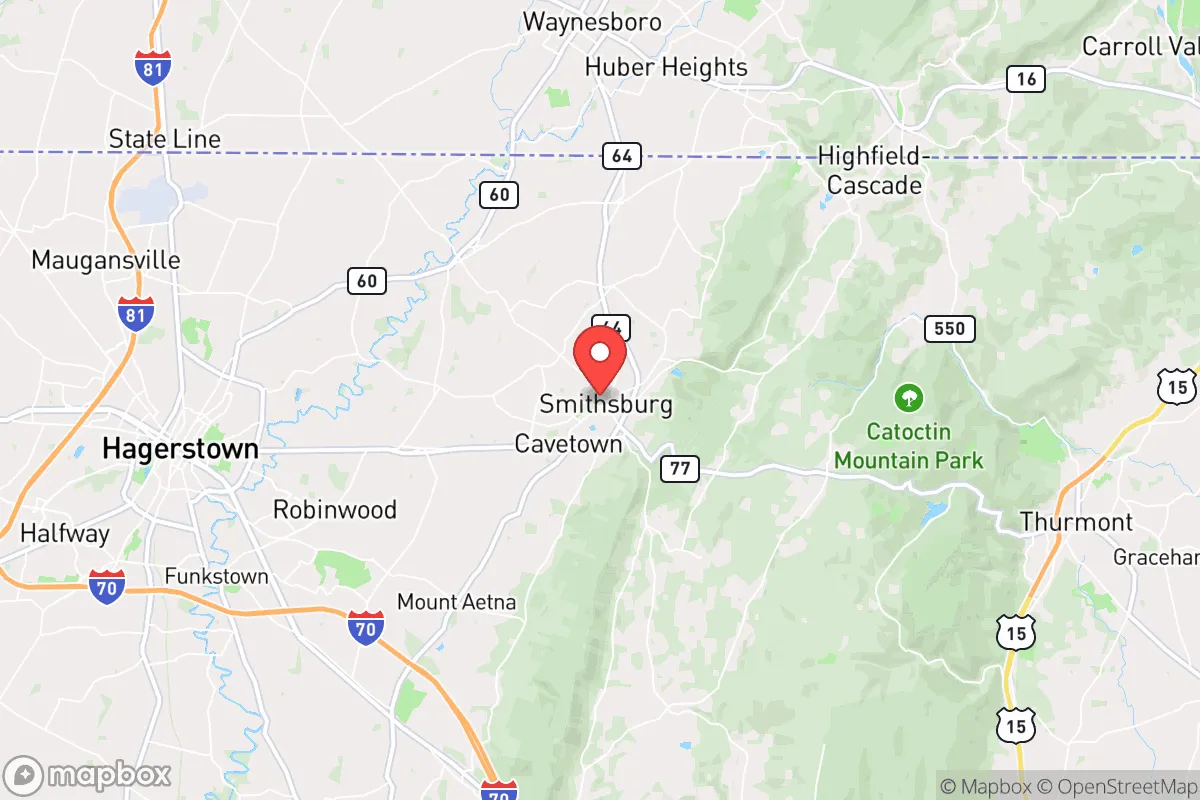
Smithsburg’s population is projected to remain small and predominantly white for the foreseeable future. The town’s low foreign-born share (0.7%) and limited rental housing stock offer few entry points for new immigrant populations. Future growth will likely come from continued domestic migration of families and remote workers priced out of Frederick and Hagerstown, who will concentrate in new subdivisions on the town’s periphery, such as the planned Smithsburg Station development near the intersection of MD-64 and MD-77. The town’s cultural identity will remain rooted in its agricultural and small-town heritage, with little pressure toward the kind of rapid diversification seen in larger Maryland cities. For a mover considering Smithsburg, the town offers a stable, low-diversity environment where community institutions—the volunteer fire company, the Lions Club, and the annual Smithsburg Carnival—remain central to social life. The next decade will likely see a modest increase in population, but the town’s demographic character will change slowly, if at all.
Smithsburg is becoming a quiet bedroom community for the Frederick-Hagerstown corridor, but one that retains its historic identity as a place where families know their neighbors and newcomers are expected to integrate into existing social structures. For those seeking a homogenous, safe, and community-oriented environment with easy access to Appalachian hiking and Mid-Atlantic cities, Smithsburg represents a stable choice with little demographic turbulence ahead.

* Values derived from national, state, county, city and local statistics and may differ in a specific area. Last updated: 2026-11-22T00:36:18.000Z
Narrative content on this page is AI-generated and may contain mistakes. Verify any details that matter before acting on them.
ReloMaps may earn a commission from affiliate links at no extra cost to you.

