Photo: Wikipedia
Political ClimatePolitical Climate in Sioux City, IA
District shown is the primary district for this city’s centroid. Cities may span multiple districts.
Local Political AnalysisPolitical Analysis of Sioux City, IA
Sioux City leans solidly conservative, with a Cook PVI of R+15 that places it among the most reliably Republican metro areas in Iowa. The city has voted for the GOP presidential candidate in every election since 2000, often by double-digit margins, and local races typically follow suit. But if you’ve lived here as long as I have, you’ve seen the political ground shift under your feet—not dramatically, but enough to notice. The old-school, live-and-let-live conservatism that defined this town for decades is now bumping up against a quieter, more organized progressive push, especially in the schools and county government. It’s not a revolution, but it’s a slow creep that has folks like me paying close attention.
How it compares
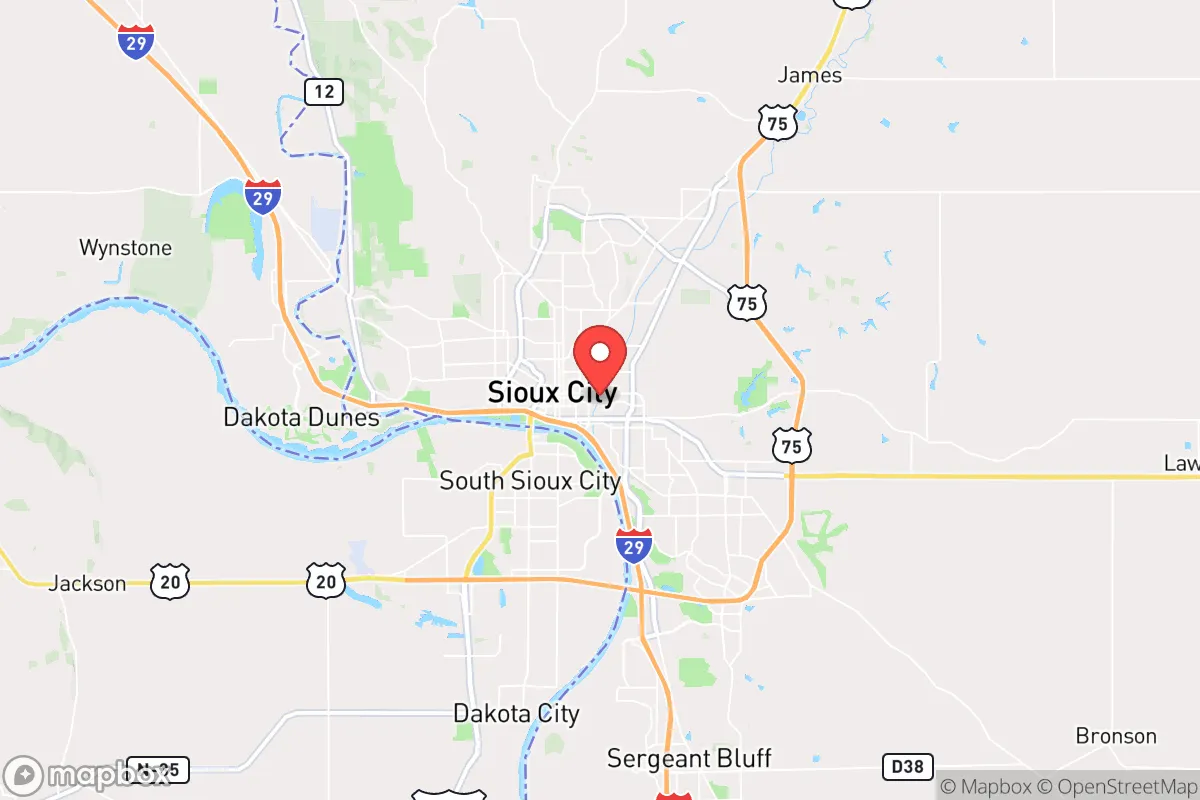
Drive 30 minutes south to Sioux City’s own suburbs like Sergeant Bluff or Dakota Dunes, and you’ll find even deeper red territory—places where the R+15 feels like a baseline, not a ceiling. Head east to Le Mars, the ice cream capital, and you’re in a county that voted +25 for Trump in 2020. But the real contrast is west, across the Missouri River into South Sioux City, Nebraska. That side of the metro leans more purple, with a growing Hispanic population and a younger voter base that’s nudged local politics toward moderate Democratic candidates. Even within Woodbury County, the city itself is the moderate anchor; the rural townships around it are where the real conservative fire burns. If you’re looking for a place where your vote actually counts in a primary, Sioux City still delivers—but the margins are tightening in ways that should make any freedom-minded resident sit up straight.
What this means for residents
For the average family, the political climate here means lower taxes and fewer regulations than you’d find in Des Moines or Iowa City. Property taxes are about 1.2% of assessed value, and there’s no city income tax. The school board has held the line on critical race theory and gender ideology curriculum, but not without a fight—I’ve sat through meetings where parents had to shout over activists pushing DEI training for elementary kids. The county sheriff’s office still cooperates with ICE, and the city council has resisted calls to defund the police. But the pressure is real. In 2023, a progressive slate nearly flipped two council seats, and the local Democratic Party has been busier than I’ve seen in 20 years. If you value your Second Amendment rights, you’re still safe here—open carry is legal, and the sheriff issues permits without a hassle. But the long-term trend? I’d keep an eye on the school board elections. That’s where the real battle for this town’s soul is being fought.
One thing that sets Sioux City apart culturally is its pragmatic, blue-collar conservatism. This isn’t the country-club GOP you find in West Des Moines. People here work in meatpacking, logistics, and manufacturing—jobs that don’t leave much time for ideological purity tests. The city has a strong Catholic and Lutheran heritage that shapes its social conservatism, but you’ll also find a live-and-let-live attitude on personal matters like hunting, fishing, and small business ownership. The biggest red flag I see is the slow but steady push from outside groups—funded by coastal money—to turn this town into a mini Portland. They’re targeting zoning laws, trying to impose “equity” mandates on city contracts, and pushing for ranked-choice voting. So far, we’ve held the line. But if you’re thinking of moving here, know this: the fight for Sioux City’s future is just getting started, and the outcome will depend on whether enough of us show up to the polls and the school board meetings. It’s still a great place to raise a family, but it’s not a place to be complacent.

State Political ClimatePolitical Climate in Iowa
State Political AnalysisPolitical Environment in the State
Iowa has been a reliably Republican state in presidential elections since 2016, but its political climate is more nuanced than a simple red-state label suggests. The state’s overall partisan lean is roughly R+6, with Republicans holding trifecta control of the governorship and both legislative chambers since 2017. Over the past 10-20 years, Iowa has shifted from a classic purple swing state—where it voted for Obama in 2008 and 2012—to a solidly conservative stronghold, driven by a rural exodus from the Democratic Party and a growing suburban realignment. However, the state’s two largest metros, Des Moines and Iowa City, remain Democratic-leaning, creating a sharp urban-rural divide that defines Iowa politics today.
Urban vs. rural divide
The political map of Iowa breaks down cleanly along the urban-rural axis. The Des Moines metro (Polk, Dallas, and Warren counties) is the state’s Democratic anchor, with Polk County voting for Biden by 12 points in 2020. Iowa City (Johnson County) is the most liberal area in the state, home to the University of Iowa, and consistently votes Democratic by 30+ points. Meanwhile, the rural counties in northwest and north-central Iowa—like Sioux, Lyon, and Osceola—are deeply Republican, often voting 70-80% for GOP candidates. The suburbs around Des Moines, such as Ankeny and Waukee, have been a key battleground; they voted for Trump in 2020 but by narrower margins than in 2016, signaling a slow drift toward the center. The city of Cedar Rapids (Linn County) is a bellwether—it voted for Obama twice, then flipped to Trump in 2016 and 2020, reflecting the broader rural shift. The Quad Cities (Davenport, Bettendorf) are split, with Scott County trending Republican in recent cycles.
Policy environment
Iowa’s policy environment is aggressively conservative on most fronts. The state has a flat income tax of 3.8% (phased down from 8.5% in 2018), and property taxes are among the lowest in the Midwest, capped by a 2013 law that limits annual increases to 2%. There is no state estate tax. Education policy is a flashpoint: the state passed a universal school voucher program in 2023 (HF 68), allowing any family to use public funds for private or homeschool expenses—a major win for school choice advocates. Healthcare is mixed; Iowa expanded Medicaid under the Affordable Care Act in 2014, but the state has since imposed work requirements for able-bodied adults. Election laws tightened in 2021 with SF 413, which reduced early voting days from 29 to 20, required polls to close at 8 p.m., and banned private funding of elections. Gun rights are robust: Iowa became a permitless carry state in 2021 (HF 756), and there is no state-level red flag law. The regulatory posture is business-friendly, with a right-to-work law on the books and no state-level minimum wage above the federal $7.25.
Trajectory & freedom
Iowa is becoming more free in several key areas, particularly for conservatives. The 2021 permitless carry law (HF 756) expanded Second Amendment rights significantly, and the 2023 school voucher law (HF 68) gave parents more control over their children’s education. In 2022, the state passed a “Parents’ Bill of Rights” (SF 2369), requiring schools to notify parents of any curriculum involving sexuality or gender identity and allowing them to opt their children out. Medical freedom saw a win in 2023 with a law banning gender transition procedures for minors (HF 565). On the downside, property rights took a hit in 2022 when the Iowa Supreme Court upheld a county’s use of eminent domain for a carbon pipeline project (Summit Carbon Solutions), sparking backlash from landowners. Taxation is trending downward: the flat tax rate is scheduled to drop to 3.5% by 2027. Overall, the trajectory is toward greater personal liberty in education, firearms, and medical choices, but property rights remain a contested area.
Civil unrest & political movements
Iowa has seen relatively little civil unrest compared to coastal states, but there are notable flashpoints. The most visible movement in recent years has been the opposition to carbon capture pipelines—specifically the Summit Carbon Solutions project—which has united rural landowners, environmentalists, and libertarians in protests at county meetings and statehouse hearings. In 2023, hundreds of farmers and activists rallied at the Iowa Capitol against the use of eminent domain for private pipelines. On the left, the Black Lives Matter protests in Des Moines and Iowa City in 2020 were largely peaceful, but they did lead to calls for police reform that fizzled in the legislature. Immigration politics are relatively quiet; Iowa has no sanctuary cities, and a 2023 law (HF 648) requires local law enforcement to cooperate with federal immigration authorities. Election integrity controversies flared after 2020, with Republican lawmakers citing concerns about ballot drop boxes and mail-in voting, leading to the 2021 restrictions. No major secession or nullification rhetoric exists, but the “Iowa Freedom Caucus” (a group of hardline state legislators) has pushed for more aggressive nullification of federal gun laws.
Projection
Over the next 5-10 years, Iowa is likely to become more conservative as rural areas continue to depopulate and the remaining population skews older and whiter. The Des Moines metro will grow, but its Democratic lean may be offset by an influx of conservative-leaning migrants from Illinois and California who are drawn by lower taxes and housing costs. The suburbs of Ankeny and Waukee are expected to remain purple but could tip red if national trends hold. The biggest wildcard is the carbon pipeline fight: if eminent domain is used aggressively, it could galvanize a libertarian-populist backlash that reshapes local elections. The school voucher program will likely expand, further entrenching school choice. Expect continued fights over medical freedom (e.g., vaccine mandates) and property rights. A new resident moving in now should expect a state that is reliably Republican, with a strong conservative policy framework, but with simmering tensions over land use and local control.
Bottom line for a new resident: Iowa offers a low-tax, gun-friendly, school-choice environment with a conservative cultural tilt. You’ll find a sharp divide between the liberal college towns (Iowa City, Ames) and the rest of the state. If you value personal freedom in education, firearms, and medical decisions, you’ll feel at home. But keep an eye on property rights—the pipeline fight is a reminder that even in a red state, big government can still show up on your land. For a conservative-leaning individual or family, Iowa is a solid bet for the next decade, provided you choose your county wisely.
* Values derived from national, state, county, city and local statistics and may differ in a specific area. Last updated: 2026-04-29T21:49:40.000Z
Narrative content on this page is AI-generated and may contain mistakes. Verify any details that matter before acting on them.
ReloMaps may earn a commission from affiliate links at no extra cost to you.

