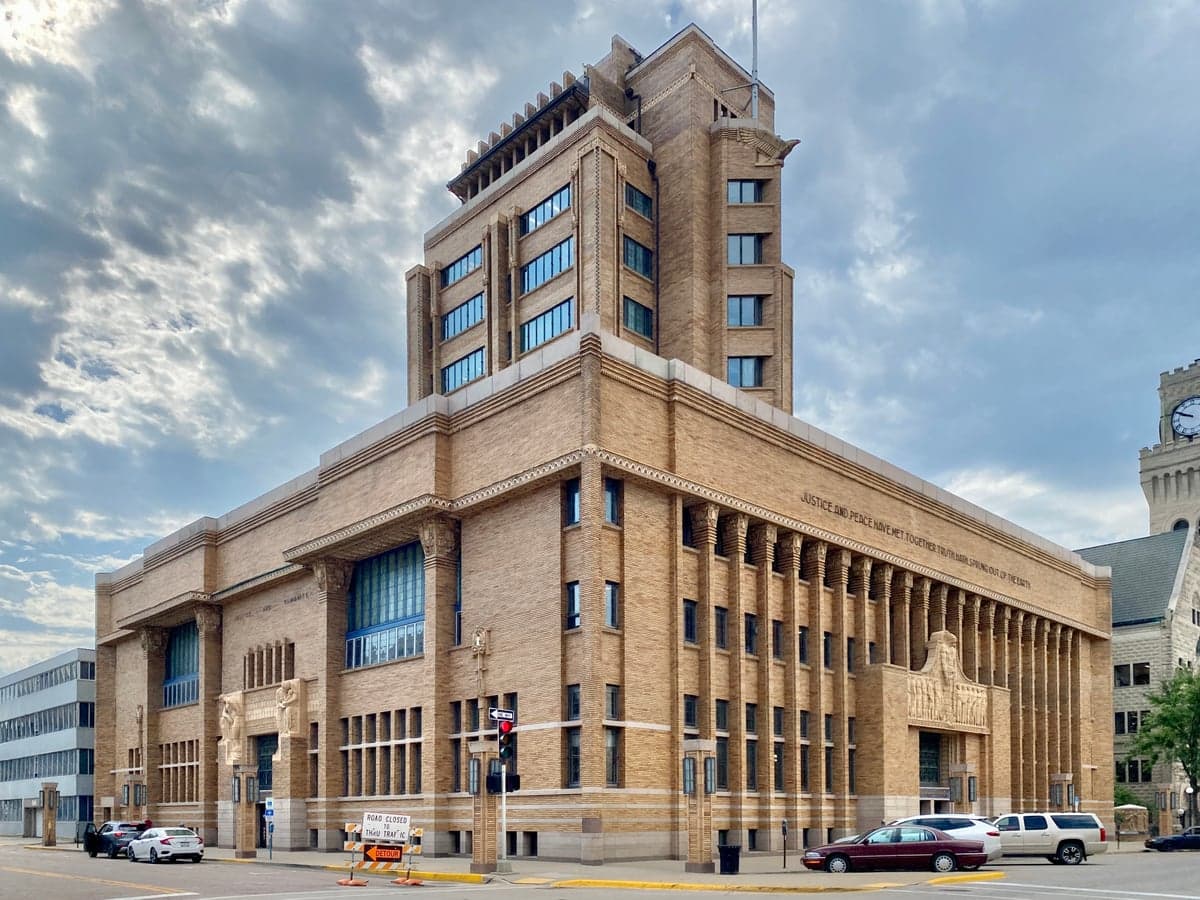
Photo: Wikipedia
Strategic Assessment of Sioux City, IA
Workable tactical position. Some exposure to population density or targets, but generally defensible in a crisis.
What does the Strategic Assessment tell us?
Our Strategic Assessment grades tactical survivability of an area. Major population centers, military targets, fallout zones, natural disasters, and border exposure all drive risk — lower exposure means a more defensible position in a crisis.
This is heavily inspired by Joel Skousen's Strategic Relocation book. Highly recommended you checkout the book ($)What does this tell us?
Our Strategic Assessment grades tactical survivability of an area. Major population centers, military targets, fallout zones, natural disasters, and border exposure all drive risk — lower exposure means a more defensible position in a crisis.
This is heavily inspired by Joel Skousen's Strategic Relocation book. Highly recommended you checkout the book ($)Strategic Pillars

Key Distances
Regional Safe Places
Below is our recommended "safe zones" in Iowa and the surrounding area based on our strategic heuristics. For most people, it's unrealistic to live in a “safe zone” full-time due to work, family or other personal reasons. They tend to be more rural. However, many of these areas are perfect for second homes and retreat properties that double as a vacation home or even a short-term rental.
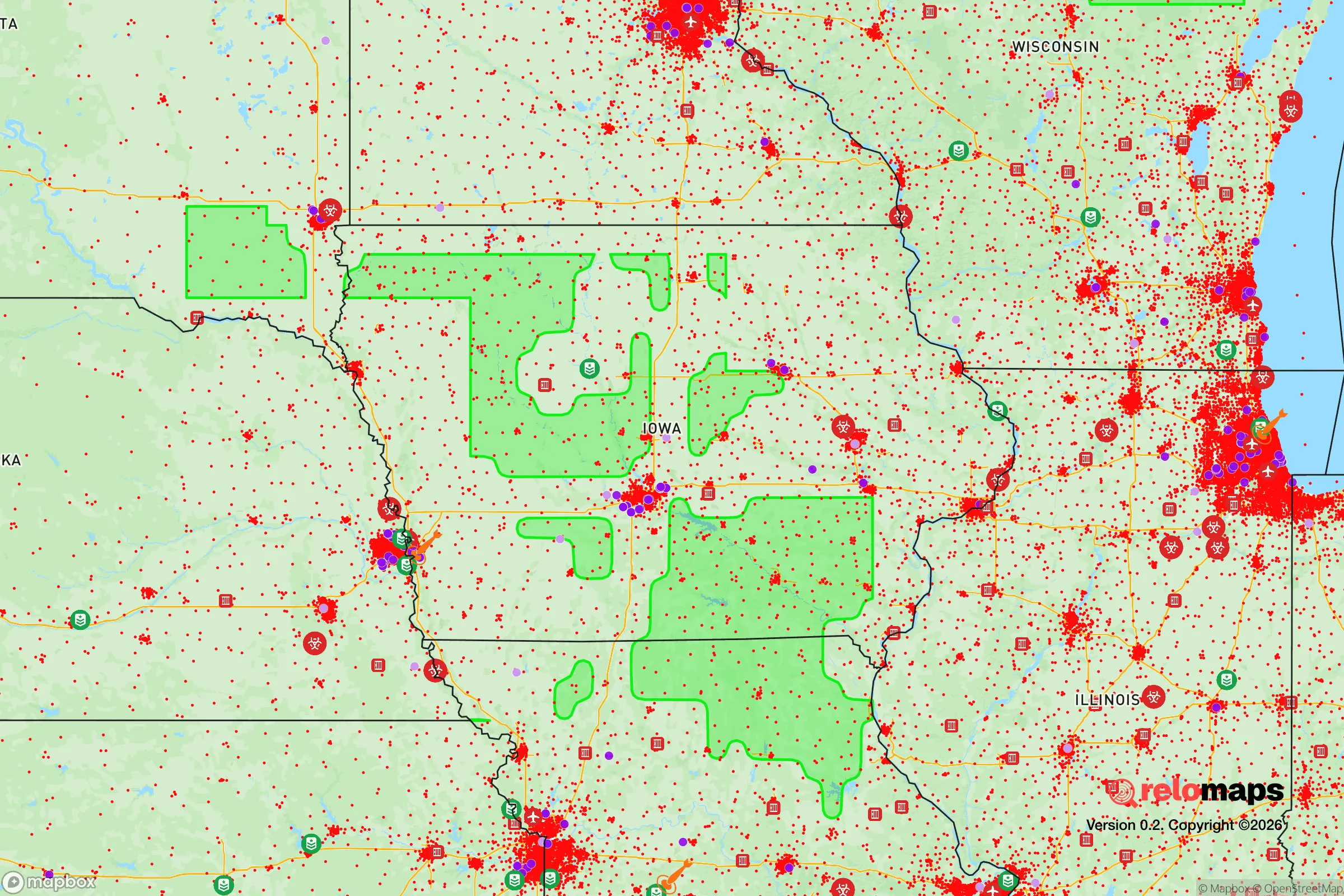
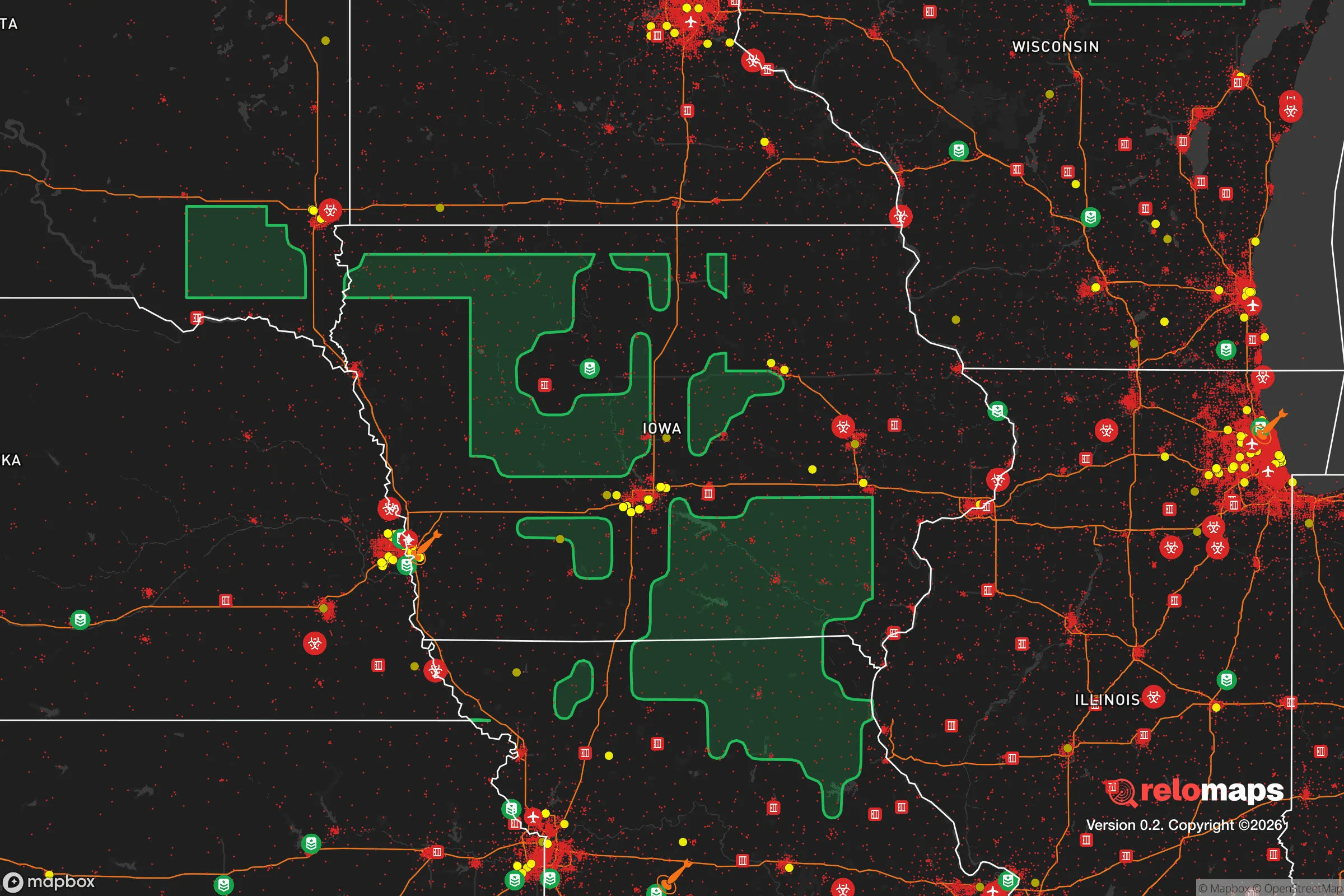


Important Note: For informational purposes only. This does not mean nothing bad ever happens in the green zones. Please use common sense. This is based on public data and modeled with AI. We tried to take a conservative approach but mistakes happen. We update this regularly as new information becomes available.
Solar Generator Recommendations
Backup power matters more here than in safer locations. We've picked three solar generators across budgets and capacity tiers — start with the budget unit if you only need a few essentials, or step up if you want to run a fridge and HVAC for days at a time.

Jackery Portable Power Station Explorer 300
Budget OptionPower on the Go: Weighing only 11 lbs, it's convenient to set up and store with book-sized foldable solar panels

BLUETTI Portable Power Station AC180
Designed for both indoor and outdoor scenarios, AC180 is highly capable as it has a robost capacity and continuous output power.

EF ECOFLOW DELTA Pro Ultra Power Station
Upgraded PickEcoFlow DELTA Pro Ultra is a whole-home energy system designed to grow with your family. Integrated with the Smart Home Panel 2, it scales to meet your evolving energy needs — keeping your home powered, intelligent, and secure through every stage of life.
We earn a commission, at no additional cost to you.
Strategic Assessment Analysis
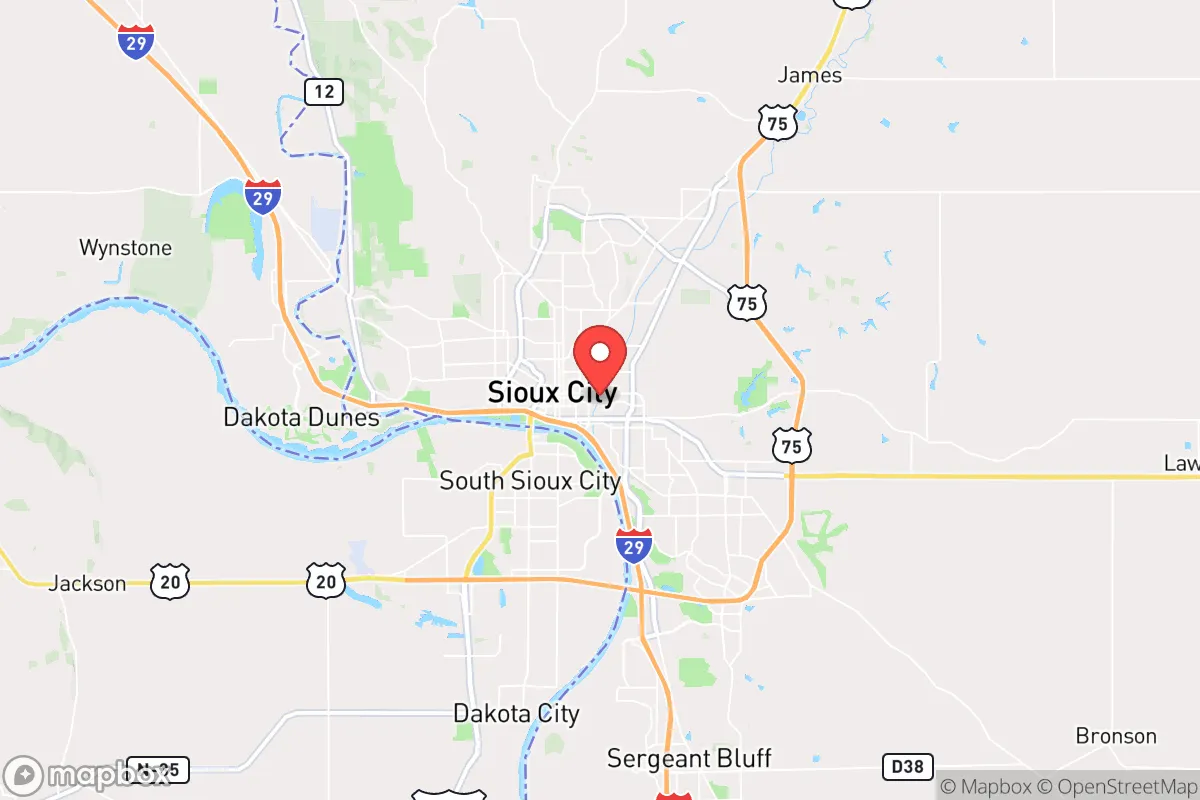
Sioux City, Iowa, sits at the intersection of three states—Iowa, Nebraska, and South Dakota—and the Missouri River, giving it a strategic resilience that few Midwestern towns can match. Its location roughly 90 miles north of Omaha and 150 miles south of Sioux Falls places it far enough from major metropolitan centers to avoid the worst of urban collapse scenarios, yet close enough to access regional supply chains and medical infrastructure. For a relocator prioritizing self-sufficiency and security, Sioux City offers a mix of agricultural abundance, industrial backbone, and relative isolation that makes it a serious contender for a long-term survival base.
Geographic position and natural advantages for long-term security
Sioux City’s geography is its strongest card. The Missouri River provides a reliable water source, and the surrounding Loess Hills offer natural elevation and defensible terrain—rare in the flat Midwest. The city sits at the confluence of the Missouri and Big Sioux rivers, which historically supported trade and now supports irrigation and potential off-grid water access. The region’s fertile soil means local food production is viable, with thousands of acres of corn, soybeans, and pastureland within a 20-minute drive. The area’s low population density—roughly 85,000 in the city proper and about 145,000 in the metro—means less competition for resources during a crisis. Winters are cold but manageable, and the risk of natural disasters like hurricanes, earthquakes, or wildfires is negligible. Tornadoes are a real threat, but the Loess Hills provide some sheltering effect, and basements are standard in nearly every home built before 2000.
Risks, exposures, and proximity to fallout-relevant landmarks
No location is perfect, and Sioux City has its vulnerabilities. The most obvious is the Sioux Gateway Airport, a former Air Force base that still hosts a 9,000-foot runway capable of handling heavy military cargo. In a national emergency, that runway becomes a target or a chokepoint for military movement. The city also sits within 200 miles of Offutt Air Force Base near Omaha, which houses U.S. Strategic Command—a prime target in any conflict involving nuclear or conventional strikes. While Sioux City itself is not a primary target, fallout from a strike on Offutt could drift eastward depending on wind patterns. Additionally, the Union Pacific rail yard and several grain elevators along the Missouri could become secondary targets or attract looting during civil unrest. The city’s proximity to the Ponca State Park and the Missouri River floodplain means flooding is a recurring risk—major floods in 2011 and 2019 caused significant damage to low-lying neighborhoods and farmland. For a prepper, this means avoiding properties in the 100-year flood zone and having a plan for river-level rise.
Practical resilience for a relocator: food, water, energy, and defensibility
For someone serious about self-reliance, Sioux City delivers on the basics. Water is abundant from the Missouri River, but municipal treatment plants could fail during a prolonged grid-down event. A well with a hand pump or a river filtration system is a wise investment. The area’s agricultural surplus means local farmers’ markets, CSAs, and bulk grain suppliers are plentiful—stockpiling rice, beans, and canned goods is straightforward. The energy grid is part of the Midcontinent Independent System Operator (MISO) region, which has faced strain during extreme cold snaps (like the 2021 polar vortex), but natural gas and propane are widely available for backup heating. Solar potential is moderate—about 4.5 peak sun hours per day—enough to supplement but not fully replace grid power in winter. Defensibility is mixed: the city’s layout is a mix of older neighborhoods with narrow streets (good for chokepoints) and sprawling suburban subdivisions (harder to secure). The Loess Hills to the west offer rural retreat options with line-of-sight advantages. The local gun culture is strong—Iowa is a shall-issue state for permits, and open carry is legal without a permit. The Woodbury County Sheriff’s Office and Sioux City Police are well-funded relative to the population, but response times in rural parts of the county can exceed 20 minutes. For a family, the Sioux City Community School District has some strong magnet programs, but overall test scores are below state averages—homeschooling or private options (like Bishop Heelan Catholic Schools) are common among conservative families.
The overall strategic picture for Sioux City is one of moderate-to-high resilience with manageable trade-offs. It’s not a remote mountain hideout, but it’s also not a coastal megacity that will implode overnight. The combination of river water, agricultural land, low crime rates (violent crime is about 30% below the national average), and a politically conservative population (Woodbury County voted +15 for Trump in 2020) makes it a viable base for someone who wants to be prepared without living off-grid in a bunker. The biggest downsides are the proximity to Offutt Air Force Base and the flood risk, both of which can be mitigated with proper planning. For a relocator who values community, access to supplies, and a lower profile, Sioux City is a solid choice—just don’t buy a house in the floodplain, and keep a bug-out bag ready for a northward retreat into South Dakota’s Black Hills if things go truly sideways.

* Values derived from national, state, county, city and local statistics and may differ in a specific area. Last updated: 2026-04-29T21:49:40.000Z
Narrative content on this page is AI-generated and may contain mistakes. Verify any details that matter before acting on them.
ReloMaps may earn a commission from affiliate links at no extra cost to you.

