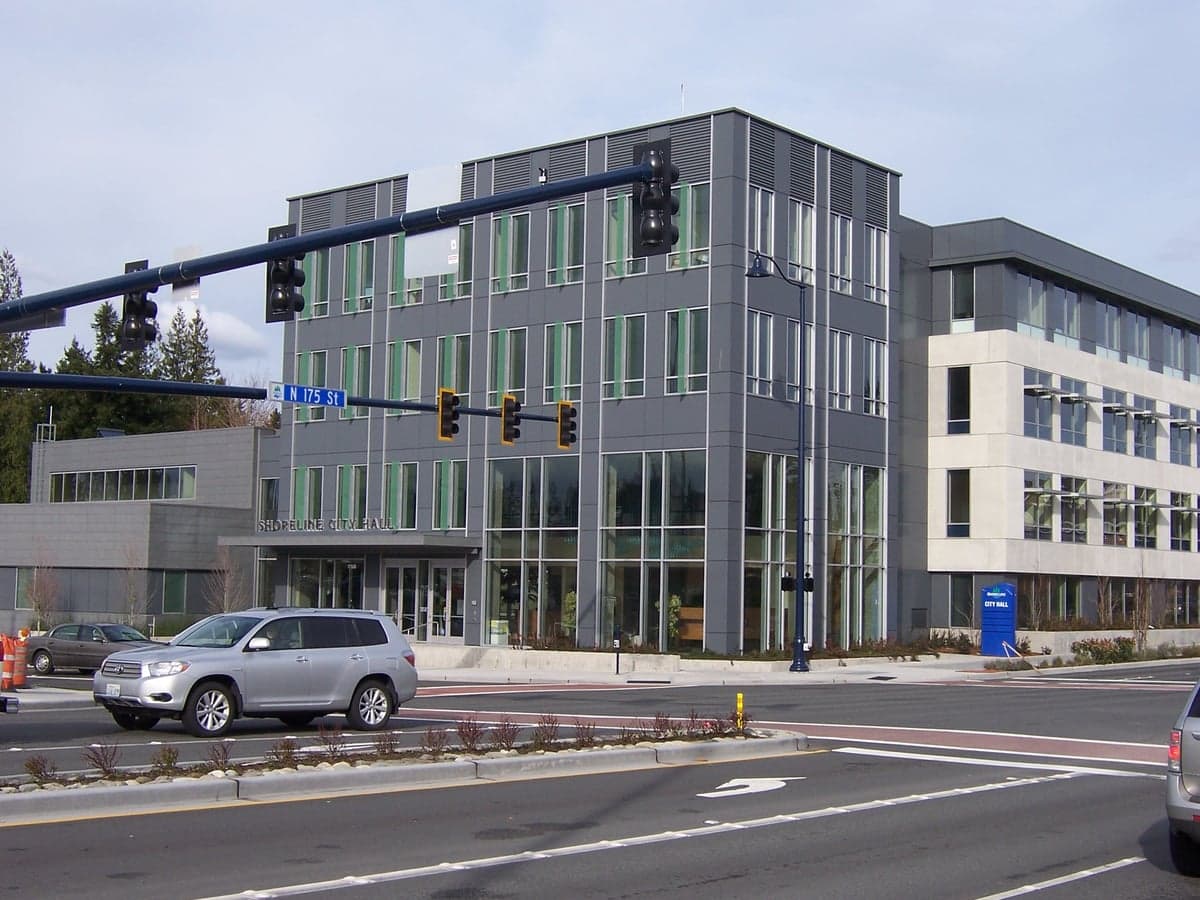
Photo: Wikipedia
Personal Sovereignty in Shoreline, WA
Viable for self-reliance. Generally workable, though some barriers may limit total independence.
What does Personal Sovereignty tell us?
Personal Sovereignty measures your capacity for self-reliance and independence with minimal government friction. Higher scores mean fewer barriers between you and the way you want to live... but it assumes you have the space you need and good neighbors.
What does this tell us?
Personal Sovereignty measures your capacity for self-reliance and independence with minimal government friction. Higher scores mean fewer barriers between you and the way you want to live... but it assumes you have the space you need and good neighbors.
State Policy
Energy independence: Importer (55% of energy produced in-state)
Personal Liberty
Homesteading

Personal Liberty Analysis
For a conservative-leaning individual or family evaluating Shoreline, Washington, through a lens of personal sovereignty, the reality is sobering: you are operating within a state that has aggressively centralized power in Olympia, leaving local autonomy heavily constrained. Shoreline itself is a dense, progressive-leaning suburb of Seattle, and while its tree-lined streets and relative safety offer some appeal, the legal and regulatory environment systematically erodes the kind of self-reliance and freedom that survivalist-minded people prioritize. The trade-off here is clear: you gain proximity to high-paying tech jobs and Pacific Northwest natural beauty, but you sacrifice significant control over your property, your children’s education, your medical choices, and your ability to defend yourself. This analysis breaks down the specific sovereignty factors that matter most to those who view government overreach as a primary threat.
Tax burden and regulatory posture in a high-cost state
Washington State’s lack of a personal income tax is often touted as a freedom win, but the reality for Shoreline residents is a heavy reliance on regressive sales taxes and property taxes that fund an expansive state apparatus. King County’s property tax rates are among the highest in the state, and Shoreline’s local levies for schools and parks add further burden. For a prepper focused on financial independence, this means a significant portion of your income—whether from a W-2 job or a side hustle—gets siphoned off before you can invest in supplies, land, or alternative energy. The regulatory posture is equally stifling: Washington’s State Environmental Policy Act (SEPA) and Growth Management Act give local governments broad power to block or delay construction, even on your own property. Adding a shed, building a greenhouse, or installing a rainwater catchment system can trigger permitting processes that take months and cost thousands. The state’s energy code is among the strictest in the nation, mandating heat pumps and high-efficiency windows that increase upfront costs. For someone who values the right to build and modify their property without government permission, Shoreline’s regulatory climate is a clear negative.
Self-defense and gun law specifics in a restrictive state
If personal sovereignty means the right to keep and bear arms without infringement, Shoreline is a difficult place to live. Washington State has enacted some of the most restrictive gun laws in the country since 2020, including a ban on standard-capacity magazines (over 10 rounds), a ban on many semi-automatic rifles classified as “assault weapons,” and a requirement for a 10-day waiting period on all firearm purchases. In 2024, the state also passed a law requiring a permit to purchase a semi-automatic rifle, which includes a mandatory firearms safety course and a background check through local law enforcement. Shoreline itself is a “home rule” city that has historically supported these measures, and the King County Sheriff’s Office—which provides policing for Shoreline—is generally aligned with progressive gun control policies. Open carry is legal but practically discouraged by the social climate; concealed carry requires a permit, and reciprocity with other states is limited. For a survivalist, the inability to own standard-capacity magazines or commonly used defensive rifles like the AR-15 is a major infringement. Self-defense in the home is legally protected under Washington’s “castle doctrine,” but the state does not have a “stand your ground” law, meaning you have a duty to retreat in public spaces if safely possible. This legal landscape makes Shoreline a poor choice for anyone who prioritizes the right to armed self-defense as a cornerstone of personal sovereignty.
Self-reliance and homesteading viability in a suburban footprint
Shoreline’s zoning is predominantly single-family residential on lots averaging 7,000 to 10,000 square feet—enough for a garden and a few chickens, but far from the acreage needed for true homesteading or off-grid living. The city’s municipal code restricts livestock to chickens only (no goats, pigs, or bees without special permits), and any structure over 120 square feet requires a building permit. Rainwater collection for potable use is technically allowed but must comply with state Department of Health standards that effectively require a full treatment system, making it cost-prohibitive for most. Solar panels are permitted but subject to homeowner association (HOA) restrictions in many neighborhoods—Shoreline has a patchwork of HOAs and design review boards that can veto installations based on aesthetics. The city’s urban growth boundary, enforced by King County, means you cannot simply buy a larger lot outside the city limits without moving to unincorporated areas like nearby Bothell or Snohomish County. For a prepper seeking to reduce reliance on grid infrastructure and government services, Shoreline’s suburban density and strict zoning make self-sufficiency a hobby, not a lifestyle. The soil quality is decent for gardening, and the mild maritime climate allows year-round growing, but the regulatory overhead and lack of space severely limit what you can achieve.
Personal liberties: parental rights, medical autonomy, speech, and property
On parental rights, Washington State has moved aggressively to centralize authority in the state. The 2023 “My Health My Data” act, while ostensibly about privacy, has been used to restrict parents’ access to their children’s medical records in certain contexts, and the state’s gender-affirming care laws explicitly allow minors to consent to certain treatments without parental notification. For a conservative parent, this represents a direct assault on the family unit. Medical autonomy for adults is also constrained: Washington has a strict vaccine mandate for healthcare workers and school attendance, and during the COVID-19 pandemic, Shoreline’s local government enforced mask mandates and business closures with little tolerance for exemptions. The state’s public health emergency powers are broad, and the governor can unilaterally issue orders that override local control. Free speech is protected under the First Amendment, but Shoreline’s social climate is heavily progressive, and expressing dissenting views on topics like immigration, gender, or government overreach can lead to social ostracism or professional consequences—a form of soft authoritarianism that many conservatives find stifling. Property rights are the weakest link: Washington’s “public use” doctrine allows the state to take land for private development via eminent domain, and the Shoreline City Council has used zoning changes to force density increases, effectively reducing the value of single-family lots. For someone who believes their home is their castle, the constant threat of regulatory takings and zoning changes is a serious erosion of sovereignty.
In the broader Pacific Northwest context, Shoreline offers a slightly better sovereignty profile than Seattle proper—lower crime, more space, and a less radical local government—but it remains firmly within the orbit of a state that has embraced top-down control. Compared to rural areas in eastern Washington or Idaho, where property taxes are lower, gun laws are more permissive, and zoning allows for genuine self-sufficiency, Shoreline is a compromise that sacrifices significant personal freedom for convenience and job access. For a survivalist or prepper who values autonomy above all else, the calculus is clear: Shoreline is a place to work and save, not a place to build a sovereign life. If you must be in the region for career reasons, treat it as a temporary base and look to the foothills or the other side of the Cascades for your long-term retreat. The state’s trajectory is toward more regulation, not less, and Shoreline’s position as a dense, liberal suburb means you will be fighting an uphill battle to preserve your rights at every turn.

* Values derived from national, state, county, city and local statistics and may differ in a specific area. Last updated: 2026-04-21T11:05:56.000Z
Narrative content on this page is AI-generated and may contain mistakes. Verify any details that matter before acting on them.
ReloMaps may earn a commission from affiliate links at no extra cost to you.

