Photo: Wikipedia
Demographics of Shoreline, WA
Affluence Level in Shoreline, WA
An upper-middle-class area. Household wealth, education levels, and homeownership run ahead of national benchmarks.
People of Shoreline, WA
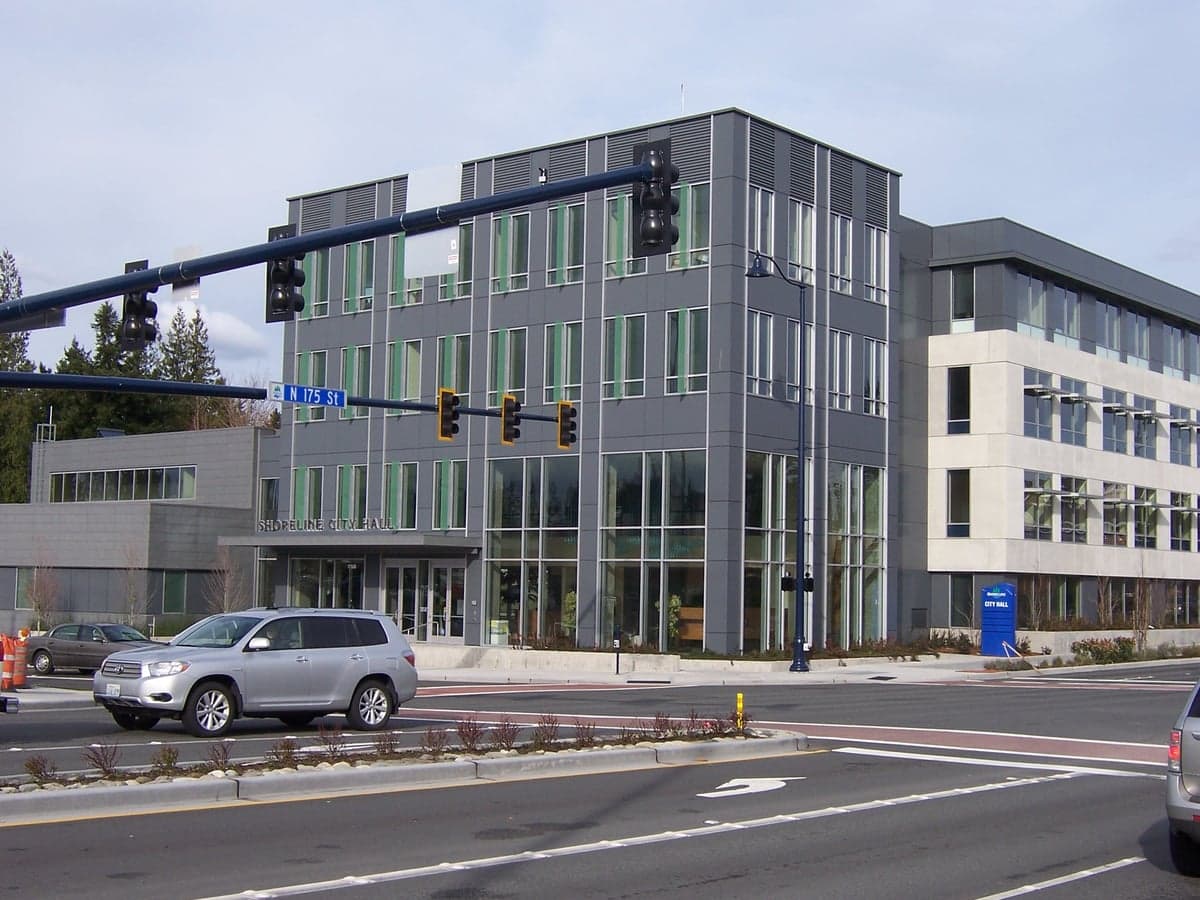
Shoreline, Washington, is a densely settled, family-oriented suburb of 59,280 residents that feels more like an established city than a bedroom community. Its population is notably well-educated, with 52.8% holding a college degree, and racially diverse compared to the broader Puget Sound region, though still majority white at 63.2%. The city’s character is defined by its mid-century housing stock, mature tree canopy, and a strong sense of local identity that emerged only after incorporation in 1995, before which it was simply the unincorporated northern edge of Seattle. Today, Shoreline is a place where multi-generational white families live alongside growing East and Southeast Asian and Indian communities, creating a quiet but real demographic transition.
How the city was settled and grew
Shoreline’s human history begins with the Coast Salish people, specifically the Duwamish and Suquamish tribes, who used the area’s salmon-rich creeks and beachfronts for seasonal camps. Euro-American settlement began in earnest after the 1880s, when the Seattle, Lake Shore & Eastern Railway laid tracks along the waterfront, opening the area to logging and small-scale farming. The first major wave of white settlers were Scandinavian and German homesteaders who cleared land for dairy farms and berry fields, clustering around what is now the Richmond Beach neighborhood, where the railroad depot and a small commercial district formed. By the 1920s, a second wave of working-class families—many of them Norwegian and Swedish immigrants—built modest homes in the Ridgecrest and Hillwood neighborhoods, drawn by cheap land and the promise of jobs in Seattle’s shipyards and lumber mills. These early residents were overwhelmingly white and Protestant, and they established the area’s character as a quiet, semi-rural fringe of Seattle. The post-World War II boom transformed Shoreline: returning GIs and their families flooded in, buying the thousands of single-family homes built on former farmland in neighborhoods like North City and Briarcrest. This wave was almost entirely white, and by 1960 the area was a classic middle-class suburb, with no significant non-white population.
Modern era (post-1965)
The 1965 Hart-Cellar Immigration Act opened the door to significant demographic change, but Shoreline’s transformation was gradual. The first non-white arrivals were East and Southeast Asian families—primarily Chinese, Filipino, and Vietnamese—who began moving into the Echo Lake and Parkwood neighborhoods in the 1980s and 1990s, drawn by affordable housing and good schools. This wave accelerated after 2000, as Seattle’s tech boom pushed housing costs northward. Today, East and Southeast Asian residents make up 13.0% of the population, with a visible concentration in the area around Shoreline Community College and along Aurora Avenue. A smaller but distinct Indian community (1.7%) has grown more recently, settling primarily in the newer developments near the North City business district, where larger homes and proximity to tech employers in Bothell and Redmond are draws. The Hispanic population (8.1%) and Black population (6.2%) are more dispersed, with no single ethnic enclave, though a notable Hispanic presence exists in the older, lower-cost housing stock along the Aurora corridor. Domestic in-migration from other parts of Washington and California has been the largest driver of growth since 2000, bringing a mix of young families and empty-nesters who value Shoreline’s relative affordability compared to Seattle proper. The foreign-born share (8.0%) is modest for the region, reflecting the city’s status as a second-ring suburb that attracts more domestic movers than direct immigrants.
The future
Shoreline’s population is trending older and more diverse, but the pace of change is moderate. The white share has declined from roughly 75% in 2000 to 63.2% today, and this trend will continue as older white residents age in place and younger, more diverse families move in. The East and Southeast Asian population is the fastest-growing group, projected to approach 18-20% by 2035, driven by both immigration and domestic relocation from Seattle’s International District. The Indian community, while small, is growing steadily as tech workers seek larger homes in the Ridgecrest and Briarcrest neighborhoods. The Hispanic and Black populations are growing more slowly, likely plateauing near current levels as housing costs rise. The city is not tribalizing into distinct ethnic enclaves; rather, it is experiencing a slow, organic integration, with most neighborhoods becoming more mixed. The biggest demographic wildcard is the ongoing redevelopment of the Aurora Avenue corridor, where new apartment complexes are attracting younger, more transient renters, potentially accelerating turnover. For a conservative-leaning mover, the key takeaway is that Shoreline remains a stable, family-oriented suburb where the white majority is shrinking but not disappearing, and where new residents—regardless of background—tend to assimilate into the existing civic culture rather than forming separate communities.
Shoreline is becoming a more diverse, more educated, and slightly more expensive version of its former self, but it retains the quiet, neighborly feel that drew its original white settlers a century ago. For someone moving in now, the city offers a middle ground: enough demographic change to feel modern and connected to the broader region, but enough continuity to feel familiar and safe. The next decade will likely see continued gradual diversification, with no dramatic shifts in character or politics.

* Values derived from national, state, county, city and local statistics and may differ in a specific area. Last updated: 2026-04-21T11:05:56.000Z
Narrative content on this page is AI-generated and may contain mistakes. Verify any details that matter before acting on them.
ReloMaps may earn a commission from affiliate links at no extra cost to you.

