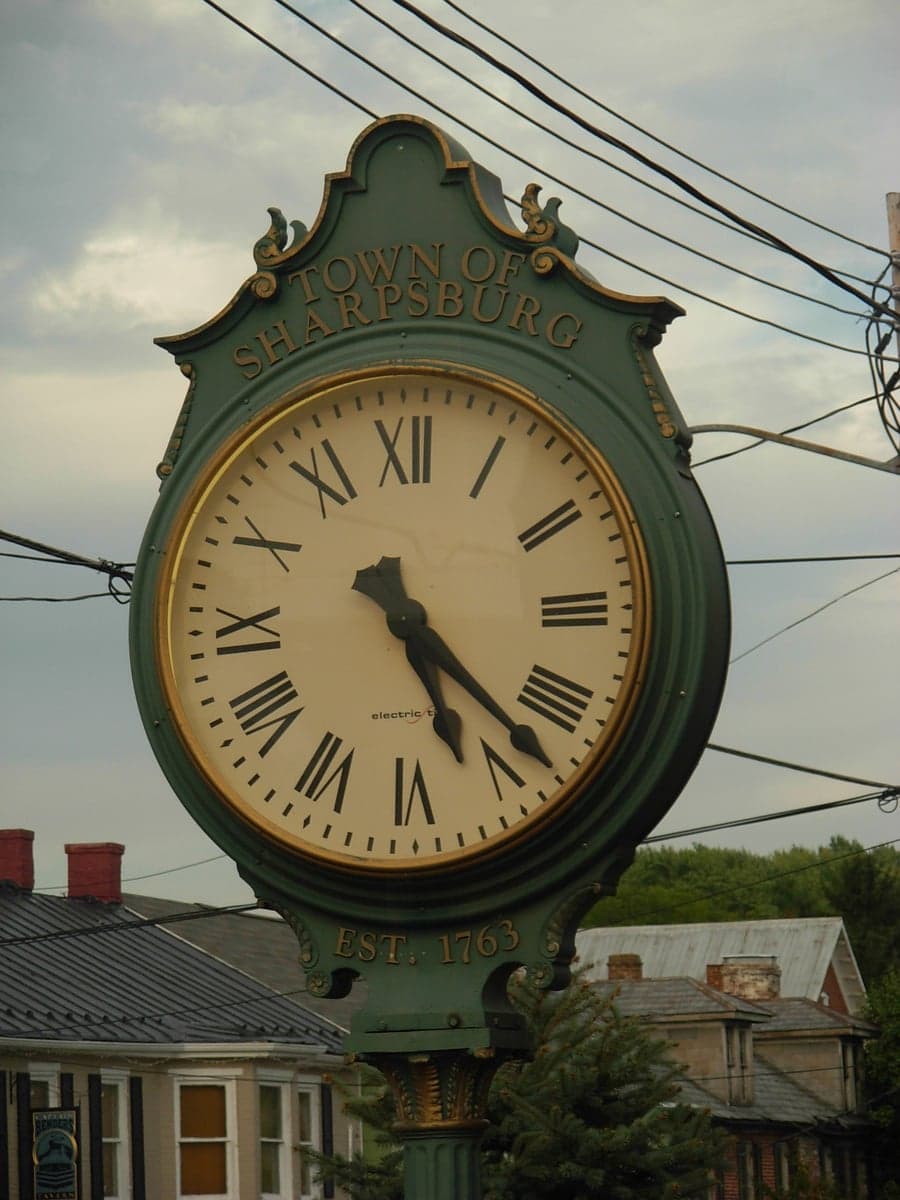
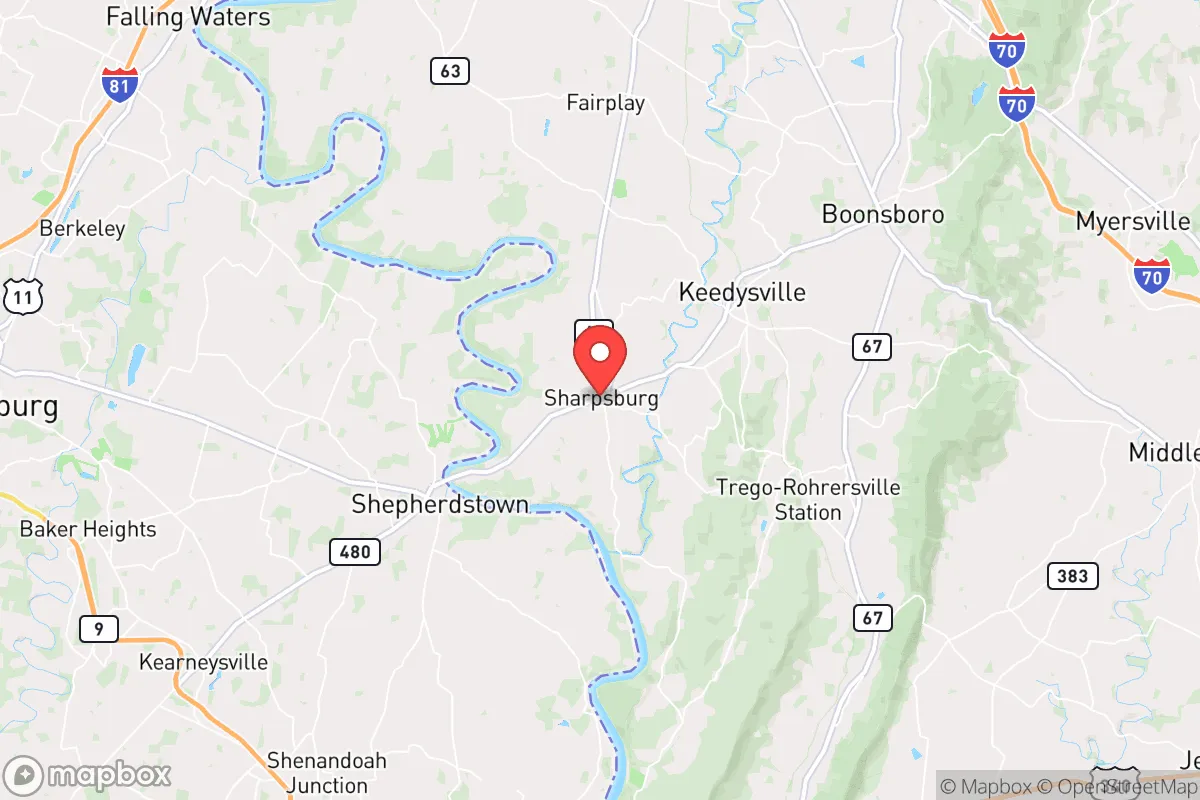
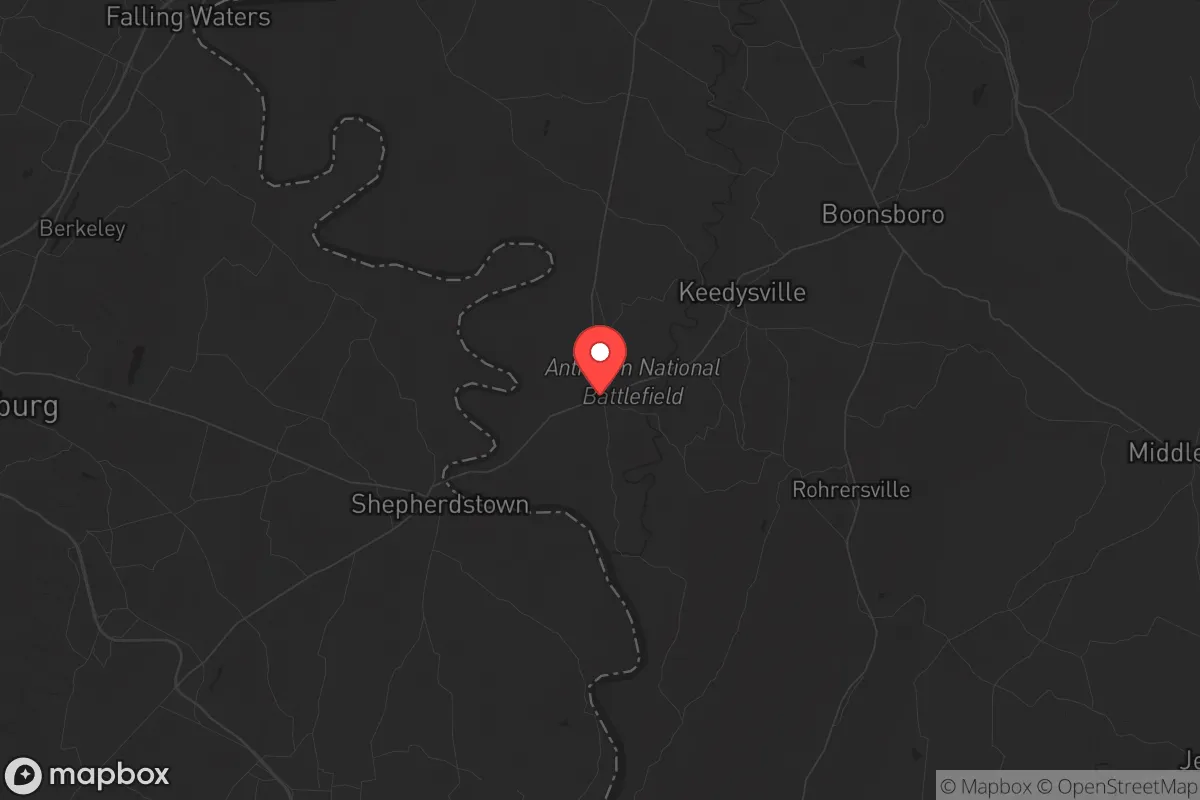
Photo: Wikipedia
Demographics of Sharpsburg, MD
Affluence Level in Sharpsburg, MD
A middle-class area roughly in line with national averages across income, home values, education, and employment.
People of Sharpsburg, MD
The 596 residents of Sharpsburg, Maryland form a remarkably stable, predominantly white community rooted in deep family histories that trace back to the town’s 18th-century founding. With a population that is 87.9% white, 3.5% Hispanic, and 2.7% East/Southeast Asian, and a foreign-born share of just 3.0%, Sharpsburg remains one of the most ethnically homogeneous small towns in Washington County. Its identity is shaped by Civil War heritage, agricultural traditions, and a tight-knit social fabric where many residents are descendants of the original German and English settlers.
How the city was settled and grew
Sharpsburg was founded in 1763 by Joseph Chapline, who laid out 100 lots on a tract called “The Resurvey on Sharps’ Old Field.” The town’s first wave of settlers were primarily German and English farmers drawn by the fertile limestone soils of the Antietam Creek valley and the promise of land grants from the Calvert family. The original settlement clustered around what is now Main Street and Hall Street, where the earliest log homes and taverns served travelers on the Great Wagon Road between Pennsylvania and the Shenandoah Valley. By the early 1800s, a second wave of German-speaking Lutherans and Reformed Church families built the German Reformed Church (now St. Paul’s Lutheran) and established the Church Hill neighborhood, where many of their descendants still live. The town’s growth stalled after the Civil War, as the Battle of Antietam (1862) devastated the local economy and population. For the next century, Sharpsburg remained a quiet agricultural village, with most residents working on family farms or in the nearby limestone quarries. The Potomac Street corridor became the commercial heart, while the Antietam National Cemetery area drew visitors but few new permanent residents.
Modern era (post-1965)
After the 1965 Hart-Cellar Act, Sharpsburg saw virtually no immigration-driven diversification. The town’s foreign-born population remains at just 3.0%, and the Black population is recorded at 0.0%. The modest demographic changes that did occur came from domestic in-migration. In the 1970s and 1980s, a small number of families from the Washington, D.C. suburbs—primarily white professionals seeking rural lifestyles—purchased historic homes in the West Sharpsburg area, near the Potomac River. These newcomers restored many 19th-century structures but did not alter the town’s ethnic composition. The 2.7% East/Southeast Asian population, which includes a few families of Korean and Filipino descent, is concentrated in the newer housing along Shepherdstown Pike (MD-34), where a small subdivision of single-family homes was built in the 1990s. The Hispanic population (3.5%) is largely composed of agricultural workers who live in rental properties scattered along Keedysville Road and the outskirts near the Antietam Battlefield. These groups remain small and dispersed, with no distinct ethnic enclave forming.
The future
Sharpsburg’s population is projected to remain stable or decline slightly over the next decade, as the town has limited land for new development and no major employers to attract newcomers. The median age is rising, with many younger residents moving to Hagerstown or Frederick for jobs and education. The town’s cultural identity is likely to stay rooted in its Civil War heritage and agricultural character, with little pressure toward diversification. The small Hispanic and East/Southeast Asian populations may grow incrementally through family reunification, but they will remain a minor presence. The Church Hill and Main Street neighborhoods will continue to be the stronghold of long-established white families, while newer arrivals—mostly white retirees and remote workers—will settle in the Shepherdstown Pike corridor. No significant new subdivisions or apartment complexes are planned, so the town’s demographic profile will change slowly, if at all.
For someone moving to Sharpsburg today, the town offers a deeply rooted, historically conscious community where most residents share a common cultural background. The population is stable, aging, and unlikely to diversify rapidly. Newcomers—particularly those who value quiet, rural living and Civil War history—will find a welcoming but insular environment where integration into the social fabric requires genuine engagement with local traditions and institutions.

* Values derived from national, state, county, city and local statistics and may differ in a specific area. Last updated: 2026-11-20T12:52:13.000Z
Narrative content on this page is AI-generated and may contain mistakes. Verify any details that matter before acting on them.
ReloMaps may earn a commission from affiliate links at no extra cost to you.

