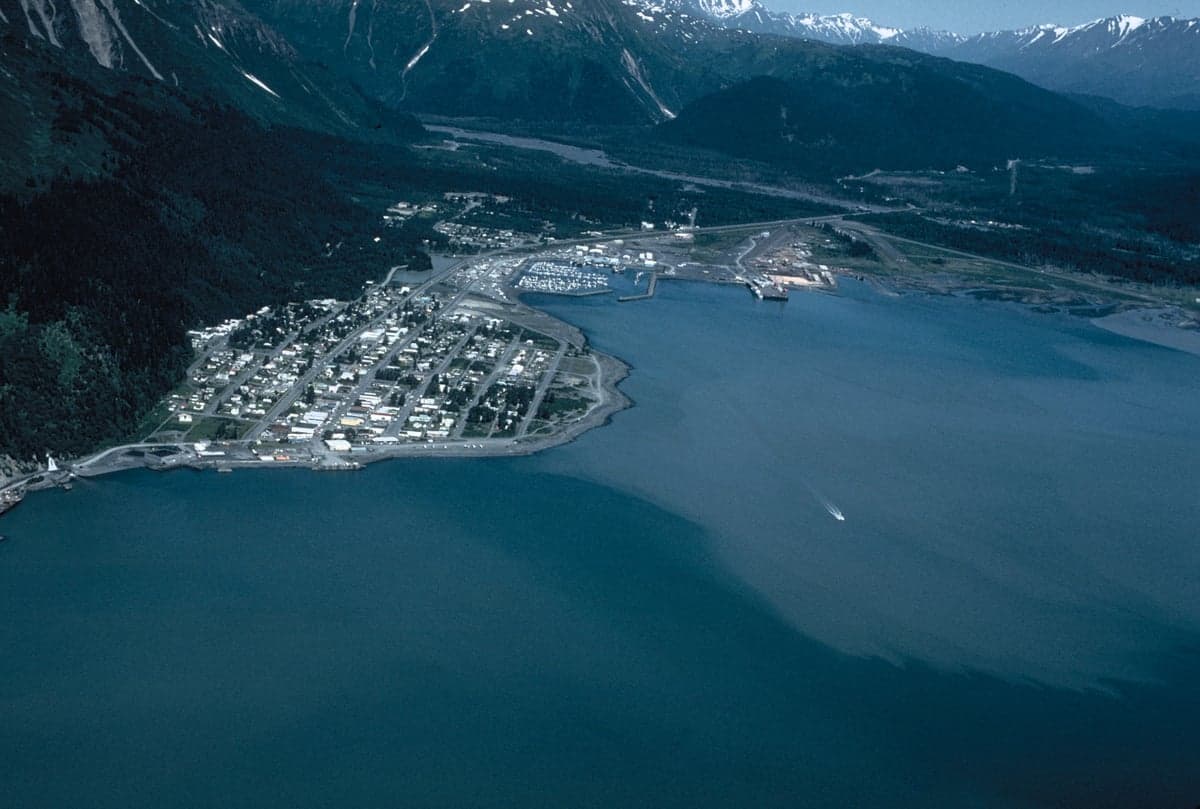
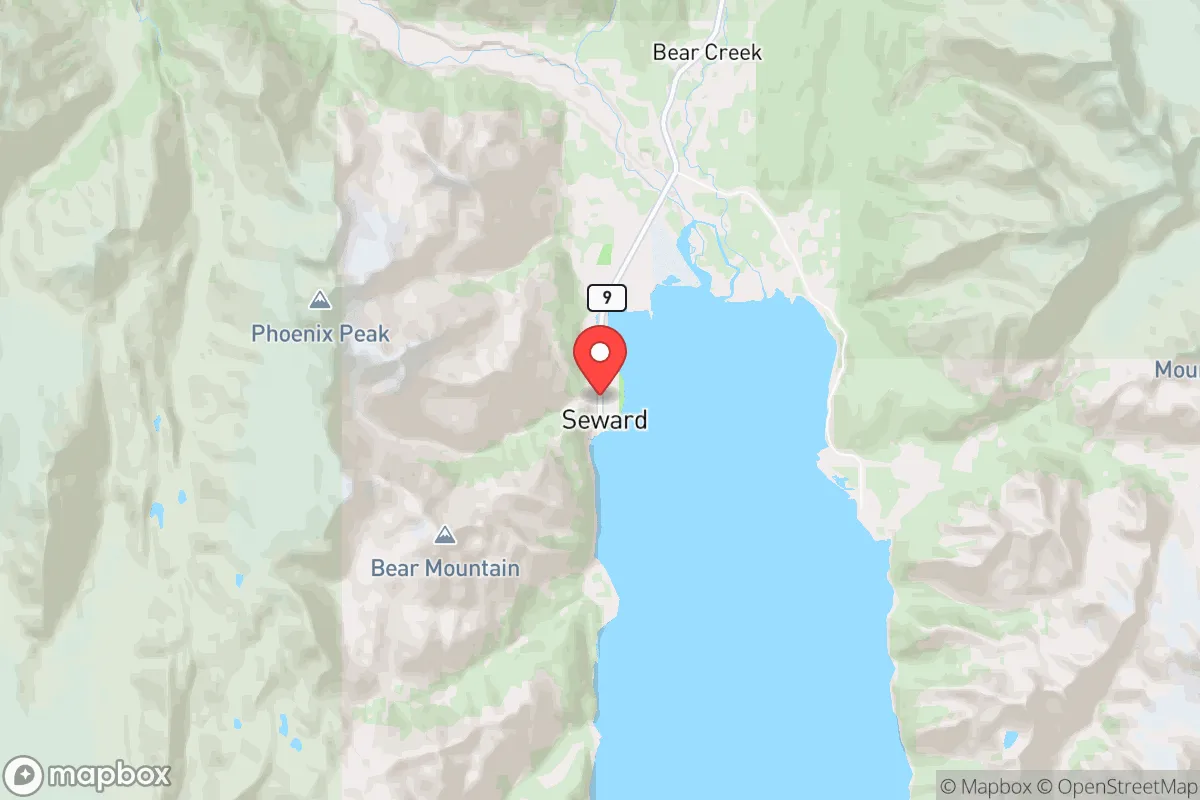
Photo: Wikipedia
Personal Sovereignty in Seward, AK
Viable for self-reliance. Generally workable, though some barriers may limit total independence.
What does Personal Sovereignty tell us?
Personal Sovereignty measures your capacity for self-reliance and independence with minimal government friction. Higher scores mean fewer barriers between you and the way you want to live... but it assumes you have the space you need and good neighbors.
What does this tell us?
Personal Sovereignty measures your capacity for self-reliance and independence with minimal government friction. Higher scores mean fewer barriers between you and the way you want to live... but it assumes you have the space you need and good neighbors.
State Policy
Energy independence: Net exporter (350% of energy produced in-state)
Personal Liberty
Homesteading

Personal Liberty Analysis
Seward, Alaska, offers a level of personal sovereignty that is increasingly rare in the Lower 48, but it comes with a distinct set of trade-offs that a survivalist or prepper must weigh carefully. The city sits in a state that constitutionally mandates a "maximum personal liberty" and a minimal government footprint, yet the practical realities of a remote, weather-beaten coastal town mean that true autonomy is less about legal protections and more about your own grit, gear, and willingness to be left alone. For the conservative-minded individual or family looking to escape the creeping overreach of federal and state mandates, Seward presents a compelling, if rugged, sanctuary—provided you understand that the government's absence is both a blessing and a burden.
Tax burden and regulatory posture in a high-cost, low-tax state
Alaska’s tax structure is the single strongest pillar of personal sovereignty in Seward. There is no state income tax, no state sales tax, and no state property tax—a trifecta that leaves the average household with thousands more dollars annually to invest in their own preparedness, land, and supplies. The state’s Permanent Fund Dividend, while not a life-changing sum, is a direct cash payment to every resident that reinforces the idea that the state’s resources belong to the people, not the bureaucracy. However, Seward itself imposes a 4% sales tax on most goods, and property taxes, while low by national standards, are levied locally to fund schools and infrastructure. The regulatory posture in Seward is generally light-touch compared to urban centers in the Lower 48. Building permits are required, but enforcement is lax in the more rural outskirts, and there is no statewide building code for single-family homes outside of seismic safety requirements. The Alaska Department of Fish and Game does impose strict regulations on hunting and fishing seasons, which can frustrate those who view subsistence as a right, not a privilege. For the prepper, the key takeaway is that the state government largely stays out of your wallet and your business, but the local municipality will still want its cut and its paperwork.
Self-defense and gun law specifics in a constitutional carry state
Alaska is one of the most firearm-friendly states in the union, and Seward reflects that ethos. The state has permitless constitutional carry for both open and concealed handguns for anyone 21 or older who can legally possess a firearm. There is no state-level waiting period, no magazine capacity limit, and no firearm registration. The Castle Doctrine is codified in statute, meaning you have no duty to retreat from your home, vehicle, or place of business before using deadly force against an intruder. Stand Your Ground laws extend this protection to any place you are lawfully present. For the survivalist, this means you can legally keep a rifle or shotgun in your truck, carry a sidearm while hiking the Resurrection River Trail, and defend your property without fear of prosecution—provided the threat is credible. The practical reality in Seward is that bears are a far more common threat than human predators, and most locals carry bear spray or a large-caliber handgun as a matter of routine. The Kenai Peninsula Borough does not have any additional gun restrictions, and the Seward Police Department is generally supportive of lawful carry. The only notable limitation is that Alaska state law prohibits carrying firearms in certain government buildings, schools (with exceptions for vehicles), and courthouses. For a prepper, the legal landscape here is as close to ideal as you will find in the United States.
Self-reliance and homesteading viability in a coastal frontier
Seward’s geography and zoning create a unique environment for self-reliance, but it is not the wide-open homesteading frontier many imagine. The city itself is compact, with most residential lots ranging from 5,000 to 10,000 square feet—enough for a substantial garden, a chicken coop, and a small greenhouse, but not for livestock like cattle or pigs. Outside city limits, in areas like Bear Creek or along the Seward Highway corridor, you can find parcels of 1 to 5 acres, often with no zoning restrictions beyond basic septic and well requirements. Off-grid living is entirely feasible and common. Many homes in the outlying areas rely on solar panels, propane generators, and wood stoves, as extending grid power can cost tens of thousands of dollars. The city water system is reliable, but well water is the norm for rural properties. Seward’s climate—cool, wet, and overcast for much of the year—limits growing seasons to about 90 days, making high tunnels and cold frames essential for serious food production. The ocean provides a bounty of salmon, halibut, and shellfish, but you need a boat and the skill to handle the notoriously rough waters of Resurrection Bay. For the prepper, the viability of self-reliance here is high if you are willing to invest in infrastructure and learn the local ecology. The regulatory hurdles are minimal, but the physical ones are significant.
Personal liberties in a small, tight-knit community
Personal liberties in Seward are generally robust, but the small-town dynamic creates informal constraints that can feel like government overreach in a different form. Parental rights are strongly protected under Alaska law, with no state-level mandates for school curriculum transparency that would override a parent’s ability to opt their child out of objectionable material. Homeschooling is common and lightly regulated—you simply file a notice of intent and provide an annual assessment. Medical autonomy is a mixed bag. Alaska has no state-level vaccine mandate for adults, and the COVID-era restrictions were minimal compared to the Lower 48, but the Seward hospital (Providence Seward Medical Center) is a small facility that may defer to state health mandates in a crisis. The state does have a medical marijuana program, but recreational use is legal for those 21 and over, and you can grow up to six plants for personal use. Free speech is protected by the Alaska Constitution, which has its own strong free-expression clause, and the local culture is generally live-and-let-live. Property rights are the crown jewel of personal sovereignty here. Alaska’s Constitution explicitly states that "private property shall not be taken or damaged for public use without just compensation," and eminent domain abuse is rare. The Kenai Peninsula Borough has minimal land-use restrictions outside of floodplain and coastal zone management. For the conservative individual, the biggest threat to personal liberty in Seward is not the government but the social pressure of a small community where everyone knows your business. If you value anonymity, you will not find it here.
Overall, Seward offers a level of personal sovereignty that ranks among the highest in the United States for those willing to accept the trade-offs of extreme weather, high cost of living, and geographic isolation. The tax burden is negligible, the gun laws are among the most permissive in the nation, and the regulatory environment is light enough to allow genuine self-reliance. Compared to the Pacific Northwest or the Northeast, where government overreach into property, health, and education is accelerating, Seward feels like a time capsule of American liberty. But it is not a libertarian paradise—the local sales tax, the fishing and hunting regulations, and the social dynamics of a small town all impose their own constraints. For the survivalist or prepper who values freedom above convenience, Seward is a strong contender. For those who want a low-effort escape from the system, the reality of living in a coastal frontier will quickly disabuse them of that notion. The sovereignty here is earned, not given.

* Values derived from national, state, county, city and local statistics and may differ in a specific area. Last updated: 2026-04-19T19:36:05.000Z
Narrative content on this page is AI-generated and may contain mistakes. Verify any details that matter before acting on them.
ReloMaps may earn a commission from affiliate links at no extra cost to you.

